
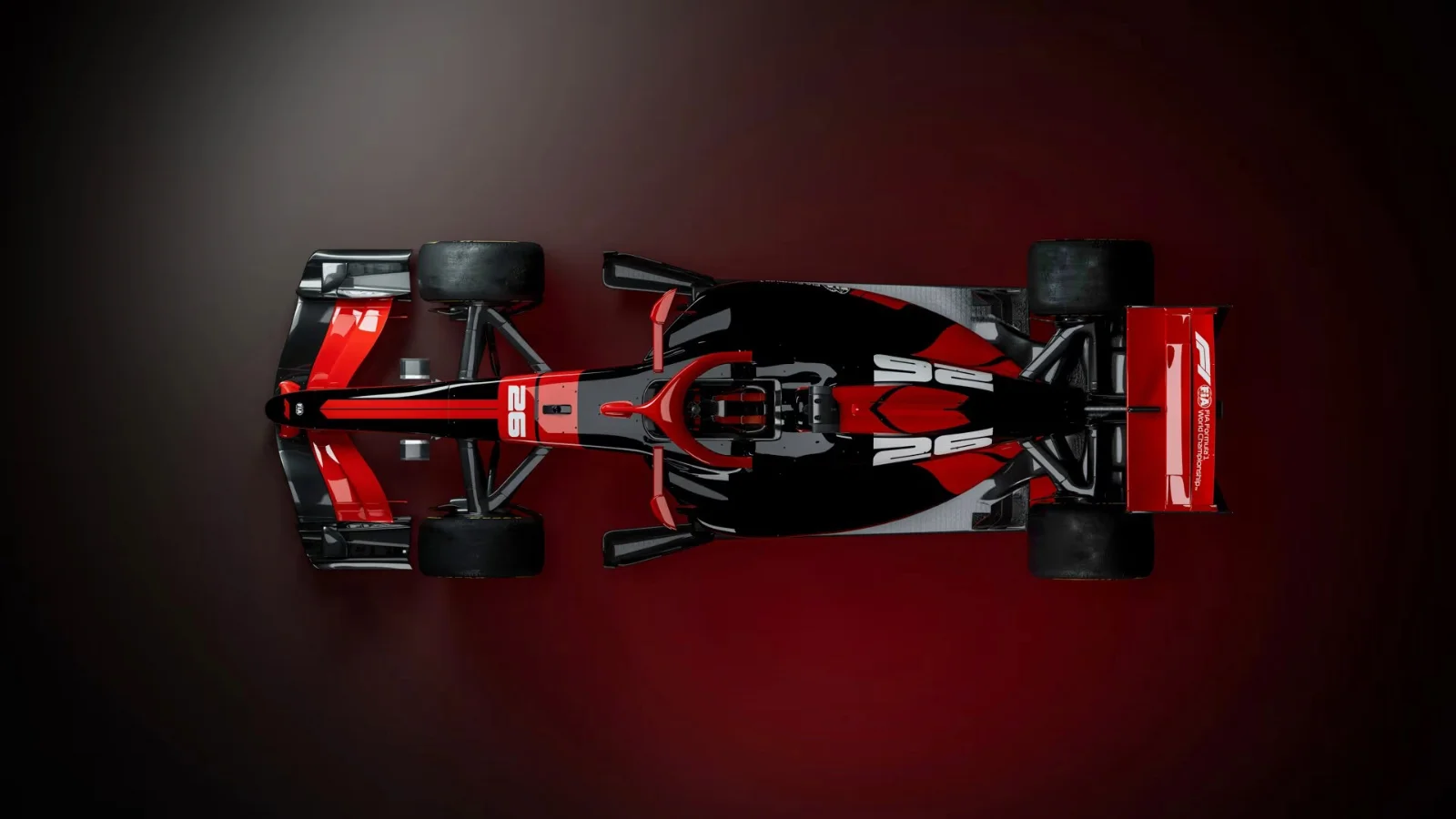
The early shakedown of Audi’s Formula 1 R26 challenger sparked much intrigue, but unbeknowingly, an increased scrutiny on how its interpreted the new rulebook.
The German squad‘s first-ever venture into F1 was given its next step last week with a private test at the Circuit de-Barcelona Catalunya.
A totally black car, an early iteration of the R26 which will contest the championship, was given 200km with Nico Hulkenberg and Gabriel Bortoleto sharing the duties behind the wheel.
Naturally, there was an eagerness for glimpses to be caught of the car, and some amateur footage taken within the circuit managed to do just that.
But a significant googly was thrown in the aftermath, as an image purported to be the car cornering the Spanish circuit began to circulate on social media.
Alas, those possessing the more eagle-like of eyes will have spotted that aspects of the car did not match those that would dovetail in with the new radical regulations cycle.
So, what did we learn about the actual R26, and what might it bode for the other 10 machines that will be lining up on the grid for the 2026 campaign?
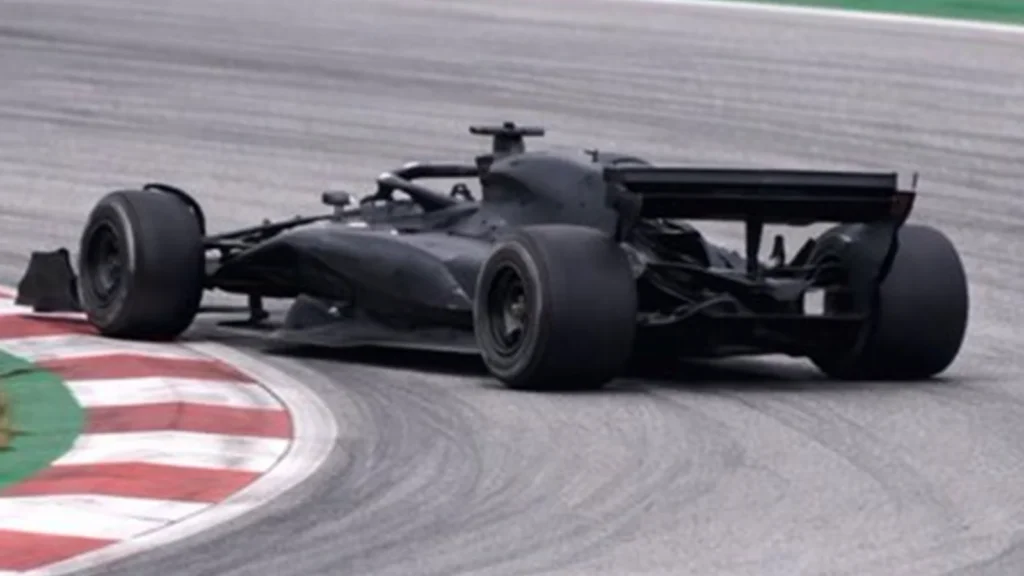 Remember, not everything you see online is real – the image purported to be the new Audi F1 challenger was quickly debunked as AI-generated
Pre-ground-effect features indicate a step back in time to ensure a step forward for F1
Notably, the backs of the cars will hark back to some features in previous regulation cycles. With ground-effect featuring far less, there appears to be an extreme possibility of the return of high rakes.
A common feature before the ground-effect era cars, high rakes could feature as the ride heights will be higher with the 2026 cars.
Adrian Newey was a great proponent of the positive rake [a deviation of the floor plane from the back] in the pre-ground-effect days with Red Bull, and a potential reappearance of the concept could mean a distinct possibility that Newey’s Aston Martin AMR26 could feature this.
The R26 also appears to feature a subtle version of the shark fin, that was often seen on cars from the late 2000s to 2018, when they were outlawed as they grew ever more prominent.
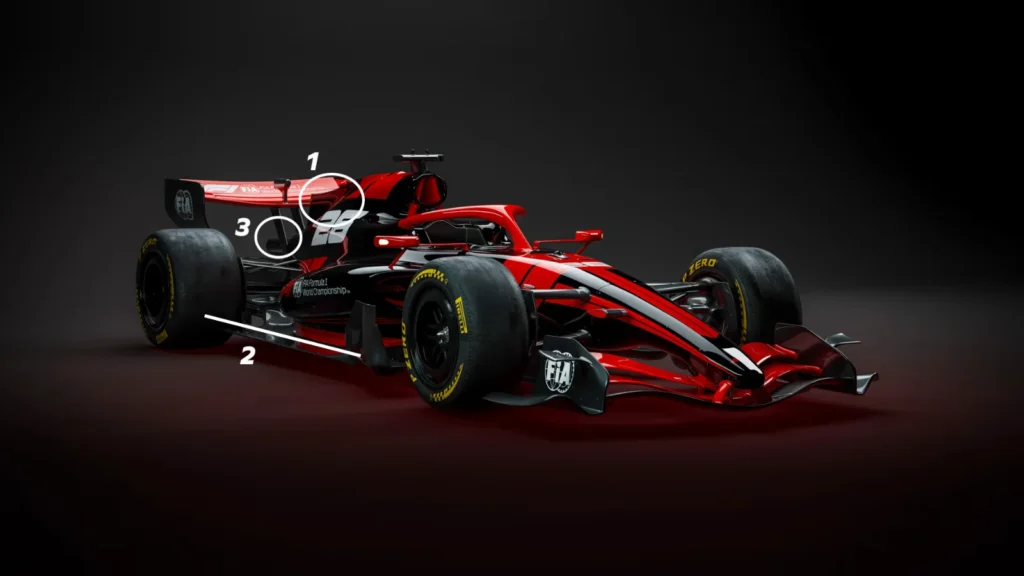 WHAT F1 2026 CARS MAY HAVE: 1. The return of shark fins | 2. High rake designs, as ride heights will be much higher | 3. Double-mounted rear wings
Another throwback will be the likely return of pushrod suspension, which was largely unsuccessful during the ground-effect era.
Speculation has pointed towards a number of teams such as Red Bull and Ferrari opting for pushrod, particularly on the rear of the car.
The new aero characteristics this year are likely to render pushrod suspensions a more harmonious option, as well as being a weight-saving exercise to boot.
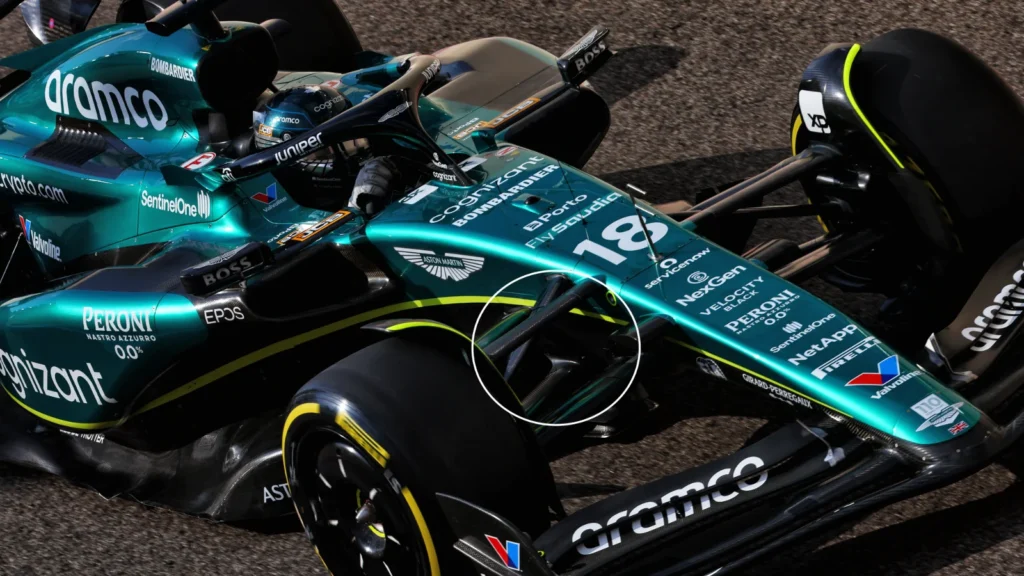 There is a likelihood of pushrod suspension – both front and rear – being favoured by teams once again
Motorsport Week understands that Audi opted for a double-pushrod suspension set-up for the Barcelona test, which may be a common occurrence up and down the grid.
Whilst it appears that the FIA and F1 renders of the 2026 car correlate with the Audi in terms of a double rear-wing mount [with a central swan neck-like design], it is unclear how it correlates with the sides of the car.
This creates further intrigue about the supposed early reports that Ferrari has, at least at some stage, considered a 2022 Mercedes-style sidepod-less design.
With less than a fortnight until the first testing schedule begins – at the same circuit – there will now be several days of intrigue as to whether the other teams will have adopted similar features to their cars, or whether there will be a significant breadth of interpretation of the new rules that will see a plethora of unique touches that will be found at the glossy end of a photorapher’s extra-long lens.
READ MORE – Audi drivers react to ‘fantastic’ first F1 car shakedown