

January 16, 2026 — 11:40am
Save
You have reached your maximum number of saved items.
Remove items from your saved list to add more.
Save this article for later
Add articles to your saved list and come back to them anytime.
Got it
AAA
Where were you in 2016?
I’ll go first. I’d just started uni and I had thick curtain bangs à la twee queen Zooey Deschanel. Beyoncé’s Lemonade was getting some serious air time on my car radio, and Instagram still showed posts in order of when they were posted. I didn’t know what a Labubu was and Rihanna was still making music. It was, put simply, a pretty good year.
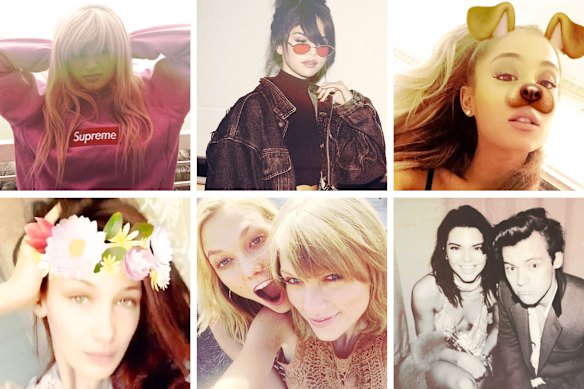 2016, clockwise from top left: Kylie Jenner, Selena Gomez, Ariana Grande, then-couple Kendall Jenner and Harry Styles, Karlie Kloss and Taylor Swift, and Bella Hadid.
Yes, part of this is just the buoyancy of youth, the feeling of having “the world at my feet”, to quote my year 12 yearbook. But I’m not alone in idealising 2016.
The latest social media trend invites users to share photos of themselves from a decade ago, with celebrities like Kylie Jenner, Selena Gomez and Hailey Bieber taking part.
On TikTok, searches for “2016” surged by 452 per cent in the second week of the new year, while compilation videos of “peak Millennial culture” – think moustache tattoos, typewriters and flower crowns, all pictured in sepia tones and set to the tune of indie-folk group The Middle East’s Blood – are trending.
So, why 2016?
Obviously, 2026 marks a decade on.
But it was also a watershed year in many ways. Donald Trump defeated Democrat Hillary Clinton in the US election, the Brexit vote took place and the Paris Agreement came into force (the last of which, a decade later, we’re on track to surpass).
It was a time before AI slop ruled our social media feeds, before a global pandemic turned the world inwards and before Twitter became a vanity project for Elon Musk.
Gen Z – the youngest of whom were just four years old in 2016 – are embracing the culture of their Millennial elders, romanticising their youth as a simpler, more optimistic time.
Editor’s pick
It makes sense. Millennials came of age in an era of overwhelming hope. Start-up culture was in full swing and it was still possible to survive on a barista wage in a city like Sydney. Fuelled by Obama-era optimism, many felt like real progress was being made when it came to social issues like LGBTQ and reproductive rights, racial justice and body positivity.
Many Gen Z today are understandably pessimistic about the future, faced with a near-impenetrable housing market, growing political polarisation and a dying planet. Many, particularly young women, have given up on love entirely.
Obviously, 2016 was far from perfect. The very nature of nostalgia means we see the past through rose-tinted glasses. Clearly, the forces that led to where we are today had been brewing for some time.
But in periods of deep economic and political uncertainty, it’s understandable we find comfort in the warm glow of our memories. I, for one, will be riding out the end of the world by reviving the Mannequin Challenge, watching Glee and strumming my ukulele.
Make the most of your health, relationships, fitness and nutrition with our Live Well newsletter. Get it in your inbox every Monday.
Save
You have reached your maximum number of saved items.
Remove items from your saved list to add more.
From our partners