
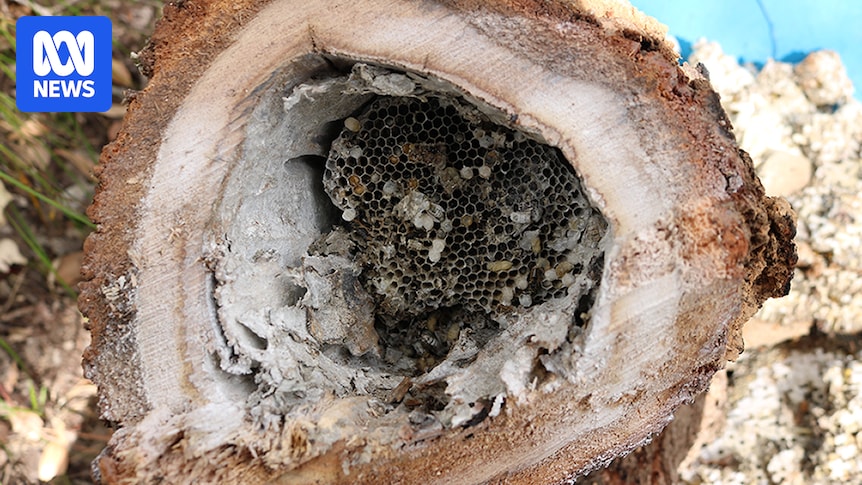
An enormous 40-litre nest of European wasps — one of the worst invasive wasp species in the world — has been discovered in the regional WA city of Albany.
Sixteen times the average 2.5-litre size, Albany locals were horrified to discover the nest in nearby bushland after spotting the insects in their suburban backyards.
WA is the only state to not have an established population of the European wasp.
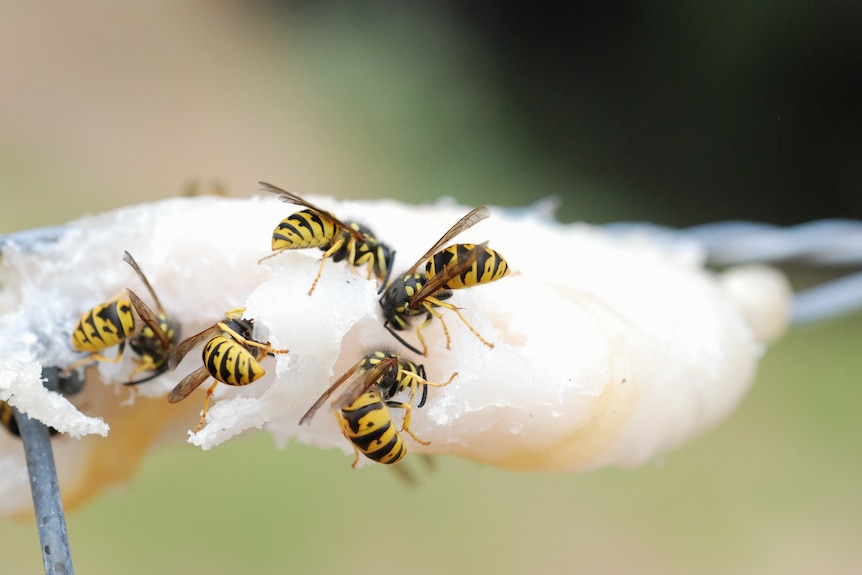
European wasps can be distinguished from the native paper wasp by their black antenna. (Supplied: Department of Primary Industries and Regional Development)
Albany city councillor and member of local environmental group Lynn MacLaren said she was alerted to the wasp nest when a neighbour came to her.
“I got a knock on the door because one of the neighbours had seen them and recognised them and alerted the Department of Primary Industry and Regional Development (DPIRD), so they were in the neighbourhood letting us know that they were on the lookout for the nest,” she said.
“We got some leaflets from DPIRD and alerted the neighbours and all the people that go to the bush carer group and we were all on the hunt for these little wasps that dig into the soil.”
The hunt begins
With the help of two other reports from the public, DPIRD was able to triangulate the search area where they used baits to further narrow down the location.
The “huge” nest — about the size of a bar fridge — was eventually found at a small granite outcrop nestled in the suburb of Mira Mar.
“It was pretty scary actually,” Ms MacLaren told the ABC.
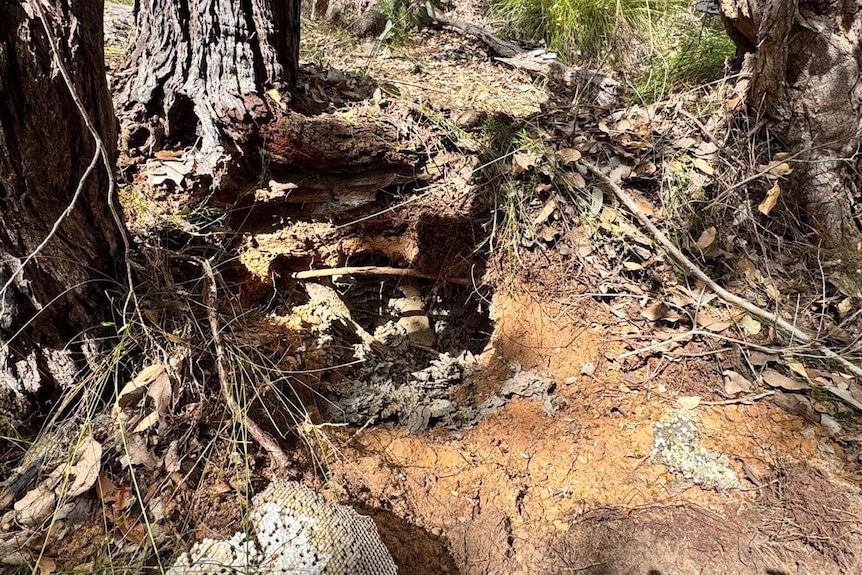
The nest was so large that, once removed, it killed a tree. (Supplied: Department of Primary Industries and Regional Development)
“Once we saw it, it was huge and underneath these two trees and inside one tree.
“We had to kill it [the tree] to remove the nest material, but it had done quite a bit of damage and would have done damage if anybody had disturbed them because, as you will find out, they’re pretty nasty stingers.”
DPIRD was able to quickly remove and destroy the nest, including its three queens.
The ‘perfect environment’
The European wasp, or Vaspula germanica, is now common in most parts of Australia, except WA.
“The eastern states’ counterparts have basically stopped trying to eradicate them because they are fully established there, so every year hitchhikers come to us,” DPIRD European wasp project lead Kris Armstrong told the ABC.
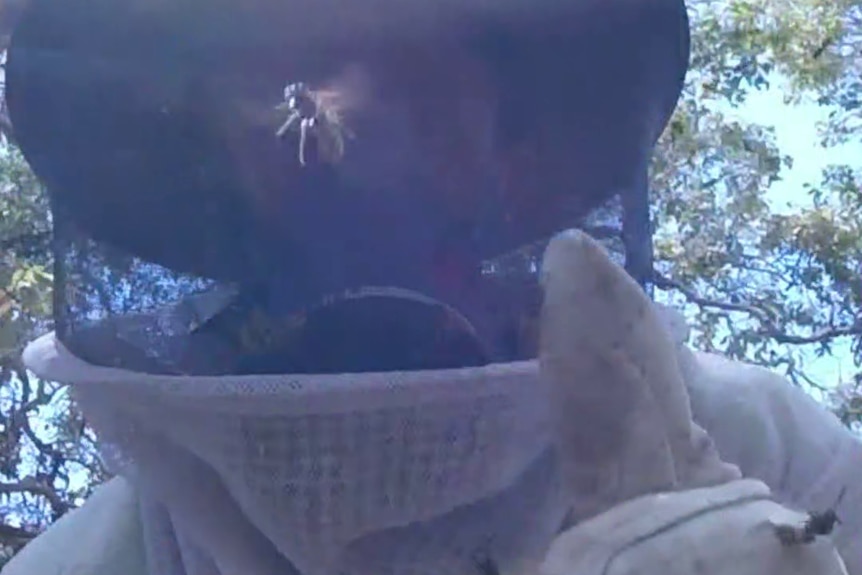
A DPIRD officer gives a thumbs up while cleaning out the nest. (Supplied: DPIRD)
“It all depends on how bad the season is in the eastern states and how many queens are transported across on freight that get to WA.”
Mr Armstrong said the state’s south coast offered the “perfect environment” for the species, with the Mediterranean climate allowing them to thrive year-round, unlike their Northern Hemisphere counterparts that die off in the winter.
Since 2023, DPIRD has removed 33 nests from the Albany area.
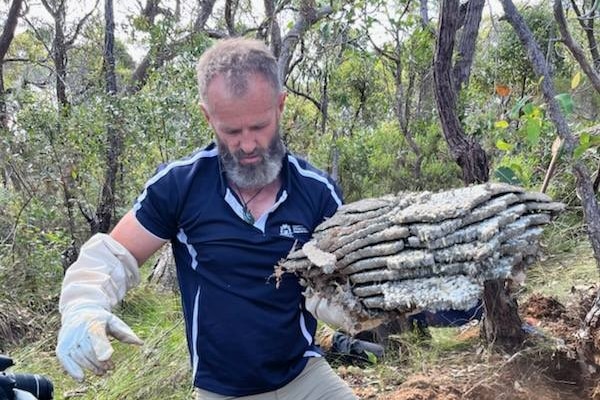
A DPIRD officer removes a section of the nest. (Supplied: Lynn MacLaren)
If you see something, say something
Mr Armstong said DPIRD had thousands of surveillance traps throughout WA, but reports from members of the public were vital in the eradication effort.
“They see things where traps aren’t, so any reports help us enormously to keep them out,” he said.
Not to be confused with paper wasps, which are distinguished by their black and yellow antenna, European wasps live in holes and are attracted to protein-rich and sugary foods.
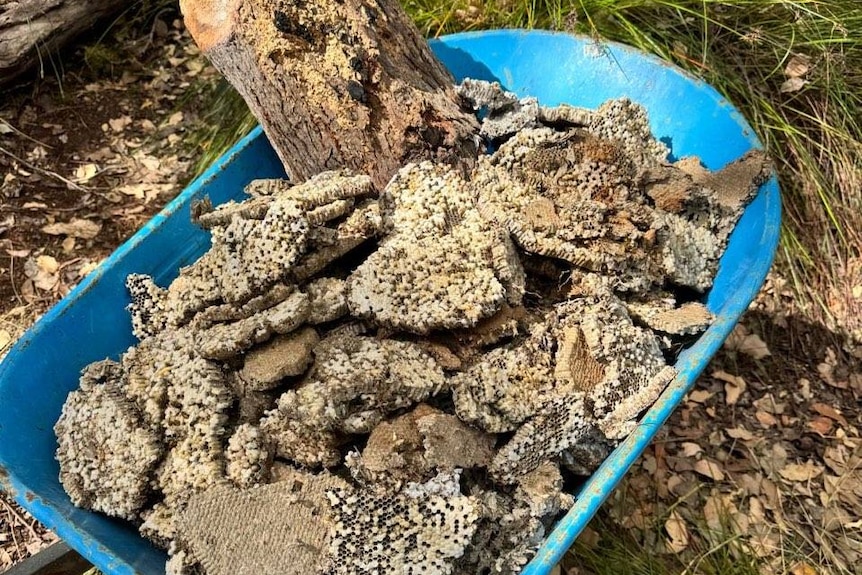
The extracted nest was large enough to fill a wheelbarrow. (Supplied: Lynn MacLaren)
“Paper wasps are not interested in those sorts of things,” Mr Armstrong said.
“So that’s one of the biggest giveaways, and if you see wasps eating proteins or your own food, call us please.”
Mr Armstrong said if a member of the public believed they had seen a European wasp, even if they were not sure, they should still report it.
“I would rather 1,000 false alarms that we can investigate than someone not be bothered to report one that actually is a European wasp and then it gets out of control,” he said.
Wasp sightings can be reported at DPIRD’s Pest and Disease Information Service on 08 9368 3080 or by email to padis@dpird.wa.gov.au.