
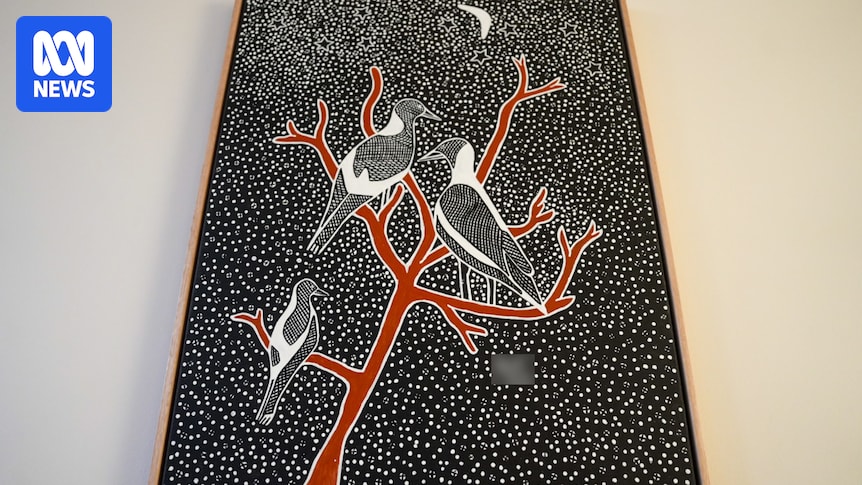
Sydney’s Long Bay Correctional Complex is far away from home for Aboriginal man John, but while he serves out his sentence, art has been a source of comfort and connection.
The incarcerated 75-year-old, whose name has been changed for privacy reasons, said he missed seeing the goannas, kangaroos, emus and birds.
But with each stroke or dot placement on a canvas, painting brings him closer to the familiar sights, sounds and feelings of his country.
“It relaxes me thinking about my hometown and my country where I come from,” he said.
“It does take you back to being home.”Inmate artists redecorate Sydney courthouse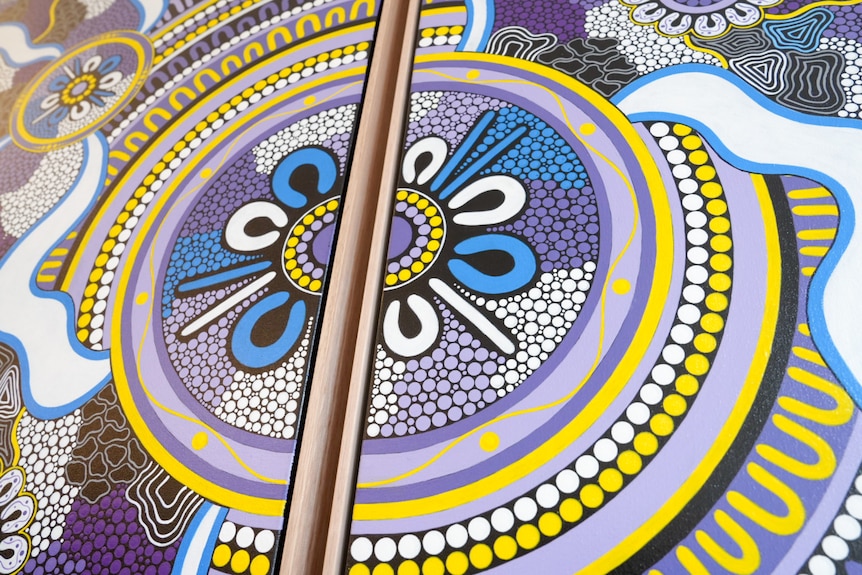
Painting has brought Aboriginal people together at Long Bay Correctional Facility. (ABC News: Patrick Thomas)
Most of John’s artwork is inspired by nature, with each piece generally taking him two weeks to make.
“I do the emu and kangaroo mostly and sometimes I get into the birds like the brolgas and the magpies and the koalas, the cockatoos,” he said.
Painting, which he learnt how to do from other artists before being imprisoned, helps him with feelings of isolation.
“A couple of Aboriginal guys want to get into the artwork but they haven’t got the tools to do it with just yet — the paint, the canvas … I help them out in some ways,” he said.
“We talk about what we’re going to do and what sort of colours they might have to use on the art, things like that.
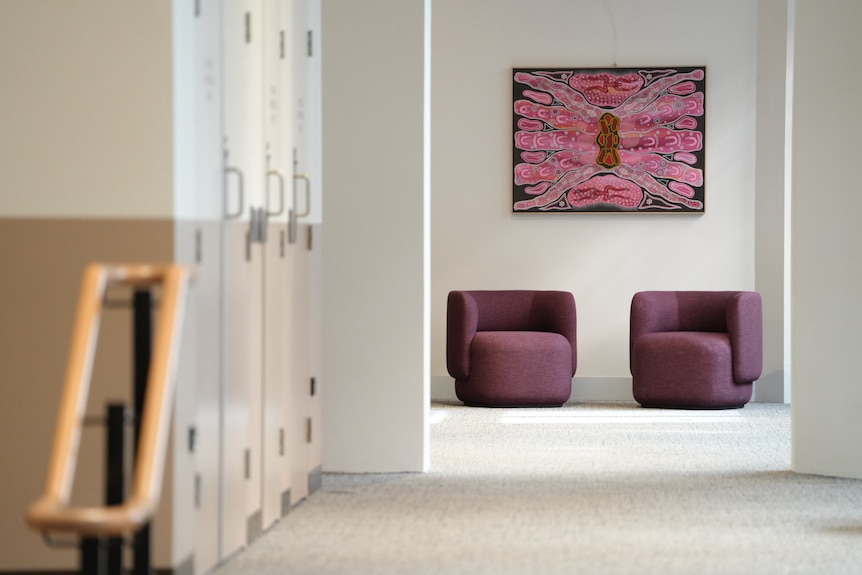
The paintings feature a mix of traditional ochre colours and some brighter ones. (ABC News: Patrick Thomas)
Now artworks by John and other Aboriginal inmates have been purchased by the Department of Communities and Justice for $12,000 via the Boom Gate Gallery.
The gallery is part of Long Bay Correctional Complex and offers the public the opportunity to purchase art made by inmates.
According to the NSW government website, prices are set by the inmates in collaboration with the gallery staff, with 75 per cent of the proceeds going back to the artist and 25 per cent going towards gallery running costs.
Inmates can access this money while in prison, send it to family or use it to buy their next canvas.
Sixteen artworks in total were purchased by the department and displayed at Sydney’s Downing Centre courthouse complex as part of its recent flood-related renovations.
“They sell my work for me and give me something to look forward to when I get out,” John said.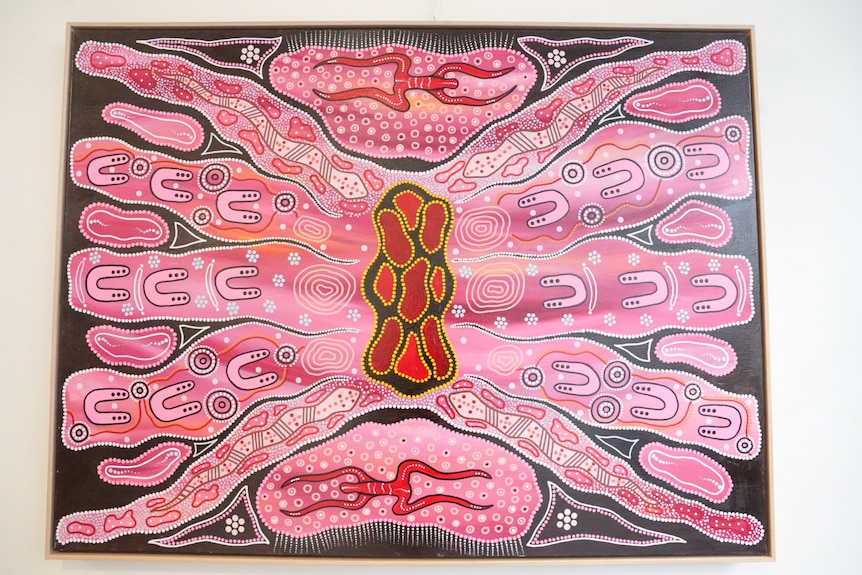
This artwork depicts Aboriginal people around a fire. (ABC News: Patrick Thomas)
Painting ‘not a privilege’
Long Bay Correctional Complex psychologist and Wiradjuri man Craig Raymond said painting can “build that bridge between family or mob back home”.
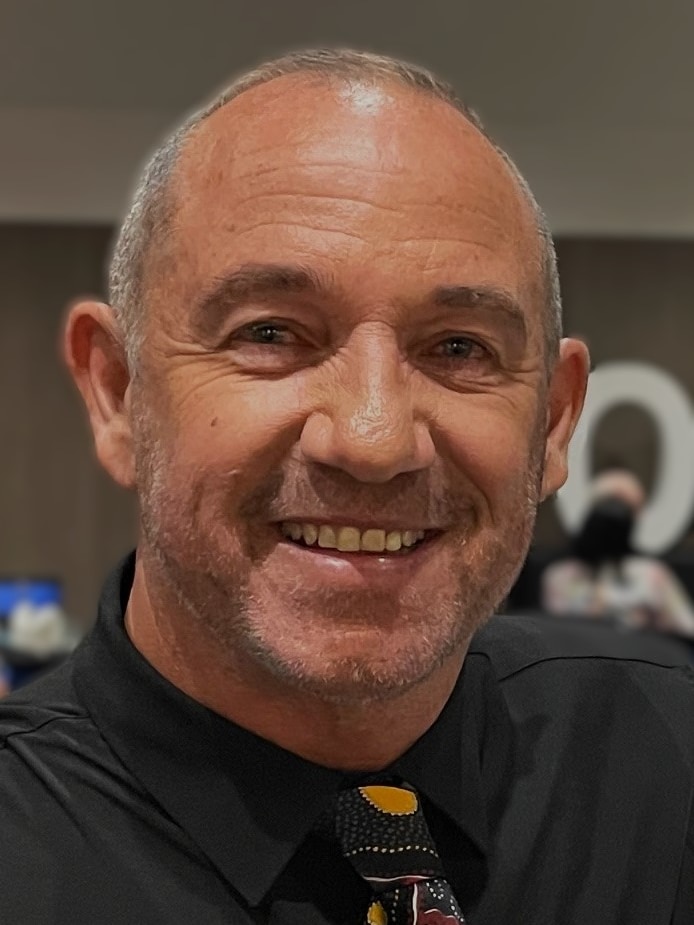
Mr Raymond said painting can improve wellbeing. (Supplied: Corrective Services NSW)
“Indigenous people tend to be more collective over individualistic in nature, so for an Indigenous person who is away from their mob and their community, it can impact them more than what it does for non-Indigenous people,” he said.
There is a holistic framework called the Aboriginal and Torres Strait Islander Social and Emotional Wellbeing model, which is sometimes used in correctional settings, that emphasises important aspects of Indigenous identity.
“It’s a connection to body, mind and emotions, family and kinship, community, culture, country, and spirit and ancestries,” Mr Raymond said.
He said allowing Indigenous inmates to paint helps to fulfil these needs.
“I think people sometimes think that these offerings are a privilege, but my view is that Aboriginal artwork in prison is not a privilege, it’s a prevention,” he said.
“It reduces harm, it calms people down, it gives them that link to family and to culture, and it also helps benefit them after release.
“It gives them hope that they can, perhaps, continue this once they are released and they become an artist.”
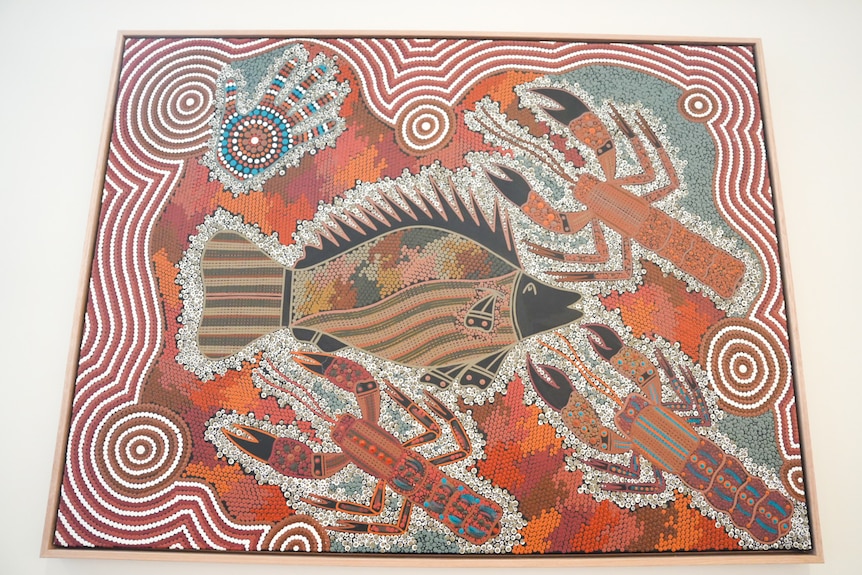
The 16 artworks were purchased by the Department of Communities and Justice for $12,000. (ABC News: Patrick Thomas)
Closing the gap
Mr Raymond said Indigenous inmates creating artwork “plays a part in the closing the gap initiatives”.
“If justice and the community are really serious about closing the gap, then culture, as in artwork, must sit basically at the centre of that rehabilitation,” he said.
“Seeing artwork created in custody that’s been purchased with proceeds going to the artist, and then more importantly displayed in institutions such as the Downing Centre, Court and Admiralty House, it sends a really powerful message to mob.
“Basically what it tells them is all those historical factors of being excluded, and racism and discrimination, and all the negative effects of colonisation, they are changing in 2026.”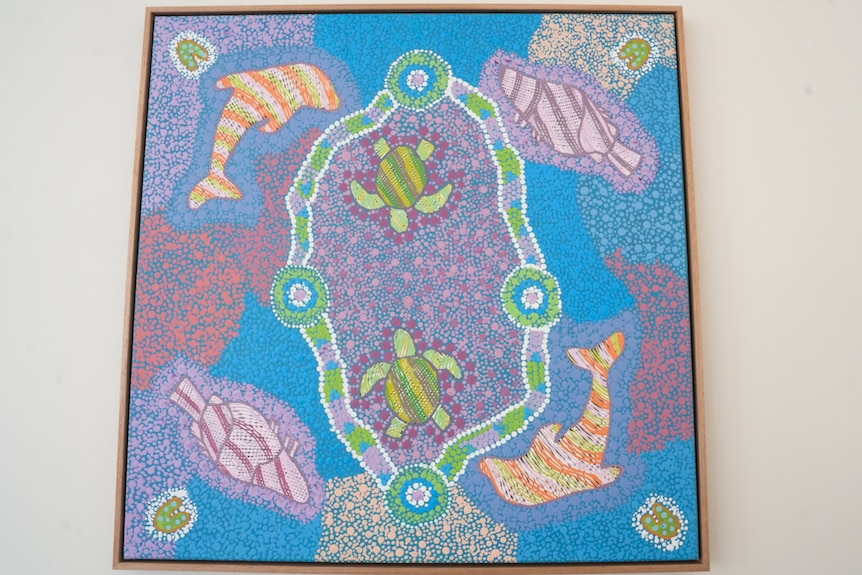
Multiple artworks feature animals. (ABC News: Patrick Thomas)
He said it reflects an “emerging commitment to recognition and respect” that can can hopefully “lead to change”.
“When we’re only 3.8 per cent of the population, there’s obviously something wrong when we’re 30 to 40 per cent of the prison population,” Mr Raymond said.
Ultimately for John, it makes him feel “really proud to know that people do appreciate my work”.