
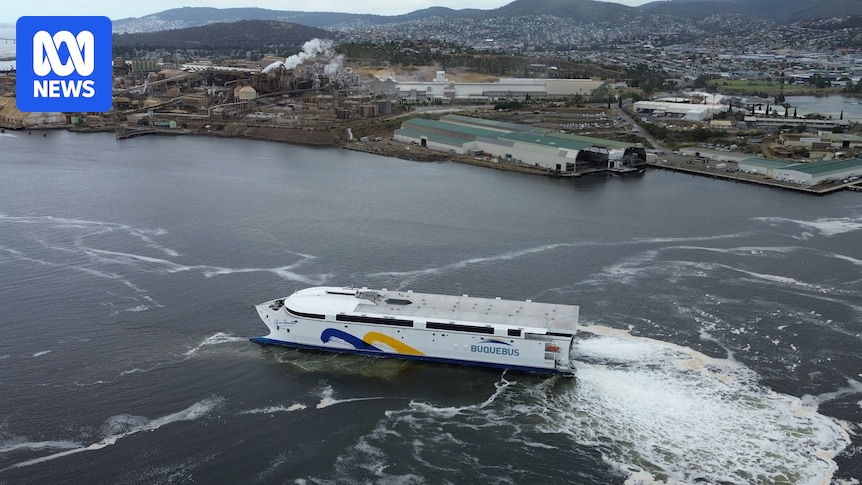
When the world’s largest battery electric vessel is moved from the Tasmanian shipyard where it was built to its new home in South America, it will need the help of a “gargantuan” heavy lift ship.
China Zorrilla, built by Hobart’s Incat, started sea trials on the River Derwent in Hobart on Friday, making history as the first electric ship of its size and capacity to move on its own.
The 130-metre ferry with a capacity for 2,100 passengers and 225 vehicles, is powered by more than 5,000 batteries, weighing in around 260 tonnes.
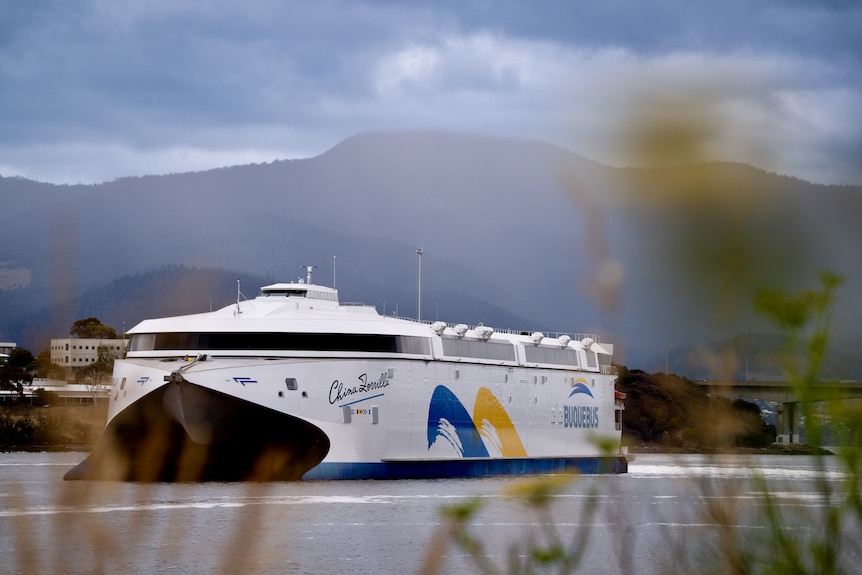
The harbour trials form part of a testing and commissioning program that will continue in the lead-up to the vessel’s delivery to South America. (ABC News: Mitchell Woolnough)
A single charge carries only enough energy for the ferry to run for 90 minutes.
It will be used by Buquebus, a South American ferry operator that connects the Uruguayan capital Montevideo and the Argentinian capital Buenos Aires, which are on opposite sides of the Rio de la Plata (River Plate).
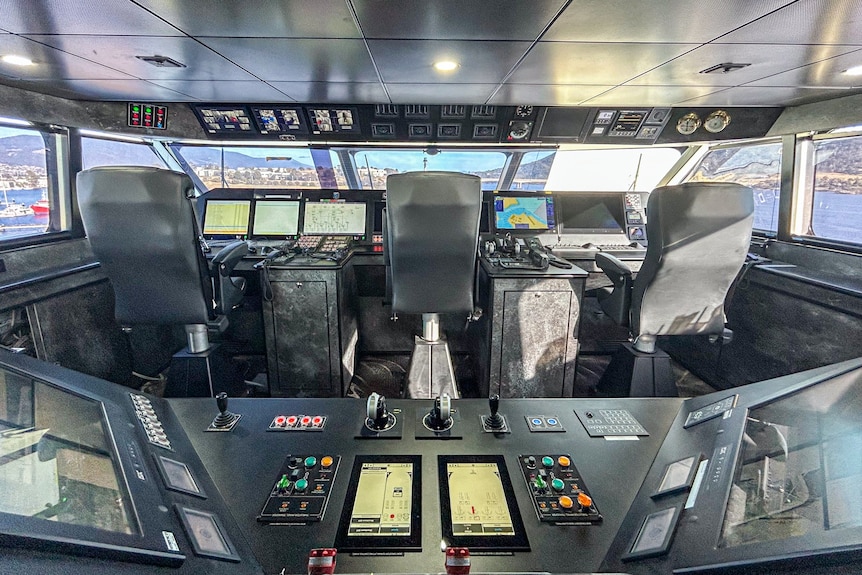
The view from inside the China Zorrilla wheelhouse. (Supplied: Incat Tasmania)
World’s largest ‘100 per cent electric’ ship launched
The ship’s home port will be Montevideo, and it will travel the 55 kilometres (30 nautical miles) between the two cities three times a day.
The ferry trip will take just over an hour, which is within the ship’s battery range.
But unlike the diesel ferries Incat has built for South America, this one will not be able to be moved such a great distance on its own.
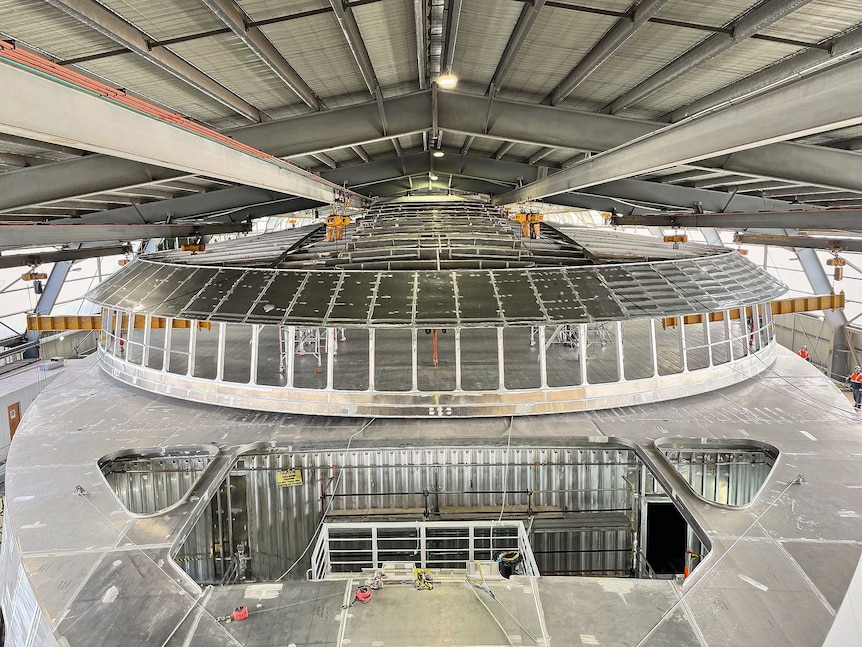
Hull 096 pictured during the construction phase. (Supplied: Incat)
So how will it get there?
A heavy lift ship, which Incat’s public relations and corporate affairs manager, Tom Cooper, described as “gargantuan in size” will be brought in to move Hull 096.
There are only a few heavy lift ships operating in the world. One is expected to arrive in Hobart in either February or March, depending on when Hull 096’s sea trials are finished.
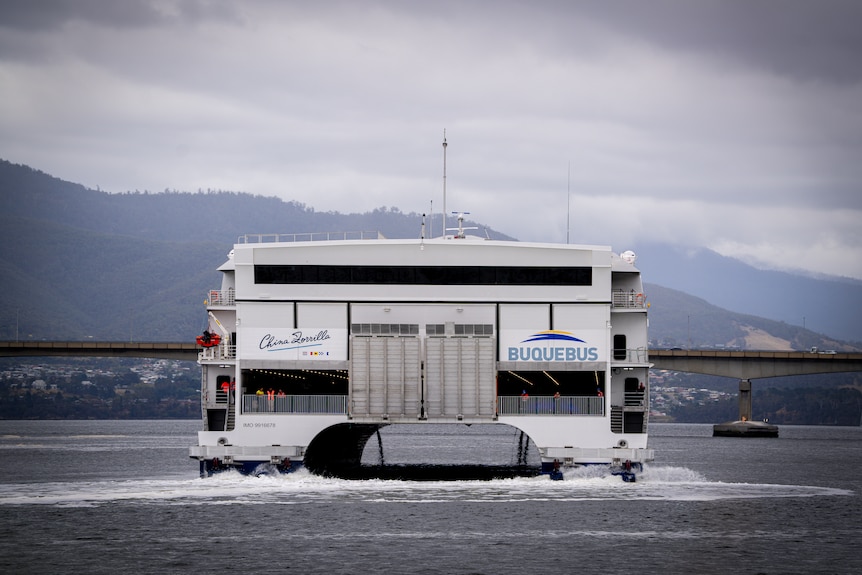
The trials involve testing propulsion, manoeuvrability, control systems, and onboard operational performance in “real-world conditions”, Incat says. (ABC News: Mitchell Woolnough)
Mr Cooper said the use of the heavy lift ship on the River Derwent would be a “carefully managed process” with exclusion zones set up.
“It’ll all be done through the maritime authorities, MAST [Marine and Safety Tasmania], AMSA [Australian Maritime Safety Authority], all the port authorities will be actively involved as well,” he said.
“Incat will work with them so there won’t be any disruption to any users of the River Derwent.
“But there will be exclusion zones for the couple of days that the heavy lift ship is here being that it’s such a large ship and we don’t want to jeopardise any other marine users’ safety while that process is taking place.”
Hull 096’s journey to South America will take about 28 days.
Ferry performance being tested
Hull 096 will be named China Zorrilla, after a Uruguayan film and theatre star who died in 2014.
But before it starts plying the waters of the Rio de la Plata, the ship will be put to the test some more on the River Derwent.
On Friday, the ferry performed a series of manoeuvres to test how it responded on the water.
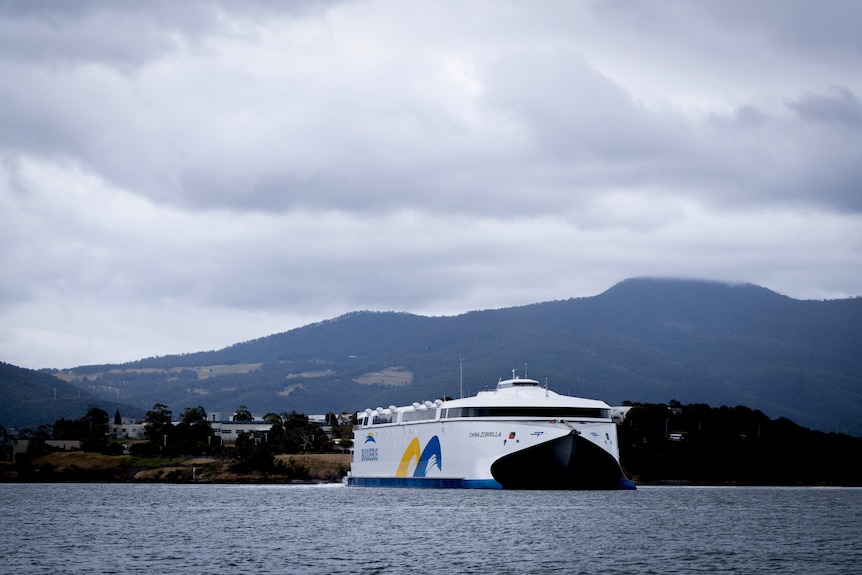
Incat says the ship will be capable of carrying 2,100 passengers and more than 220 vehicles. (ABC News: Mitchell Woolnough)
More sea trials are planned over the coming weeks to test the ferry’s onboard operational performance, control systems, propulsion, and manoeuvrability.
It is estimated the ferry will reach upwards of 25 knots during speed trials.
The ferry has been more than two years in the making, and Mr Cooper said Incat workers stepped out of their sheds on Friday morning to watch it move.
“There was a big sigh of relief when the ship started moving away from the wharf, but also a massive sense of pride here,” Mr Cooper said.
“This is what the world — and the maritime industry globally — has been waiting for: to see this ship finally moving after more than two years of construction.
“We couldn’t be happier.”