
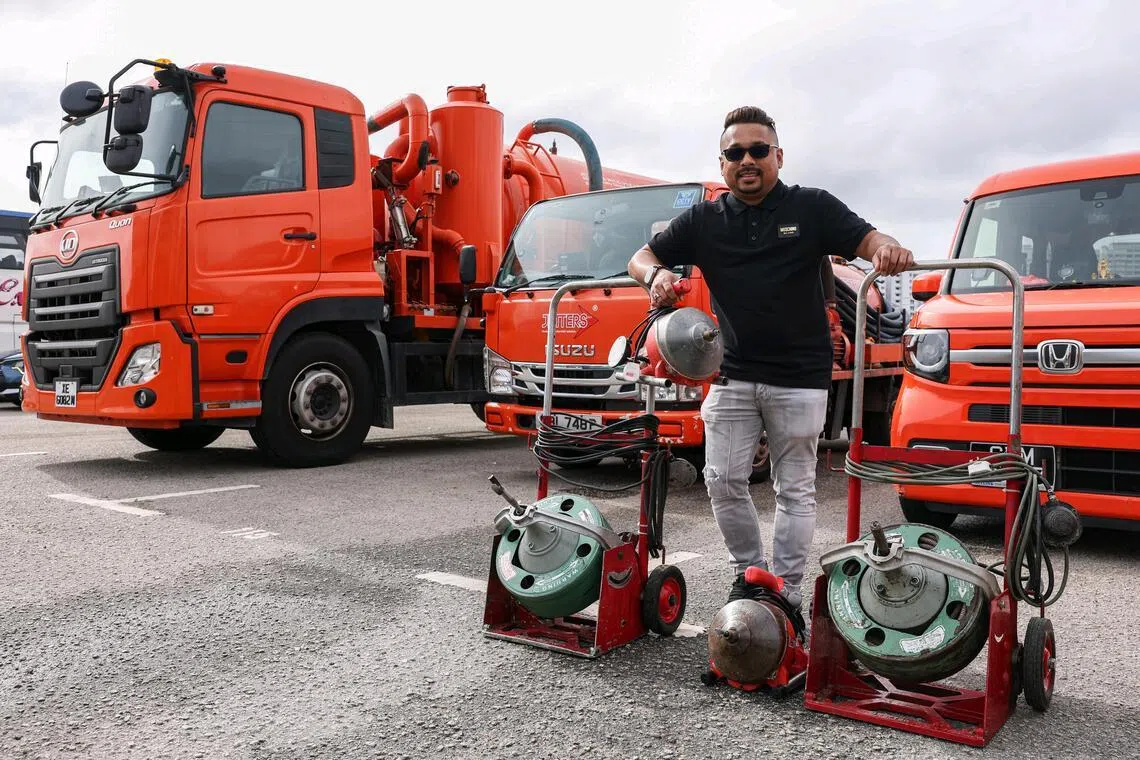
SINGAPORE – When Mr Shaik Nifael Nazeemuddin dropped out of pre-university because “I didn’t want to study any more”, he did not imagine that his first job would involve cleaning grease traps – devices that separate grease from waste water.
The teen, who studied in the express stream at Nan Chiau High School, failed his O-level mathematics and combined science subjects in 2005. He retook them a year later and got into Millennia Institute in 2007, but after his first year-end examinations, he was ready to quit.
His father, then a general manager at a waste management company, was furious at his son’s decision. In a bid to convince him of the importance of school, he insisted that Mr Shaik earn his keep.
So, the then 17-year-old turned up at dad’s office in Ubi for an interview – he took the bus there from his home in Hougang, while his father drove to work.
“He told me: ‘You have no education and no experience. You should be thankful I’m employing you,’” Mr Shaik, now 36, recalls. He would be paid $23 a day as a technician and could earn more if he did overtime work.
The first weeks in December 2007 were “very bad” as he struggled to come to terms with his new reality, he says.
“My friends were going to school and playing Counter-Strike. I was cleaning grease traps. It smelled so bad. I thought: ‘What am I doing with my life?’” the chatty Mr Shaik recalls.
“Then I told myself: I already have one leg in. Make it or break it. That’s when I decided to give everything to it.”
He worked long hours to earn more, even sleeping next to grease traps when there was a three-hour buffer between jobs in the wee hours of the night.
Later, he joined the high-pressure water jet team to learn more technical skills. He discovered that being able to read and write English set him apart from the older workers, as he could communicate with clients easily, an asset his boss appreciated.
By the time he left the company in late 2008 to do his national service, he was pulling in more than $3,000 a month as a senior technical specialist.
After completing NS in 2010, he joined a specialist cleaning company for a year as an operations executive. His duties mainly involved using high-pressure jets to remove barnacles from vessels and equipment on Jurong Island.
Fourteen months later, he decided to heed his father’s advice and embarked on a global diploma in marketing and marketing management at a private educational institution here. But he gave it up when he failed an important module.
He was unsure of his next steps at age 22, but his father, who by then was working in another waste management firm, referred him to his company. It needed a manager to oversee operations, planning and sales for its 60-member team.
He earned less – $1,900 – when he started in 2011, but picked up valuable skills such as negotiating a deal with a foodcourt operator to handle all 20 branches instead of just one.
In two years, the then 24-year-old more than doubled his monthly salary and earned himself a company car, a red Mercedes-Benz C180, he says.
Mr Shaik’s interest in entrepreneurship was sparked during his secondary school days. He recalls seeing schoolmates arriving in chauffeur-driven Mercedes-Benzes and Bentleys, only to find out that their businessman-fathers could not read or write English.
In contrast, his highly-educated teachers drove more modest cars.
“I told myself: ‘The only way I’m going to make money is by doing business,’” says the former school sprinter, debater and National Police Cadet Corps member.
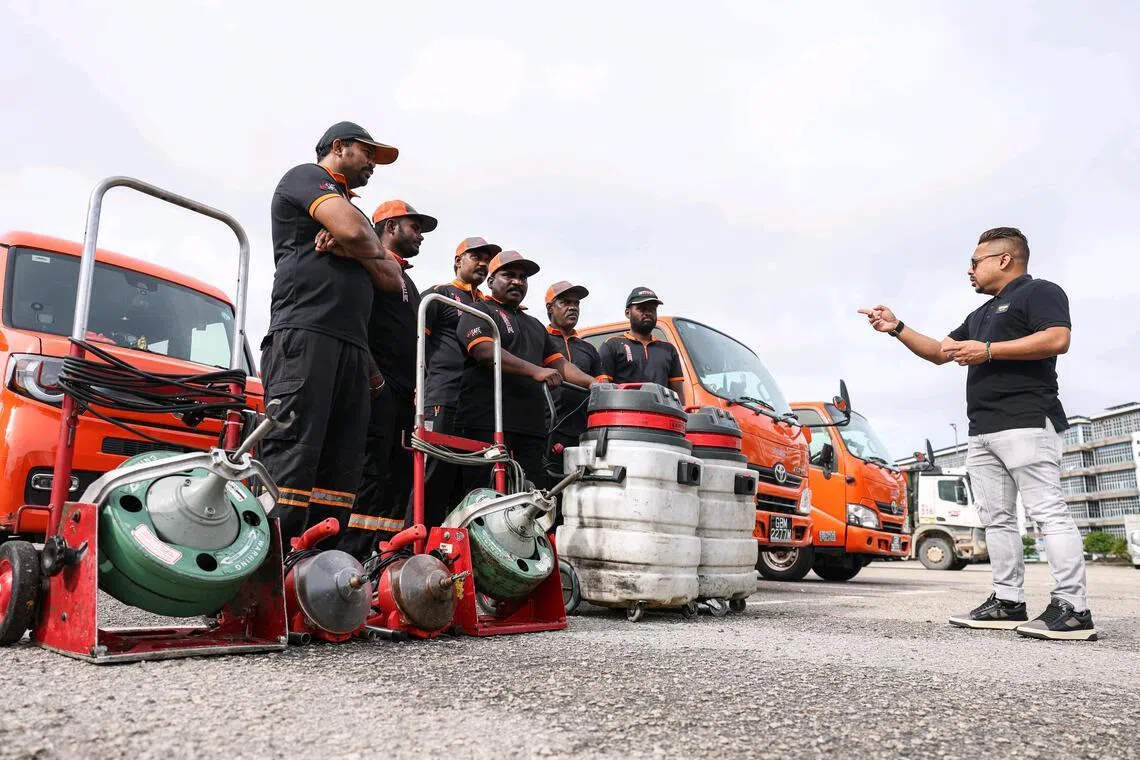
Mr Shaik Nifael Nazeemuddin (right) with some of his team from Jetters Incz.
ST PHOTO: BRIAN TEO
Even though Nan Chiau was not a Special Assistance Plan school then, he faced a huge culture shock adapting to its focus on Chinese language and culture as a minority student. That included after-school activities in Chinese calligraphy and Chinese opera.
That experience, together with the fact that he grew up in the Teochew heartland of Hougang, expanded his world view and gave him skills that would one day prove pivotal.
In hindsight, he says: “I went to the right school. My parents took me out of my comfort zone and my survival instincts kicked in. I started to look at life differently.”
Still, his foray into entrepreneurship at age 26 came quite by accident in 2015.
His father was forced out of the company they worked at after a disagreement with its management, and Mr Shaik quit in protest.
Determined to strike out on his own, he approached Mr Kelvin Neo, an acquaintance in his 50s who worked in the same building. Mr Neo, who runs landscape company Ho Eng Huat Construction, had once asked if he was ready to be his own boss. Mr Neo spoke no English and Mr Shaik spoke very little Hokkien, but they had a good rapport.
To his surprise, the older man immediately agreed to invest $200,000 into Mr Shaik’s fledgling waste management company, Jetters Incz. He also introduced Mr Shaik to a corporate secretarial service to help him set up his new venture. Mr Neo never asked for the money back.
Mr Shaik says of the life-changing incident: “If I am shy, I will never learn and will die stupid.”
Starting a business proved to be harder than he realised, as he was juggling cash-flow issues while raising two young children with his wife Dania Nur Kay’la Mohd Taib, 36, who helped him with sales. She is now Jetters’ chief commercial officer and they have three kids aged eight to 16.
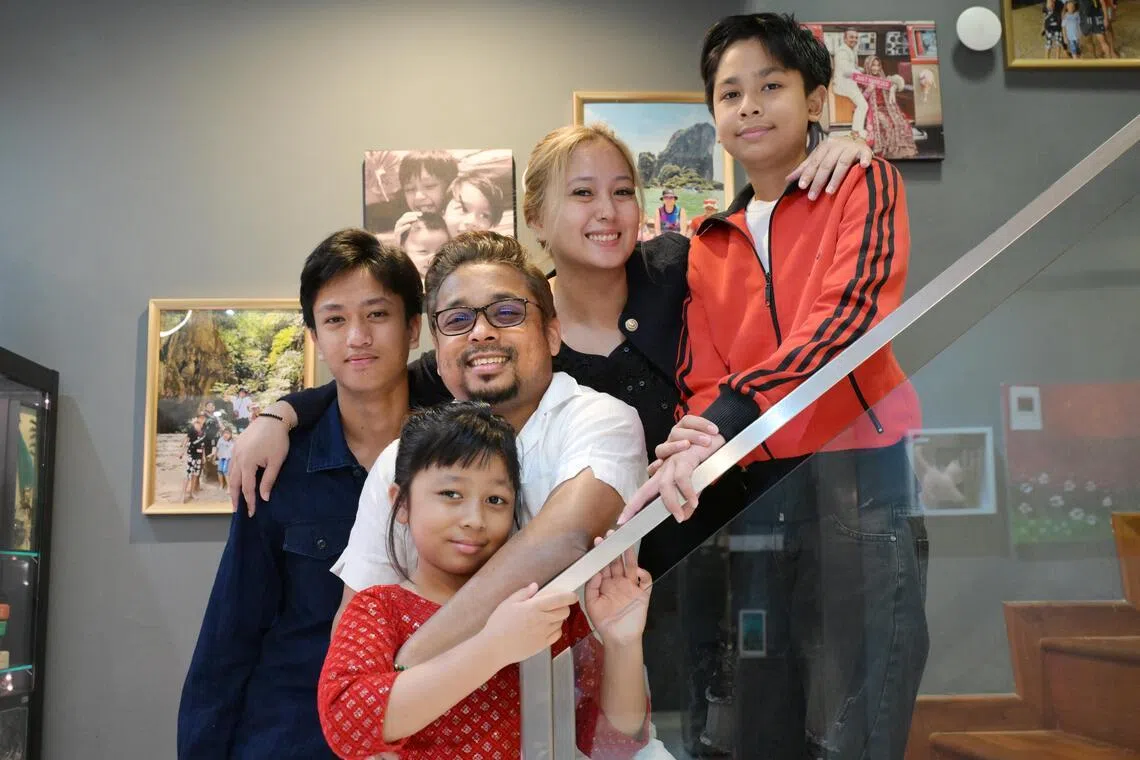
Mr Shaik with his wife Dania Nur Kay’la (second from right) and their children, (from left) Shaik Elfy, Davina Mikaela and Shaik Eshan.
ST PHOTO: NG SOR LUAN
“It wasn’t easy, but I told him: ‘Don’t give up. Jetters is our baby, don’t ever let it go,’” says Ms Dania.
Their hard work paid off and Jetters Incz pulled in $600,000 in revenue in its first year, thanks in part to big clients from his former company who signed up with him. Ten years on, its revenue is expected to hit the upper end of $3 million for 2025.
In January 2025, it was named one of Singapore’s 100 fastest growing firms in a ranking by The Straits Times and Germany-based global research firm Statista. The list was based on revenue growth from 2020 to 2023.
Jetters grew tremendously during the Covid-19 pandemic, thanks to Mr Shaik’s foresight. He took his foreign workers out of dormitories just before the lockdown and was therefore able to take on more jobs.
He also bought his first office property in Admiralty and subsequently sold it for a profit when he moved operations closer to Hougang, where he lives in an executive maisonette.
Mr Shaik says Jetters was one of the first in the industry to go digital. He plans to leverage on the Internet of Things to grow it into a technology company and is looking for a partner.
While waste management may not have been his first choice of career at 17, Mr Shaik believes it is nothing to be ashamed of.
“When people meet me at gala events, I say: ‘I clean longkangs.’ They tell me, ‘Don’t say that’, but how is that insulting?” he says.
“I’ve been overlooked, stepped upon, forgotten. It’s normal. So, I never look at the glass as half empty. I like to see it as half full.”
Studying is not his forte, but Mr Shaik says he has had a longer career runway than his peers because of it and his mental fortitude has helped him stay the course.
“Life has been my best teacher.”