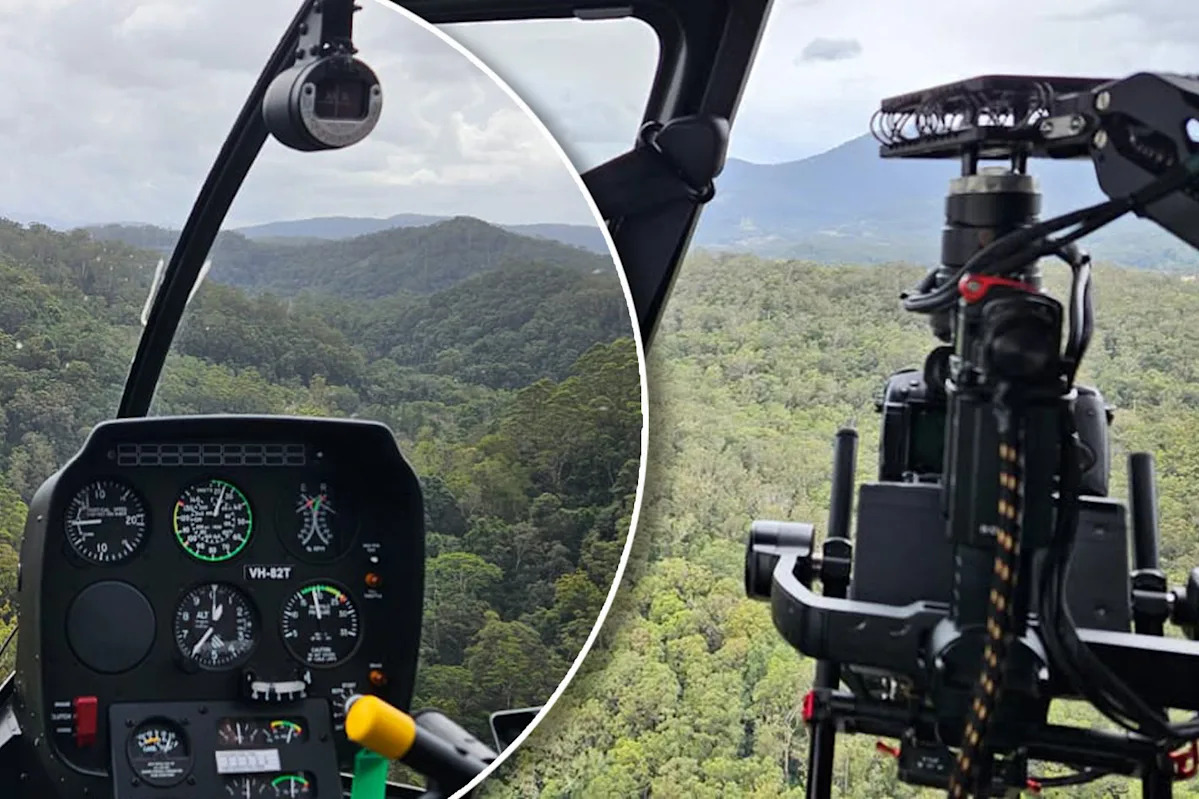
An Aussie council is going to extreme lengths to prevent an emerging feral threat from taking hold in its region. Air crews took to the sky this month to monitor for invasive deer, a destructive pest that costs Australia $91 million a year.
The feral animals are present “on all our borders and moving in”, according to Tweed Shire Council, the northernmost council area in NSW, which is attempting to stop them at all costs.
Deer Project Officer Frances Smith-Wright told Yahoo News that preventing the spread of deer into the region is a high priority, arguing it’s cheaper to keep them out than to manage established populations.
“They are definitely on all our borders and moving in,” she told Yahoo News, adding council and land owners are on “high alert”.
While deer have established populations in South Australia, Victoria, NSW, Queensland and Tasmania, there is currently no resident population in the northern rivers region of NSW.
“We’re fully aware of the damage they can do,” she said, adding, “They are a pest, and we have to control them”.
Just this week, Rachel Clarke from the tiny town of Burra in southern NSW warned the deer population in the area had skyrocketed in recent years, with a feral herd taking over her rural property.
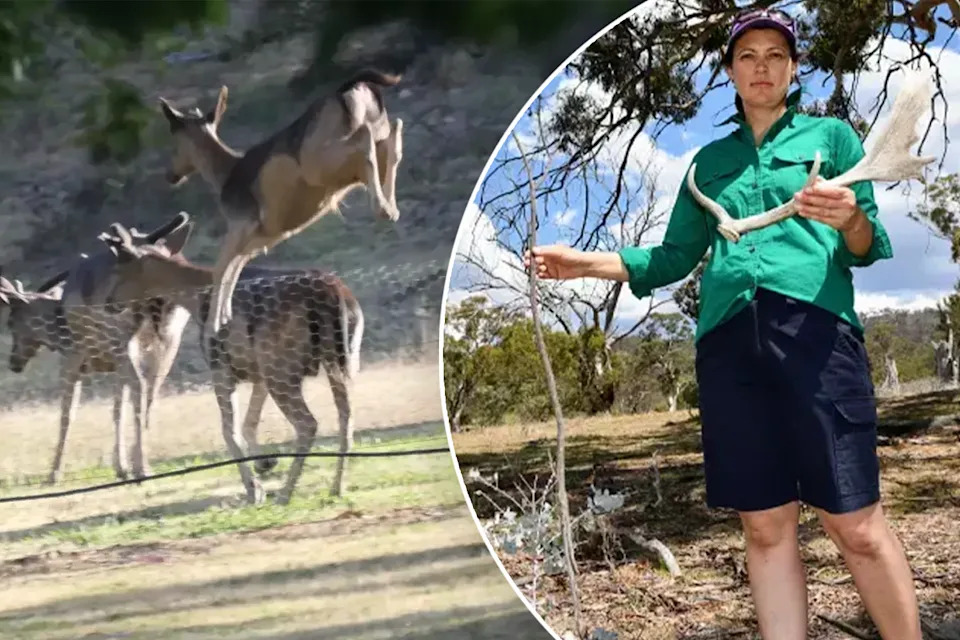
Rachel Clarke is warning that deer are becoming more prolific and bold across NSW. Source: The Land.
Farmers on the ‘front line’ of invasive pest
Smith-Wright said “farmers are on the front line” of tackling deer as the pests move across the country.
In 2021, feral deer were responsible for costing the Australian economy approximately $91.3 million, which included $69.1 million in agricultural losses.
“We’ve done workshops in the rural areas and made them aware of the crop damage that can be done, fencing damage, spread of ticks,” Smith-Wright said.
What’s more, deer can “completely annihilate” council efforts to restore native vegetation.
Another issue the animals pose is road safety, with concerns that deer, which can weigh up to 300 kg, can cause significant damage if involved in a collision.
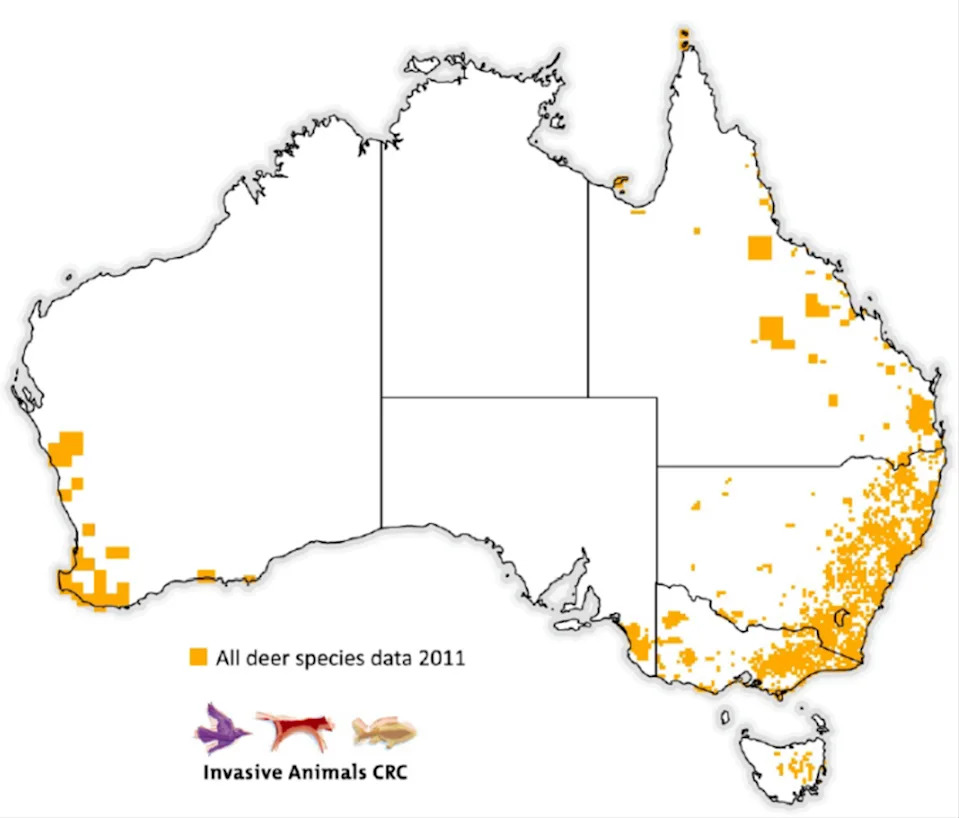
A map of deer spread across Australia in 2011. Source: Invasive Species Council
Helicopter crew covers 10,000 hectares to spot invasive species
This month, helicopter and drone surveys covering 10,000 hectares of land in the Tweed region revealed not a single deer in the area, proving that preventive measures are proving successful.
“We covered national parks, council land, and some private land,” she said.
“We’re really happy the way the project has gone.”
Educating the public is paramount to preventing their spread.
“The main issue is to keep public awareness and keep people talking about it and just report what they see,” she said.
Council will use eDNA and cameras to monitor for their presence, and if found, professional pest management services will be there to control the deer.
Why were deer introduced to Australia?
Deer were first brought to Australia in the early 1800s by European settlers.
They were mainly imported for recreational hunting.
Red deer were introduced to Tasmania in 1827, followed by several other species over the years, including fallow, sambar, chital and muntjac.
The goal was to establish game species for hunting and to introduce animals that mirrored those of the settlers’ homelands, creating a more familiar European landscape.
However, Australia’s delicate ecosystems were never designed to accommodate them.
Because they have no natural predators here, deer numbers have exploded across the entire country, with estimates now suggesting there are millions.
Speaking to Yahoo News Australia, the Centre for Invasive Species Solutions CEO, Shauna Chadlowe, previously encouraged all residents to photograph and report deer when they see them.
“Reporting by the public helps us know where the feral deer are, particularly in new areas, as well as areas where deer are spreading,” she said.
“Knowing where they are helps land management agencies and communities better prepare for early action to keep numbers and impacts of deer low and manageable, rather than waiting for them to get out of hand.”
Those who spot deer should report them using the feral scan app.
Do you have a story tip? Email: newsroomau@yahoonews.com.
You can also follow us on Facebook, Instagram, TikTok, Twitter and YouTube.