
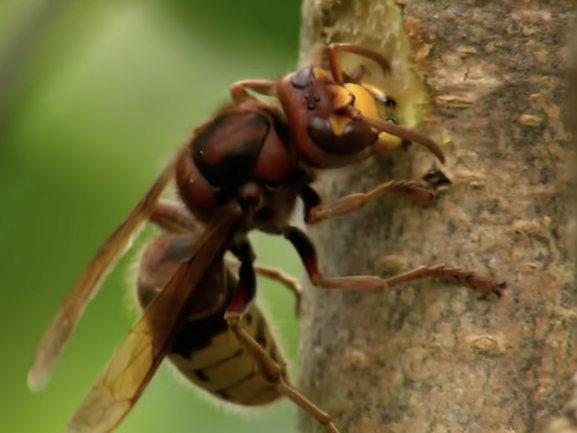
The insects are disappearing — and with them the ecosystems that sustain life. Dr Simon Pockley reports.
APART FROM A SHORT period of record-breaking drought in 2014, following a bush fire that burnt out my bush block and surrounding Warrumbungle National Park, the seasons have been kind. After more than 50 years of observing the succession of plants, animals, and insects, I have developed an eye and ear for minute changes.
To get to the Warrumbungles, I drive 1,000km from Melbourne up the Newell Highway west of the Great Dividing Range. It can feel like driving through Australia Felix – formerly grazing country, now mainly wheat and canola.
This spring, from August to December, my block was covered with yellow copper wire daisies (Podolepsis jaceodes), with thousands of (introduced) orange Wanderer Butterflies – but something was missing.
When I examined the flower-heads, there were no bees. There were no beetles, no hoppers, no hover flies, no cicadas, no mozzies, no dragonflies, no stick insects or orb spiders. At night, it is usually impossible to read because of moths. But this spring, even with all the doors and windows open, there were no moths at all.
So what’s the problem — isn’t it nice to be insect-free?
The problem is that without insects, there is, or will be, a cascading collapse of our barely understood ecosystems — plants not pollinated fail to reproduce; soils become barren; birds, reptiles and other animals die because insects are a critical food source. The more I looked, the less I saw and the more this absence became alarming.
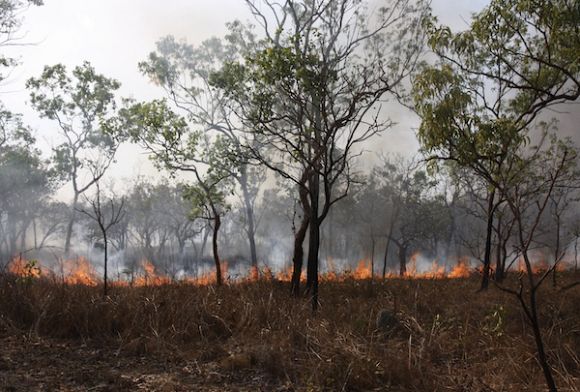
Remember the summer abundance of Christmas beetles and Bogong moths? And what about the splatometrics of insects on the windscreen — now barely a smudge?
I wrote to one of the dwindling number of entomologists in Australia. I wanted to confirm that my observation of this broader absence was not just fading eyesight or some local aberration. If the insects were vanishing, surely this was a National emergency.
She wrote back:
‘Sadly, this is happening all around the world, and the general assumption is that the nearly unlimited use of insecticides is the main culprit. But as with climate change, the world seems to simply ignore this. It will be too late when there are no bees anymore to pollinate our crops… So, not a national but a global emergency!’
In July 2025, the Environment Institute of Australia and New Zealand (EIANZ) held an Insects in Crisis Symposium in Canberra, followed in August by a Communiqué citing research by Professor John Woinarski that catastrophic insect declines in Australia were so dramatic that almost 150 species were estimated to become extinct in 2024.
This follows a pledge in 2022 by Environment Minister Tanya Plibersek to prevent all new extinctions. It’s terra nullius for insects, as they are not usually included in environmental impact assessments.
Another critical dimension of the crisis of insect extinction is the decline in entomological expertise available for accurate data collection. An award-winning entomologist, Sylwester Chyb, was among a group of around 60 scientists who claimed harassment and being frozen out or pushed out of the CSIRO around 2013.
The Insects in Crisis Communiquéstates:
Quantifying insect population losses is difficult because fewer than half of the estimated 200,000 species have been formally described in Australia and Aotearoa, New Zealand. Many collected species await description, and modelling suggests that most haven’t been discovered yet. Species cannot be listed as endangered without formal description, creating a vicious cycle where the lack of funding into research results in the scarcity of funding into conservation and the subsequent extinction of species.
While the importance of public engagement is acknowledged in the communiqué, there appears to have been little or no media attention to the word crisis. In November 2025, only Independent Senator David Pocock spoke up against the secrecy and scale surrounding large staff reductions at the CSIRO, as well as the Australian Research Council (ARC).
Successive Federal Government assaults on scientific research can only exacerbate the declining knowledge of the role of insects and the complexity of the ecosystems they support.
Rachel Carson’s ‘Silent Spring‘ (1962) was written before the USA weaponised herbicides in the Vietnam War and before Monsanto (now Bayer) developed chemical and genetically modified (GM) farming in the 1990s. Her book is not just a description of the blindly arrogant misuse of biocides, but a condemnation of the systemic failure of regulatory authorities in the USA.
In Australia, a similar systemic failure of regulatory authorities should be inferred from the alarming 2021 State of the Environment report, which revealed the poor and worsening condition of Australia’s environment and the nation’s world-leading mammal extinction rate.
Nascent research into the destructive power of artificial light at night (ALAN) and anthropogenic noise (for example, flight paths) on insect populations provides evidence that man-made light and sound disrupt vital communications for mating, predator avoidance and foraging.
More widely accepted as primary drivers of the high insect extinction rate in 2024 have been: Continued land clearing for agriculture and urban development; rising temperatures; the 2019-20 bushfires, estimated to have destroyed approximately 60 billion insects; and the widespread application of agricultural pesticides.
If we return to the Newell Highway at night, from April to July, the lights of spray booms can be seen applying knockdown pre-sowing sprays.
There is room here only for a broad description of the chemicals commonly applied to wheat and canola (often grown in rotation) as identified by the Australian Pesticides and Veterinary Medicines Authority (APVMA). They can be broadly categorised as herbicides (to control weeds) and insecticides (to control pests). Both can harm non-target insects through direct toxicity, sub-lethal effects on behaviour and reproduction, or contamination of soil, water and pollen.
The impact of commonly used herbicides on insects highlights a gap between standard testing and real-world ecological effects on specific insect species. For example, Glyphosate is extensively used for pre-planting weed control and, as a desiccant before harvest for both wheat and canola, it disrupts gut microbiome in some insects.
Widely used insecticides contain broad-spectrum active ingredients like neonicotinoids and pyrethroids that are repeatedly implicated in global and Australian research on pollinator and beneficial insect declines. The common practice of mixing them together can amplify their toxicity by a factor of ten.
Healthy freshwater ecosystems are also a key component of the life cycles of many insects. According to the NSW State of the Environment Report 2024, many areas of the Murray–Darling Basin have a poor to very poor river condition in terms of water quality (nutrients and salinity), vegetation cover, catchment disturbance and hydrological stress (changes to natural flow regimes).
It is not possible to add pesticides to water anywhere without threatening the purity of water everywhere.
~ Rachel Carson, ‘Silent Spring’
The great flushing of residual chemicals from cotton fields further north, in March and April 2025, began when torrential rains created vast inland seas, sending the flush into rivers like the Diamantina and Cooper Creek, eventually reaching Kati Thanda (Lake Eyre) in May 2025.
Since the introduction of genetically modified (GM) Bt cotton, which produces a protein toxic to a major pest, the cotton bollworm (Helicoverpa spp.), the Australian cotton industry has reduced its overall synthetic insecticide use by over 95 per cent.
However, some chemicals are still in use and can be harmful to beneficial insects if not managed carefully within an Integrated Pest Management (IPM) strategy. Historically, both neonicotinoids and synthetic pyrethroids (described above) were extensively used, but there is little data available to show any residual effects of these chemicals when they are flushed into waterways during flood events.
Nor is the impact of fire retardants and various surfactants integrated into any form of holistic view of the health and balance of insect populations.
One of the most striking features of the 2025 Insects in Crisis Communiqué is how weak and ineffective a document it is. Motherhood statements about engagement and the need to reform legislative frameworks are whistling in the wind.
Just to begin to address the problem of insect decline, we would need to rapidly and simultaneously reverse interconnected trends, namely:
reverse global warming;
change farming from intensive, pesticide‑heavy monocultures to diverse, insect‑friendly systems;
re-vegetate and restore natural habitat on a broad scale with plants of local provenance and ecological corridors between grasslands, wetlands and wood edges; and
phase out or strictly limit neonicotinoids, synthetic pyrethroids, and stop nutrient and chemical runoff into soils and waterways.
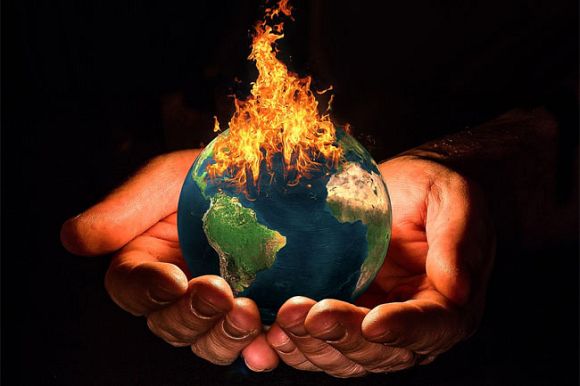
The sheer enormity (impossibility) of such objectives tends to preclude any notion of action. Do we shrug in despair? Do we start shouting? How can anyone respond effectively to problems of such scale and complexity?
Yet, as I think about my own response, such impotence is understandable.
I have an email signature that includes a quote I’ve used as a guiding principle for nearly everything; it directed me during my time with Landcare.
The activist is not the man who says the river is dirty. The activist is the man who cleans up the river.
~ Ross Perot
In practice, even cleaning up a river can be complex. These days, on walks in Melbourne, my meagre activism is to pull plastics out of Merri Creek with a stick until I have a bag full. The rubbish is usually back again in a few days. But it makes me feel as though I am doing something.
Rachel Carson chose to end Silent Spring by invoking Robert Frost‘s poem The Road Not Taken.
She believed humanity had a choice:
We stand now where two roads diverge. But unlike the roads in Robert Frost’s familiar poem, they are not equally fair. The road we have long been travelling is deceptively easy, a smooth superhighway on which we progress with great speed, but at its end lies disaster. The other fork of the road – the one less travelled by – offers our last, our only chance to reach a destination that assures the preservation of the earth.
~ Rachel Carson, ‘Silent Spring’
We remained on the road to disaster and our scientists are calling out a crisis. Do we still have any choice? Of course, we do.
And we can still act locally, no matter how ineffectual it may seem. If we embed an ecological approach to any action and ask what key indicator reflects our capacity to repair and protect biodiversity, we can, at the same time, describe a core dimension of a healthy environment.
The most powerful indicator is connectedness — as opposed to isolation. Together we can proceed. What we have always had, when facing disaster, is poetry and music. Poetry and music connect us with a shared voice when we are mute.
It might sound gratuitous or even factious, but I’d like to hear more from the poets and musicians.
Dr Simon Pockley is a former chair of the Southern Otway Landcare Network and a senior business analyst at Australian National Data Service. You can follow Simon on Twitter @simonpockley.
Support independent journalism Subscribe to IA.

