
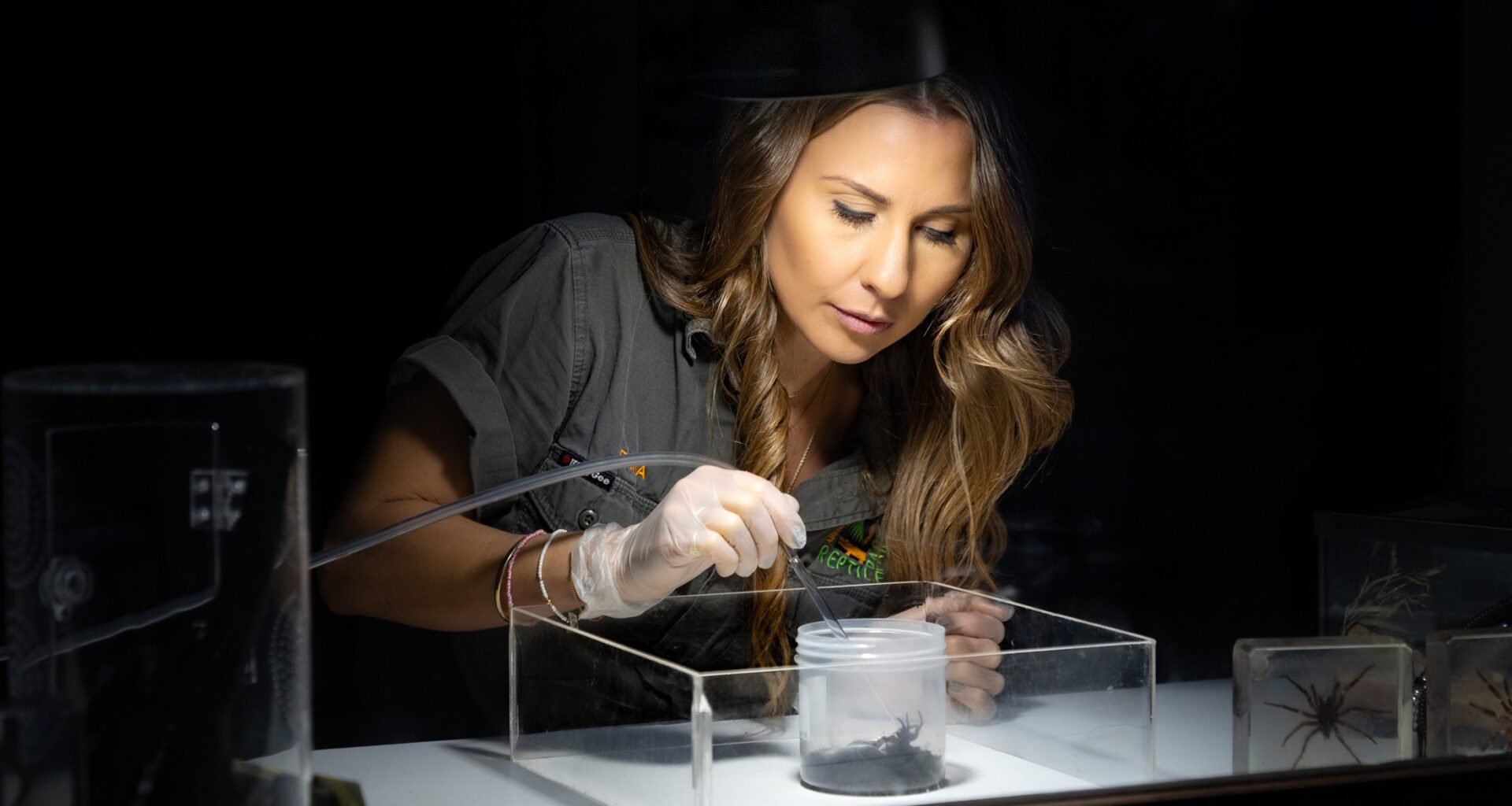
Residents throughout the Hunter are being urgently asked to safely capture and donate funnel-web spiders found around their homes.
The plea comes after the Australian Reptile Park, located just an hour from Newcastle, issued a warning during the week that the long-lasting effects of COVID-19 lockdowns were still being felt in one of its critical life-saving programs.
Currently, the venue is facing the lowest number of funnel-web spiders it has ever seen, placing pressure on the initiative that supplies essential venom across the country.
Once they milk the atracids, the toxin is frozen and sent to CSL Seqirus in Melbourne to make antivenom.
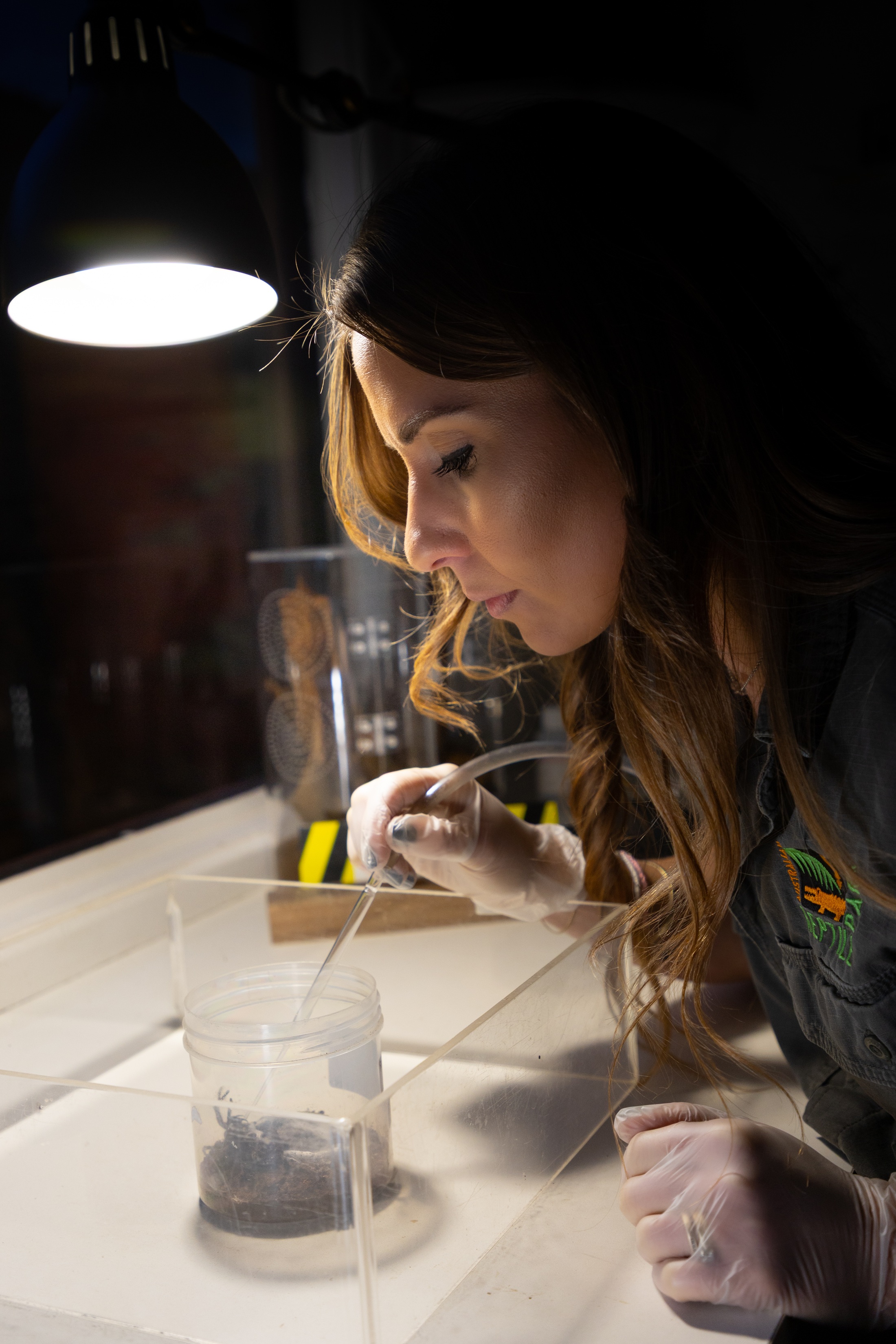 Australian Reptile Park spider keeper Emma Teni. Photo: Australian Reptile Park
While the impacts of COVID-19 may feel like a distant memory to many, for the Australian Reptile Park, the consequences are unfolding right now.
During the 2020 lockdowns, locals were restricted to travelling within a 2km radius of their properties.
As a result, almost no funnel-web spiders or egg sacs were donated during that time.
Those, which would have matured and joined the venom program years later, simply never arrived.
“We are facing some of the lowest numbers of spiders in the history of the park,” spider keeper Emma Teni said.
“This means we need donations now more than ever.”
The Australian Reptile Park milks adult male Sydney funnel-web spiders, as their venom is significantly more potent and essential for antivenom production.
However, they only live around one year once they reach maturity, meaning the program constantly requires new donations to continue.
It takes approximately 150 individual venom milkings to produce just one vial of antivenom.
The highest recorded number of ampoules needed to save a single patient was 13.
That means it took almost 2,000 venom milkings to save just one life.
At present, the program is operating below its usual funnel-web spider capacity, limiting how much venom can be collected.
In recent years, the Australian Reptile Park has made major investments into expanding its breeding facility, with outstanding success.
More than 2,000 juvenile funnel-web spiders are currently being raised to secure the future of the program.
However, they are still years away from reaching maturity and cannot yet be milked.
“The future of the program is strong,” Ms Teni said.
“We have thousands of baby spiderlings being raised.
“But, it will be a few years until they’re ready to be milked.”
Since the funnel-web antivenom initiative began more than 40 years ago, not a single person has died from a bite, an extraordinary achievement credited to antivenom and rapid medical treatment.
Now, locals can play a role, too.
There are 15 official spider drop-off locations from Sydney to Newcastle, including Broadmeadow (Animal Referral & Emergency Centre, 11 Perth Road) and New Lambton Heights (John Hunter Hospital, Pathology Level 2).
For more news stories:
Get all the latest Newcastle news, sport, real estate, entertainment, lifestyle and more delivered straight to your inbox with the Newcastle Weekly Daily Newsletter. Sign up here.