
As the world grapples with the urgent need to reduce greenhouse gas emissions, carbon capture, utilization and storage (CCUS) is increasingly seen as a critical component of climate strategies, particularly for decarbonizing hard-to-abate sectors such as cement, steel, and heavy industry.
2026 is poised to be a pivotal year in transitioning CCUS from primarily pilot and demonstration stages toward broader commercial deployment, influenced by shifting policy environments, rising investment, and growing technological maturity.
The overall global CCUS capacity remains modest relative to the scale of global emissions, but it’s showing clear growth. As of early 2025, global operational CO2 capture and storage capacity stood at roughly 50 million tons per annum (Mtpa) – up slightly from the previous year, according to data from the International Energy Agency (IEA).
“The carbon market is already maturing,” Jan-Wille | RSS.com
A broader view of project activity highlights hundreds of projects in the CCUS value chain, reflecting increasing momentum. Reports identify well over 600 CCUS projects in various pipeline stages, with an approximate 15% year-on-year increase in activity, supported by tripling investment toward roughly $6.4 billion (as of 2024).
Despite this growth, CCUS remains far from meeting climate goals. Even if all announced projects progress as planned, by 2030 capture capacity could reach around 430 Mt CO2 per year, which is still well below the roughly 1 gigaton (Gt) per year thought necessary under net-zero pathways for the global energy sector toward mid-century.
Most current and planned capacity is concentrated in North America and Europe, with Asia – particularly China and the Middle East – accounting for a growing share of projects under development.
What’s Driving Momentum in 2026?Policy & Regulation
Public policy is a central driver of CCUS deployment. In key markets, provisions such as tax credits (e.g., the US 45Q incentive) offer substantial rewards per ton of CO2 captured and stored or used, with enhanced allocations for emerging technologies like Direct Air Capture (DAC).
Such policy incentives have been estimated to exceed $30 billion in total support, reflecting sustained governmental investment in CCUS research, demonstration, and deployment.
In Europe, regulatory frameworks like the EU Industrial Carbon Management Strategy and related clean-industry initiatives aim to harmonize CO2 market structures and facilitate cross-border transport and storage.
Funding & Investment
Investment in CCUS has grown in recent years, with billions being directed toward new projects and technology development. For example, large industrial programs such as Germany’s €6 billion (~$7 billion) industrial decarbonization initiative, including CCS technologies, will start to roll out competitive support mechanisms in mid-2026, expanding public funding for CCUS deployment.
Private capital interest is also on the rise: major energy companies have entered negotiations to attract infrastructure investment into CCUS assets (such as Eni’s discussions to sell stakes in its CCUS business).
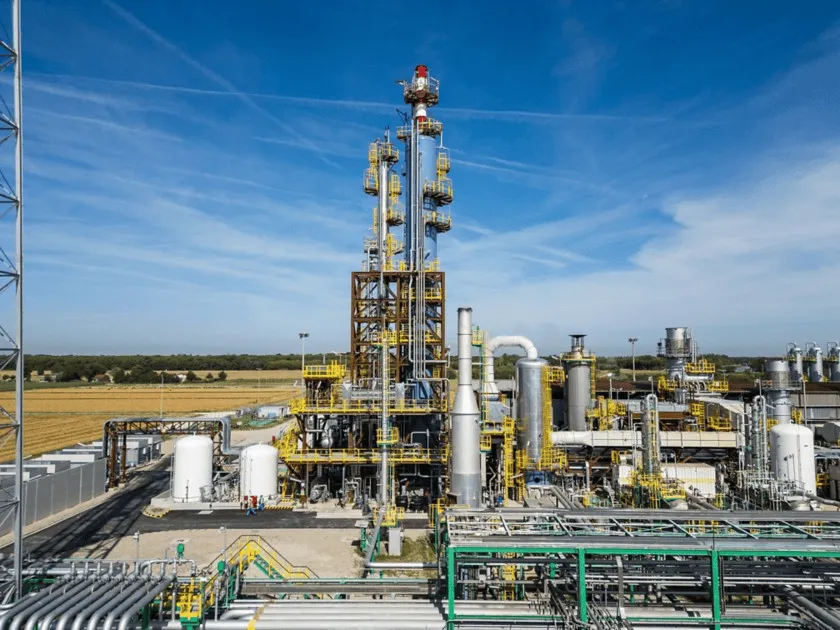 Eni’s joint CCS project with Snam in Ravenna, Italy. Image courtesy of EniMarket Signals & Corporate Action
Beyond public funding, corporate commitments to net-zero emissions and low-carbon production are pushing major industrial emitters to consider CCUS as part of their decarbonization portfolios.
While utilization remains an emerging portion of the full CCUS landscape, markets for CO2-derived products (such as fuels, chemicals, and construction materials) are gaining traction, offering pathways for captured carbon to enter productive value chains.
Key Technologies to WatchCarbon Capture Technologies
In 2026, the backbone of CCUS deployment will continue to be point-source carbon capture technologies applied to industrial and energy facilities, including cement, steel, chemicals, refining, and power generation. These systems are designed to capture CO2 before it enters the atmosphere, distinguishing them from atmospheric carbon removal approaches.
The most widely deployed capture systems today rely on post-combustion chemical absorption, typically using amine-based solvents. These technologies are commercially proven and remain the default option for retrofitting existing industrial assets, though they are energy-intensive and contribute significantly to operating costs.
Looking toward 2026, technology developers are increasingly focused on incremental efficiency improvements, including:
Advanced solvent formulations with lower regeneration energy requirementsProcess integration to reduce parasitic energy loadsModular capture units designed to shorten construction timelines and reduce upfront capital expenditure
Such improvements are expected to play a meaningful role in lowering capture costs, which currently range widely depending on industrial application and CO2 concentration.
Pre-combustion carbon capture is already applied in industrial hydrogen and ammonia production and is a recognized way to reduce CO2 emissions from syngas-based processes. Specifically, ammonia and hydrogen production facilities must remove CO2 from process gas streams – a classic application of pre-combustion capture as part of industrial decarbonization.
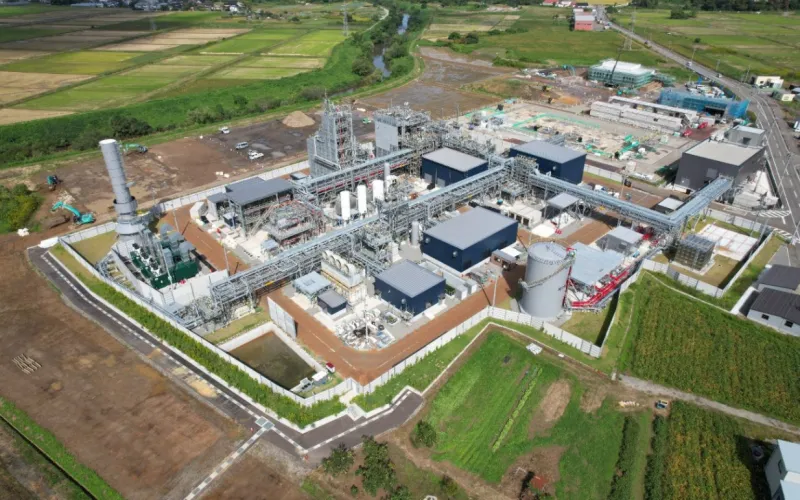 Kashiwazaki Hydrogen Park in Niigata Prefecture, Japan. Image courtesy of INPEXTransport & Storage Infrastructure
As capture capacity grows, CO2 transport and storage infrastructure is emerging as one of the most critical enablers and constraints for CCUS scale-up in 2026.
Pipeline networks remain the dominant transport solution for large-volume, onshore CCUS projects, particularly in regions with existing oil and gas infrastructure. However, shipping-based CO2 transport is gaining traction, especially in Europe, where cross-border movement of captured CO2 is central to enabling shared offshore storage hubs.
Relevant: API Introduces New Standard To Guide CO2 Pipeline Transportation
Geographic studies indicate that 70% of global industrial CO2 emissions are located within approximately 60 miles of potential storage sites, highlighting the importance of robust infrastructure planning to control costs and accelerate deployment.
In Europe, new offshore storage projects such as Denmark’s Greensand initiative – set to start operations in 2026 – exemplify the expanding storage capacity needed to support broader CCUS adoption.
Utilization Pathways
While permanent geological storage remains the dominant destination for captured CO2, carbon utilization continues to evolve as a complementary pathway, particularly where it can improve project economics or support industrial value chains.
In 2026, utilization efforts are expected to remain concentrated in:
Synthetic fuels and e-fuels, primarily for aviation and shippingChemical production, including methanol and polymersBuilding materials, where CO2 is mineralized into concrete or aggregates
Although utilization markets are still relatively small compared to total emissions, they offer near-term revenue opportunities and can help reduce reliance on subsidies in early CCUS projects. Importantly, experts continue to caution that carbon utilization alone cannot absorb the volumes required for climate stabilization, reinforcing the need for long-term storage as the primary pillar of CCUS deployment.
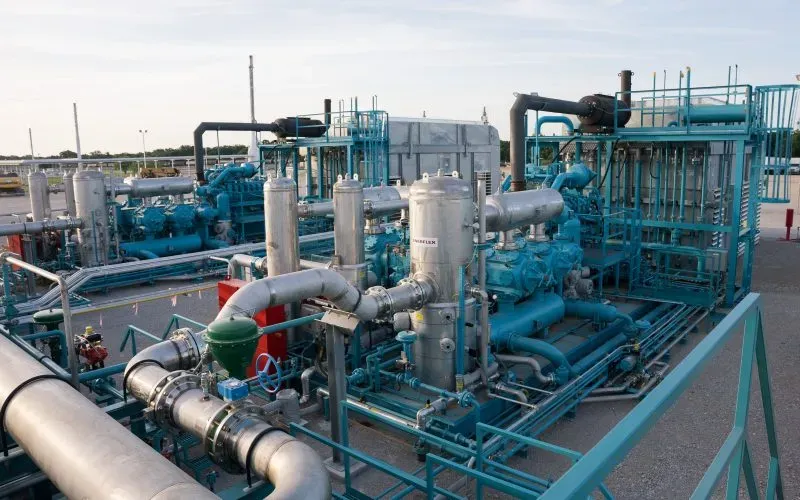 BKV and Copenhagen Infrastructure Partners joint CCUS venture in Denmark. Image courtesy of BKV.Challenges & Risks Ahead in 2026
Across regions, high capital and operational costs remain central barriers to CCUS scaling. Estimates indicate capture costs ranging from $40 to $120 or more per ton of CO2, depending on technology and industrial source — costs that often exceed prevailing carbon prices and place pressure on business cases without strong policy support.
Policy & Regulatory Uncertainty
Inconsistent policies and regulatory frameworks across jurisdictions complicate long-term investment decisions and infrastructure planning. Many countries still lack standardized approaches to liability, long-term storage monitoring, and cross-border CO2 transport rules, which can dampen investor confidence and slow permits.
Infrastructure and Public Acceptance
Deploying CCUS at scale requires not only capture facilities but vast pipelines, storage hubs, and transport networks, all of which face logistics, land-use, and social acceptance challenges. Public concerns about subsurface CO2 risks and community engagement remain important considerations for equitable deployment.
Measurement, Reporting & Verification (MRV)
Robust MRV systems are essential for credibility in carbon accounting and market mechanisms. In many regions, standardized protocols for CO2 measurement and verification are either nascent or inconsistent, posing hurdles for carbon crediting and performance assurance.
Voices in the industry
Carbon Herald spoke to several industry experts to gauge their opinions on where CCUS is likely to be headed in 2026, including the main opportunities and challenges stakeholders will be faced with.
Colin Laing, Advisory Team – CCUS Lead, Xodus, said: “We are now seeing the first tranche of Northern European CCS projects finish construction and begin operation, with agreements signed that will see carbon begin to move across European borders for storage.
“This is a big step toward a fluid market with the potential to drive economies of scale. However, the recent reset in the Danish CCS allocation process serves as a vital lesson – ambition can’t outpace the regulatory and project realities needed to secure investor confidence.
“As major economies like Germany, as well as Mediterranean hubs in Greece and Italy, ramp up their plans, emitter volumes are materialising that could let the industry scale in these regions. Balancing continued enthusiasm for CCS with pragmatic planning at a country and continent level will allow the sector to continue to build into 2026 and beyond.”
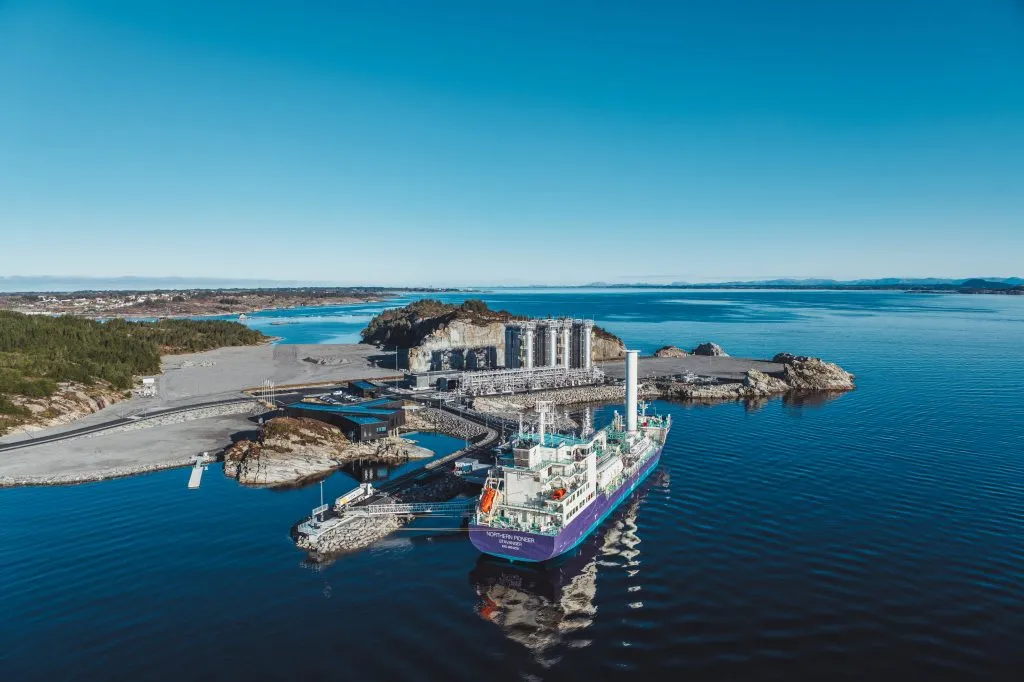 CO₂ receiving terminal in western Norway. Image courtesy of the Northern Lights project.
Jamie Burrows, Global Segment Lead CCUS, Energy Systems, DNV, told us: “Looking ahead to 2026, momentum is set to continue with Project Greensand in Denmark expected to enter operation, and the commercial start‑up of Stratos in Texas – the world’s largest direct air capture (DAC) facility.
“While more work lies ahead, these developments demonstrate that CCUS has reached a turning point. It is now firmly positioned as a critical tool for meeting global climate goals. The industry’s next challenge is to scale up, deploying more projects and deploying them faster.”
Sunil Vyas, Technical Director & CCUS Subject Matter Expert, Fluor, voiced his predictions for the year ahead: “2026 can certainly help take steps towards large scale deployment but it won’t happen overnight. I think continued investment, in its various forms, in the CCUS space is needed to keep moving forward.
“The challenge for large scale deployment is that, ultimately, projects need to be profitable. Fluor has recently completed FEEDs or are currently in the FEED phase for several CCUS projects that need good return on investments (ROI) to clear final investment decisions (FID). Increased regulatory incentives related to CO2 emissions can help with that along with a growing CDR market for certain applications.”
Final takeaways
In 2026, CCUS stands at a crossroads: momentum is building through technology advances, policy incentives, and facility pipelines, yet significant gaps remain in scaling to climate-relevant levels. Progress in infrastructure, regulatory clarity, and market mechanisms will determine whether CCUS transitions from niche projects to a core pillar of global decarbonization.
Ultimately, CCUS’s role in 2026 will be defined not only by the projects that begin operations but by how governments, industries, and communities coalesce around pragmatic pathways for deeper emissions reductions.
Read more: CCUS In 2025: An End-Of-Year Review