
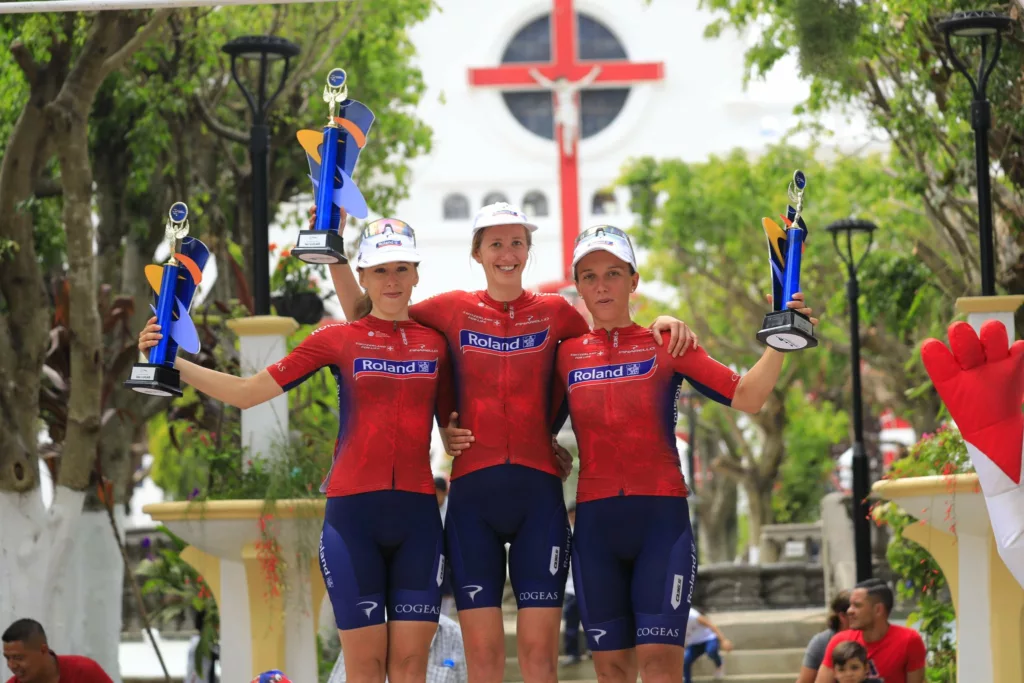
Roland’s story is not a straight line, and that is exactly why it matters. This team began as a points-smart project on the sport’s outer edge, built credibility through targeted racing, then pushed itself into the Women’s WorldTour at a time when the division was growing in profile and cost at the same time. For a few seasons, it held its ground. In 2023, it even looked, briefly, like it might change level.
A timeline of reinvention: the names tell you where the pressure points were2018: the credibility year, driven by a single ruthless engine2019: expansion, variety, and the first hint of a pathway team2020: the recruitment wave and the points economy in action2021: a core forms, and leadership becomes the team’s currency2022: WorldTour entry, and the year the job description changed overnight2023: the high-water mark, when a win changed how the team was perceived2024: the squeeze year, when being thin stopped being manageable2025: targeted success, new ambition, and a WorldTour model that no longer added upThe riders who define Roland’s legacy, and what they did with the opportunityVerdict: Roland did not fail, it ran into the Women’s WorldTour’s new economics
Then the landscape shifted again. By the end of 2025, Roland was the lowest placed Women’s WorldTeam in the three-year cycle rankings, and rather than hanging on at the top tier with a squad stretched to breaking point, it chose to step away entirely. Not down to ProTeam, but all the way back to Continental level in 2026, with an ultra-thin roster and no wins on the board.
That decision was not an admission that the team forgot how to race. It was an acknowledgement that the Women’s WorldTour had started to reward depth, redundancy, and calendar coverage as much as talent. Roland could produce riders. It could still win races. What it could not do, sustainably, was fund the modern version of “being WorldTour” on its terms.

A timeline of reinvention: the names tell you where the pressure points were
Roland’s identity has been rebuilt more often than most teams manage in a decade, and the naming changes are not cosmetic. Each one signals a shift in funding, geography, and what the team could realistically target.
It began as Cogeas-Mettler in 2018, became Cogeas-Mettler-Look through 2019 to 2021, then stepped into the Women’s WorldTour in 2022 as Roland Cogeas-Edelweiss Squad. The Israel-Premier Tech Roland year in 2023 brought a sharper profile, before a reset to simply Roland for 2024 and early 2025. In June 2025, the Le Dévoluy partnership arrived with talk of a new training base and a fresh long-term narrative. By 2026, the team had dropped back to Continental status.
The story underneath is consistent: when the team was at its best, it was a specialist at picking the right moments, backing leaders who could convert opportunity into wins, and giving younger riders responsibility. The problem is that the Women’s WorldTour now punishes specialist teams that cannot also be generalists across the full calendar.
2018: the credibility year, driven by a single ruthless engine
The first season mattered because it established intent. Roland did not enter the sport quietly. It came in with a rider who could win immediately, and a programme designed to make those wins count.
Olga Zabelinskaya was the defining figure of 2018. The win at Chrono des Nations in October was more than a line on a results sheet. It was proof that this team could land a serious result in a race that carries weight, late in the year, when tired legs and motivation gaps expose weak programmes. That kind of win travels. It tells riders and sponsors that the project is real.
Around that headline moment, the team’s broader approach was already visible. It targeted races where it could control outcomes, stack points, and build confidence. This was not a team trying to out-muscle the established European squads. It was trying to out-plan them in the spaces they did not always prioritise.
2019: expansion, variety, and the first hint of a pathway team
In 2019, the team widened its net. You can see it in the range of victories and in the balance of the roster. This was the year where Roland began to look less like a single rider plus support, and more like a platform.
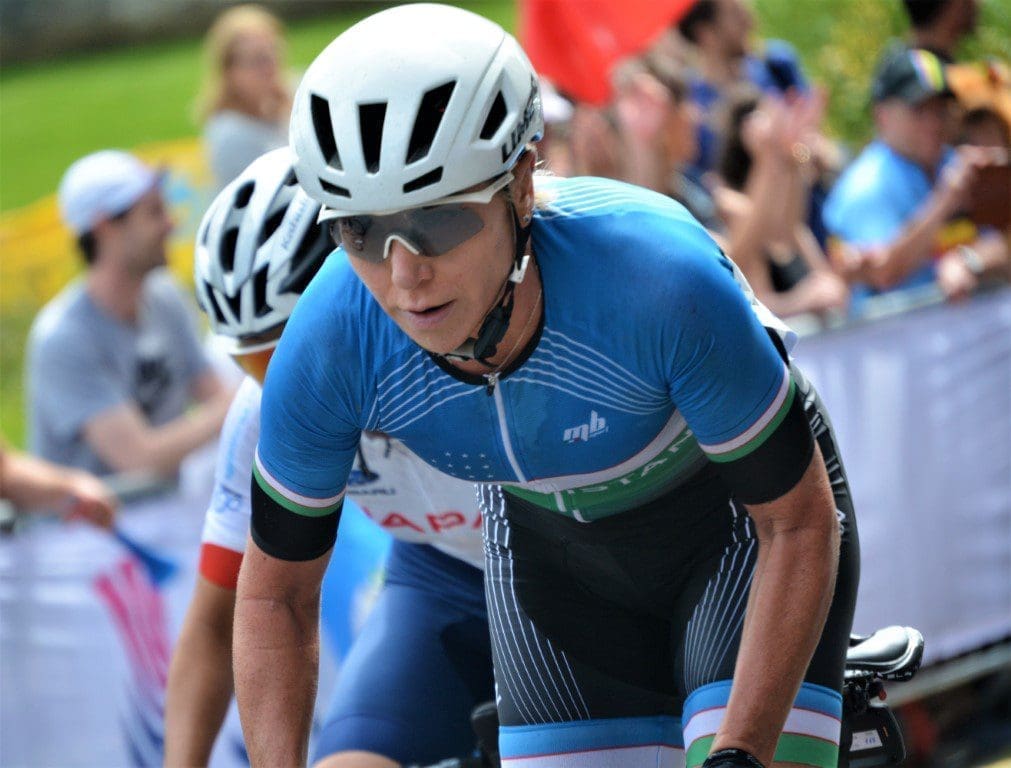
The high points came in clusters. Antri Christoforou delivered repeatedly across time trials and one-day races, then added Asian continental titles in both the time trial and road race. Amber Neben brought a different kind of credibility, taking the US national time trial title. Zabelinskaya remained productive too, again showing that the team could build seasons around riders who knew how to win.
What makes 2019 important in hindsight is the shape of it. There is a mix of disciplines, a spread of countries, and an early sense that riders could join this team and actually be allowed to race for themselves. That sounds obvious, but it is a rare commodity in women’s cycling. For a younger rider, “opportunity” often means waiting behind someone else’s ambitions. Roland was starting to offer an alternative.
Letizia Borghesi’s presence in this era sits neatly in that frame. She is a rider who would go on to become a dependable WorldTour contributor, and teams like Roland are often the place where that transition begins: not with perfect results, but with real responsibility.
2020: the recruitment wave and the points economy in action
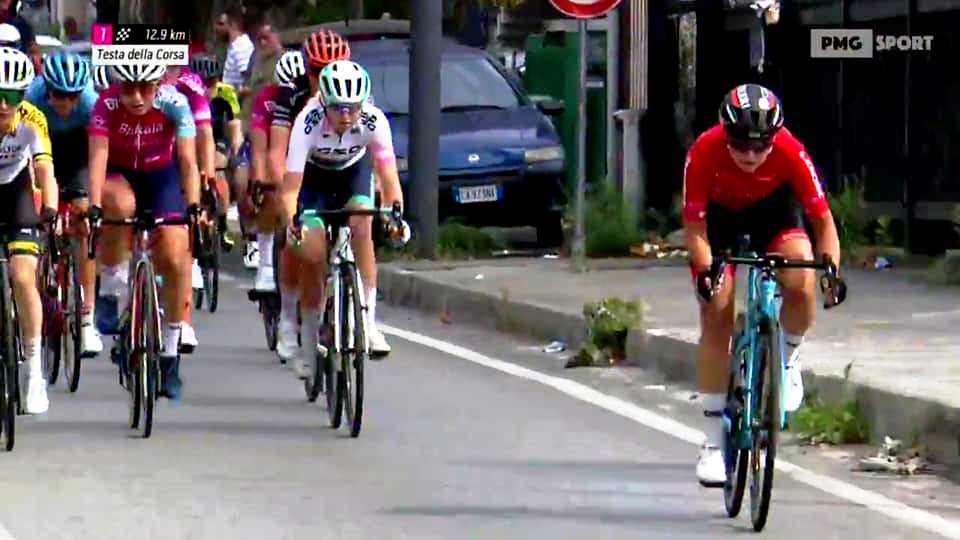
The 2020 season was when Roland’s operating model became explicit. There was a large intake of younger riders and neo-pros, mixed with experienced names who could steady the programme. This was not recruitment for glamour. It was recruitment for growth and survival at the same time.
The wins told the same story. In Turkey, the team collected early-season victories through Diana Klimova and Daria Malkova. Later in the year, Maria Novolodskaya won back-to-back at altitude in the Mount Erciyes races, the kind of results that signal a team is not only chasing soft points, but can also win when the racing gets harder.
National titles added texture: Mia Radotic’s Croatian time trial championship, and Klimova’s Russian national road win. These are not just jerseys. For smaller teams, they are a marketing asset and a programme stabiliser. They tell the peloton that riders can arrive, be backed, and leave with something meaningful.
If you want the real takeaway from 2020, it is not the individual events. It is the efficiency. Roland turned selected blocks into output, and used that output to justify the next step. This is the season where the Women’s WorldTour move begins to feel less like a dream and more like a plan.
2021: a core forms, and leadership becomes the team’s currency
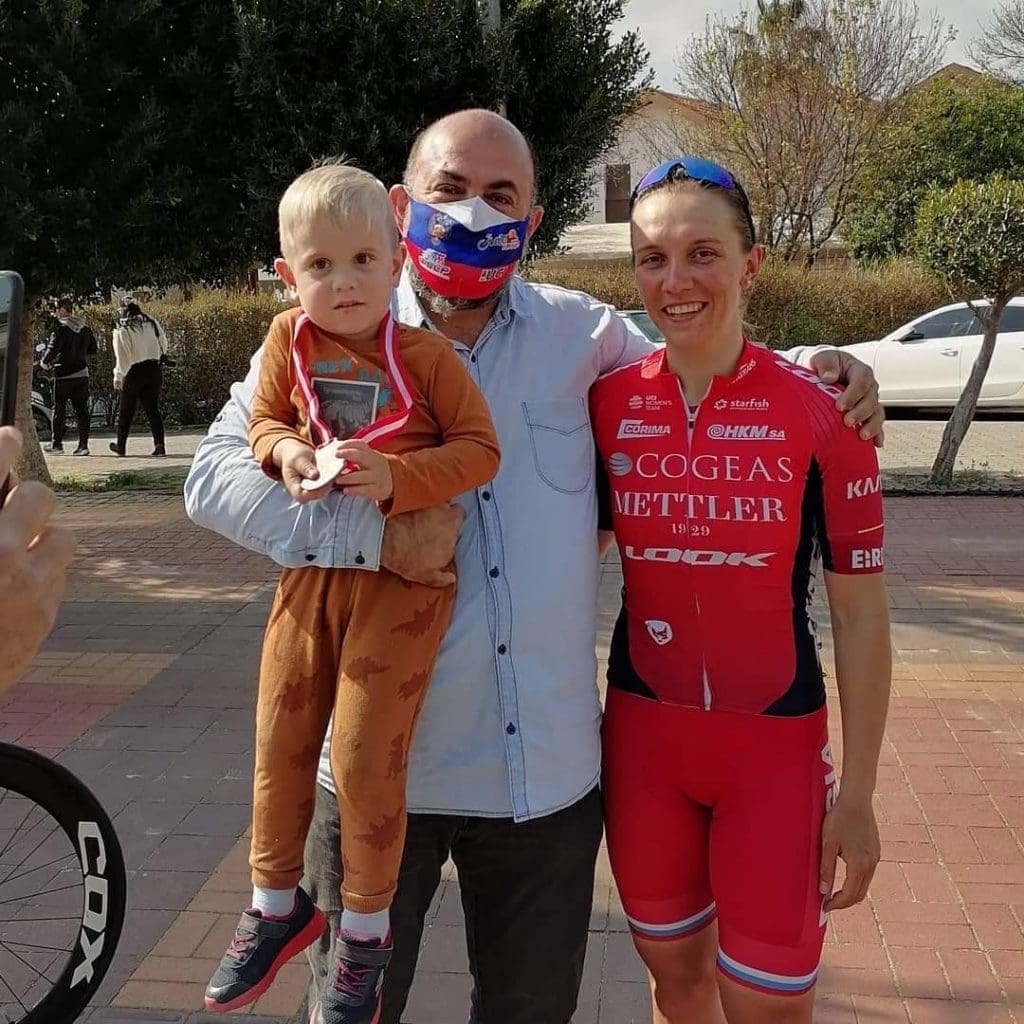
By 2021, Roland’s pre-WorldTour identity had matured. The roster blended development with leadership, and the results again arrived in targeted clusters.
Tamara Dronova winning the Russian national road title was the clearest leadership marker. It is the kind of result that says a rider can carry pressure and deliver when the race is shaped around expectation. Zabelinskaya and Dronova also contributed wins in Turkey, underlining how the team continued to pick environments where it could win, rather than simply participate.
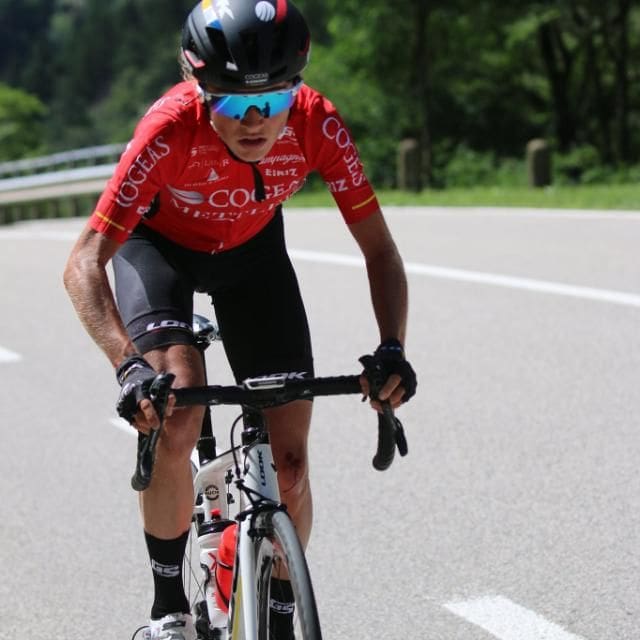
Two names in 2021 feel especially significant because they foreshadow the WorldTour era. Dronova became the rider you could build around. Petra Stiasny arrived during the season, and her profile made sense for what the team would soon need: climbing talent, endurance, and the ability to grow into harder calendars.
This is where Roland’s pathway identity becomes more than a nice idea. It becomes functional. Riders join, learn to lead, and start to look like WorldTour riders before the licence ever arrives.
2022: WorldTour entry, and the year the job description changed overnight
The jump to Women’s WorldTour status in 2022 was the team’s biggest institutional step. It is also where the sport stops being forgiving.
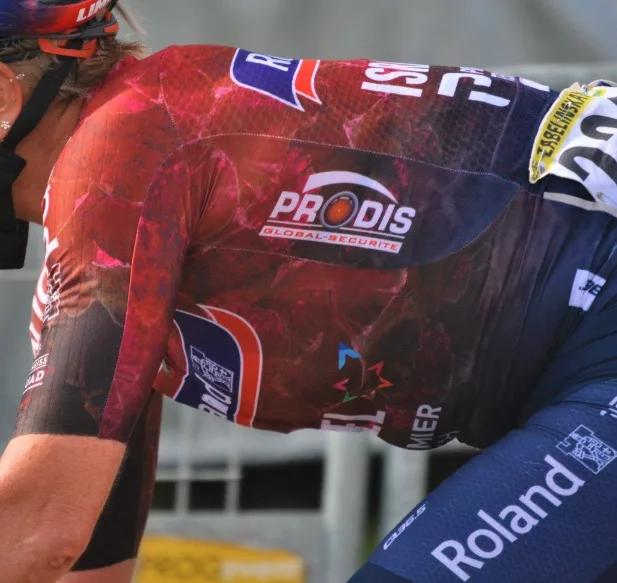
At WorldTour level, survival becomes a skill. You cannot only target. You have to show up repeatedly, in different terrains, against deeper squads, with fewer weeks where “learning” is accepted as an excuse. Roland’s 2022 rankings show a team that did not thrive, but did belong. It was 14th on the WorldTour team standings, and Dronova was 20th in the WorldTour individual classification, a strong indicator that the team had a rider who could compete in meaningful races even without top-tier support depth.
This season is best understood as a reality check. The team’s previous model was built on control: pick the right races, arrive with leaders, leave with results. The WorldTour model is built on exposure. You are constantly in the shop window, constantly compared, and constantly asked to run multiple programmes even when your budget is built for one.
Roland got through it, which in itself was a success. It also learned how thin the margin would be going forward.
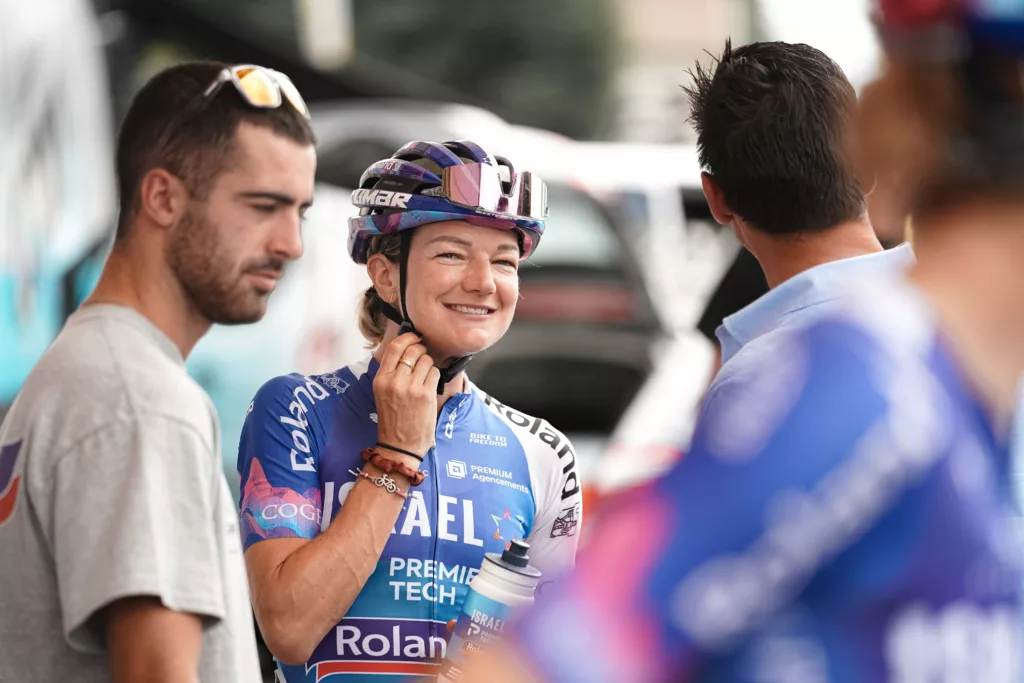 Photo Credit: ASO-Thomas Maheux
2023: the high-water mark, when a win changed how the team was perceived
If you want Roland’s peak moment, it lives in 2023. The Israel-Premier Tech Roland branding gave the team a more polished look, but the real shift came from performance.
Claire Steels winning the reVolta with a solo move was the kind of result that cuts through. It is a win that tells the peloton a rider is not simply surviving the WorldTour, she is shaping races in it. For Roland, it was a perfect advertisement of what the team did best: give a rider room to lead, back that leadership, and allow a breakthrough to happen.
The rankings reflect the same sense of momentum. The team finished 12th in the WorldTour standings and 11th on the broader UCI team ranking. Steels was the best-placed rider in the UCI individual ranking for the team at 37th. That combination matters because it implies a team with direction, not just isolated points.
But 2023 also carried the seed of the next problem. When a smaller team produces a rider who wins like that, the market reacts. The rider’s value rises quickly. Bigger squads offer more stability, more support, and more chances to repeat those moments. Roland’s challenge is that it was excellent at creating that value, and less equipped to keep it.
2024: the squeeze year, when being thin stopped being manageable
After 2023, Roland reset again, and the vulnerability became more visible. In 202,4 the team’s WorldTour ranking dropped to 20th, while Dronova remained its best-placed individual rider at 62nd on that same WorldTour list. On the UCI side, the team ended 17th, with Dronova 49th individually.
Those numbers point to a familiar mid-tier story: one or two riders doing the heavy lifting in a season that demands far more breadth. This is the season where crashes, illness, and ordinary dips in form become structural threats, because the team does not have enough redundancy to absorb them.
The key point is that 2024 was not “bad racing”. It was racing that exposed the cost of being small in a calendar that increasingly rewards volume. If you cannot run two competitive programmes at once, you will miss points, miss opportunities, and eventually miss safety.

2025: targeted success, new ambition, and a WorldTour model that no longer added up
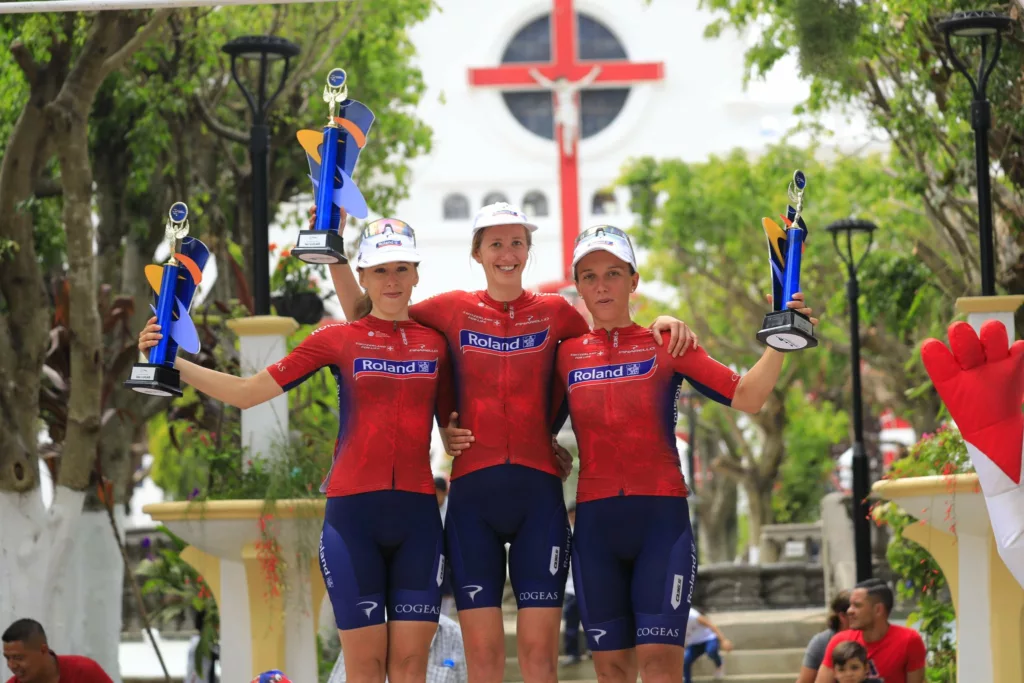
In 2025, Roland’s year had two parallel stories running at once. On the road, it could still win. The El Salvador block delivered a concentrated set of victories, the kind of targeted execution Roland had always been built to produce. Mia Griffin also emerged as the best-ranked rider for the team that season, finishing 81st on the UCI individual ranking, which fits the profile of a rider who can collect results and keep a programme credible.
Off the bike, June brought the Le Dévoluy partnership and the idea of building a training base. It was a bold play. It suggested long-term thinking, a commitment to performance, and a desire to attach the team to a place and an identity rather than simply a sponsor line.
Then the WorldTour reality reasserted itself. The new participation framework in women’s cycling tightened expectations. Women’s WorldTeams are effectively required to cover the full Women’s WorldTour calendar with only one permitted opt-out, with mandatory participation in the Giro d’Italia Women, Tour de France Femmes, and Vuelta a Espana Femenina. For a squad already living close to the edge, that is not just a rule. It is a budget multiplier, a staffing multiplier, and a fatigue multiplier.
This is where Roland’s decision becomes understandable, even if it still feels stark. The team did not drop to ProTeam. It went straight back to Continental, choosing fewer hoops and more control over its season. In 2026, the roster being listed at just two riders and the win tally at zero makes the point more bluntly than any opinion could: this was not a gentle reshuffle. It was a reset.
 Petra Stiasny
The riders who define Roland’s legacy, and what they did with the opportunity
Roland’s lasting contribution is not a monuments palmarès. It is a pipeline.
Noemi Ruegg is a clean example of the team’s development function: a rider who came through a structure where responsibility was available early. Elise Chabbey’s early link to the project fits the same category, a rider with clear engine and ambition who benefited from a programme that did not reduce her to a background role. Letizia Borghesi’s stint is the reminder that riders can outgrow this kind of platform quickly once they show reliability.
In the WorldTour era, the spine is clearer. Tamara Dronova carried the team through its toughest transition years, delivering leadership and the kind of repeatable output that underfunded teams depend on. Petra Stiasny represents the kind of rider Roland needed the most: someone who could develop into a WorldTour climbing asset while still being versatile enough to contribute across a season. Mia Griffin’s role is just as important. Mid-tier teams survive on riders who can convert the right blocks into results, and she fits that mould.
Claire Steels is a great example of a late starter making the move up the ranks. Her 2023 breakthrough is Roland at its best, a rider given the platform to win, then moving into a bigger WorldTour role afterwards. That is the bittersweet reality for teams like this. Producing talent is success. Keeping it is expensive.
Verdict: Roland did not fail, it ran into the Women’s WorldTour’s new economics
Roland’s rise was smart and deliberate. It won early through targeted programmes, built a pathway structure, then made the leap into the Women’s WorldTour and proved it could survive there. In 2023, it even showed it could do more than survive.
Its step back to Continental status is not a sporting confession. It is a commentary on where the Women’s WorldTour is heading. The top tier is becoming more professional and more consistent, and that is a good thing for the sport. The cost is that the middle class is being asked to fund the expansion, by staffing and racing a calendar that is now closer to a year-round global circuit than a selective set of goals.
Roland chose the honest option: step down before the obligations turned into penalties, burnout, or a season defined by merely turning up. The team’s legacy is still substantial. It produced WorldTour riders, gave them room to lead, and proved that an underdog project can reach the top tier. It also proved that staying there now requires a scale that some teams, even capable ones, cannot justify.