
Australia’s telecommunications regulator is scrambling to respond to a crisis it failed to prevent.
The Australian Communications and Media Authority (ACMA), long criticised for not policing the grey importation of smartphones, is now seeking to buy back Samsung-branded handsets after reports that some devices were unable to place emergency Triple Zero calls following Australia’s nationwide 3G shutdown.
The belated move—officially described as “testing”—comes after multiple deaths allegedly linked to mobile phones that could not access emergency services on Vodafone and Optus networks once 3G was switched off. ACMA and the nation’s mobile carriers are responsible for regulating handset compliance and network safety.
Despite those responsibilities, non-compliant devices have continued to operate on Australian networks.
Grey-imported smartphones from major brands including Samsung, Apple and Xiaomi are openly sold online, often without Australian certification or network customisation. Retailer Kogan is currently offering hundreds of such devices, some explicitly labelled as “Chinese versions”.
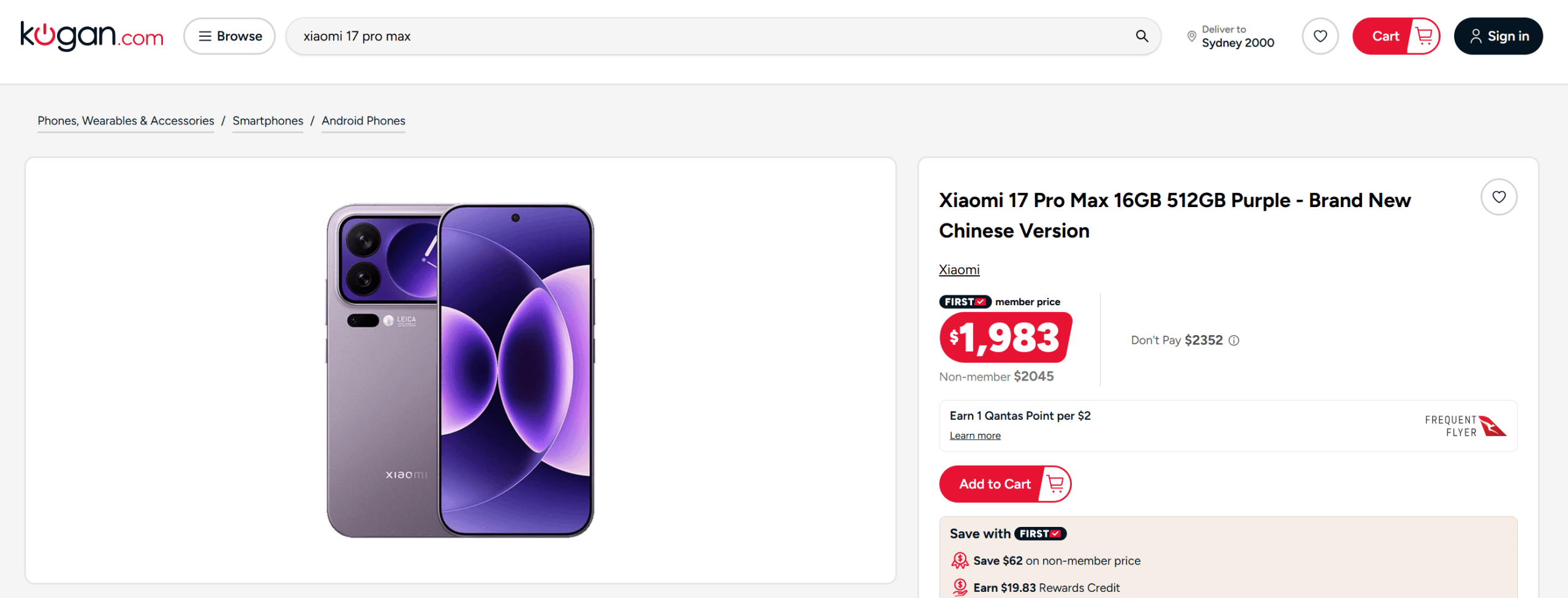
This is just one of the hundreds of grey imported smartphones being bought into Australia that have not been manufactured for Australian networks. Many greyphones are configured for Chinese networks. ChannelNews has been shown devices in Australia configurted for Indian, Russian and Iranian networks.
While Kogan advertises the phones, it avoids being classified as the importer. Instead, consumers are deemed the importer of record, with Kogan processing payment and placing orders in the customer’s name with a Hong Kong-based supplier. The devices are shipped directly to Australia without certification for local carrier requirements.
There is also no certainty that these devices are free from foreign spyware or software capable of running Chinese-developed AI platforms such as DeepSeek.
ACMA has refused to clarify how many of the Samsung handsets now under scrutiny entered Australia through third-party importers rather than Samsung itself. The regulator has also failed to explain why it did not prevent carriers from allowing 4G access to phones incapable of making Triple Zero calls without software modification.

Nerida O’Loughlin, ACMA.
ChannelNews understands that Samsung-certified devices sold locally were self-certified by the manufacturer, the standard process required under Australian regulations.
According to iTnews, ACMA is using the federal BuyICT procurement portal to attempt to acquire affected Samsung devices, following what critics describe as a systemic failure by both the regulator and carriers to control handset compatibility on Australian networks.
The BuyICT listing states the purpose of the purchase is “consumer testing”—a claim that has raised questions about whether telcos conducted adequate device testing before allowing phones onto their networks.
An ACMA spokesperson told iTnews the authority had “no plans” beyond determining whether the devices could be purchased. The spokesperson later admitted the reference to “consumer testing” was an error.
Samsung has acknowledged that 72 handset models have problems placing emergency calls but says most can be fixed with a software upgrade. However, affected customers have been given only around one month to complete the upgrade after their carrier detects the device on its network.
A further 12 Samsung models cannot be upgraded at all and must be blocked.
All grey-imported devices previously reliant on 3G networks will also require software updates to avoid disconnection. Many of the Samsung phones were configured to lock onto Vodafone’s now-decommissioned 3G network.
Only now, after refusing to order carriers to block non-compliant phones earlier, has ACMA asked Vodafone, Optus and Telstra to deny network access to devices that cannot place emergency calls.
Calls to ACMA’s media line are timing out. The federal authority has failed to respond to repeated emails and messages from ChannelNews regarding its apparent lack of enforcement and certification oversight.
Critics say the regulator’s inaction has already had fatal consequences—and that its current response comes far too late.