
Racing Bulls boss Peter Bayer has warned that the workload for drivers will go up as a result of an increase in hybrid energy in F1 2026.
He reasons the complexity of the new systems being introduced will add to their role in the car, but could also become a key performance differentiator.
Peter Bayer outlines increased challenge for drivers in F1 2026
Want more PlanetF1.com coverage? Add us as a preferred source on Google to your favourites list for news you can trust.
Sweeping new regulations for F1 2026 will see an increase in electrical energy, with a near 50/50 split between power from the internal combustion engine, and the hybrid system.
That coincides with new aerodynamic rules that will see cars sport movable aerodynamics.
The combination of those systems promises to change the face of racing, with a new push-to-pass style boost mode available for drivers in battle in place of the Drag Reduction System.
Racing Bulls heads into the coming season with Liam Lawson and Arvid Lindblad, the latter the only newcomer to the grid for F1 2026.
Lindblad arrives after Isack Hadjar was promoted to the senior team, while Lawson did enough in the latter part of 2025 to retain his seat over Yuki Tsunoda, who has reverted to a reserve driver role.
“I think our two drivers are primarily happy that they get to drive in Formula 1,” Bayer said on the Backstage Boxengasse podcast.
“That means there’s a little less grumbling. And both of them have a really great attitude towards the subject.
“Basically, they’re trying to learn, and they’re working very hard. Of course, it’s complex.
“On the one hand, the whole DRS thing has changed. You have straight-line mode and cornering mode, then you have this push-to-pass button that allows you to draw more energy when you’re within a second.
“And of course, you have to manage all that. You have to think, OK, do I use this boost button now, or do I maybe ease off a bit on the straight, recharge and then try to overtake on another back straight?
“So, we all assume that it will be super exciting, but the drivers will definitely be challenged because, at the same time, the regulations state that the driver must drive the car independently.
“That means we can’t programme it now, for example. We can only practise it.”
During the DRS era, drivers merely had to be within a second of the car ahead to be able to open a slot gap in their rear wing and boost their chances of mounting a successful attack.
They also had the ability to use their battery such that they could more easily defend from such attacks; recharging in less vulnerable areas of the track.
Fundamentally, those elements will remain, with the added complexity of movable wings designed to make the cars efficient in a straight-line without compromising corner performance due to a lack of aerodynamic grip.
How the systems, and their use by drivers, influence the on-track action is one of the great unknowns heading into the current campaign.
While managing key elements from within the car is not unusual, F1 2026 promises to add a new layer of complexity.
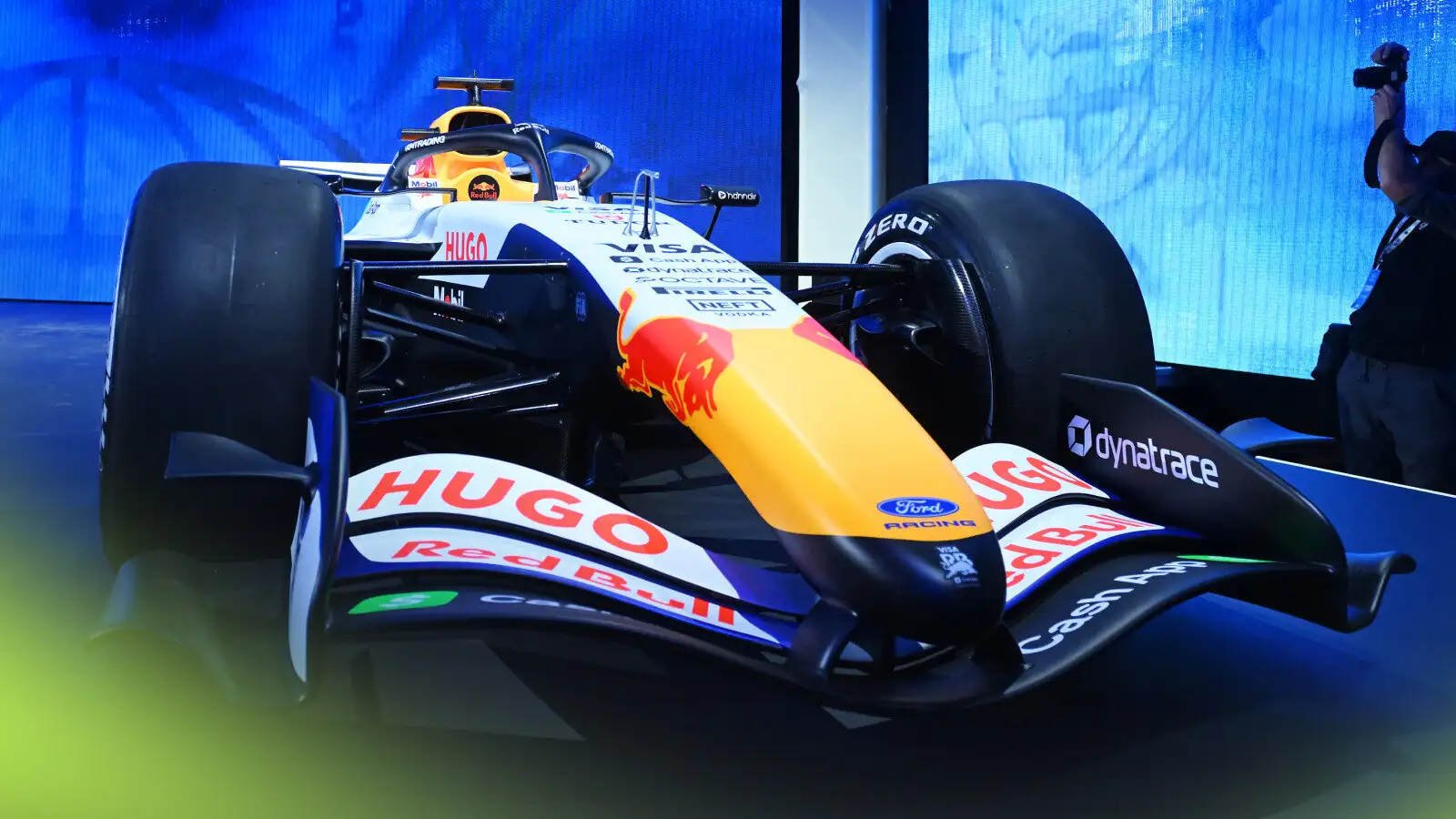
Racing Bulls unveiled its 2026 look at an event with Ford last week, the squad retaining the predominantly-white design it has carried since its rebrand from AlphaTauri.
F1 2026: Formula 1’s season of change
F1 2026 uncovered: Next-gen cars, new tyres, and design decisions
MOM is out and Boost Mode in as key F1 2026 terms defined
Lawson and Lindblad will get their first chance to truly sample their new machine, the VCARB03, during the five days of pre-season testing in Barcelona next week.
Teams can run on any three of the five days during the closed-doors test, which begins on January 26.
That precedes pre-season testing proper beginning in Bahrain next month, with six days of running available to teams.
Racing Bulls does so having equalled its best-ever season result after it finished sixth in the Constructors’ Championship last year.
Lawson scored 38 of the team’s 92 points, having swapped to the Faenza squad after racing with Red Bull for the opening two rounds.
The New Zealander endured a torrid start to the year after being promoted in place of Sergio Perez, only to struggle at the wheel of the RB21.
He then took time to adapt to the Racing Bulls, though a discovery over the Monaco Grand Prix and implemented from Austria proved a turning point in his season – and likely saved his career.
Speaking with talkSPORT, Lawson admitted he’s planning on speaking to compatriot Nick Cassidy – a race winner in Formula E.
“He’s probably the best at it, honestly,” Lawson said of Cassidy’s energy management skills.
“I watched his race. I was in New Zealand still, playing golf, and we were watching the live stream of Mexico.
“He’s obviously doing a really, really good job, and somebody that, over the years I’ve spoken to a lot, and I probably this year will be speaking to a lot more, asking for advice.”
Meanwhile Lindblad steps up from Formula 2, where he won three races en route to sixth in the championship.
The British-Swedish driver spent just a single season in the competition, having won the Formula Regional Oceania championship earlier in the year to gain the points necessary to secure an FIA Super Licence.
He was duly awarded a dispensation as he failed to meet the age criteria (18) until August.
Highly rated by Red Bull’s now-departed motorsport advisor, Dr Helmut Marko, Lindblad joins the F1 grid amid high expectations.
Want to be the first to know exclusive information from the F1 paddock? Join our broadcast channel on WhatsApp to get the scoop on the latest developments from our team of accredited journalists.
You can also subscribe to the PlanetF1 YouTube channel for exclusive features, hear from our paddock journalists with stories from the heart of Formula 1 and much more!
Read Next: Why rookie Arvid Lindblad picked rare F1 number 41 for 2026 debut