
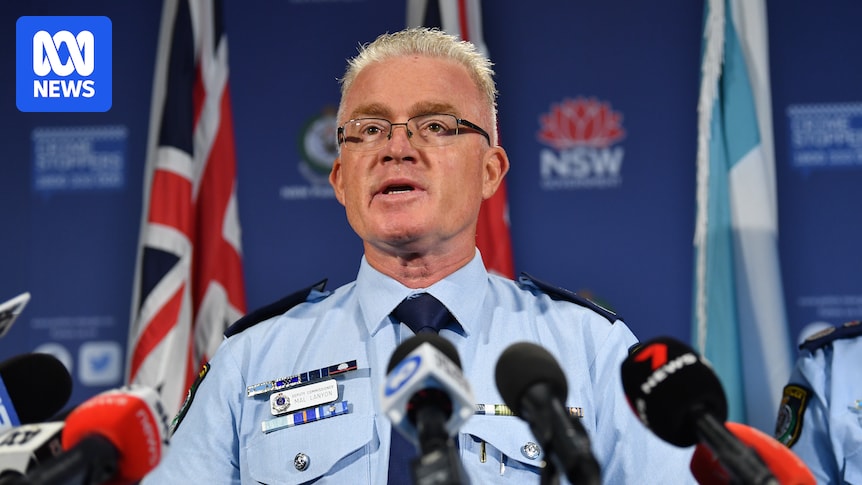
NSW Police Commissioner Mal Lanyon has announced restrictions on protests in parts of Sydney will be extended.
However, Commissioner Lanyon said he had “significantly limited its scope”.
Effectively, the extended restrictions now go from Darling Harbour through the north of the CBD to Oxford Street and all of the Eastern Suburbs Police Area Command, and does not include Hyde Park.
The powers were initially granted to police in legislation that was rushed through NSW parliament after the Bondi terror attack on December 14, when 15 people were killed at a Hanukkah event.
“This is a time for calm. It’s a time for peace. It is a time for the community to come together,” Commissioner Lanyon said.
“We are still less than six weeks from the most serious and devastating terrorist act ever in New South Wales.”
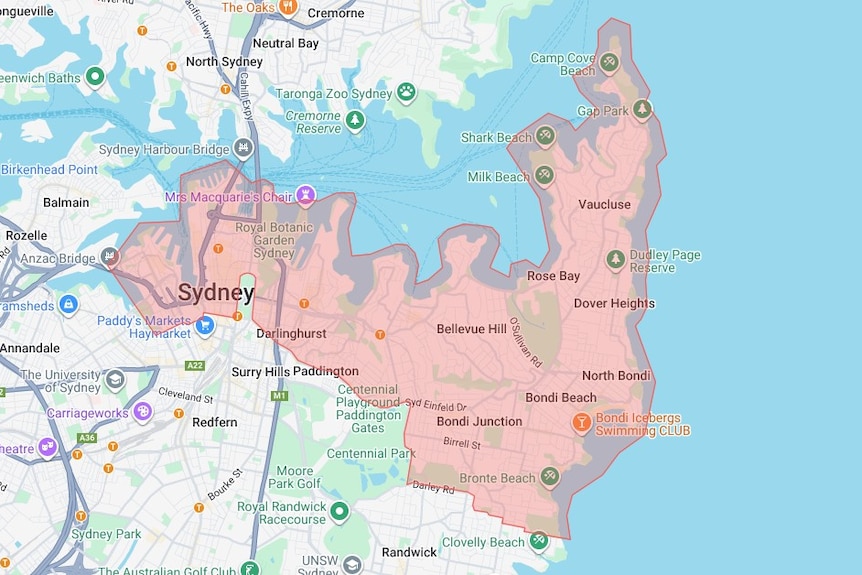
The Public Assembly Restriction Declaration area declared by NSW Police Commissioner Mal Lanyon. (Supplied: NSW Police Force)
The laws give police the ability to declare that no public assemblies can be authorised after a terror attack.
Police activated the power on Christmas Eve and extended it for another 14 days on January 6.
That declaration can be extended in two week increments for up to three months.
Decision allows for Australia Day protests to go ahead
Previously the restrictions related to public assemblies in the South West Metropolitan, North West Metropolitan and Central Metropolitan policing areas.
The reduced restriction area will now allow a planned Invasion Day rally on Australia Day to go ahead.
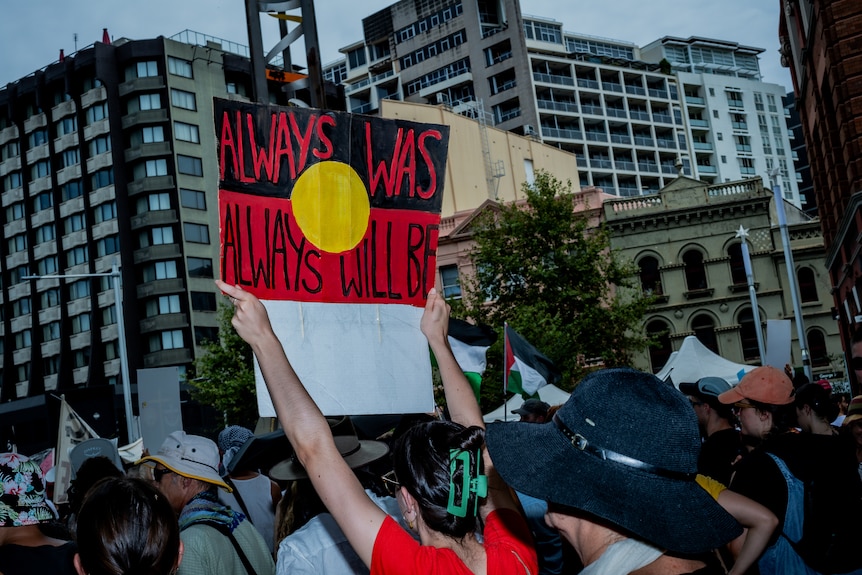
A planned Invasion Day rally on Australia Day will now go ahead. (ABC News: Brendan Esposito)
“It’s about getting the balance right between community safety and a right to protest. The protest that is planned by the First Nations community on Australia Day will be managed down through College Street and out of Southern Sydney,” he said.
“I am satisfied that reduces the risk to the community.”
He said he expects tens of thousands of community members to come into the CBD on January 26 for the protests.
It also paves the way for the March For Australia protest, also planned on Australia Day, to go ahead if other police requirements are met.
“We have significant and ongoing discussions with all protest organisers,” Commissioner Lanyon said.
The restrictions do not ban protests altogether but remove extra legal protections that are particularly relevant when groups seek to march through the streets.
The powers have been criticised by civil rights and protest groups who say they infringe on important democratic freedoms, and unfairly blame pro-Palestinian rallies for the terror attack.
However, the state government has argued they are necessary to promote harmony in the wake of the tragedy.
The NSW Jewish Board of Deputies has previously welcomed the restrictions, arguing they give the Jewish community space to grieve.
Look back at how ABC readers and other Australians responded to this live
moment.
1h agoTue 20 Jan 2026 at 4:59am
Press conference finishes
That’s all from Commissioner Lanyon.
For more on this story, you can keep up to date on the ABC News website.
1h agoTue 20 Jan 2026 at 4:55am
Significant police presence expected at upcoming rallies
There will be a significant police presence at upcoming rallies and protests in Sydney.
NSW Police will be monitoring the protests heavily.
“The job of the police is to enforce the legislation,” Commissioner Lanyon said.
“One of the challenges for police but, is that a lot of these protests are conducted, organised online so we do not know how many people are looking to come until we get there. The community want to be reassured, so we make sure there are sufficient police there.”
1h agoTue 20 Jan 2026 at 4:51am
Eastern suburbs still ‘grieving’, hence restrictions
Explaining the reasoning to maintain the restrictions to protest in Sydney’s east, Commissioner Lanyon acknowledged “that community is still grieving”.
“We want to de-conflict where we can.”
Show more