
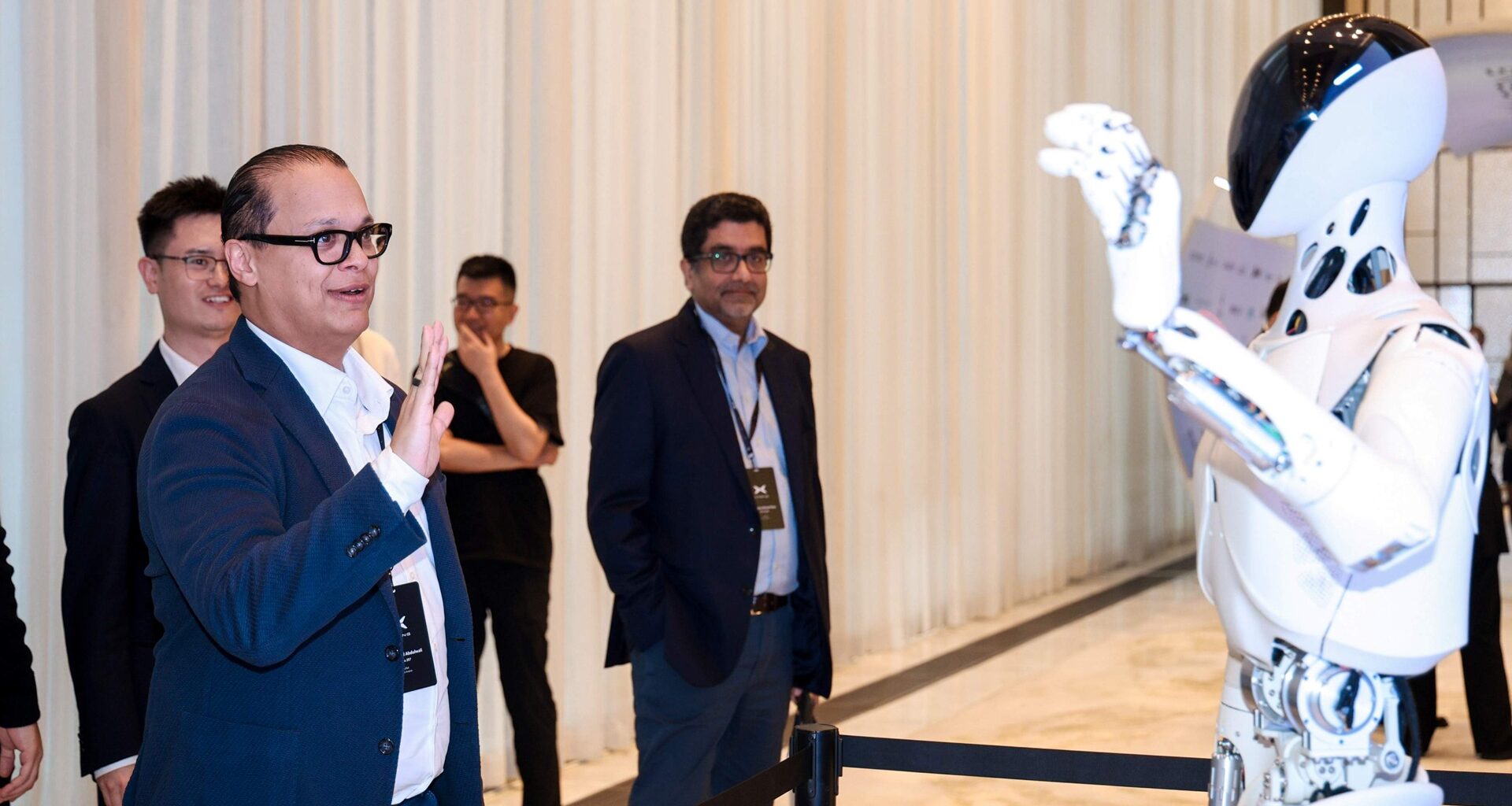
XPeng has completed the first unit of its ET1 humanoid robot prototype, marking progress toward large-scale mass production.
Founder and CEO He Xiaopeng announced the milestone on social media, saying the robot was developed to automotive-grade standards and rolled off the production line.
“Today, the first unit of our ET1 robot, developed to automotive-grade standards, has successfully rolled off the production line,” Xiaopeng wrote on Weibo, adding that he spent the day “observing and discussing the details behind it” with the team.
“This marks a critical step toward the large-scale mass production of advanced humanoid robots this year,” the CEO stated.
XPeng said it aims to begin mass production of humanoid robots by the end of 2026, a goal the company first laid out at its 2025 AI Day event last November.
The company first unveiled its humanoid efforts with the IRON robot at its 2024 AI Day event, showing a robot with lifelike movement and design.
Robot development over years
At the 2024 AI Day, XPeng revealed its first-generation IRON humanoid robot, based on years of research and development. The model featured more than 60 joints and 200 degrees of freedom.
The company said its humanoid robots share technology with its electric vehicles. “The robots have already been integrated into XPeng’s daily operations and focus on internal applications, such as factories and stores,” the company said at the time.
A year later, XPeng introduced a second-generation humanoid robot powered by its VLA 2.0 model and multiple in-house AI chips delivering thousands of trillions of operations per second.
The robot’s humanoid spine, bionic muscles, and flexible skin enabled smooth motion that looked strikingly human-like. During demos, many audience members and online viewers initially thought a person might be inside the robot suit.
To prove it was a machine, company representatives exposed parts of the robot’s mechanical structure on camera during the demo.
XPeng said the next-generation humanoid will first focus on commercial service applications. These could include retail, hospitality, and other service roles in industries rather than personal home use at launch.
AI and robotics strategy
The humanoid robotics effort is part of XPeng’s broader “physical AI” strategy, which includes autonomous vehicles, robotaxis, and other embodied intelligent systems.
The company’s AI stack, including large models and custom chips, is designed to unify robotics, autonomous driving, and other future mobility platforms.
XPeng’s humanoid robots remain in development, but the completion of the first ET1 prototype shows continued progress toward making advanced humanoids a real product line.