
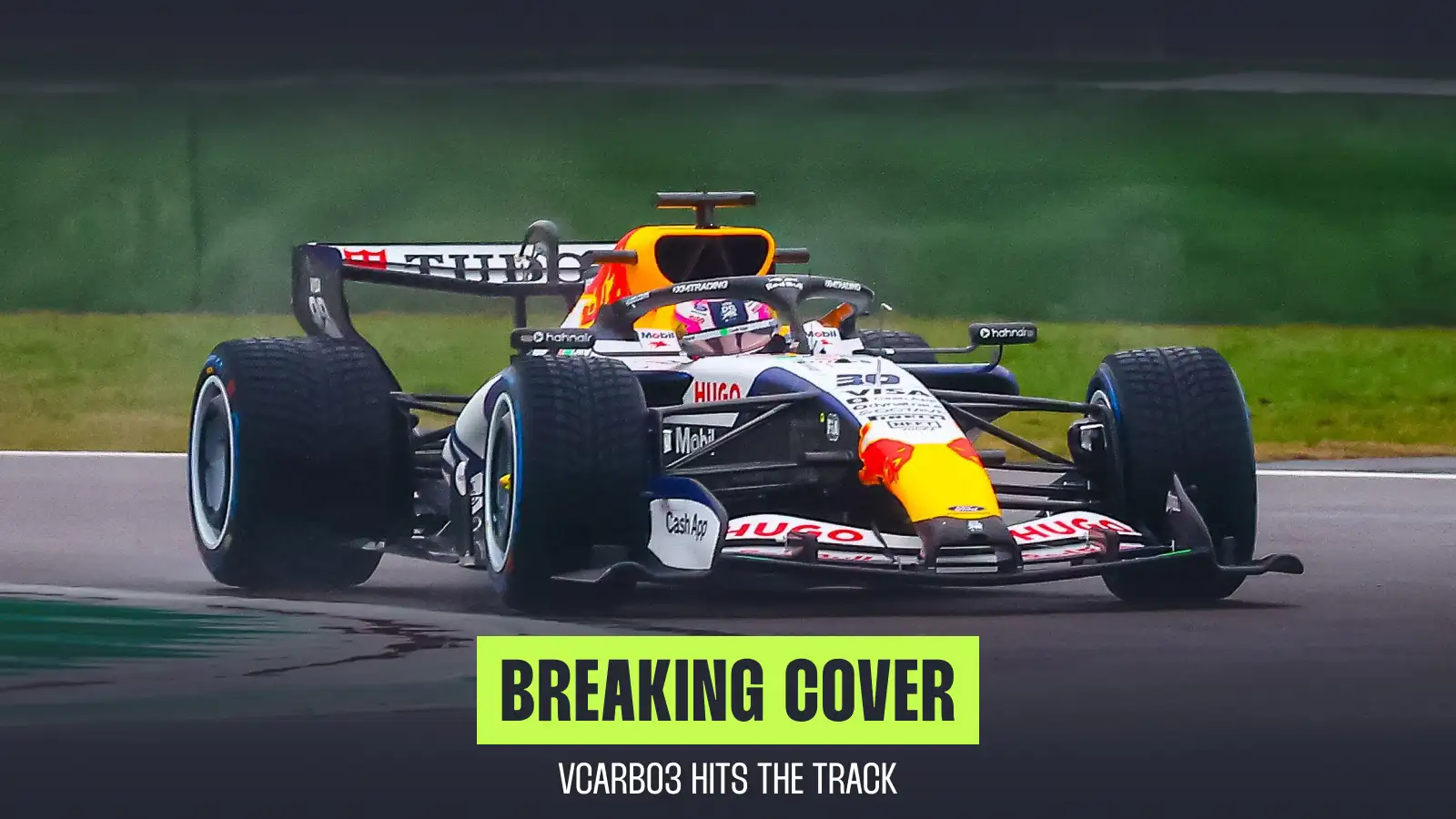
Racing Bulls have taken to the track with the VCARB03 at Imola today [Tuesday] for a demo run and revealed a few more details regarding how the car might shape up heading into pre-season testing.
We’ve seen the renders, now we get to see the physical car, well kind of…
Virtual reality
Want more PlanetF1.com coverage? Add us as a preferred source on Google to your favourites list for news you can trust
As expected, the renders shown by Racing Bulls a few days ago were clearly an early version of what the team worked on, but gave somewhat of an approximation of what we can expect this season, especially if we compared with the images of the Red Bull, Audi, Cadillac and Haas that have circulated.
By far the biggest difference we can see when comparing the render with reality is the redistribution of cooling, with the airbox size increased and shape completely redesigned, whilst the sidepods and the inlet have been adjusted accordingly.
The airbox seen on the car today is an uncoventional design, with a much larger and hooded topline to the inlet than is usually employed, albeit the V-shaped internal structure remains around the roll hoop. This hooded-style solution means there’s an angle presented, as the lower lip of the airbox sits behind the upper lip, perhaps as a means to deal with some of the losses associated with the halo and drivers helmet ahead.
Meanwhile, comparing the render solution with the one seen on track there’s also more support structure beneath the airbox inlet, with a pair of legs connecting it with the back of the cockpit, as the team deal with both the structural demands in this region, whilst also catering to their aerodynamic requirements.
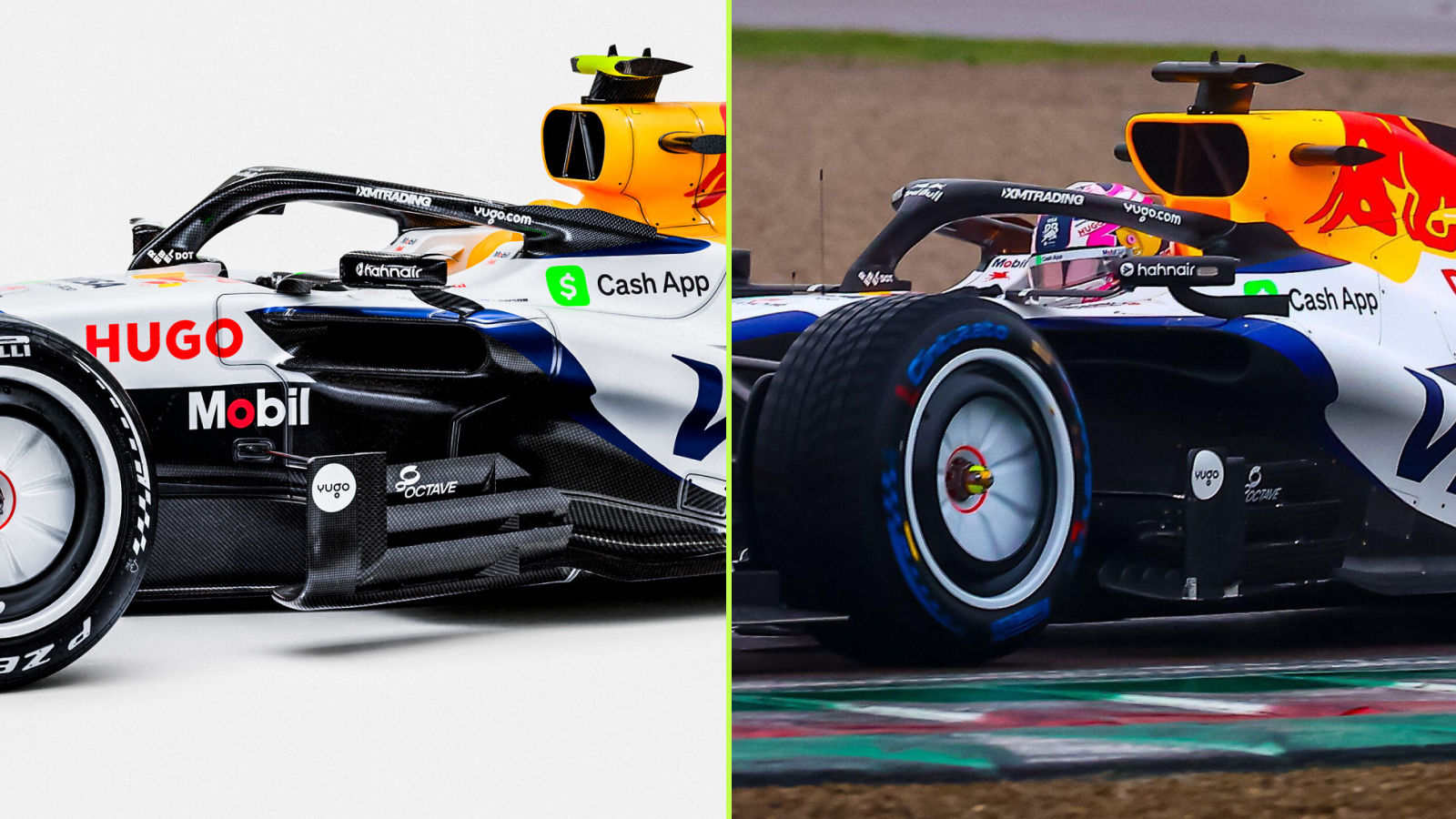
This redistribution between the airbox and sidepods comes as an effort to balance the demands of the powerunit, with the hybrid components and other ancillaries fed cool air by the centreline cooling, whereas the ICE is primarily cooled by the heat exchangers housed within the sidepods.
This arrangement is more advantageous in terms of being able to craft a sidepod and engine cover solution from an aerodynamic point of view, with their shapes more critical with these regulations in terms of recovering the losses associated with the front tyre wake.
As we can see when we compare the renders and track images, the size, shape and position of the inlet has been reworked, with a shallower letterbox section inboard, whilst it’s more open around the shoulder’s corner, which enables a more effective shoulder design for the undercut and sidepod bodywork too.
The mirror and stalk arrangement has been simplified too, with the slat-style approach used in the past and seen in the renders dropped for a conventional mirror body and an elongated vane at the outboard end.
As you might expect, there’s also some subtle differences between the design of the floor foot and deflector array when compared with the render, the real world variant being sat above the floor foot, rather than connected to it at the front.
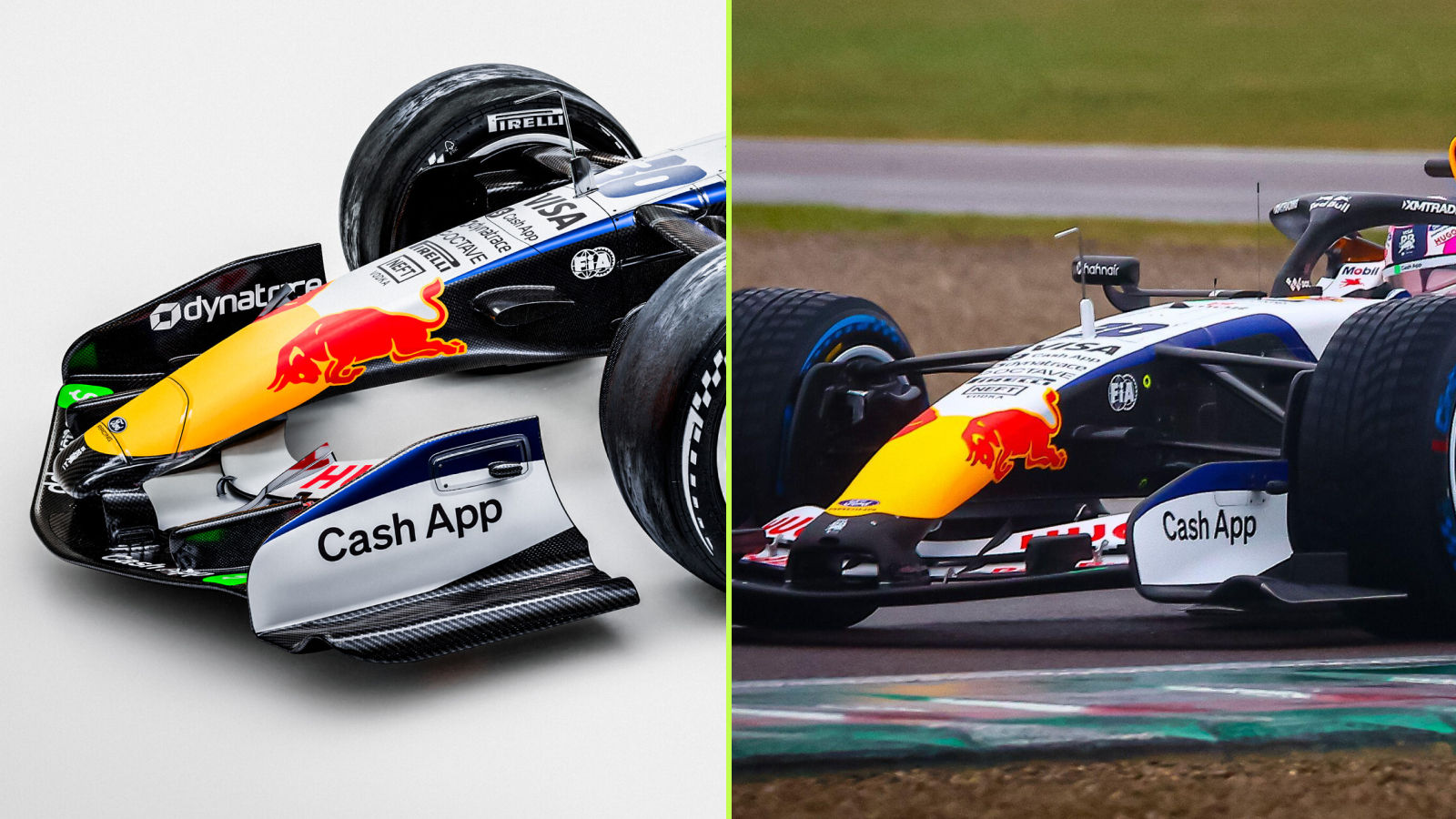
Heading back to the front of the car and there’s some difference to be seen when it comes to the nose and front wing too, with the front wing pylons more robustly attached to the nose tip, albeit retaining a similar effect to those seen in the render.
There’s still no diveplane attached to the side of the endplate on the VCARB03 that hit the track at Imola but, the overall architecture of the rest of that region remains similar, albeit there is a vertical vane on top of the footplate now to aid in guiding the pressure and airflow in that region. The images from the track also show more of the twist distribution across the endplate’s length, with the element twisted outward toward the upper trailing edge.
In terms of the suspension we now also have confirmation of a pushrod / pushrod layout on the VCARB03, with the car used in Imola confirming what the renders had already suggested.
Meanwhile, the other design oriented aspects of the cars design, such as the floor spat region ahead of the rear tyre and the rear wing are very similar to what we saw in the renders, albeit there’s clearly margin here for those to change in the coming weeks and months as the designs mature, not only for Racing Bulls but their rivals too.
Again, whilst it’s worth appreciating some of the differences between the model shown in the renderings and the car out on track, we should use caution. The rate of development early on with these cars is going to be extreme, especially as any more extreme concepts that can be held back and not shown to their rivals will be held back as long as possible.
Want to be the first to know exclusive information from the F1 paddock? Join our broadcast channel on WhatsApp to get the scoop on the latest developments from our team of accredited journalists.
You can also subscribe to the PlanetF1 YouTube channel for exclusive features, hear from our paddock journalists with stories from the heart of Formula 1 and much more!
Read next: F1 2026 uncovered: The game-changing potential of ‘Active Aero’ revealed