
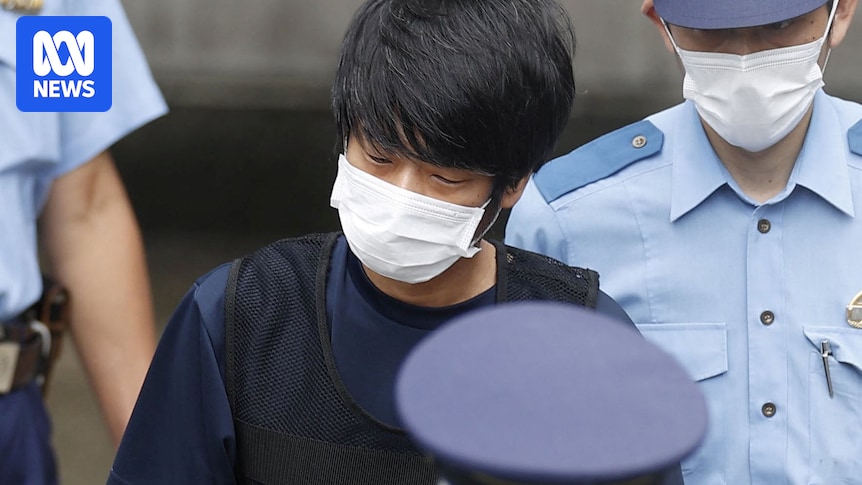
The gunman who assassinated former Japanese prime minister Shinzo Abe has been sentenced to life in prison.
Tetsuya Yamagami, 45, fatally shot Mr Abe in July 2022 with a homemade gun while the political leader was delivering a campaign speech in the western city of Nara.
Yamagami pleaded guilty to murder, and prosecutors had sought a life sentence.
Although Mr Abe was no longer serving as Japan’s prime minister at the time of his killing, the assassination stunned the nation.
Yamagami previously said he targeted the country’s longest-serving premier over ties to a group formerly known as the Unification Church, which he blamed for ruining his family by taking excessive donations from his mother.
How it unfolded
Tetsuya Yamagami pleaded guilty to fatally shooting Mr Abe as the prime minister stood surrounded by security, media and supporters outside the Yamato-Saidaiji train station in Nara in 2022.
Yamagami used a homemade gun — made of pipes, wood and duct tape — to shoot Mr Abe several times.
His legal team had called for a more lenient sentence, arguing a prison term of “no more than 20 years” was suitable.
Loading…
The 45-year-old has said he shot Mr Abe because he believed he and other Japanese officials had ties to the controversial Unification Church.
Yamagami’s mother had become a devoted member of the church and made extensive donations to it, which he said had left their family bankrupt.
In court, Yamagami said he thought Mr Abe was the “centre of the Unification Church’s political involvement” in Japan.
“I thought that striking back at the Unification Church and dealing it a blow was the purpose of my life,” he said.‘Moonies’ church faces dissolution
The killing of Mr Abe and Yamagami’s allegations led to high-profile investigations into the Unification Church.
The group, which started in South Korea, became known for its mass weddings, and Mr Abe had spoken previously at events related to it.
In early 2025, a Tokyo court ordered the church to disband — accusing it of manipulating followers into making large donations.
During Yamagami’s trial, prosecutors called for a life sentence and labelled the killing “an unprecedented crime in our country’s postwar history”.
They argued Yamagami’s “tragic” upbringing did not mean he did not know right from wrong.