
THE RUNDOWN
Severe solar flares have triggered an aurora alert across Australia.
The Bureau of Meteorology has set an alert 48 hours from January 19 with the strongest viewing conditions in Australia’s southern states.
Auroras have been spotted in uncommon places like the UK, the Netherlands and parts of France, a credit to the intensity of the storm.
The breathtaking auroras in Tasmania and Victoria caused chaos last night, with more activity predicted today, Wednesday 21, 2026.
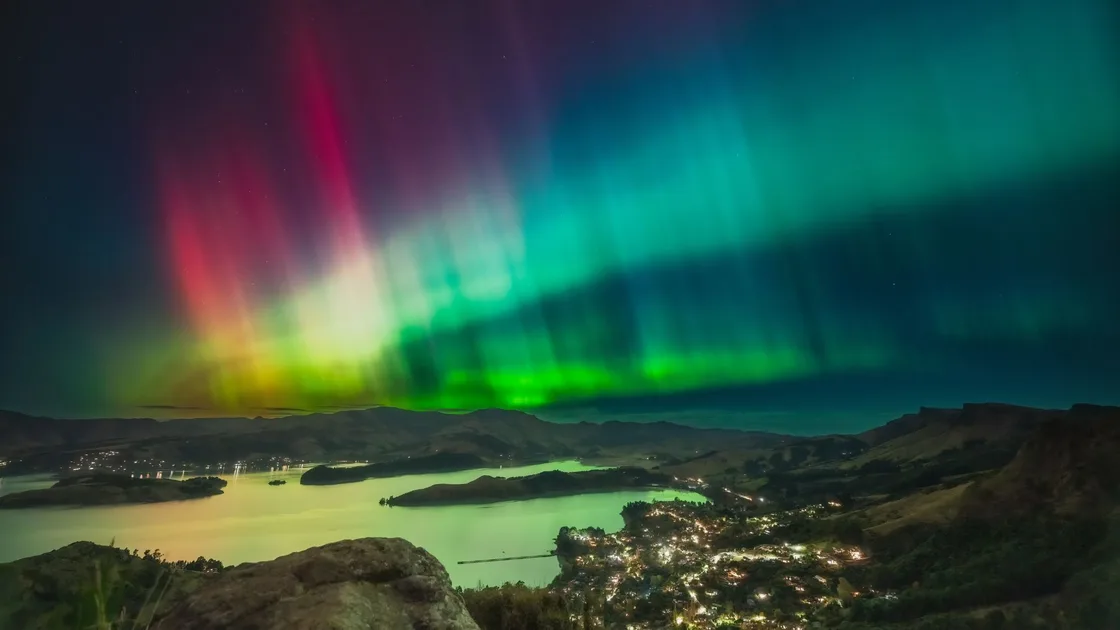
Tonight, Australian skies may host one of the year’s most ethereal natural shows as the Aurora Australis — the Southern Lights — prepares to shimmer above the southern horizon. A severe geomagnetic storm is sweeping past Earth thanks to a powerful solar flare and fast-moving coronal mass ejection from the Sun, making this an unusually strong event for January.
The Aurora Australis occurs when charged particles from the Sun slam into Earth’s magnetic field during a solar flare and collide with gases high in the atmosphere, igniting waves of colour across the night sky. The energy burst is expected to reach us on Tuesday evening and early Wednesday morning, putting on a spectacular show across Australia and there is more to come. According to The Age, the aurora caused “chaos” in the Cape Schanck, Victoria peninsula, with even the local mayor lining up in the hundreds deep line for a chance to catch the stunning light show. Breathaking scenes were also captured in Williamstown and in Merimbula, New South Wales, as shades of violet, lilac and acid green lit up the skies. And, we’re due for more geomagnetic activity tonight. Dr Rebecca Allen, co-director at Swinburne Space Technology and Industry Institute, said the aurora would appear on Wednesday night. “We could expect definitely again tonight to see some aurora,” she said. “It doesn’t look like it would be as strong as the ones last night, but still quite up there,’ she shared.
Aurora chasers and sky watchers are advised to head outside after sunset once the sky darkens — roughly an hour or so after the sun dips below the horizon — and find a clear, southern-facing view away from city lights.
So what’s causing the intensity? The Coronal Mass Ejection (CME) has been listed as a “severe” Geomagnetic Storm by the US National Oceanic and Atmospheric Administration’s Space Weather Prediction Centre. “An S4 severe solar radiation storm is now in progress. This is the largest solar radiation storm in over 20 years,” the agency shared on X (formerly Twitter).
“The last time S4 levels were observed was in October 2003. Potential effects are mainly limited to space launch, aviation, and satellite operations.
The state most likely to experience a strong display is Tasmania; favourites like kunanyi / Mount Wellington, Carlton Beach and Goat Bluff could offer prime perches to catch the lights dancing overhead. But clearly Victoria and New South Wales can expect a slice of the action.
Aurora displays are fleeting and can shift with cloud cover and solar conditions, but even a faint green or pink glow is a reminder of the cosmic forces at play above us. Keep an eye on real-time space weather updates, and if you do catch a glimpse, it might just be one of those bucket-list moments where science and beauty converge
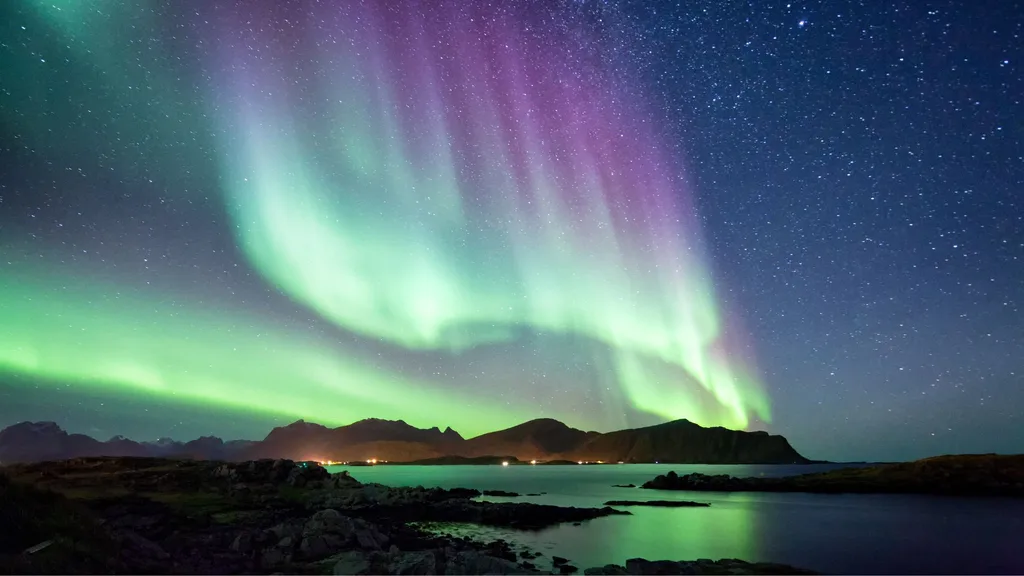 Image: Getty
Where Can You See The Aurora Australis Tonight?
The Bureau of Meteorology’s warning has been issued for the next 48 hours from January 19, with the strongest viewing conditions expected in Australia’s southern states: Victoria, Tasmania and South Australia. Because of the intensity of this solar flare, there is a chance that solar activity could push the aurora beyond its usual reach. Meanwhile, NOAA Space Weather Prediction Centre has identified peak windows, although the intensity of tonight’s geomagnetic activity could mean the aurora arrives earlier and lasts longer.
Aarun Chandran, who runs the Aurora Australis Facebook page, spoke with ABC Australia earlier today and said that while Australians will have to wait for nightfall, the activity overseas is looking spectacular – and cropping up in unexpected locations, which might give hopeful aurora watchers in Australia’s northern states hope. “I’ve seen photos from the UK, the Netherlands and parts of France and Germany, and these are not common locations…. To see something tonight, you just need a little bit of activity and hopefully clear skies.”
“It wouldn’t hurt to check it out for half an hour or an hour around 10pm, wait for the nautical twilight to finish around 10pm, then stick around,” he advises.
Real-time updates are available vis the NOAA Space Weather Prediction Centre and the Bureau of Meteorology.
Australian Time ZoneState Or TerritoryBest Aurora Viewing Time AEDT (Australian Eastern Daylight Time)NSW, VIC, TAS, ACT10:00pm – 3:00am AEST (Australian Eastern Standard Time)QLD10:00 pm – 2:00am ACDT (Australian Central Daylight Time)SA10:30pm-2:30am ACST (Australian Central Standard Time)NT9:30pm -1:30am AWST (Australian Western Standard Time)WA8:00pm – 12:00am
How To See The Aurora Australis
As with the full moon, city lights and cloud cover are the enemies of the aurora, which is one of the reasons sightings are more common in rural areas. Chandran says that, as with shooting stars and the Milky Way, letting your eyes adjust is advisable. “Take a photo with your phone as it sees more colour than your eyes… take long exposure shots for a couple of seconds if you’re seeing any colours and play around.” As Aurora’s form around the Earth’s magnetic poles, and because Australia sits in the southern hemisphere, lights will usually appear low on the southern horizon, so find your spot and look south.
What Is A Solar Flare?
A solar flare is a sudden and powerful eruption of magnetic radiation and energy from the Sun’s surface. It is caused by the release of energy from twisted magnetic fields near “sun spots”, heating plasma to millions of degrees and emitting light, X-rays, and radio waves that affect the Earth’s atmosphere. Solar flares are ranked in ascending intensity from A, B, C and up to X. According to Space, today’s solar flare measured X1.9, placing it right in the upper tier of solar outbursts.
Is There An Aurora Australis Tonight?
Yes, many states in Australia can expect to see the Aurora Australis tonight, thanks to powerful geomagnetic storms.

Senior Writer, Fashion + Beauty
Sign up for our newsletter
Want 15% off at Adore Beauty? Sign up to the latest news at ELLE.
By joining, you agree to our Privacy Policy & Terms of Use
About your privacy Are Media Pty Limited collects your personal information through this site to process registrations, send out newsletters, communicate offers, discounts, competitions, or surveys, and to provide you with targeted advertising based on your online activities. Our Privacy Policy contains information on how you can access or correct your personal information, which entities we may disclose your personal information to (including overseas recipients), how to opt out of targeted advertising, and how to lodge a complaint.