
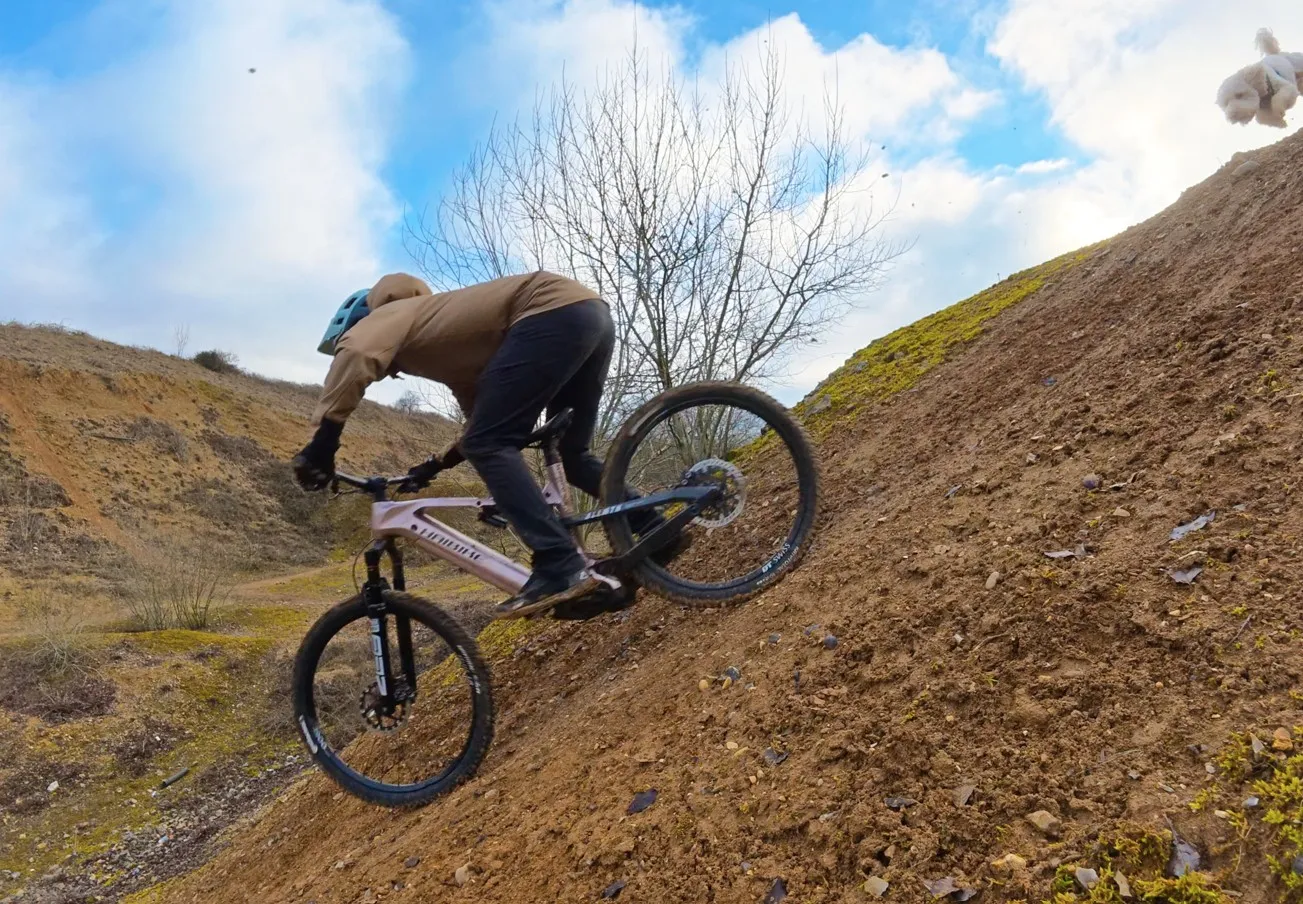
We’ve had a few outings on gearbox driven e-bikes now, but the Haibike AllMTN CF 11 represents our first chance to review the system under the high strain of an all mountain e-MTB application.
The last time we had an outing on a Pinion gearbox system, during our Riese and Muller Delite5 GT review, we came away suitably impressed by a system that built momentum well and vastly reduced the need for maintenance, adding long term value. In this instance, however, the long-distance e-MTB touring application asked a lot less of the system, while Haibike and its AllMTN platform is tasked with climbing rugged mountain terrain and descending with the same ease.
If you’re shopping in this category, Cycling Electric has a detailed catalogue of full suspension electric mountain bike reviews to suit every need.
£7,899 | View offer
Pros
Built for big mountain adventure
Weight placement of heavy parts is as low as can be
Sharp and playful Magura brakes
Trustworthy tyres on multi-terrain and wet/dry
Cons
Some audible squeal from the drivetrain
Have felt better climbing control from competitor motors
Specifications
Stated weight: 24.4kg (L)
Stated range: miles
Frame material: Carbon fibre
Motor: Pinion E1.12 MGU 12-speed gearbox motor
Battery: InTube 800Wh removable (Possibility to add FIT range extender)
Drivetrain: Pinion E1.12 MGU 12-speed gearbox
Brakes: Magura MT5 4-piston hydraulic discs
Saddle: Selle Royal Vivo Custom
Tyres: Continental Kryptotal (mullet 27.5/29″ mix)
Suspension: RockShox ZEB Ultimate RC2 fork with 160mm of travel / RockShox Super Deluxe Ultimate RC2T rear shock, 160mm travel
Included accessories: Remote dropper post
Haibike AllMTN 11 review: Who is this e-MTB pitched at?
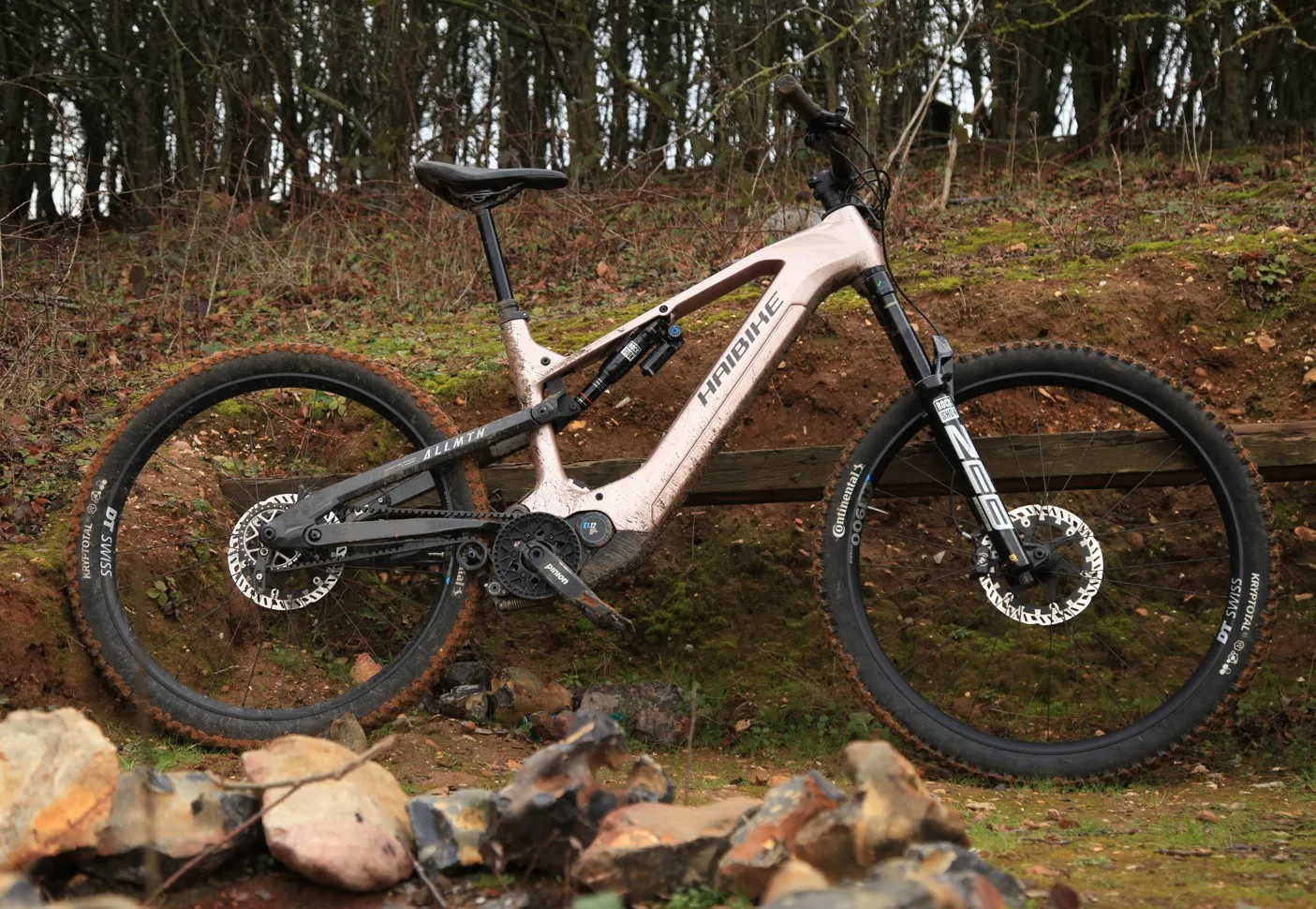
To cut to the chase, the Haibike AllMTN CF 11 is your big mountain dream build e-MTB with a price to match its uncompromising spec. For most of us, this flagship won’t be within our budgets, but for those seeing the value in investing in a bike that’s built to last and indeed to have lowered maintenance costs over time versus traditional derailleur-clad e-MTBs, perhaps you’ll see the value right away.
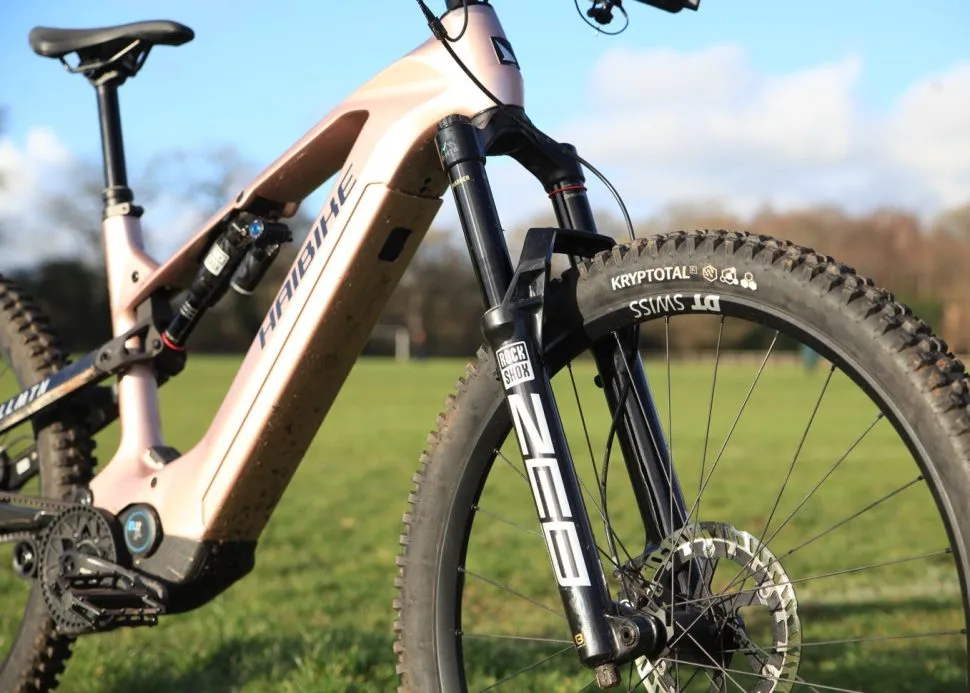
This is a long-travel e-MTB with 160mm in both the front fork and rear shock, plus it’s got a hefty 800Wh battery inside the sculpted downtube. Those two factors alone tell you that this is more than just an enthusiast tier product, rather something that requires bike handling skills and an ability to manage a bike built for downhill. Needless to say, the weight carried requires some strength to tame as well, however, if you’ve a background in downhill riding you may well be used to it.
This Haibike AllMTN CF 11 review is for the current model year and replaces a prior write-up from 2024, when this bike carried a Bosch mid-motor.
The Pinion E1.12 MGU gearbox: Performance and perks
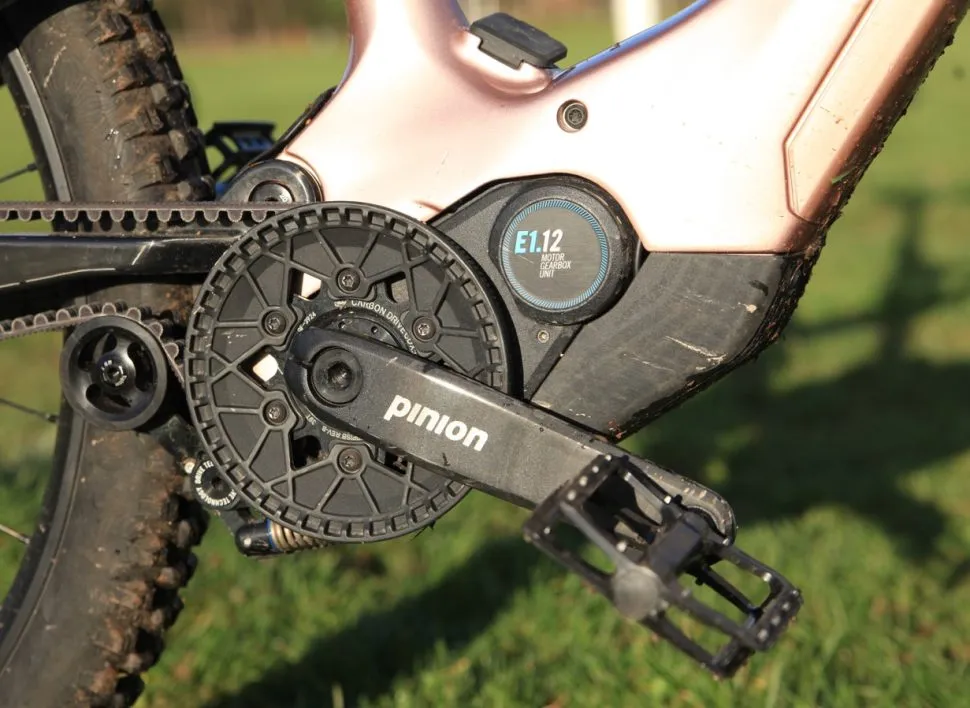
For those who have yet to deep dive into the subject of gearboxes on bikes, Pinion has been perhaps the longest-standing and biggest-name brand in the space, though others like IntraDrive are starting to make a case to brands for adoption of its system. That said, this is a technology in its relative infancy and currently seen on probably less than 5% of e-bikes, whether urban or mountain. This also means there’s a price premium to pay, not only because the technology has major pros versus a traditional derailleur system in terms of system maintenance, protection and reliability, but also just because the economies of scale are as yet nowhere near those of traditional gearing.
That said, we’ve certainly seen more expensive e-MTBs with this level of kit lately, so in value terms alone, this Accell Group-backed brand has come in very reasonably in the broader pool of premium big mountain products. Plus, it’s always worth flagging that this is the top-spec available – the Haibike AllMtn platform runs down as low as £3,145 for the AllMTN 4 (accounting for a bit of discounting on 2025 builds). Of course, the build kit is substantially different and derailleur-based.
The significant upshots to a system like this are many-fold, though not totally without cons. The plus points include, but are not limited to, a single packaged gearing and motor system that communicates via sensors to sync a rider’s momentum to a fine degree with the motor’s help. This is enclosed package is said to need an oil change only after 10,000 kilometres of riding, which is far beyond the service window of traditional systems. Another benefit to doing things way is to save mountain bikers the well-known anguish of smashing your derailleur on a rock high up on the trail.
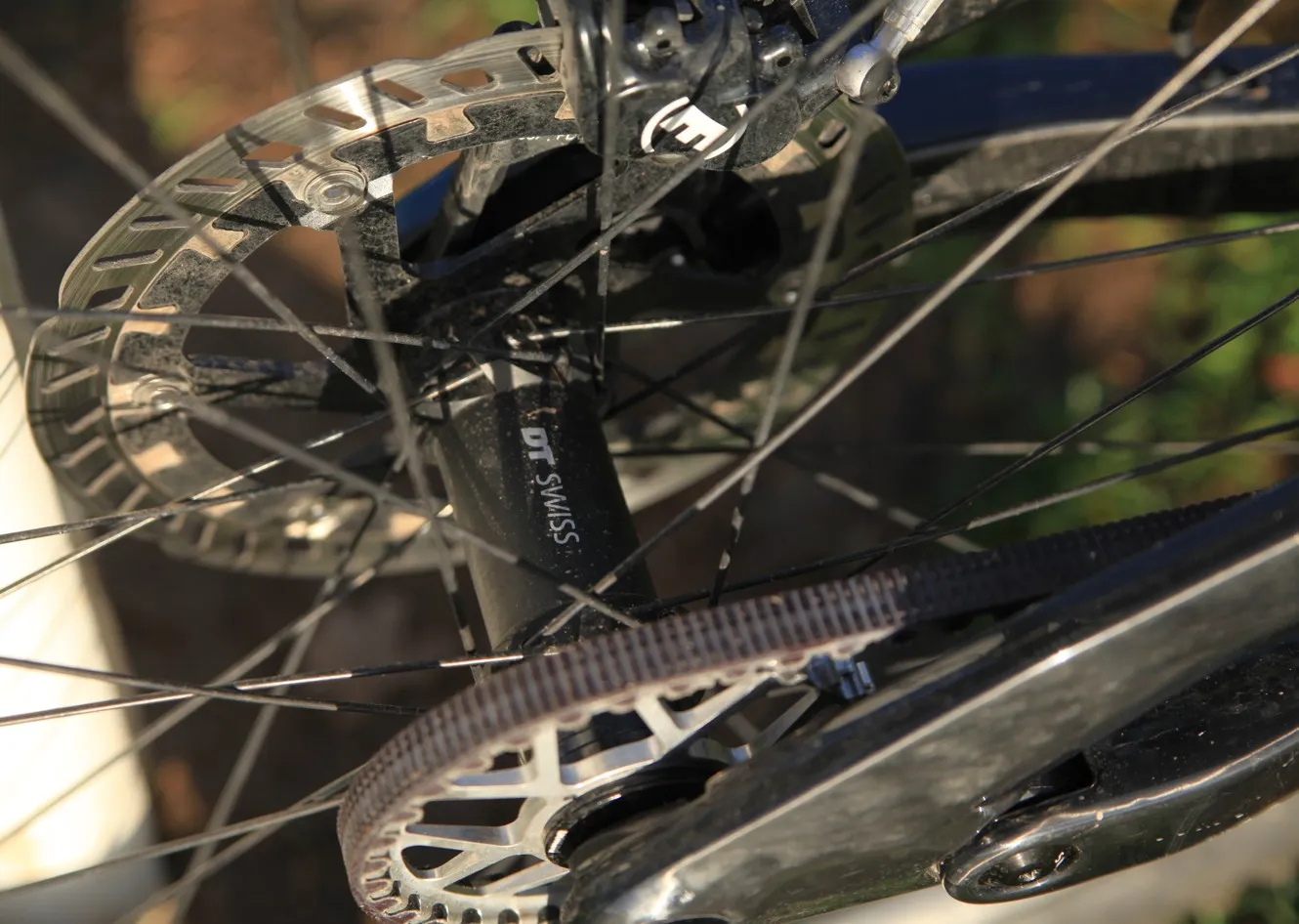
A tensioner located behind the motor prevents the belt from sliding off the cogs, the belt being another perk of the system. Naturally, these carbon fibre based belts don’t require any oil, are generally a stronger solution that chains, so better for high torque applications, plus they shed dirt pretty well.
All in, the Pinion MGU weighs around 4.1kg, which needless to say has more bulk than competing Bosch, Avinox or Shimano drives, for example, but you must factor into this the loss of weight on drivetrain components that are now enclosed.
How did I find this focal point during my Haibike AllMTN CF 11 review? A mixed bag.
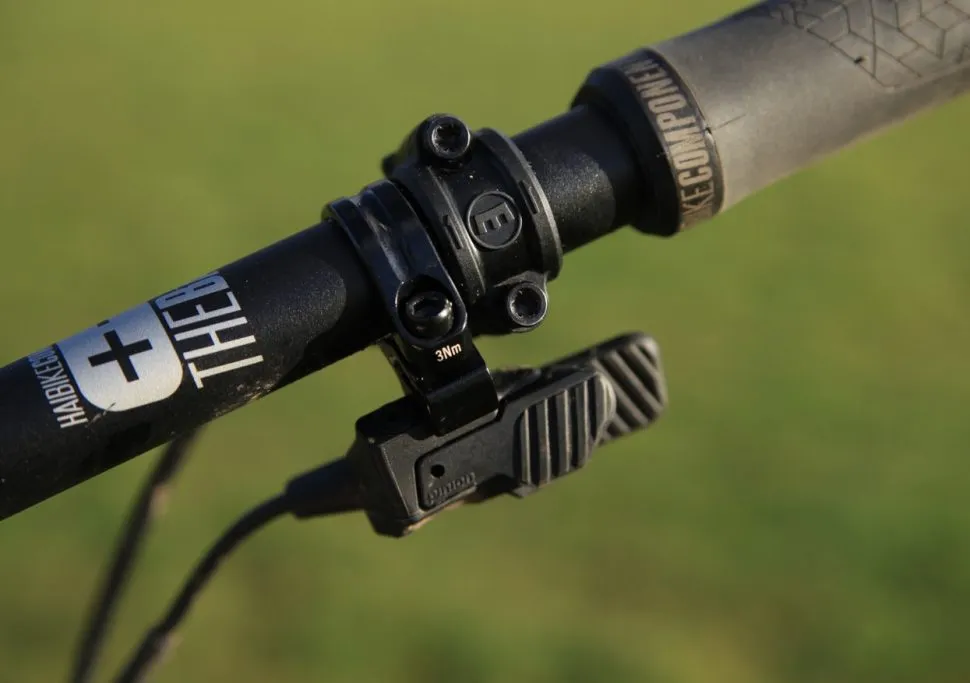
To begin, you’ve control over the output of the gearing via paddle controllers at the handlebar, which are nicely grooved for grip even with gloves on. To flip the motor assistance up of down there’s a slick and slimline collar on the left hand side that tucks really neatly between the brakes and grips.
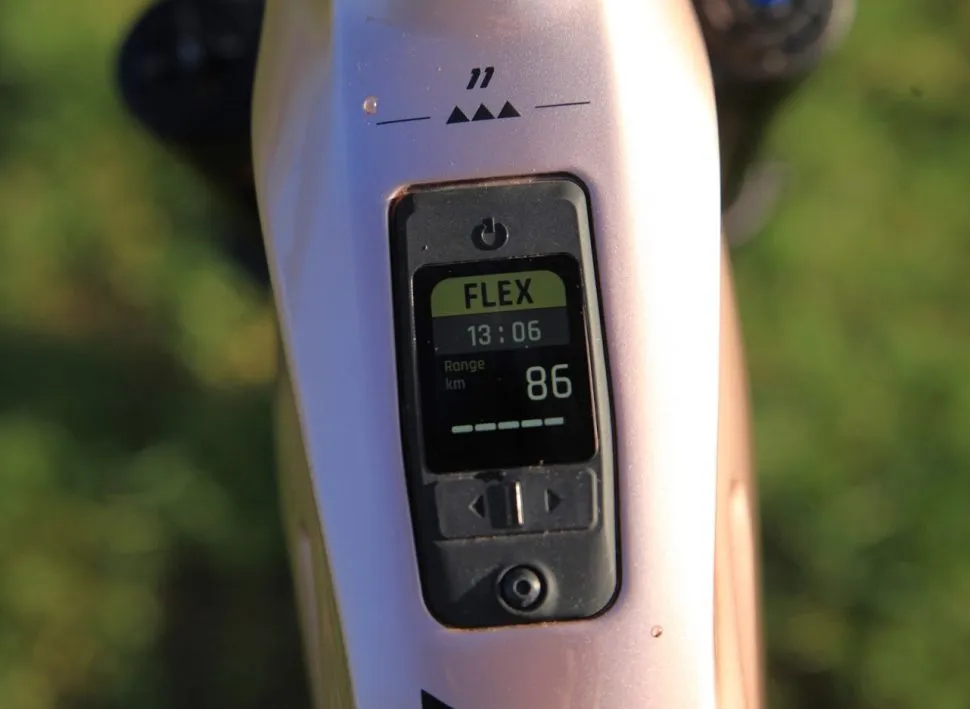
Down on the top tube is a display which gives you the option to ride in eco, Flow, Fly or Flex – in other words, adjust the assist strength up or down. This well lit and colour contrasted display can also reveal other ride metrics if you cycle through using the buttons at the base. As standard it will tell you the time and indicate your remaining range according to the power mode you currently have. Seeing that tally adjust in real time as you move from mode to mode is very helpful to ride planning. Of course there is too a partner mobile app to relay further deep dive details.
Related Articles
A collaboration with FIT on the battery equipment has its upsides, with access to hefty range extenders and other electronic perks, inclusive of the ability to add an e-bike tracker that also activates a motion alarm. As standard, the app can display your bike’s last known position thanks to a GPS chip. Though you can activate a digital motor lock remotely, this doesn’t stop the bike being ridden, just cuts motor support (which to be fair does make things very difficult). Here Pinion is perhaps a step or two behind some competition.
Within the app you can toggle into features such as Pre.Select or Auto.Shift, which gives you greater flexibility to let the tech take over if you are happy to let the sensors decide what gearing is best as you apply pedal pressure. In the app you can too toggle each support level from the motor, adjusting how responsive and punchy you want the torque to be in each mode.
If you’re a big user of Komoot or Strava, you may like to play around with the navigation features, though these won’t work if you drop signal or go offline, so it’s best to import a file. Finally, it is viable to connect to a heart rate monitor, something we picked up while toggling the settings during our I:SY P12 ZR compact review.
That leads nicely into a clear distinction that I think I’ve picked up on with this system. Both times I have tested it on easier going applications have not turned up any flaws. However, climbing steep, loose terrain in a quarry testing ground that I often visit, the Pinion MGU didn’t seem to hold up to quite the same degree. I noted a slight squeal, reminiscent of a car cam belt slipping, that I can only assume comes from the belts inside the gearbox. I didn’t feel any issues in performance, but the noise was mildly concerning from a device that’s very well sealed. This tended to happen under high load.
As for out and out climbing grunt, comparable to say a Bosch or certainly the Avinox system, I was battling with the super steep terrain earlier on the climb with high load gear changes featuring a slippage that killed momentum when I was really pushing to be rescued.
That’s not to say this system can’t climb, it certainly can over non technical 5% climbs, it just doesn’t yet match up to the competition in pure momentum terms when the going gets tough and into the 10% and technical range.
If you were wondering, the power metrics behind the system are 85nm of torque and a 600W peak power, so it adds up that these numbers are now mid-tier as motor makers chase the next leg up. That said, with the Pinion MGU, you do have a massive 6005 gear range, so power aside, your own efforts could really help things along. The low gear felt really low, so as long as you’re climbing firm terrain (I often wasn’t) it works well.
Haibike AllMTN 11 review: The bike and the ride
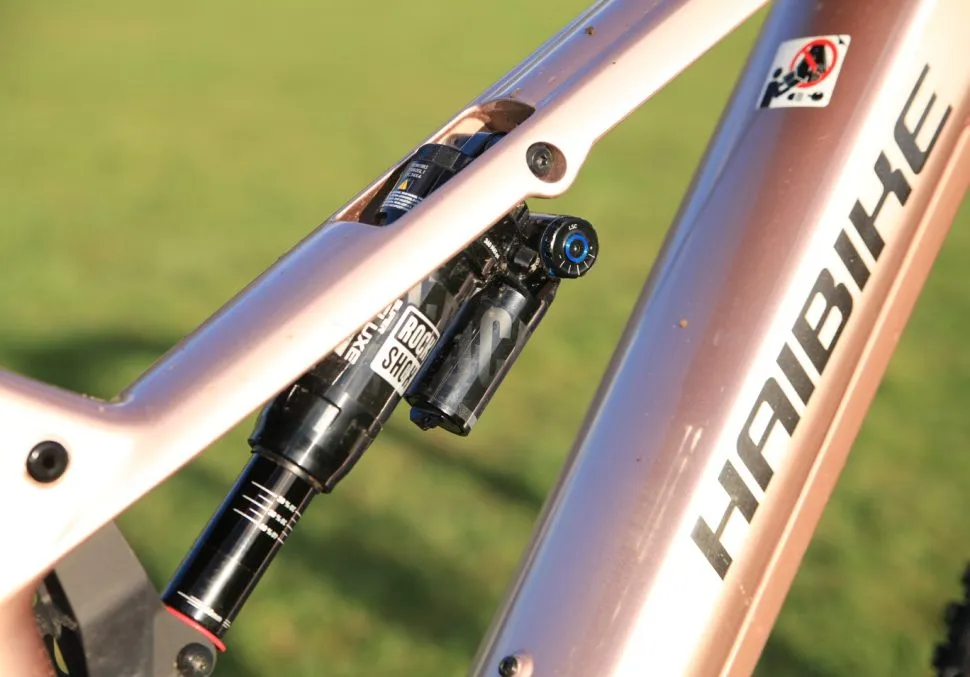
Take a close look at the Haibike AllMTN frame and you can see fine distortions in the frame that reflect how the carbon weave has been manipulated to backup this e-bike’s ride characteristics. This is especially noticeable above the head of the rear shock, which is nestled into a split section of top tube.
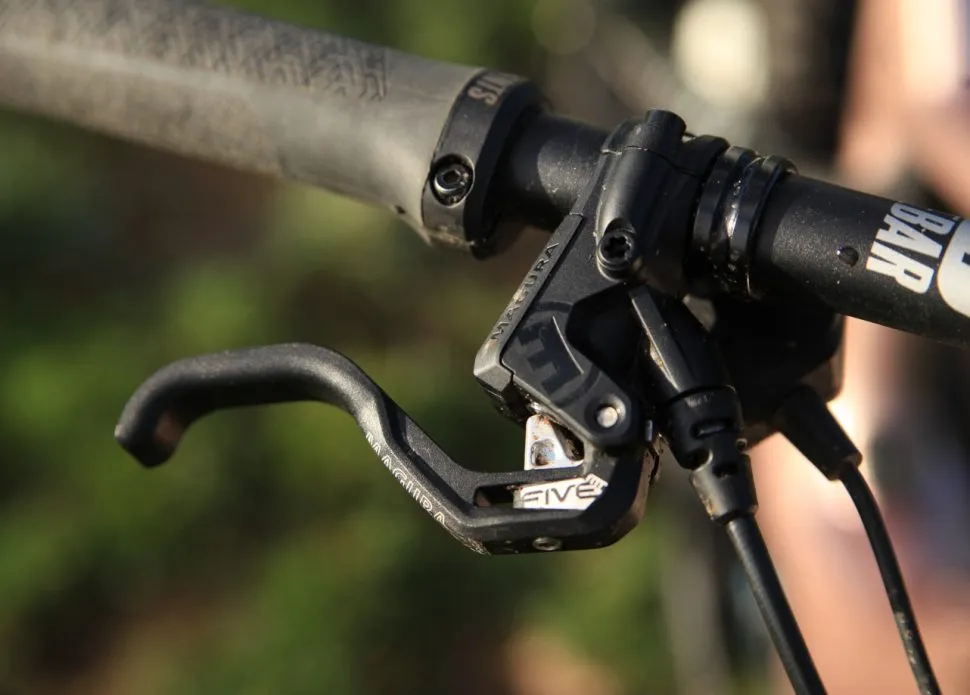
That feeling that Haibike has paid close attention to how the bike handles by making incremental adjustments feels like it translates into precise handling. Most of my test riding with this bike took place in horrible conditions, so I needed to feel confident when leaning into steep slopes and a ton of assurance was delivered here both in terms of how the frame reacted to my throwing it into corners, but also I have high praise for Magura’s MT5 brakes, which are fast becoming my favourite hydraulic discs for this kind of e-MTB.
These brakes have a really neat ergonomic lever design that feels perfect for two-finger clasping. Inside the lever, there’s a little bite point adjustment too, so you can fine-tune where the brake bites. I much prefer a brake that is not at all ambiguous about the point where it’s 90% of the way to locked and, by feel alone, that was easy to determine with these large rotor-clad brakes. The stopping power was predictable, able to be modulated and playful if I were using the brakes to cut into downslope corners.
Conclusion: Handling business
On the suspension, you’ve a premium pairing of RockShox ZEB ultimate fork, plus a RockShox Super deluxe Ultimate rear shock. On the fork there’s tuning options on the damper to dial in high- and low-speed compression, as well as the rebound adjustments. All of these combined, I was able to confidently rattle my way down some really steep and loose descents without fear. This bike feels extremely comfortable pointed downward.
Part of that comes from the contact with the ground, which comes from another component that has been impressing me in the past year – Continental’s Kryptotal tyres. Anecdotally, the compound on these feels like it has just the perfect amount of rigidity in the sidewalls and soft compound grip in the top to really bite down on the trail, giving this bike a bit more predictability.
These tyres come attached to DT Swiss wheels that are built for the application. I’ve reported before on the lengths DT has gone to to shore up its hubs for heavier, battery-based riding and though you can’t see them, there are oversized precision bearings in the hubs that should stand up to riding far more aggressive than I was able to deliver.
All-in-all, for the mid-winter riding I was able to fit into a month-long test period, the Haibike AllMtn was a very satisfying bike to have, though I will now need to find another e-MTB with the Pinion MGU between the cranks to determine whether some of the minor issues I had are more commonly felt.
As with the albeit aluminium Neuron:ON reviewed here, I am again left wondering if the weight of full fat electric mountain bikes will outweigh the need for range in time. Sure, it’s great to have proper all mountain range to hand, but these are burly bikes. As an experienced mountain biker, I’ll admit to struggling to really pop these bikes onto the back wheel properly when I need to push through a sudden dip, or handle a bit of airtime. Those more experienced than I still seem to be coping, but as I wrote in a set of 2026 e-bike world predictions (arguably hopes) I do expect at some point soon manufacturers to flip back from range priority to consideration for handling. Range extenders are always an option, so to my taste having an 800Wh battery is, for a lot of southern UK riding at least, overkill.