
January 21, 2026 — 7:30pm
Save
You have reached your maximum number of saved items.
Remove items from your saved list to add more.
Save this article for later
Add articles to your saved list and come back to them anytime.
Got it
AAA
Renewable energy use has surged to record levels across the eastern seaboard, breaking past 50 per cent of the electricity mix in the final three months of last year and helping the grid ride a summer of extreme heat stress and intense demand from power-hungry air-conditioners.
The contribution from clean energy in the December quarter was the highest it’s ever been, accounting for 50.1 per cent of eastern seaboard’s electricity grid, new figures reveal.
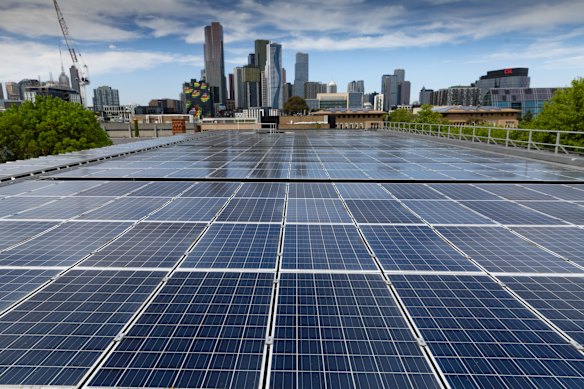 Renewable energy reached a record high share of the electricity grid in the December quarter. Jason South
The record result, revealed in an update from the Australian Energy Market Operator, is being hailed as a milestone achievement for the nation’s transition from polluting coal-fired power stations to a greener future.
Investors and Australian governments have been pouring billions of dollars into clean energy and storage projects, driving continued growth in renewables’ share of the grid compared to the same time a year earlier, and squeezing fossil fuels to an all-time low across the quarter.
Grattan Institute energy and climate change director Alison Reeve said the December quarter record was an important litmus test for the grid. Until recently, Australia’s grid being able to cope with high levels of power from renewable energy sources had been derided as unachievable by clean energy detractors.
“I’m old enough to remember when people said the grid will never hold up with 20 per cent renewables in it, and the grid is still holding up now,” she said.
“This is a real-world validation of what the models were telling us.”
However, Reeve said the record was not evidence that the grid was ready to cope without fossil fuels to back up weather-dependent renewables. Over the course of the entire year, including winter, when less solar power is available, renewables averaged about 44 per cent of the grid.
The heatwave that hit Sydney and Melbourne in the second week of this year, when temperatures topped 40 degrees, coincided with a rare instance where none of the major coal plants was experiencing an unplanned outage, Reeve said.
Related Article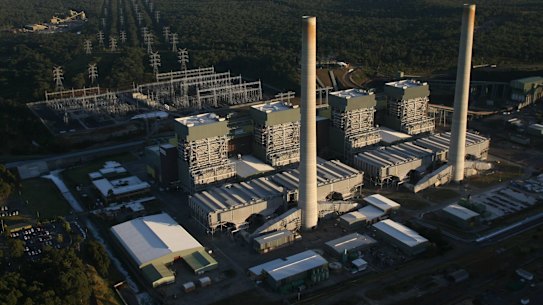
“There was a bit of an element of luck there, with all of the coal plants remaining online,” she said.
“If that heatwave had hit probably a week, week and a half earlier, there was actually quite a bit of coal offline, and we potentially would have been in trouble.”
Luckily, there was plenty of coal and renewable power supply available.
On January 7, when Melbourne exceeded 40 degrees, as well as January 10, when Sydney topped 40 degrees, fossil fuels and renewables delivered a roughly equal share of energy to the grid, with 48 per cent and 52 per cent of electricity generation, respectively.
Renewables also notched another record in the December quarter of 2025, rising to an all-time high of nearly 78.6 per cent of the entire east coast electricity mix during a half-hour burst between 11am and 11.30am on October 11.
Green energy has grown rapidly in the past decade, rising from 20 per cent of average annual electricity supply in 2018 to 30 per cent by 2021. Renewables reached 40 per cent of the electricity supply in 2024, and in the past year exceeded 43 per cent.
The Albanese government has committed to boost renewables to 82 per cent of the grid by 2030. But the build-out of renewables and the thousands of kilometres of new power lines to link them to major cities is still lagging what experts say is required for Australia to achieve its 2030 target and replace the nation’s ageing coal-fired power stations.
Australia’s biggest coal-fired power generator, Origin Energy’s Eraring in NSW, had its closure delayed by another two years on Tuesday, following warnings that the electricity grid was under-prepared for its retirement, angering environmental advocates who argue for faster and deeper cuts to greenhouse gas emissions.
Related Article
Eraring’s extension also highlighted a political vulnerability for the Albanese government, which is facing criticism over rising energy prices and is racing to add more renewables to cut emissions and replace retiring coal plants while keeping the lights on and bills stable.
Energy Minister Chris Bowen said the renewable records show the government was managing the shift from fossil fuels to renewables.
“When coal breaks down, your bills go up. And coal is breaking down a lot. That’s why we’re working to get more renewables into the system, to bring down prices for Australian households and build a more reliable grid for the future,” Bowen said.
AEMO chief executive Daniel Westerman said the record half-hour period of peak generation had risen from 54.5 per cent in 2021 to 78.6 per cent this year and showed the clean energy transition was on track.
“Consumers, industry and governments are driving this transition, with coal-fired generation needing to become more flexible to accommodate higher levels of renewables,” Westerman said.
Cut through the noise of federal politics with news, views and expert analysis. Subscribers can sign up to our weekly Inside Politics newsletter.
Save
You have reached your maximum number of saved items.
Remove items from your saved list to add more.
 Mike Foley is the climate and energy correspondent for The Age and The Sydney Morning Herald.Connect via email.From our partners