
DAVOS, Switzerland — Global inequality was a central theme at the World Economic Forum this week in Davos, as some of the world’s most powerful people gathered in the Swiss mountain enclave for the annual week-long discussion of global politics, money and technology.
It provided a fitting—if not also ironic—location for Todd Boehly, the co-owner of the Los Angeles Dodgers, to defend his team’s superlative spending. The MLB team ignited baseball fans again last week after it signed Kyle Tucker to a four-year, $240 million deal. Tucker was among the priciest free agents of the offseason, and he joined a franchise that has won the last two World Series and currently has both the sport’s highest revenue and its largest payroll.
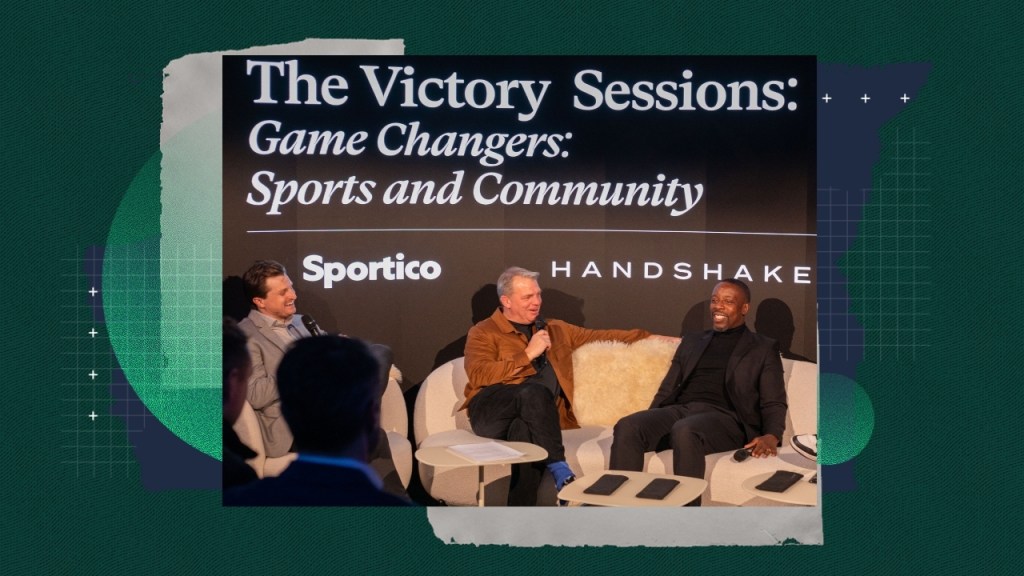
At an event hosted by Sportico adjacent to the forum in Davos, Boehly was asked whether the current economics of baseball were fair, and what it might mean for the sport’s looming labor fight. He started his answer by referencing the free-spending Yankees teams of the late 1990s and early 2000s, and the team’s 27 World Series titles.
“The facts are that ultimately you want really big teams that are pulling the league forward,” Boehly said in an interview.
The Dodgers have become a Rorschach test of sorts for baseball fans who are growing increasingly frustrated with the sport’s slanted economy. Some see the club’s owners as blowing the top off the sport, flexing their deep pockets to price out all but just a few other rivals. Others believe they are doing what all 29 other owners should—spending to win.
Baseball’s growing inequality has also become a central discussion in the sport’s looming labor fight. MLB’s current labor accord is up at the end of the upcoming season, and many in management have used the dominance of the sport’s elite as an argument for a salary cap. The MLB players union has unsurprisingly positioned that as an existential red line.

Boehly, who is the chairman of Eldridge Industries, said baseball was heading into what he called a “healthy” evolution. He also cited “mark-to-market” accounting, an economics principle in which assets and liabilities are re-priced as market conditions change.
“Demand for the sport continues to grow, and I think that there’s just going to have to be a little bit of teeth-gnashing about how it moves forward,” he said. “And I also think that there’s a mark-to-market that’s going to occur. And when those types of situations occur, there’s always a little bit of volatility.”
Boehly wasn’t the only person at the event to reference the Yankees, baseball’s most valuable team, in defense of the Dodgers. Former MLB star Alex Rodriguez, now the owner of the NBA’s Timberwolves and WNBA’s Lynx, threw his support behind the baseball team’s owners.
“It would be so hypocritical for me to dog the Los Angeles Dodgers when I played for the New York Yankees, and we were spending more money than anybody,” Rodriguez said in an interview.
While Boehly and Rodriguez are correct about those dominant Yankees teams of the late 1990s and early 2000s, the scale has changed slightly. In 2000, when the Yankees won their fourth World Series in five years, the team’s opening day payroll was $92.9 million. That was about 65% more than the median salary ($56.2 million) and nearly 6x the sport’s lowest payroll. The Dodgers last season opened the season at about $321 million, roughly equal with the New York Mets. That was more than double the median salary ($152 million) and nearly 5x the lowest-spending team.
The Dodgers last year became the first MLB team—and just the fourth sports team around the globe—to earn $1 billion in revenue. That number directly informs the team’s spending.
Boehly was asked what he considers to be the Dodgers’ budget. His answer: 40% of team revenue.
(Boehly’s Eldridge Industries is an investor in Penske Media Corporation, Sportico’s parent company).