
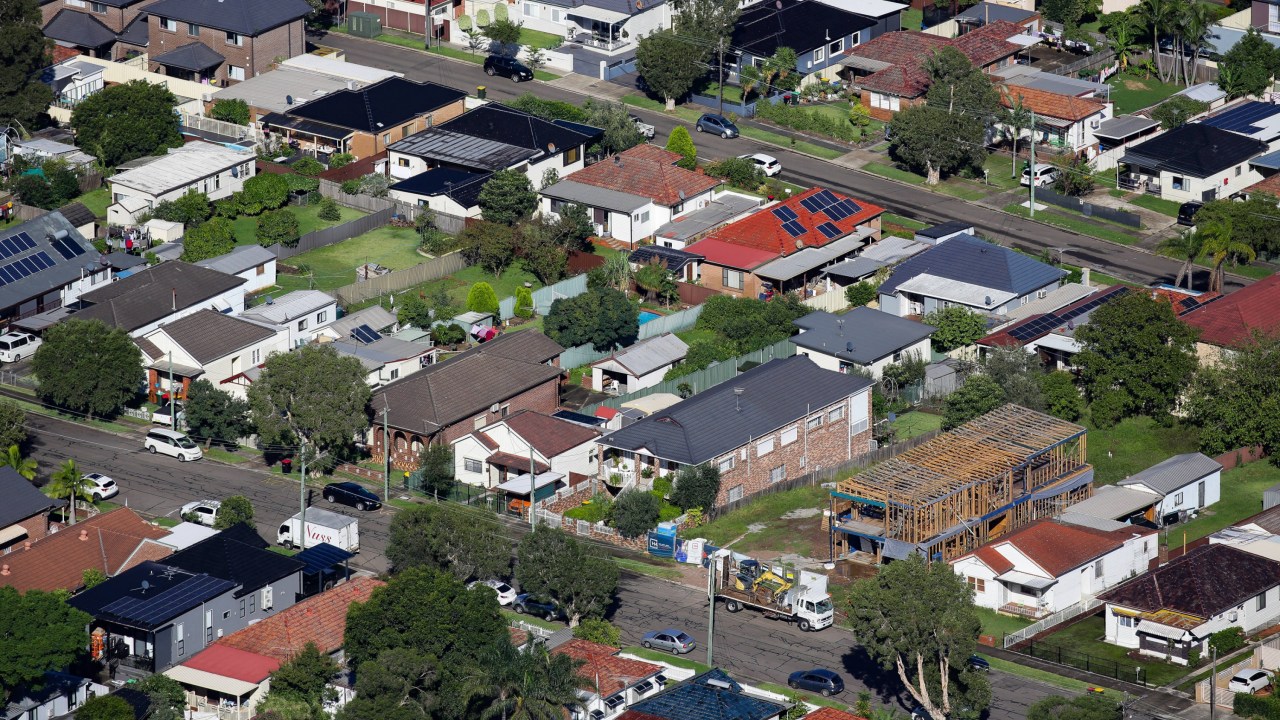
A rate hike in February could cause “huge financial losses” for many Australians as a 0.25 per cent rise will result in mortgage stress for 1.3 million households.
The Reserve Bank of Australia may be forced to lift the cash rate 0.25 per cent next month after unemployment fell to 4.1 per cent and inflation remains above the central bank’s target band at 3.4 per cent.
Money markets predict there is a 59 per cent chance the rate will lift, a solid jump from the 28 per cent chance prior to Thursday’s data being released.
A hike will bring pain to Aussie homeowners who only recently got some mortgage relief, according to Aaron Scott the co-founder of real estate agent comparison service bRight Agent.
He pointed to a Roy Morgan report which showed the number of mortgages deemed “at risk” will lift by 41,000 from about 1.25 million.
“There will be around 1.3 million Aussie mortgage holders at risk of mortgage stress if the RBA hikes in February according to new Roy Morgan research,” Mr Scott said.
“If even a fraction of those people are forced to sell because they can’t meet repayments, then you’re going to see a wobbly housing market and huge financial losses right around the country.”
He cited Cotality data which showed there were signs of weakness across the property market in capital cities, while smaller capitals showed signs of slowing growth.
“I think homeowners and property investors will be waiting with bated breath when the RBA delivers its decision next week,” Mr Scott said.
“In a 2026 worst case scenario, you’ll see a lot of people losing money – through higher interest rates, an inability to pass on higher rents, and potentially job losses too.”
After the unemployment data was published on Thursday, AMP chief economist Shane Oliver said the rise had fuelled concerns of a rate hike but noted the key piece of data to look out for is next week’s inflation numbers.
“At the margin, (the new unemployment figure) does increase the chance of a hike in February,” Mr Oliver told Sky News.
“But obviously, the inflation numbers that come out next week will be the key factor in that.”
VanEck’s head of investments and capital markets Russel Chesler similarly argued the data pushed the case for a rate hike.
“We’re now closer to an RBA rate rise,” Mr Chesler said.
“While it’s good news that Australians are fully employed, this is another indicator of a robust economy and inflation levels that are still too high for the RBA.
“Markets are currently pricing in a 25 basis point rate increase by August 2025. While we don’t think the RBA will move in February, a rate hike in March or May is not off the cards.”
Commonwealth Bank of Australia and NAB are both forecasting a rise in February, while the latter is also expecting another hike in May.
ANZ and Westpac, however, both predict the cash rate will remain steady during 2026.