
Stay informed with free updates
Simply sign up to the Utilities myFT Digest — delivered directly to your inbox.
The writer is a fellow at the Manhattan Institute
The Canadian province of Québec is pursuing one of the world’s most aggressive decarbonisation programmes — aiming to stop using fossil fuels for heat or transport within the next quarter of a century while selling more of its clean hydroelectric power to the US. But the province is using a neat trick to make all this work: it is having New York power plants produce those emissions instead.
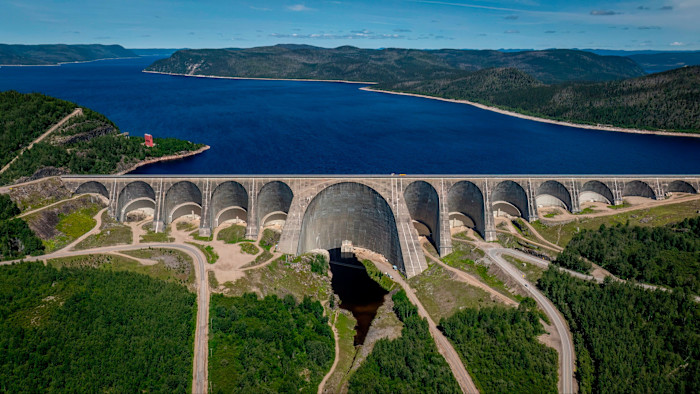
Electricity has flowed, mostly south, across this part of the US-Canada border for more than a century. Hydro-Québec, the province’s state-owned utility, generates more electricity than it needs, almost exclusively from hydroelectric dams. Québec’s government, which has touted itself as “the battery of North America”, gets a windfall as its megawatt-hours are sold to neighbouring grids in New York and New England.
Up until a few years ago, about 100 times as much power flowed into New York as went the other way. New York prior to 2022 was getting around 6 per cent of its electricity from Québec — but now it is Québec’s grid that is being squeezed.
The province’s ambitious decarbonisation drive encouraged residents and businesses to swap gas and oil furnaces for electric heat pumps and to buy new electric vehicles, which have driven up electricity demand. Officials estimate they’ll need to increase their generation capacity by about 20 per cent by 2035.
Dry conditions have reduced reservoir levels and threatened the existing supply, forcing HQ to prioritise its internal stock over exports. This translated at first into reduced exports to the US, which fell by about two-thirds between 2021 and 2023. Then, in 2023, HQ began buying electricity from New York so its dams could store more water, and soon the dynamic flipped: New York was selling more power to Québec than flowed the other way.
Last year, Québec imported more than six times as much as electricity as it sold to New York. The province, in just a few years, went from being one of New York’s primary electricity suppliers to consuming more power than any single New York-based electricity customer. These effects are straining the entire Northeast energy grid. Québec’s shift from supplier to consumer is driving up wholesale electricity prices in New York.
Québec’s purchases seem to be coming mostly from upstate New York’s natural gas plants, placing further stress on the already-constrained pipelines between Albany and Boston. New England, as a result, is forced to burn more oil for its own grid on cold days than it otherwise would if New York gas plants weren’t using it upstream to supply Québec (and paying more for heating gas). This month, power also began flowing from Québec to Massachusetts through New England Clean Energy Connect — about 1.1 gigawatts of “affordable, stable hydropower” from Canada.
New York meanwhile is counting on electricity from the Champlain Hudson Power Express, a major transmission line along the Hudson River, to bring Québec’s “hydroelectricity” directly to New York City as soon as this spring. In the near term, this will help the city meet peak air-conditioning demand during heatwaves, albeit at a sizeable cost to the New York customers subsidising CHPE’s construction and operation. However, there is little to stop HQ from continuing this arbitrage as it goes from “battery” to broker, buying power from upstate New York to maintain reservoir levels while it also sells power to Massachusetts and others.
Americans aren’t entitled to a single kilowatt of Canadian power, but when a state actor, like HQ, starts distorting neighbouring markets with massive purchases, it warrants attention from elected officials. US governors, especially New York’s, must press the Québécois to reconcile their green-energy rhetoric at home with the fossil-fuel consumption they’re encouraging south of the border.