
Photo: Courtesy of Sundance Institute/All photos are copyrighted and may be used by press only for the purpose of news or editorial coverage of Sundance Institute programs. Photos must be accompanied by a credit to the photographer and/or ‘Courtesy of Sundance Institute.’ Unauthorized use, alteration, reproduction or sale of logos and/or photos is strictly prohibited.
Over the past decade or so, the Sundance Film Festival’s World Cinema Dramatic competition has gone from being something of an afterthought to one of the more interesting lineups of the international festival circuit. These titles don’t always attract the crazy buzz that Sundance’s more media-friendly premieres do, but I’ve often found some of my favorite films of past years in this section: pictures like The Things You Kill (2025), Girls Will Be Girls (2024), This Is Not a Burial, It’s a Resurrection (2020), The Sharks (2019), This Is Not Berlin (2019), and My Happy Family (2017). Do those sound at all familiar? Perhaps not. This is the problem. Despite the increasing quality of its international lineup, Sundance remains primarily a destination for the U.S. market, independent and otherwise.
Which is why something like Rafael Manuel’s Filipiñana arrives in Park City like some strange, fascinating drifter. An invigorating dose of arch formalism in a sea of mainstream sincerity, this is the kind of movie that asks for the viewer’s attention and patience — not because it is slow or oblique but because it’s built entirely out of details. (The great Jia Zhangke is one of the film’s producers and has served as a mentor for Manuel, with the younger director also working on Jia’s recent masterpiece Caught by the Tides.) In Filipiñana, the angle of a golf club can evoke suspense, a piece of fruit on the ground can feel like a tragedy, and a casual glance can take your breath away.
The movie (which will also screen at the Berlin Film Festival in February) takes place during one idle day at an elegant golf course outside Manila, all rolling lawns and tidily trimmed trees. For all the beauty of this setting, director Manuel fills it with menace from the get-go by juxtaposing its manicured calm with the crowded, chaotic streets of Manila, where citizens line up to fill their water jugs in the unbearable heat. The first images we see of the golf course are its sprinklers, quietly spraying water all over wide, empty stretches of grass. For all the golfers’ admonitions about dehydration, there is water everywhere on the course. There’s also more food than anyone knows what to do with; mangoes fall from trees, rot, and get crushed by golf carts. The impoverished employees of the club wear matching color-coded uniforms and work in almost machinelike unison. We’re told that golf balls fished out of a pond are worth more than these laborers. When someone points out a dying pine (a nonindigenous tree imported into the Philippines, not unlike golf was, by Americans) and notes that it will soon be replaced by one of equal size and shape, we understand the same standard applies to the people who work here.
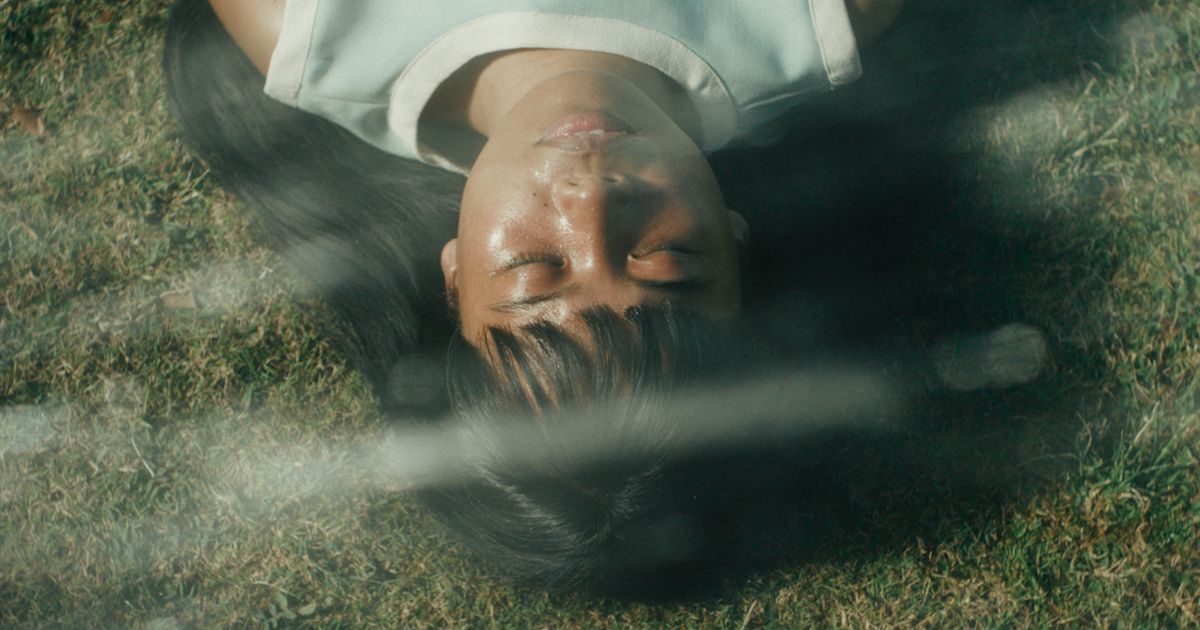
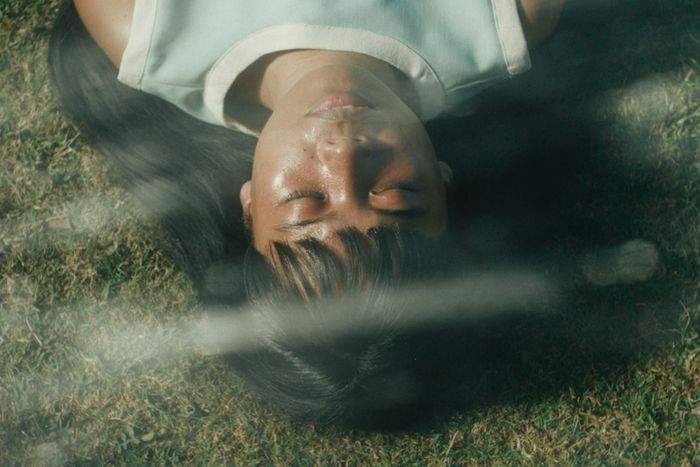
Amid these deceptively lovely expanses of green, we find Isabel (Jorrybell Agoto), a 17-year-old “tee girl” at the driving range, carefully and systematically arranging balls for the golfers to hit. A quiet dreamer who occasionally strays from the regimented, ruthless nature of her job — grabbing a stray mango here, sneaking a taste of cake there — Isabel hails from the region of Ilocos and, it seems, still feels homesick. Much of the film consists of a simple journey: Isabel is tasked with returning a golf club to Dr. Palanca (Teroy Guzman), the wealthy president of the country club and, as it turns out, an Ilocano like herself. Early on, Palanca tells Isabel to come to him for anything she might need; there’s a hint of attraction there and perhaps even a connection to a better life. As Isabel wanders the club trying to find him, she passes through different spaces, each subtly revealing another layer of exploitation and cruelty.
Manuel interweaves other story strands with Isabel’s tale, including that of Clara (Carmen Castellanos), a young Filipina American from New York out for a round of golf with her uncle (Carlos Siguion-Reyna), the owner of a golfing company. Her uncle speaks of brain drain and the need to bring young, educated Filipinos back home to help change the country. Unconvinced and uncomfortable, Clara seems moderately aware that she’s surrounded by people who are being misused — but she’s not quite uncomfortable enough to say or do anything about it.
Very little is said overtly about politics in Filipiñana, but the film doesn’t have an apolitical bone in its body. Through heightened control of imagery and mood, attention to composition and texture and sound, Manuel turns this simple, languid setting into something far more sinister without ever betraying the beauty of what’s onscreen. Isabel moves from verdant exteriors to forbidding, almost surreal interiors. (The film was shot across eight golf courses in the Philippines, giving us an idea of the kind of precision on display here.) Every placid surface, every shaded canopy, every drowsy inch of this world suggests something darker; it’s all so gorgeous and calm and, above all, artificial. Hints of violence lurk on the edges of the frame. Isabel worries about a golf ball hitting her amid the customers’ wild swings. She’s told it doesn’t hurt that much, which comes more as a confirmation of her fears than anything resembling relief. We’re told a golfer died of heatstroke not long ago. A security cart patrols the area, ready to whisk away any employee found straying outside their station.
In the end, Filipiñana isn’t really about golf even though it’s set pretty much exclusively on a golf course. And the film’s pace and mood have certainly adopted the casual, sleepy rhythms of the sport. What comes through most vividly is the sense of forced placidity, the assembly-line-like control over life and activity this country club comes to represent. The more beautiful it all is, the more terrifying it becomes.
Sign up for The Critics
A weekly dispatch on the cultural discourse, for subscribers only.
Vox Media, LLC Terms and Privacy Notice