
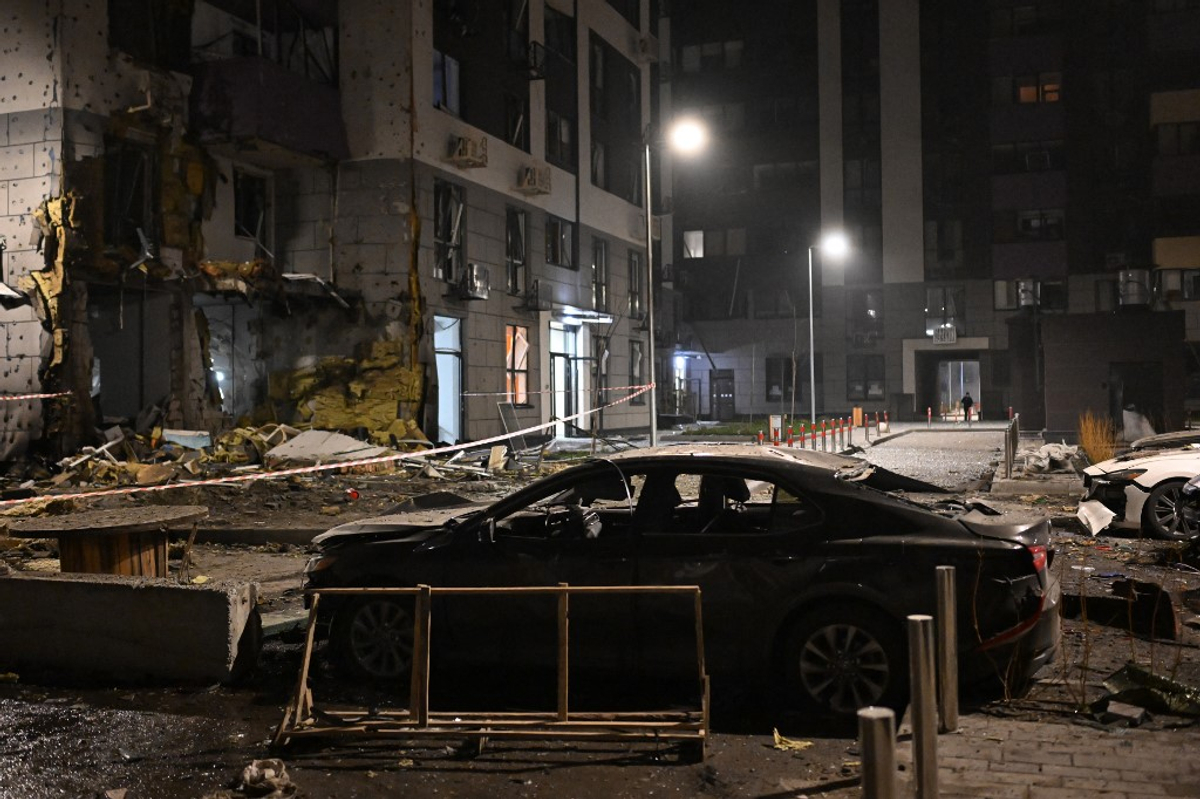
WASHINGTON, DC – Air-defense sirens wailed and explosions shook Kyiv early Saturday as Russia launched one of its heaviest assaults in months – just hours after Ukrainian, Russian, and US negotiators convened in Abu Dhabi for peace talks.
Kyiv Post reporters who spent the night in shelters described the barrage as “very, very massive.”
JOIN US ON TELEGRAM
Follow our coverage of the war on the @Kyivpost_official.
One correspondent added grimly: “I assume the situation following this strike is going to be extremely tough.”
The timing was unmistakable.
“With negotiations underway, Moscow is sending a message written in fire,” said a senior European diplomat in Washington, speaking on the condition of anonymity. “This is how the Kremlin negotiates – with missiles.”
Meaghan Mobbs, daughter of former Trump envoy Keith Kellogg, echoed the sentiment in a pointed social media post:
“With ongoing negotiations in Abu Dhabi, it’s hard not to read this as a signal of Russia’s intentions toward peace. I have stopped guessing at what point such behavior would so enrage POTUS that he decides to double down and give substantial aid to Ukraine.”
The strikes come as Kyiv sinks deeper into its worst winter energy crisis since Russia launched its full-scale invasion nearly four years ago.
Massive power outages, shortages of water and heat, and relentless attacks on the energy grid have plunged large sections of the city into darkness.

Other Topics of Interest
Ukraine in Blackouts as War and Global Tensions Escalate
Welcome to Summary of the Week — your quick guide to the top global headlines.
“Russia is trying to freeze Ukraine into submission,” said the European diplomat. “And to signal in Abu Dhabi that it still holds the escalatory cards.”
Talks in the desert
The overnight bombardment unfolded only hours after Ukraine, Russia, and the US opened their first trilateral talks since Moscow’s full-scale invasion in February 2022.
The UAE is hosting two days of meetings aimed at sketching a path toward ending the nearly four-year-old war, with territorial concessions in eastern Ukraine high on the agenda.
President Volodymyr Zelensky called the talks “a step – hopefully toward ending the war,” but tempered expectations.
Russia’s delegation is led by General Igor Kostyukov, director of the GRU military intelligence agency.
Ukraine’s team is headed by Rustem Umerov, secretary of the National Security and Defense Council and former defense minister.
Umerov offered a detailed account of the opening session. “The meeting focused on the parameters for ending Russia’s war and the further logic of the negotiation process aimed at advancing toward a dignified and lasting peace,” Umerov wrote. More sessions are scheduled, with additional Ukrainian generals joining on Saturday.
“Following each stage, we report to the President of Ukraine,” he added. “We are ready to work in various formats depending on the course of the dialogue.”
On the American side were Special Envoy Steve Witkoff, Jared Kushner, Josh Gruenbaum, General Daniel Driscoll, and General Alexus Grynkewich.
A US official involved in the talks, speaking privately, said the timing of the attack “complicates everything.”
Signals in the sky
Behind the scenes, Ukraine’s allies are already preparing for what may come after the guns fall silent – if they ever do.
The EU and the US are exploring up to $800 billion in public and private funding to rebuild Ukraine. An 18-page European Commission proposal outlines the investment goal and a 10-year fast track for Ukraine’s entry into the EU, aligned with Washington’s 20-point peace plan.
But all of it hinges on a ceasefire that remains elusive.
“Everyone wants to talk about reconstruction,” one senior EU diplomat said. “But first, the missiles have to stop.”
For now, they have not.
“This is Russia’s negotiating position,” said another European diplomat. “They bomb, then they bargain.”
And as diplomats prepared to return to conference rooms for their second day in Abu Dhabi, Ukrainians began their weekend once more in shelters – waiting to learn whether Moscow’s next message would arrive in words, or in fire.