
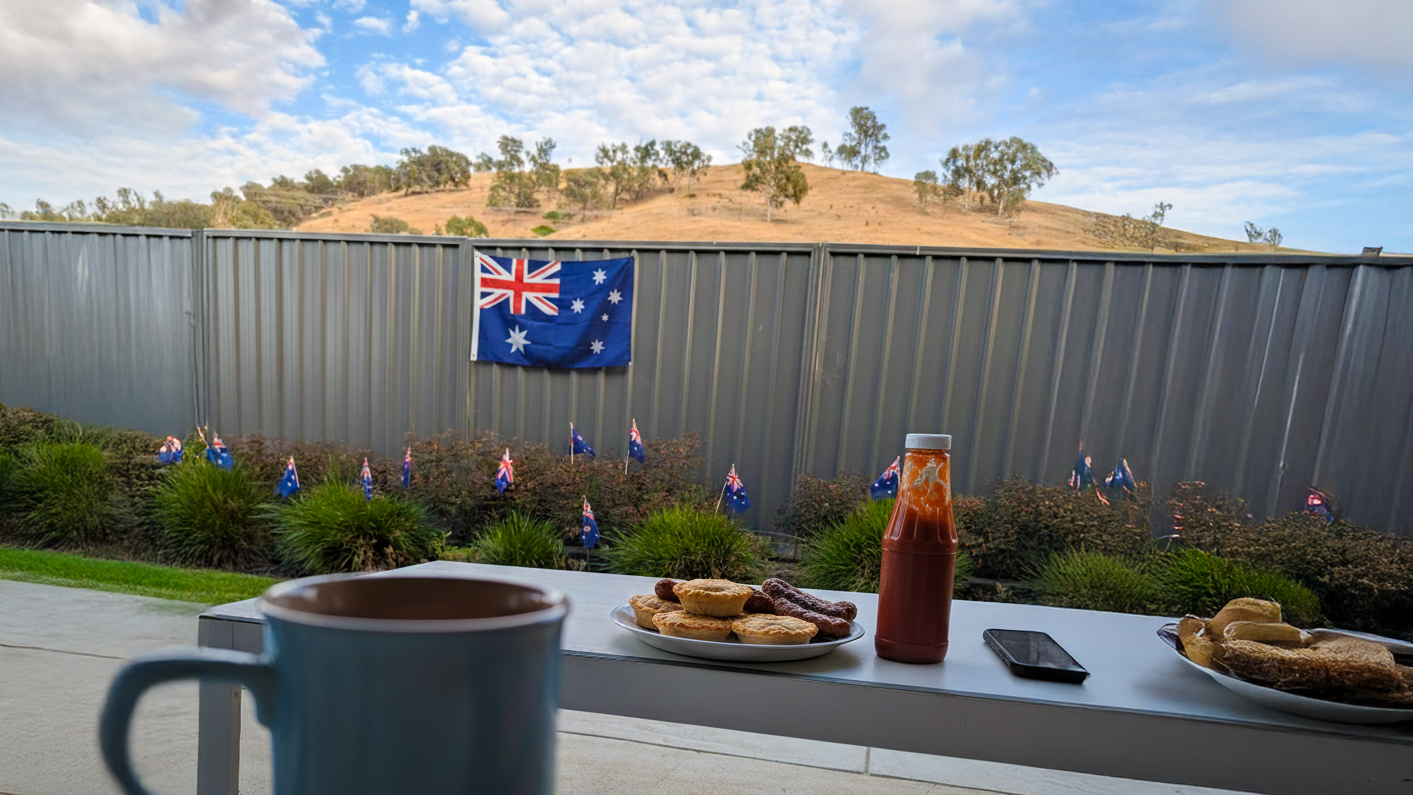
Today is a day to reflect on our history, but for us at techAU, it is also the perfect time to look at our massive contribution to the global technology landscape.
We often punch well above our weight when it comes to innovation, and the tech we have exported has literally changed the way the world functions.
From the Wi-Fi you are likely using to read this, to the medical breakthroughs saving lives every minute, Australian DNA is everywhere in the modern world.
The Wi-Fi revolution
It is impossible to talk about Aussie tech without mentioning Wi-Fi, a project born out of the CSIRO’s work in radioastronomy back in the 1990s.
A team of mathematicians and scientists were trying to listen for black holes but ended up solving the problem of indoor radio wave interference instead.
“Our wireless invention lies at the heart of what is now the most popular way to connect computers without wires.”
CSIRO, Australia’s National Science Agency.
The Black Box flight recorder
Then there is the Black Box flight recorder, invented by Dr David Warren in 1953, which is now mandatory on every commercial flight globally.
Warren’s invention was born from a desire to understand why planes crashed, and today it remains the gold standard for aviation safety.
It is a sobering thought that every time a flight is made safer through investigation, it is thanks to a piece of tech designed in Melbourne.
Ultrasound imaging technology
We also led the way in medical imaging with the development of ultrasound technology in the early 1960s by David Robinson and George Kossoff.
Their work at the Commonwealth Acoustic Laboratories allowed doctors to see unborn babies without the risks associated with X-rays.
This changed prenatal care forever and is a testament to how Australian research has a direct impact on the lives of billions.
The Cochlear Implant
Moving into the 1970s, Professor Graeme Clark gave the world the Cochlear Implant, or the ‘bionic ear’, which has restored hearing to hundreds of thousands.
It was a feat many thought was impossible at the time, but Clark’s persistence proved that Australian medical engineering could lead the planet.
Today, the company Cochlear remains a global leader, proving that we can scale homegrown research into a massive commercial success.
Google Maps and local origins
While Google is an American giant, the foundation of Google Maps actually started right here in Sydney with a company called Where 2 Technologies.
The technology was snapped up by Google in 2004, but the core idea of a web-based, searchable map started on our shores.
It is arguably the most used piece of software in the world today, and it has Australian ingenuity baked into its code.
High-tech polymer banknotes
Even the money in your wallet (or the digital representation of it) has Aussie roots through the development of polymer banknotes.
The CSIRO worked with the Reserve Bank of Australia to create notes that are nearly impossible to forge and last significantly longer than paper.
This technology has been exported to dozens of countries, showing that Australia leads the world in material science as well as digital code.
A global powerhouse for startups
Beyond individual inventions, the Australian startup ecosystem has matured into a global heavyweight, currently ranked 12th in the world.
We have moved past the era of being a quiet outpost, now boasting over 10 home-grown unicorns that are household names internationally.
Successes like Canva, Atlassian, and Airwallex have proven that Australian founders can build multi-billion dollar platforms from their bedrooms and garages.
Canva remains the crown jewel of Sydney tech, with its valuation reaching A$39 billion in recent secondaries as it dominates the global design market.
Atlassian continues to set the standard for remote work and enterprise software, showing that an Aussie culture of ‘no bullsh*t’ resonates globally.
Meanwhile, Airwallex and Judo Bank have rewritten the rules of fintech, providing the financial plumbing for a digital-first global economy.
University research and deep tech
Our innovation isn’t just happening in co-working spaces; it is deeply rooted in a world-class university research ecosystem.
The Australian Government’s Trailblazer Universities Program is currently investing over A$370 million to commercialise breakthroughs in space and honey-tech.
Projects like iLAuNCH are bridging the gap between the lab and the launchpad, helping Australia build sovereign space and satellite capabilities.
Investment in the future
The pipeline for deep tech has never been stronger, with over A$72.5 million recently awarded through AEA Ignite grants for high-impact research.
We are seeing a massive push into areas like quantum computing with Q-CTRL and medical diagnostics with Harrison.ai.
This investment ensures that the next generation of Australian inventions doesn’t just stay in a thesis, but becomes a global product.
The data centre boom
As we move deeper into 2026, Australia is emerging as a regional hub for data centres, fuelled by the exponential demand for AI.
Major players like AWS and Microsoft are committing billions—A$20 billion and A$5 billion respectively—to expand our digital infrastructure.
Local leaders like NEXTDC and Macquarie Data Centres are also scaling up, ensuring our data stays onshore and our latency stays low.
Powering the cloud with renewables
What makes the Aussie data centre boom unique is our ability to power these energy-hungry facilities with renewable energy.
We are seeing projects like the A$2.5 billion Supernode in Queensland, which pairs massive data capacity with 250MW of battery storage.
“Australia’s abundance of land and renewable energy resources also creates more potential for renewables to power data centres.”
David Scrivener, Managing Director, Westpac Institutional Bank.
Electric vehicle infrastructure expansion
Our daily lives are being transformed by the rapid expansion of electric vehicle (EV) infrastructure across the country.
In 2026, the range of available models is exploding, with the BYD Atto 1 arriving at just A$23,990 to become our most affordable EV yet.
The National Electric Vehicle Strategy is in full swing, with a major review this year aimed at making charging faster and more accessible for everyone.
How we live and breathe tech in 2026
While our inventions are impressive, the way Australians adopt and leverage new technology in their daily lives is equally fascinating. As of early 2026, Australia remains one of the most connected nations on earth, with internet penetration sitting at a staggering 97.4%.
We aren’t just scrolling social media; we are using technology to manage the increasingly complex logistics of modern Australian life.
Practical AI adoption
Research shows that over 57% of Australians are now actively using AI tools to navigate the cost-of-living crisis and manage household admin.
From using ChatGPT to map out weekly meal plans to leveraging AI for better budgeting, we have moved past the ‘hype’ phase into practical utility.
“Australians are turning to AI in droves to streamline tasks like budget setting and grocery planning this year.”
Sarah Orr, Expert, Compare the Market.
Mobile-first culture and connectivity
Our mobile-first culture is also reaching its peak, with 34.8 million mobile connections serving a population of only 27 million people.
We spend an average of 41 hours a week online, which is actually more than a standard full-time work week for many of us. This connectivity allows for the rapid adoption of digital services that other countries are still struggling to implement.
The rise of digital wallets
The way we shop has also shifted, with 91% of Australian adults being regular online shoppers and digital wallets now accounting for 23% of payments.
We are quickly becoming a cashless society, where our phones and watches handle almost every transaction we make in a day.
This shift is driven by a desire for convenience and a trust in the underlying security technologies that protect our financial data.
Telehealth and wearable health tech
We are also seeing a massive shift in how we handle our health, with many turning to wearables and telehealth as a primary point of contact. Technology has become the backbone of how we interact with doctors, especially in regional areas where physical access can be a challenge.
Australians are early adopters of smartwatches and fitness trackers, using that data to proactively manage their wellbeing.
AI and automation in the workforce
Organisations are now prioritising AI and automation not just for efficiency, but to provide the personalised services that Aussie consumers now expect.
The transition to a digital-first economy is almost complete, and the focus for 2026 is on making these systems safer and more reliable for everyone.
Whether it is a start-up in Cremorne or a major research lab in Canberra, the spirit of innovation is still very much alive.
Final thoughts on our tech legacy
As you enjoy your Australia Day BBQ or a day at the beach, take a second to appreciate the tech that makes it all possible.
We are a nation of problem solvers, and if the last century is any indication, the next great global invention is likely being coded right here.
I am personally excited to see what the next decade of Australian tech brings as we move further into the age of intelligence.
For more information, head to https://www.csiro.au/en/about/achievements