
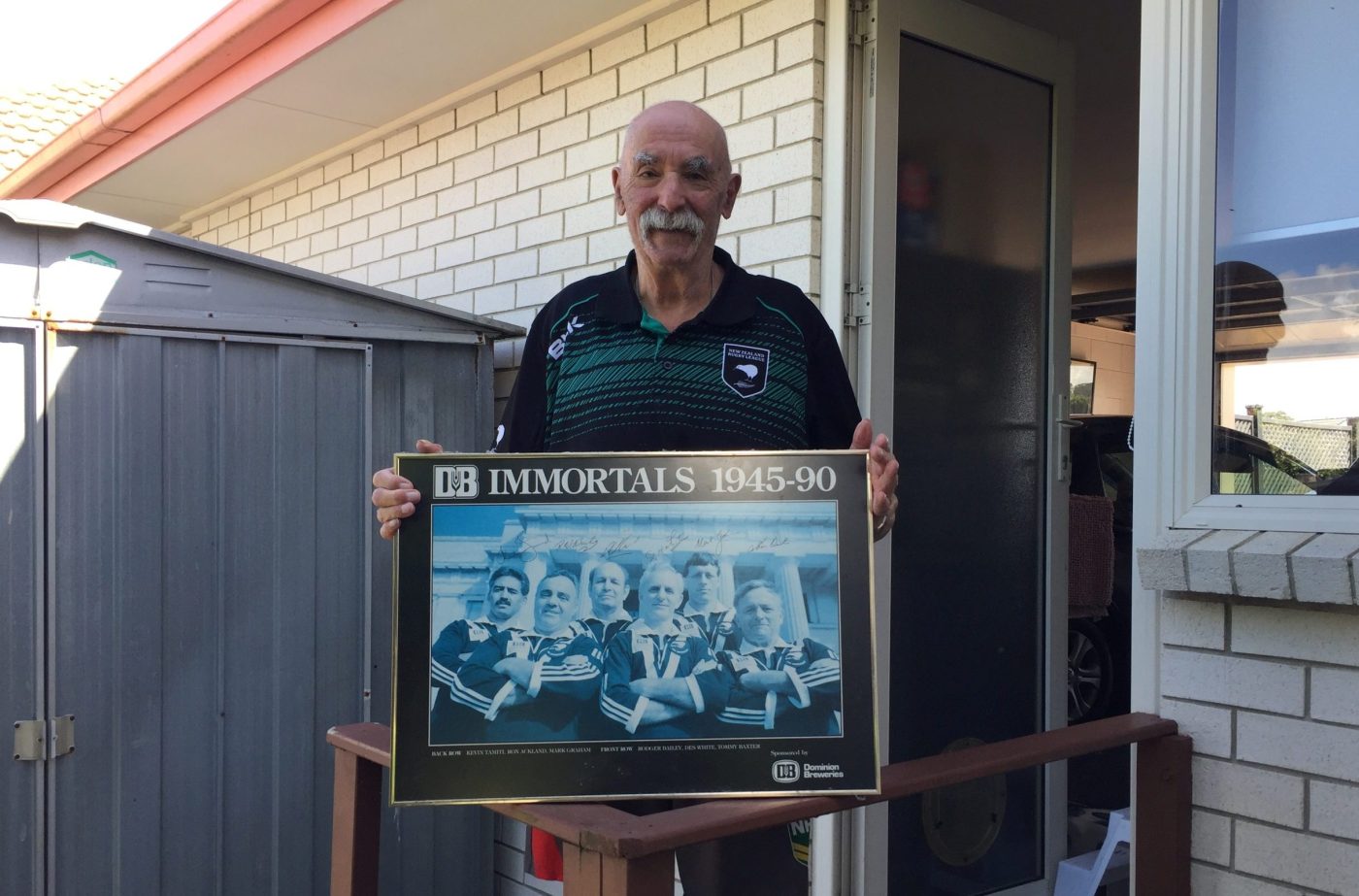
 East Auckland resident Gary Whittle holds a treasured photo showing some of the greatest Kiwi players he’s known, including legends Mark Graham and Ron Ackland. Times photos
One of the longest-serving and most dedicated stalwarts of rugby league in New Zealand has been recognised for his unwavering commitment to the sport.
Burswood local Gary Whittle has been appointed a Member of the New Zealand Order of Merit (MNZM) in the 2026 New Year Honours List for services to rugby league.
The Honour citation states Whittle has been involved with league for more than 65 years as a referee, touch judge, ground announcer, timekeeper and administrator in Auckland, Waikato, and Northland.
In 1995 he was appointed timekeeper for One New Zealand Warriors games in New Zealand, initially beginning as a volunteer, and has since served as timekeeper for more than 500 games.
Whittle has volunteered in a range of other roles to ensure numerous rugby league events could be staged, and to help maintain the sport’s high standards and reputation.
He’s been a member of the Auckland Rugby League Judicial Committee since 1981 and is serving his second term as chair, and he’s served on committees for the Auckland Rugby League Referees Association, including the annual Gold Medal Awards for more than 10 years.
Whittle was the ground announcer at Carlaw Park for Auckland Rugby League for 15 years, has been a director of the Rugby League Museum Society since 2009, and chaired Auckland Police Rugby League from 1985 to 1992.
He’s a Life Member of the Auckland Rugby League Referees Association and of Auckland Rugby League since 2008 and was recognised with a Distinguished Service Award from New Zealand Rugby League in 2000.
The Times recently spoke to Whittle about his life in rugby league and asked him how he got involved with the sport.
Whittle, who’s had a career as a police officer, grew up in the Auckland suburb of Parnell and first became involved with the storied Marist club as a youngster. He began playing the sport in 1953.
“We moved to Whitianga and came back [to Auckland] in 1959,” he says. “I rejoined and kept playing for Marist. The next year I played one more year, but I was very small.
“A mate I played with said, ‘the referees are having a meeting tonight, why don’t you go down?’
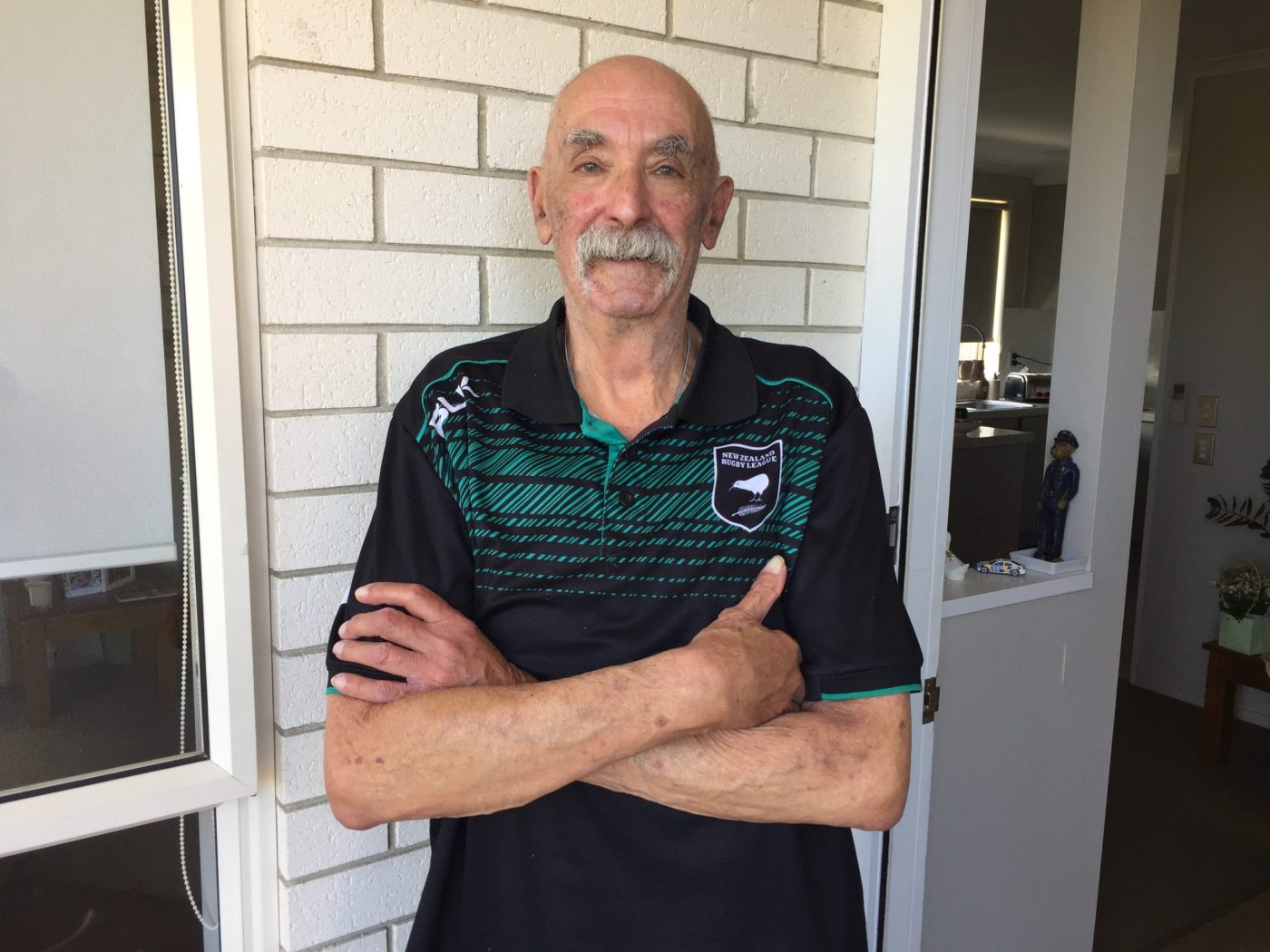 Gary Whittle says the thing that’s kept him heavily involved in rugby league over the years is the great people he’s worked alongside.
“They were at Carlaw Park and that was 1960. So I went down there and joined the referees in 1960.
“I refereed in Auckland until the end of 1967. Then I transferred to Kawakawa [in Northland, in his police role] from January, 1968, to September, 1973, and refereed rugby league up there, which was beneficial for two things.
“I got to know the locals, and it was a pretty tough town back in those days, but because I refereed league, I knew the league guys and the rugby guys, and it was a breeze to police.
“I then transferred in 1973 to Hamilton and refereed one year in Waikato. Then I got ill in 1975 and couldn’t really referee, but still kept in touch with the referees in Auckland.
“In 1976 I got promoted [in the police]. I came back to Auckland and rejoined the referees immediately, and I’ve been involved with them ever since.”
And as to why Whittle has stayed so heavily involved in the sport all these years, he says it comes down to people.
“It’s the people I meet, and I love the game itself. But it’s the people who do it all by far.
“The people I’ve worked with at Auckland Rugby League, with the referees, on the [Rugby League] Museum Society. It’s all the people.
“We all have a common interest. We all love the game and that’s what it’s all about.
“It’s not only me. There’s hundreds of people out there who do the same type of thing that I do. We’re all volunteers that keep the clubs going.
“Interestingly enough, in Auckland if you didn’t have women on the committees, the majority of rugby league clubs in Auckland would fold.
“Women are the glue that stick it all together. They get things done, they make sure there’s food, that everything is run properly, that kids are looked after.
“To me, it’s a community game, and that’s where I come from. I’ve just had a really good ride over the years, especially since I joined the ground staff at Carlaw Park.”