
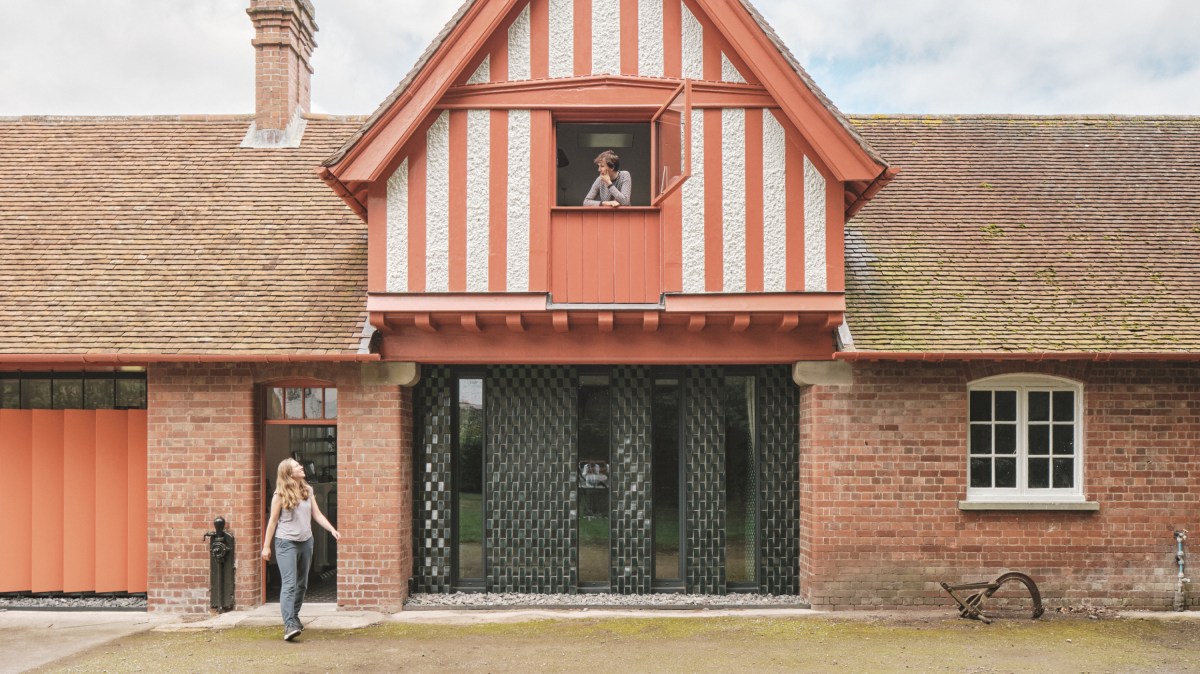
Britain’s half a million listed homes are falling out of favour with younger buyers who “don’t want the hassle”. In their eyes heritage homes are expensive, difficult to update, not energy efficient and costly to insure, says Martin Anslow, director of the Listed Property Owners’ Club (LPOC). “It’s creating a real problem because there’s not as much demand for this type of property.”
Yet he is hopeful. The latest awards for listed property renovations show that with the right architect and builders you can create something truly special.
“Careful architecture wins over big, shouty architecture,” says Jonathan Duck, a conservation adviser to the club. “There are [listed] buildings from hovels to mansions,” he adds. Successful extensions are usually “subservient” and “respecting the architectural meaning of the building. If you live somewhere like I do, in a little cottage, trying to add something high status… just looks weird”.
• Inside comedian Josh Widdicombe’s dream home renovation in Cornwall
The colours and materials of an extension or work should tonally tie in with a listed home, Duck says. “I’m a bit of an artist. I always say to people, you must squint through your eyelashes when you paint. It’s the same with houses.” A bright red extension on a “fully white” house “is going to jar”.
However, a “massive” lack of conservation planners at local councils is a “real problem”, Anslow says. As many as four in five councils don’t have enough planners to advise on heritage projects, Duck adds. “There’s just not enough bums on seats. Government doesn’t want to fund it. It’s not sexy to be looking after old buildings. But nobody goes to Slough or Milton Keynes for the architecture. Most people will go to places where there are old buildings. Chester or York or Bath or London or Cambridge or Canterbury… Heritage is a finite resource. Once it’s gone, it’s gone.”
Here we reveal the homes that have overcome the odds to feature in the Listed & Modern Architectural awards 2025.
Best conversion, adaptation and reuseWinner: Plas Hendy stable block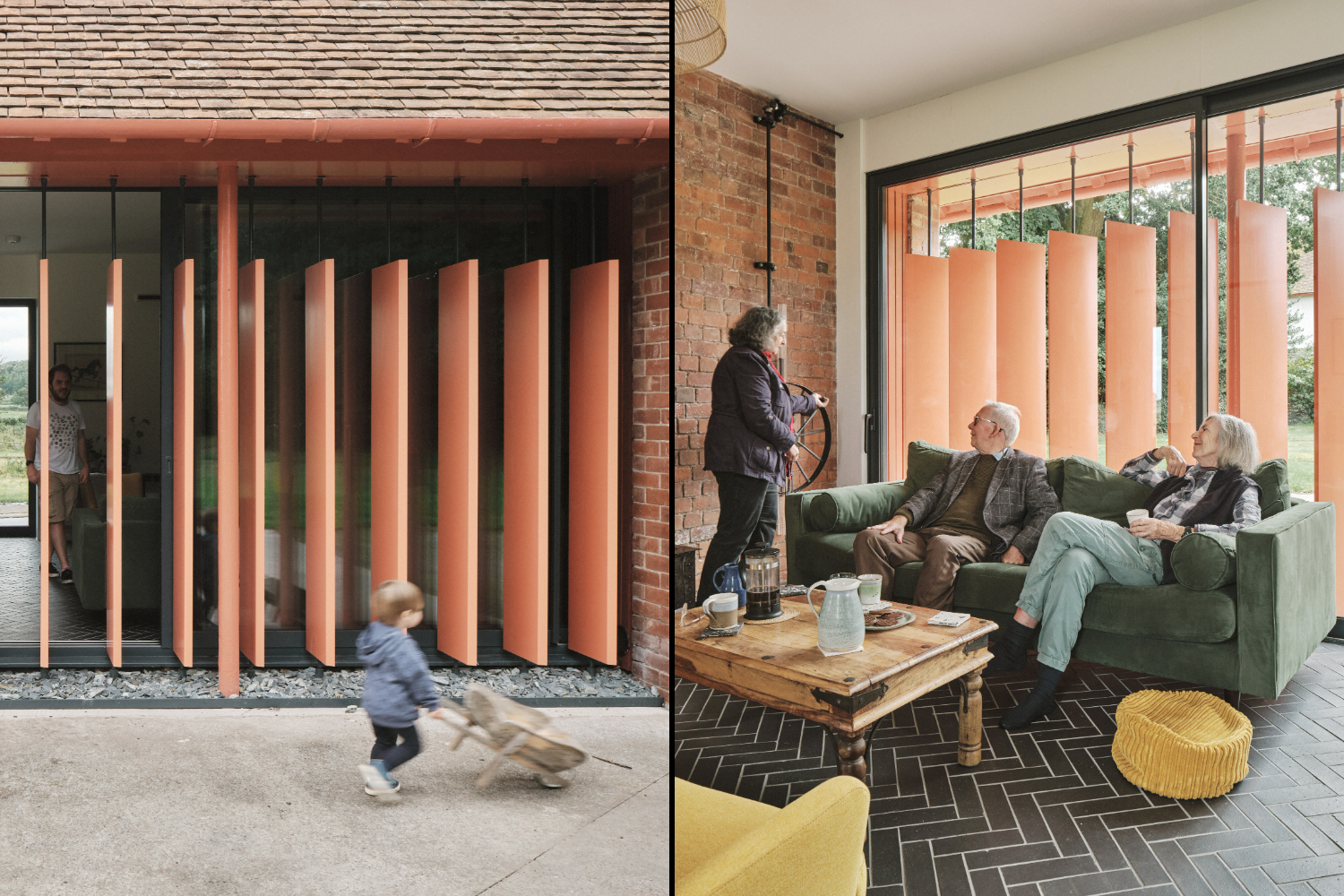
The outside louvres are opened by turning an old cartwheel, seen on the right
FRANCESCO MONTAGUTI
Plas Hendy was built in 1903 for two children who lost their parents in a boating accident on the River Wye. Three generations later Ben Crawley, the grandson of one of those orphans, helped to design a joyful rebirth of the Monmouthshire house’s dilapidated stable block. It is now a three-bedroom Welsh holiday home enjoyed by 21 members of the Crawley family.
The grade II listed stable block had three distinctive sets of sliding garage doors that were “making the biggest room quite dark”, says Crawley, who founded Studio Brassica with his wife and fellow architect Claire Priest (studiobrassica.co.uk). The duo’s solution was to reuse the garage doors inside the building as barn-style sliding doors. Outside they replaced them with bespoke pivoting louvres, which when shut “reflect solidity of what was there” but can open to let the sunlight in, Crawley says. Delightfully, you open the louvres by turning an old cartwheel found on site.

The judges considered the extension to be “beautiful, considered and playful”
FRANCESCO MONTAGUTI
A small modern rear extension added a stylish accessible bathroom for Crawley’s elderly mother, aunt and uncle, as well as space to fit the kit for an air-source heat pump system.
Glazed sawtooth bricks cover part of the building. The simple material “creates this really beautiful weave effect” that felt appropriate for the Arts and Crafts building and “changes so much in the Welsh weather”, Priest says. “We had a lot of fun with it.” Plas Hendy was also shortlisted for the Riba House of the Year in 2024.
Crawley’s uncle William Crawley, who was born at the property and who helped to pay for the £401,000 renovation, adds: “We’ve been so chuffed.”
Judges’ verdict: “Beautiful, considered and playful — but sensitive.”
Highly commended: Wool Hall
The grand entrance to Wool Hall, Somerset
JAMES BRITTAIN

The property’s extension was clad in rust-stained larch to echo the terracotta roof tiles
JAMES BRITTAIN
Built to exhibit wool in the 16th century, chapel-like Wool Hall outside Frome, Somerset, became a recording studio after Tears for Fears bought it in the 1980s. Within its walls played Van Morrison (who later owned it), Joni Mitchell, the Cure, the Pretenders and the Smiths. By 2020 it had fallen into disrepair but was bought by the music producer Luke Potashnick and his young family. “You can feel creativity in the bones of the space,” he told House & Garden magazine. “That was clear to us from our first visit.”

The old stone hall was converted into the kitchen space
JAMES BRITTAIN
To stop the historic main house from feeling like a long train carriage with a succession of rooms, the architectural designer Jonathan Tuckey (tuckeydesign.com) created a new entrance in the middle, tied together by an industrial green staircase. The old stone hall with its arched doors — and its walls now covered with insulating cork and lime plaster — contains the kitchen, with a monastic feel. A 1980s extension was clad in rust-stained larch to echo the terracotta roof tiles.
Commended: Timbercombe 
Timbercombe, Gloucestershire
Alicia Robert, who grew up in Dallas, had never farmed but always liked cows. When her children were grown she saw a picture in The Times of a hidden Cotswold valley near Stroud. She and her French husband, Xavier, who works in finance, bought it. There, with a suckler herd of Dexter cattle — Britain’s smallest native breed — she started to produce her Dillay beef boxes. She also set about restoring a ruined cottage, once home to Rosie Bannen, a local legend who lived without electricity or running water and painted her door bright yellow to welcome visitors to the end of her long lane.

The cottage was in ruins when Alicia Robert and her husband bought the property in 2019
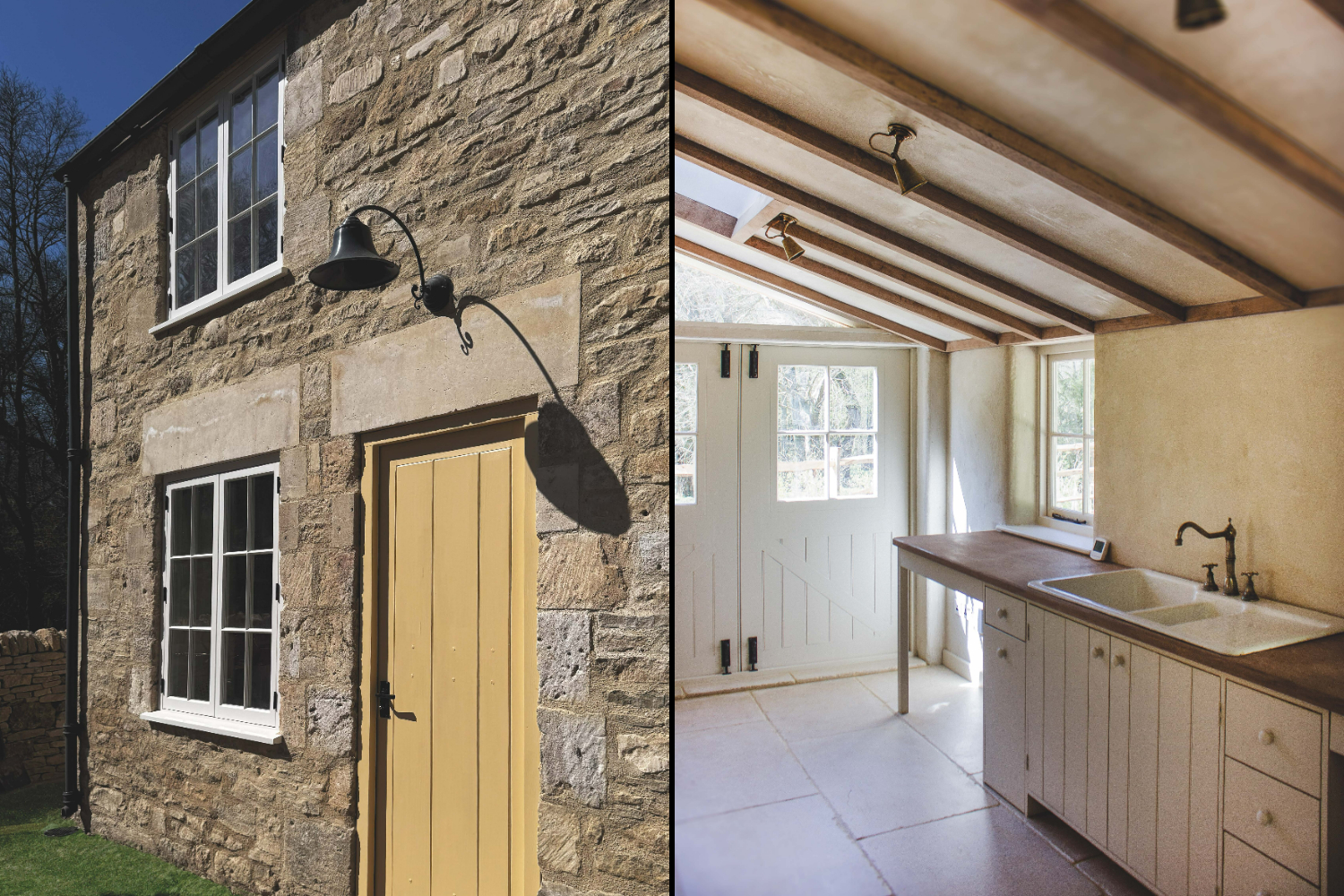
As well as fully renovating the property, the couple added an extension and a yellow door tribute to a local legend
“By the time we got here [in 2019] there were three trees growing inside. There was no roof left. Just three walls that could be saved,” Robert says. With the help of local craftsmen such as the aptly named Gareth Stone, aka Rocky, they used the fallen stones to recreate those walls.
This time, with Gransmore Architects (gransmore.co.uk), they lined the walls internally with wood fibre insulation and lime plaster, and covered the roof in GB Sol solar tiles that look like slate. A new extension was clad in larch felled on the estate, and a local cabinet maker who knew Rosie made a new yellow door. The cottage, Timbercombe, is now available as an artist’s retreat (dillay.co.uk).
Best contemporary extensionWinner: Flint Farm 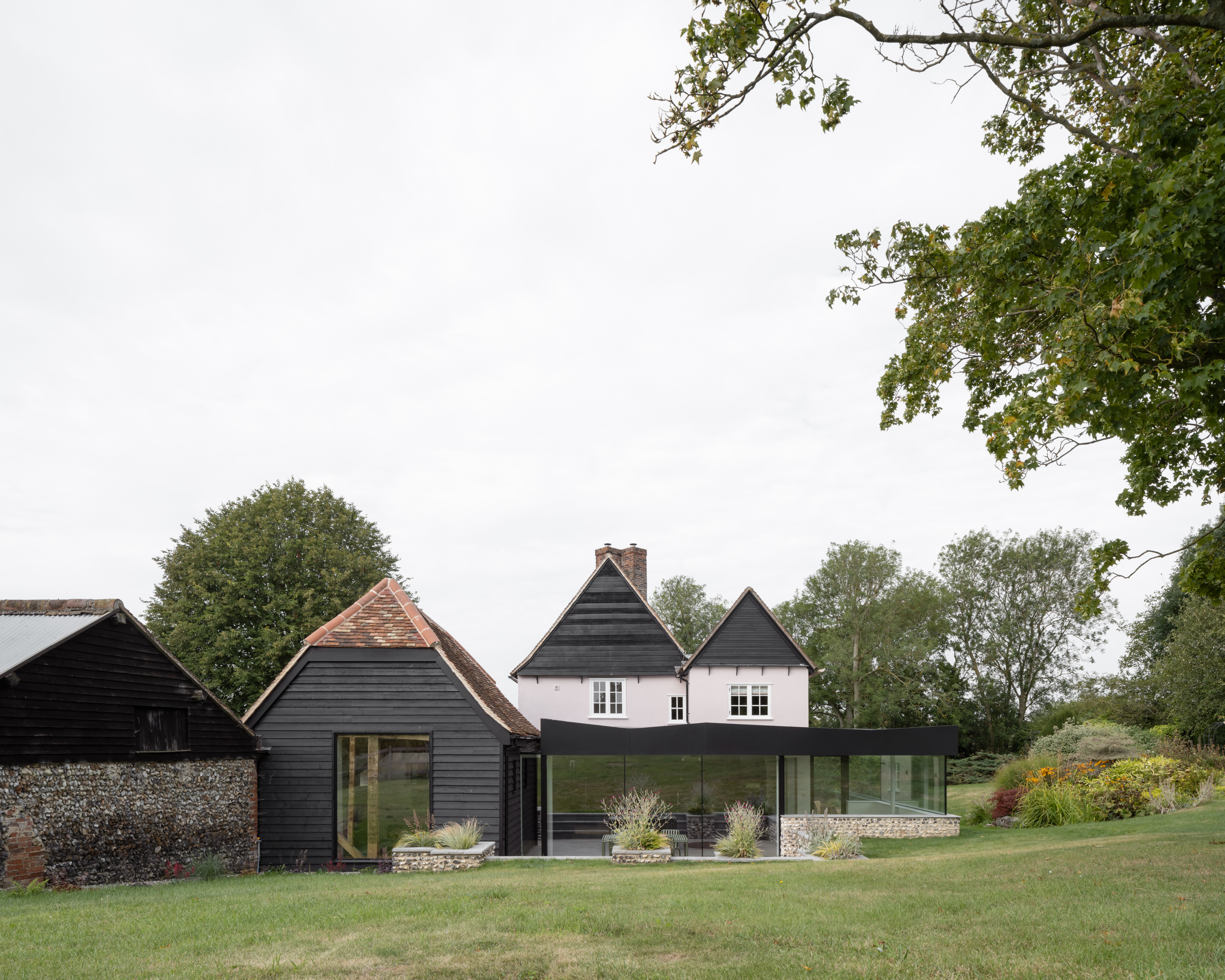
Flint Farm, Hertfordshire
JOHAN DEHLIN
Anyone extending a historic home has to choose whether to go traditional or modern. At a grade II listed farmhouse in Hertfordshire, a family who left London with two young children opted for the latter — with a touch of the former.
The house had a mammoth uPVC conservatory and a “very detracting” 1960s utility at the side, says Will Gamble, the architect who redesigned it (willgamblearchitects.com). He guided them to knock down the conservatory and replace the utility with a kitchen extension, which linked the house to a neglected old barn that became a family room with rugged exposed beams.

The judges described the project as “visually simple, appropriately scaled, well-detailed, elegant and respectful”
JOHAN DEHLIN
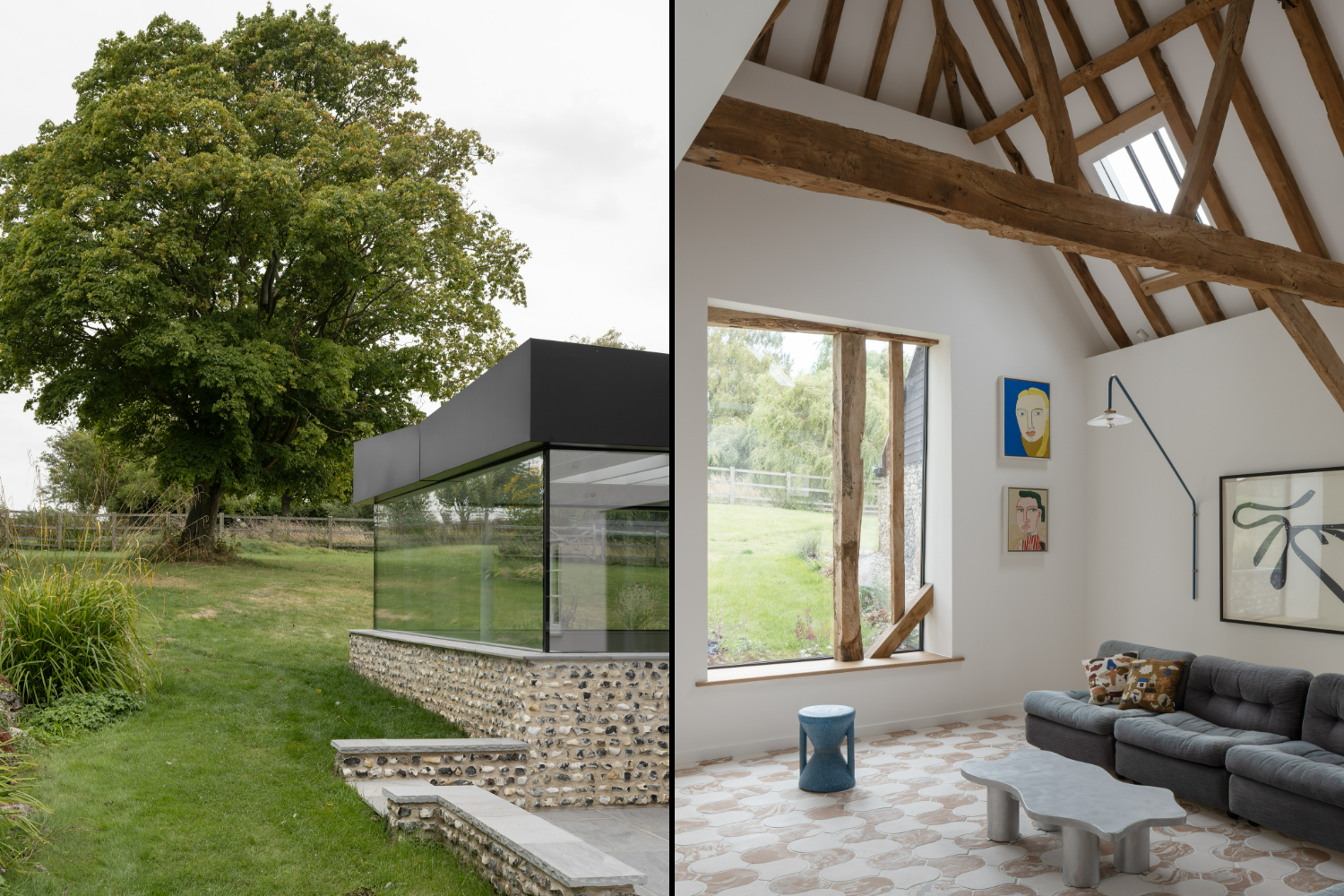
The extension links the house to an old barn that became a family room with exposed beams
JOHAN DEHLIN
The heavily glazed extension has a “crown” of angular black metal, picking up on the old black timber farmyard gables around it. It sits on low walls of flint, which appears throughout the farmstead, to anchor it to the landscape, Gamble says.
Judges’ verdict: “A visually simple, appropriately scaled, well-detailed, elegant and respectful extension. It is also funky and fun.”
• How a couple transformed a seaside villa into a vintage-filled home
Highly commended: Whitberry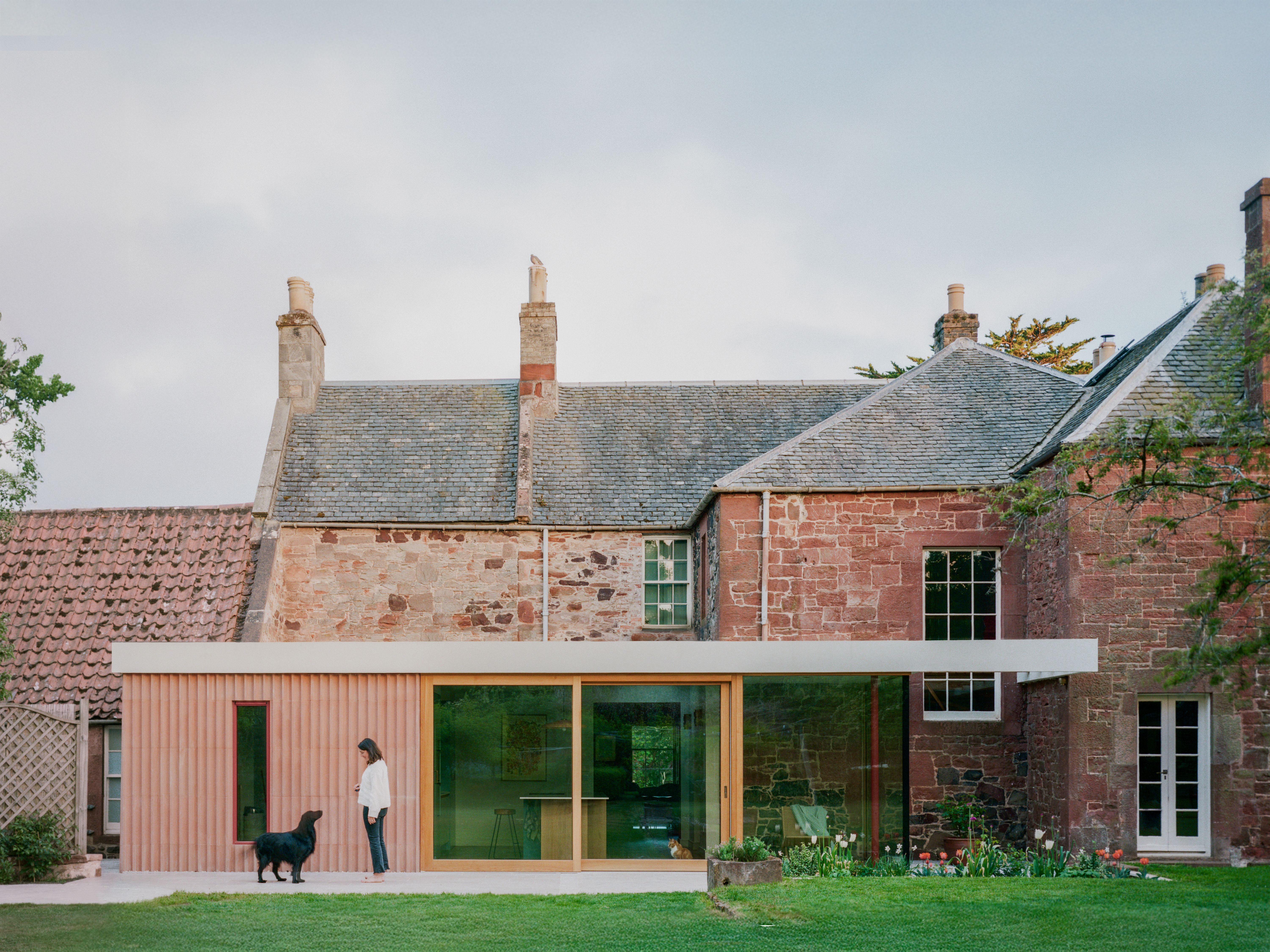
The modern kitchen extension to the Whitberry farmhouse in East Lothian
LORENZO ZANDRI
In 2018 Nick and Jessica Chatters, their two toddlers in tow, swapped Edinburgh for a grade B listed farmhouse they bought from the East Lothian estate of Tyninghame House. “With its chocolate box appearance, historic walled garden and clear potential, we fell hard for it,” Jessica, 40, says. They became the first private owners of what had been home to the factor who ran the Earl of Haddington’s former family seat.
Room by magnolia room, Nick (who came from a family of engineers) tackled “rotten windows and floors, barricaded shutters, asbestos, layers of wallpaper and dodgy plumbing”, adds Jessica, who gave birth to the youngest of their three children (now aged five to eleven) in the midst of the project.

The buyers loved the property’s chocolate-box appearance
LORENZO ZANDRI
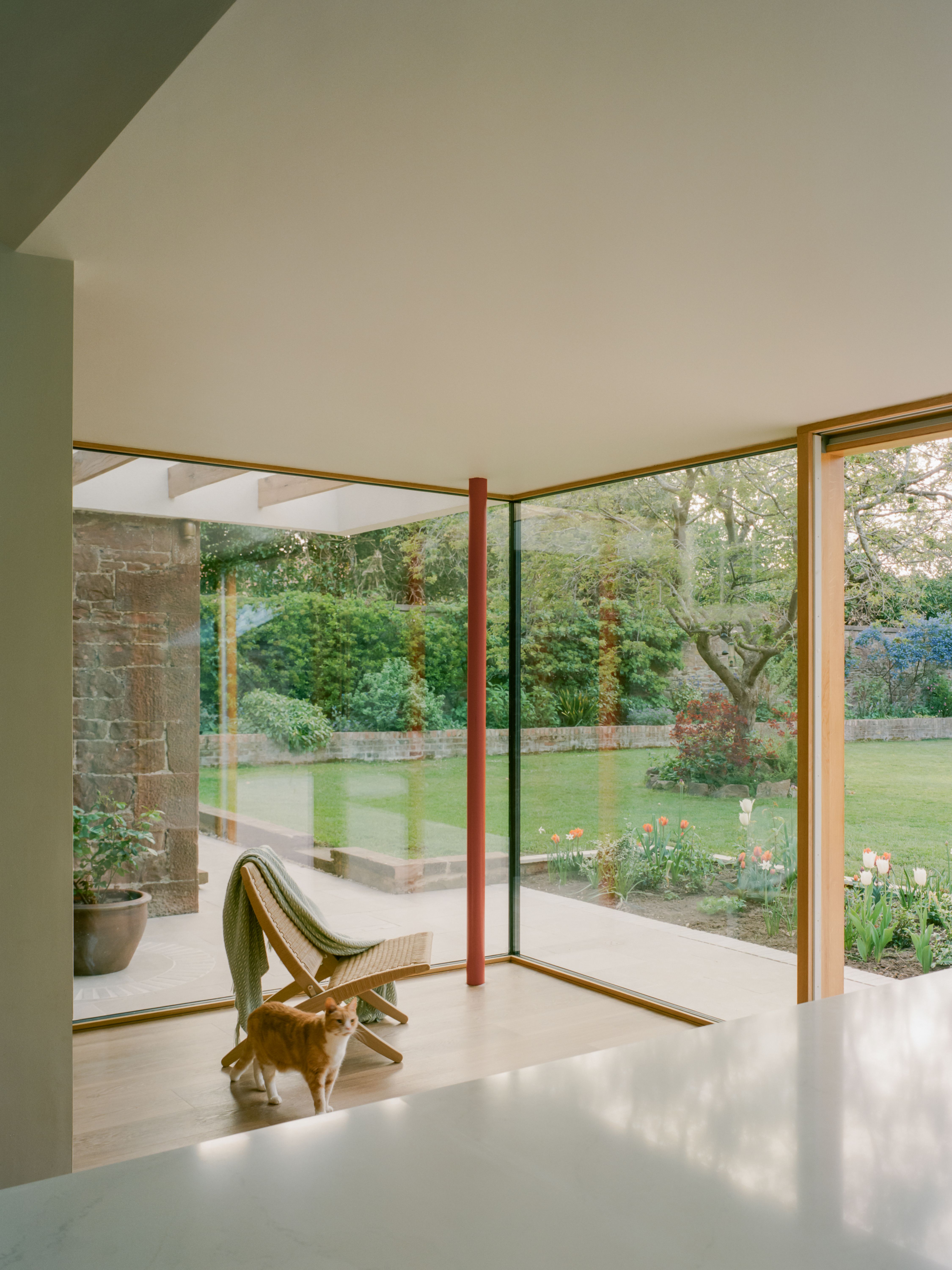
The kitchen extension opens up views over the walled garden
LORENZO ZANDRI
In 2021 they asked the architect Pend (pendarchitects.com) to design a kitchen extension to open up views over the walled garden and tie together the haphazard patchwork of older rear additions. Its solution? A fluted precast stone extension that reflects the blush pink tones of the house and unifies it all. It is the new “star of the show”, Jessica says.
Highly commended: Laurel Cottage
Laurel Cottage, near Chichester Harbour, with its striking asymmetrical extension
MATTHEW SMITH
For centuries the local blacksmith had lived in a thatched flint cottage near Chichester Harbour. It is now a boating bolt hole for Jeff Eldredge and his family of avid sailors, who bought the cottage from a friend in 2018 having holidayed there for many years.
Untouched for decades, the cottage had a galley kitchen and small rooms. To create an open-plan kitchen and a fourth bedroom the Eldredges added a striking asymmetrical extension clad in corten weathered steel.

The extension features an open-plan kitchen with expansive garden views
MATTHEW SMITH

A fourth bedroom has also been added
MATTHEW SMITH
Research into the blacksmith cottage’s history by the planning consultancy Whaleback defined the shape and material palette of “an extension forged out of the building”, says Tom Wild of Helyer Davies Architects, who designed it. A glass walkway links it to the cottage, juxtaposing old and new (hdarchitects.co.uk).
Eldredge, a retired lawyer, likes the contrast. “It was a lovely little cottage. I wanted people to see what was there before [and not wonder] what was added.”
• We turned a freezing semi into a warm home with the ultimate sea view
Top tips from listed property owners
1. Know your listed building
Understanding what makes a building special takes time. The more you understand about your building’s history and development, the better equipped you will be to make decisions about future changes, which parts are sensitive to change and which parts would benefit from change.
2. Don’t rush in
Before making decisions about alterations to your building it pays to live with it for a while. It is surprising how much ideas and aspirations can change once you spend time with a building and get to know its idiosyncrasies.
3. Understand traditional building
Traditional building materials look and behave differently from modern building materials. Understanding how traditional buildings allow moisture (rainwater, ground water and condensation) to evaporate freely away cannot be overstated.
4. Use the correct materials
Endless damage has occurred in the past as a result of using inappropriate building materials, which can affect a building’s ability to stay warm and dry. Avoid the use of cement, gypsum plasters or impervious coatings in traditionally constructed listed buildings.
5. Use skilled craftspeople
Finding the right help, and avoiding the wrong help, is half the battle. Check the credentials of those you appoint to provide advice or work on your listed building. Don’t assume that cheapest is best or that those who claim to be heritage specialists necessarily are.
6. Plan for regular maintenance
Old houses require more regular maintenance than modern houses. Routine checks and maintenance can avoid the need for more significant and costly repairs, so it pays to check rainwater goods and roofs periodically.
7. Conservation officers are friends, not foes
Few local councils provide the hands-on service that they used to for listed building owners but their aim of caring for listed buildings and protecting them for the future is the same as yours. They will often possess in-depth knowledge of local building history and techniques.
8. Tread lightly
Once lost, historic finishes, or the patina that comes only with age, cannot be reproduced. Respect the old and avoid the temptation to over-restore, which can be as harmful as total loss.
9. Buy the right house
If the listed house you have fallen in love with needs extensive alteration and a large extension to suit your family’s needs, it is probably not the right house for you. You can’t assume that consent will necessarily be forthcoming for the level of intervention that you propose.
10. Work within the law
All alterations that affect the significance of a listed building (internal or external) require consent from the local planning authority. Treat what you read on the internet with caution and if in doubt take professional advice or contact the LPOC helpline, 01795 844939.
Extracted from a 120-page guide to extending and renovating listed properties, which will launch at the Listed Property Show, where conservation experts will offer advice (Jan 30-31 at Olympia, London W14, lpoc.co.uk)