
A strange little animal. That was how her fellow art students described Gwen John. A waif was how she described herself. “I am like a shadow,” she wrote. Her “shyness and timidity” made conversation awkward. Her Pembrokeshire accent was so soft she often went unheard.
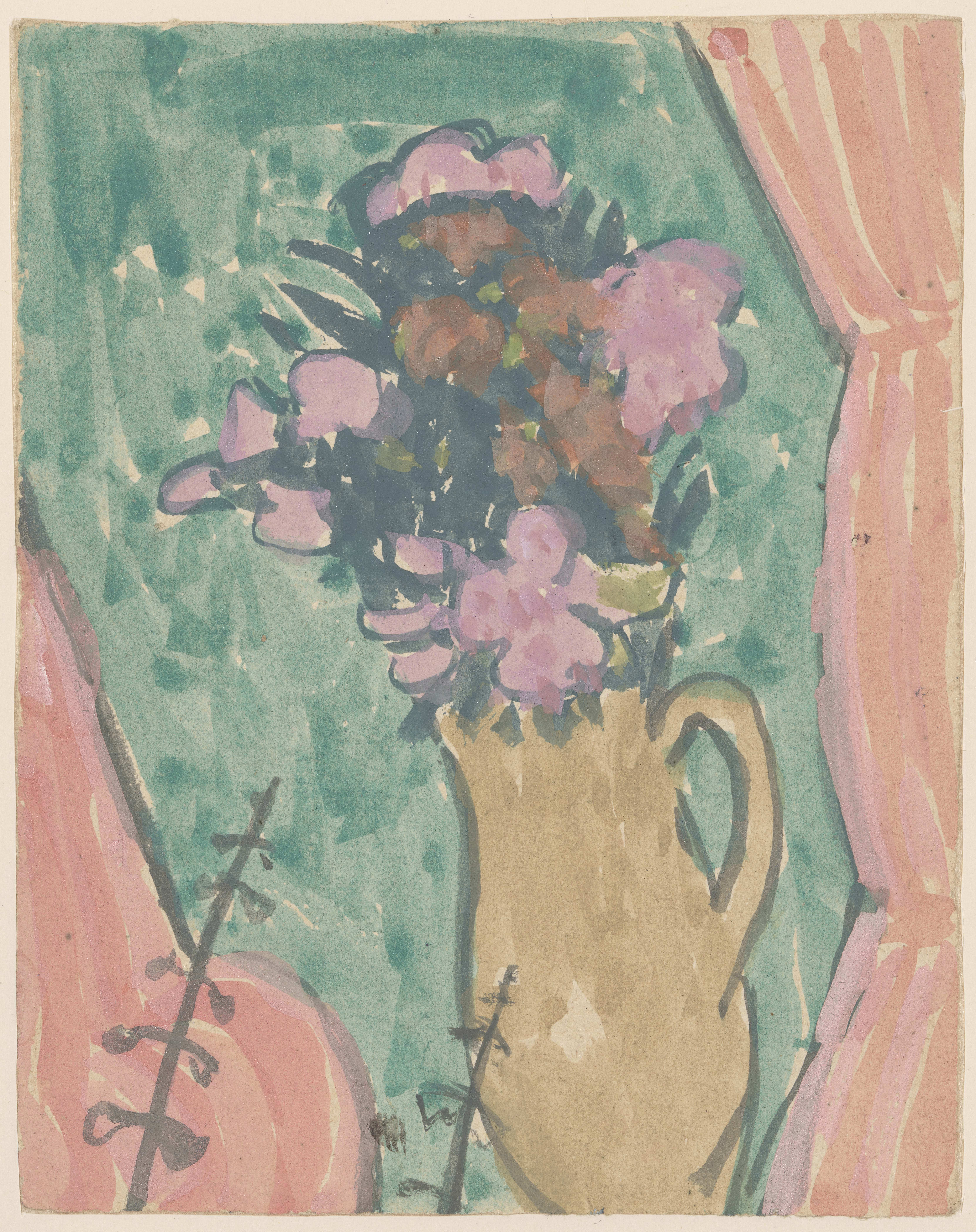
John’s voice as an artist might seem equally reticent. Her works, typically small and painted in watercolour or gouache on paper (she found oil painting strenuous and likened it to housework), were for many years much overlooked. Their subject matter is far from flamboyant: seated women captured in quiet contemplation, interiors hushed as the side chapel in a church, vases of wild flowers picked from verges, her companionable tabby cats grooming themselves. Her compositions are pared down. Her palette is muted. She works in soft harmonies of matt earth tones; in tints of pale rose, pearly greys and chalk blues.
How different she was from her younger brother, the charismatic Augustus, who, full of tempestuous energy and profligate charm, was by his mid-twenties among the most celebrated artists of his era. Setting up a ménage-à-trois — with his wife, Ida Nettleship, and his lover Dorelia McNeill — in a series of shambolic country houses, making long journeys in gypsy caravans, entertaining successions of lovers (rumour has it that, having fathered as many as 100 children, he would pat random kids on the head in case they were his own), this wild bohemian overshadowed his sister.
Yet from the beginning he saw that behind her social reticence lay a unique inner strength. Gwen didn’t merely “steal through life”, he said. “She preserved a haughty independence which people mistook for humility.” She may in her lifetime have been known as his sister, but one day, he predicted, “I will be known as the brother of Gwen John”.

The Pilgrim
YALE CENTER FOR BRITISH ART PAUL MELLON COLLECTION/BY PERMISSION OF AMGUEDDFA CYMRU – MUSEUM WALES
That moment has come. Next month a Gwen John retrospective, staged to celebrate the 150th anniversary of her birth and the centenary of the only solo exhibition of her lifetime (in New Chenil Galleries, London), opens at the National Museum Cardiff. It will move on to the National Galleries of Scotland and the Yale Center for British Art in New Haven, Connecticut. Taking its title, Gwen John: Strange Beauties, from John’s description of herself as “a seer of strange beauties”, it presents 120 paintings and sketches, many of which have never before been shown.
In the past, readings of John’s art have tended to be biographical and psychoanalytical. It’s hardly surprising. Born in 1876 in Haverfordwest, Pembrokeshire, she was only eight on the morning when, lined up in the hallway with her siblings and the household servants, she was informed that her mother was dead. The family moved to a terraced house in Tenby where Gwen, stifled by the routines of a taciturn and parsimonious father, sought refuge in sketching, reading and running wild on the beaches. Her home education was all but nonexistent. In 1894 she finally escaped, joining her brother who had recently enrolled at the Slade, the only British art school that accepted women at that period.
• Read more art reviews, guides and interviews
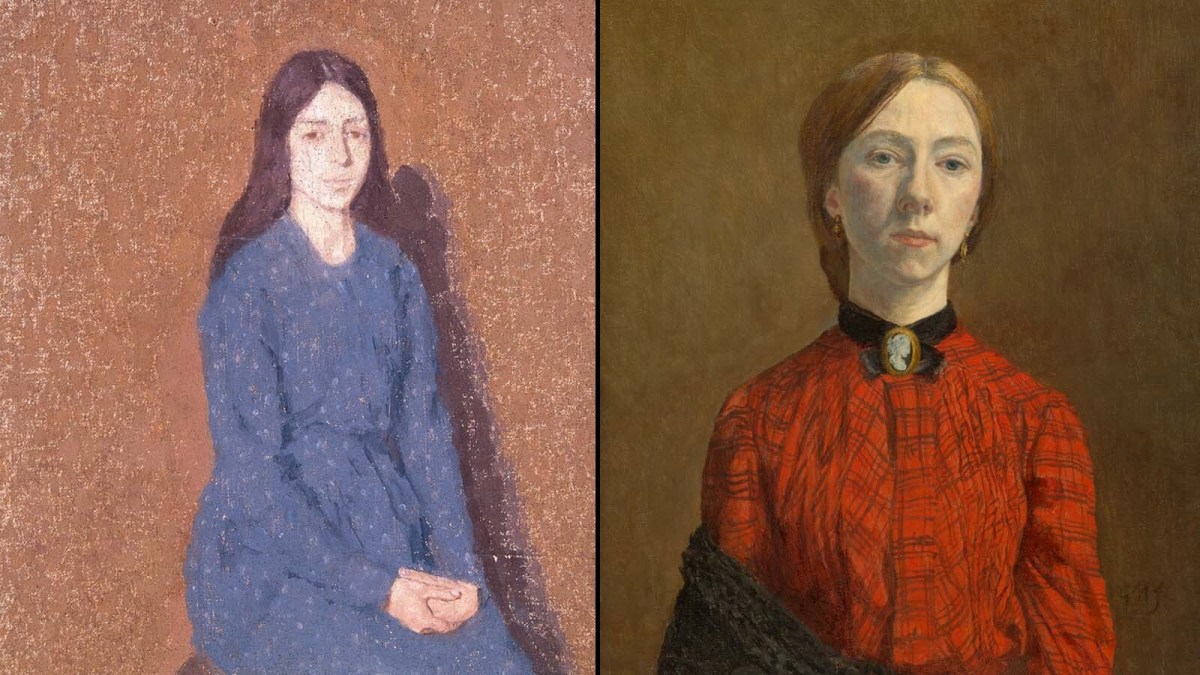
A 1902 self-portrait — the most significant painting of her early career — will be among this show’s highlights. John sits ram-rod straight. Her straight brown hair, parted down the middle, is scraped back from a pale oval face. She confronts her viewers with her penetrating stare. It is the utter frankness of this portrait that strikes. Here, at the outset of her artistic career, is a serious, determined and highly disciplined young woman. Yet for all the apparent severity, this portrait also captures a sense of her boldness. The deep red of the blouse emphasises its force. The sitter is clearly less reticent than you might have assumed.
This is the young woman who travelled to Paris to study under Whistler; who in the company of her brother’s lover, Dorelia, attempted to walk from London to Rome, living on bread, grapes and beer and, much to the astonishment of the farmers, gendarmes and animals that discovered them, sleeping under the stars beneath piles of portfolios. This was the ingenue who fell in love with Auguste Rodin, 36 years her senior. “He fired her imagination,” Sue Roe writes in a vivid biography of John, “making her tender, romantic and outrageously and irrepressibly passionate.”
Flowers in a Jug
BY PERMISSION OF AMGUEDDFA CYMRU – MUSEUM WALES
John hurled herself headlong into an affair. She was obsessed. She would rather be alone than with other people, she told the sculptor, because then she could think about him without interruption. Her anguish was all but unbearable when they were apart. She wanted only to be his model. Yet in her determination to win his approval, she kept working. Her delicate images with their aura of almost mystical serenity were achieved, Roe writes, “through immense efforts of will and herculean battles with emotional, sexual and psychic demons”.
When Rodin, by then in his sixties, moved to the Parisian suburb of Meudon, John followed, despite the jealous custodianship of his longstanding companion Rose Beuret. She would linger outside his house in the hope of glimpsing him. She would write constantly. Eventually, however, her incessant letters appeared to irritate him. He refused to see her and stopped sending replies.
The despairing John remained in Meudon for the last three decades of her life. As a young woman, moving through her brother’s bohemian circles, she had been fairly sociable, but now, drafting a set of “rules to keep the world away”, she became more reclusive. She lived alone with the cats who served as much as companions as models. She found solace in religion, eventually converting to Catholicism. Yet she remained, at the same time, devoted to her art. Sketching members of her congregation, doing portraits of nuns from the local Dominican convent, presenting her models like modern-day Virgin Marys, she discovered a profound calmness of spirit. “Oh what a world is open to us when our mind is at peace!” noted the painter who now described herself as “God’s little artist”. “A world of eternal things. What a world and what sweetness in humble solitary work.”
• The best art exhibitions of book for 2026
It is this dedication to her work, this sublimation of her fierce inner life into painterly vision, that the new exhibition explores. Although a broadly chronological hang will follow John’s story, it emphatically puts her work first and foremost. She produced 150 paintings over the course of her career as well as the thousands of drawings and watercolours that were found in her studio after her death, at the age of 63, in 1939. A huge number of these were acquired by the National Museum Cardiff, which houses the largest public collection of her work. Conserved and catalogued to a basic level, they have never been examined so extensively in such revelatory detail.

Seated Tortoiseshell Cat
BY PERMISSION OF AMGUEDDFA CYMRU – MUSEUM WALES
Until now, the co-curator Lucy Wood explains, John’s works on paper have tended to be treated as a mere addendum. But John considered them to be “quite as important as her paintings”. In her landmark New Chenil Galleries exhibition in 1926, she hung sketches and finished works side by side. The new retrospective will do the same. By opening up a dialogue between the two, the curators illuminate the work of an artist who not only produced images of intense delicacy and feeling, but also, it is argued, developed a distinctive form of modernism that grew out of her own poetic view of the world.
John had a singular vision, but her works on paper reveal that she took a surprisingly varied approach. Her childhood education may have been all but negligible, but as an adult she read avidly, filling page after page with extracts transcribed from a huge range of sources — The Idiot, Hamlet or the writings of Friar Henri Suso — and her reflections upon them. Among the highlights of this show will be a series of images of women sitting alone quietly reading. They capture a rich sense of the peaceful self-containment that John found in learning.

Girl in a Church
BY PERMISSION OF AMGUEDDFA CYMRU – MUSEUM WALES
John, as her notebooks reveal, drew on myriad influences: prayer cards, Japanese drawings and the paintings of Botticelli, Dürer and Rouault. She experimented technically, engaging with the colour theories of Chevreul, in sketches of flowers that practise tonal complementarities. She replicated images by tracing as Rodin had done. In later years, as she sank deeper into solitude, she increasingly simplified her compositions, refining her images to their essential forms. Her move towards spiritual purity is reflected in the pronounced shift of her art towards modernist abstraction. Art, she noted, could disclose “a world of eternal things”.
A picture should be painted with such feeling that it touches the heart of everyone, John believed. With imperturbable persistence she learnt to create images that do precisely that. Consider such later masterpieces as The Pilgrim — a beguiling image from about 1924 of a blue-cloaked woman, sitting upright, a rosary looped round the hand that rests on her lap — which will be coming on loan from Yale. Stand in front of her long enough and you begin to sense a tension underlying the calm. John captures less a mood of serenity than the nervous intensity of the experience of being alone with your thoughts. Even as she conjures up a mood of detachment, she engages her viewers, inviting them to imagine the inner world of her sitter. She doesn’t force the conversation. She looks on undaunted and leaves it to you to understand. Her voice may not be loud, it may be only a whisper, but it has lasted down the years.
Gwen John: Strange Beauties will be at the National Museum Cardiff, Feb 7-Jun 28