
Home » Latest Travel News » UAE Joins Saudi Arabia, Qatar, Bahrain, Kuwait, and Oman in Uzbekistan’s Ambitious Tourism Strategy to Reach Twenty Million Visitors by 2030
Published on
January 24, 2026
By: Paramita Sarkar
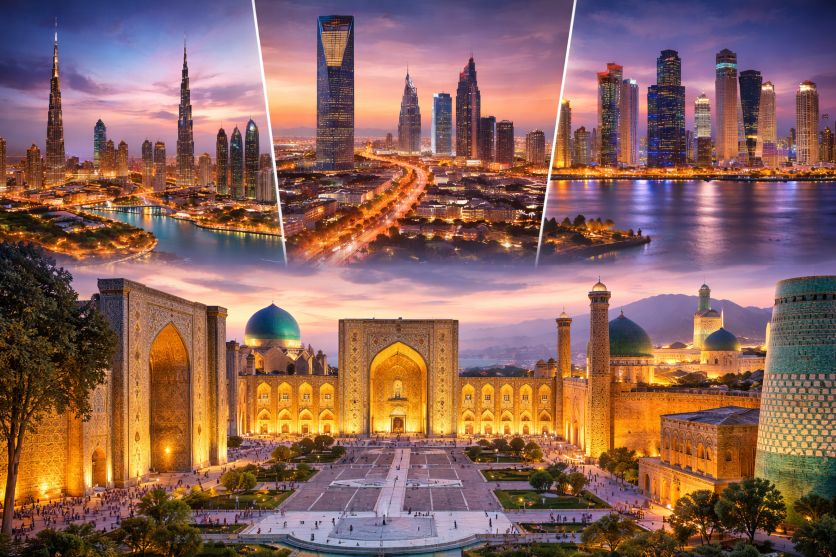
Uzbekistan has significantly raised its tourism ambitions as part of its “Uzbekistan-2030” Strategy, with the goal of attracting 20 million international visitors by the end of the decade. This marks a substantial increase from earlier projections and highlights the country’s record-breaking performance in 2024 and 2025. The tourism sector is now poised to become a key economic driver, contributing heavily to the country’s economic diversification efforts. The ambitious strategy is underpinned by key initiatives that aim to revamp the nation’s infrastructure, introduce new visa policies, and expand Uzbekistan’s appeal to both regional and long-haul tourists. As part of these efforts, Uzbekistan is particularly focused on attracting visitors from GCC countries such as the UAE, Saudi Arabia, Qatar, Bahrain, Kuwait, and Oman, with major developments planned in hospitality, transport, and promotional efforts. Here is a deep dive into the detailed components of this newly revised tourism strategy, its economic targets, and the infrastructure upgrades that will enable Uzbekistan to meet its 2030 goals.
Core Economic Targets for Uzbekistan’s Tourism Growth
Uzbekistan’s government views tourism as a central pillar for economic diversification. The updated “Uzbekistan-2030” Strategy not only focuses on increasing tourist arrivals but also aims to boost the country’s share of national GDP contributed by the tourism sector.
Tourism’s Contribution to GDP
Currently, tourism accounts for around 3.5% of Uzbekistan’s GDP. The government plans to nearly double this figure, targeting 7% by 2030. This dramatic increase is expected to generate additional revenue streams for the country, leading to enhanced employment opportunities, the development of new industries, and a further expansion of infrastructure.
Tourism Export Revenue
A major goal of the strategy is to increase tourism service exports to over $6 billion annually by 2030. This goal builds upon Uzbekistan’s performance in 2024, where tourism exports were valued at approximately $3.5 billion. This revenue growth will be driven by attracting more high-value tourists from markets outside of the immediate region, specifically from long-haul markets.
High-Value Focus: Targeting Long-Haul Tourists
Historically, Uzbekistan has attracted visitors primarily from regional markets, but the country is shifting its focus towards high-spending tourists. Western Europe, North America, and East Asia are key target markets, with tailored marketing strategies aiming to attract luxury travelers and those seeking culturally rich, heritage-based experiences along the Silk Road.
By targeting these higher-value markets, Uzbekistan hopes to increase its tourism-related revenues while ensuring that the sector becomes more resilient to the fluctuations of regional market conditions.
Advertisement
Advertisement
Expanding Infrastructure to Support Growing Tourism
Uzbekistan’s tourism strategy is supported by a massive infrastructure investment program that includes expanding accommodation options, improving transport connectivity, and building modern airports capable of handling millions of passengers. The government’s vision is clear: to create an environment where tourists can enjoy seamless travel and high-quality accommodations throughout their stay.
Accommodation Growth
As part of the strategy, Uzbekistan plans to build 4,000 new hotels and guesthouses by 2030. This will include a doubling of the number of 4- and 5-star hotels, aimed at meeting the growing demand for luxury accommodations from high-spending visitors. The increase in high-quality, international-standard accommodations will not only enhance Uzbekistan’s appeal but also attract international hotel brands looking to establish a presence in Central Asia.
Advertisement
Advertisement
Transport Connectivity and New Infrastructure Projects
To meet its goal of attracting 20 million visitors by 2030, Uzbekistan is committed to expanding transport connectivity within the country. The strategy includes expanding domestic flight routes, building 25 new roads connecting major tourist hubs (especially in mountainous regions), and constructing a new Tashkent International Airport that will be able to handle 20 million passengers annually once completed.
One of the most exciting developments is the airport’s expansion, which is set to transform Tashkent into a key international hub connecting Central Asia to the rest of the world. This project is a centerpiece of Uzbekistan’s tourism infrastructure plans.
Diversifying the “Tourist Product”
Uzbekistan’s tourism product has traditionally focused on cities like Samarkand, Bukhara, and Khiva, which remain central to the country’s tourism appeal as major stops along the ancient Silk Road. However, in an effort to reduce seasonal pressure and spread the economic benefits of tourism more evenly across the country, Uzbekistan is diversifying its tourism offerings.
Pilgrimage Tourism
Uzbekistan is home to over 1,200 sacred shrines, making pilgrimage tourism a key focus. The country aims to increase its annual pilgrim arrivals from 2 million to 3 million by improving infrastructure around these religious sites. This expansion is part of the country’s broader effort to attract Halal tourism visitors from GCC nations, particularly Saudi Arabia, UAE, Qatar, Kuwait, and Oman.
Medical and Educational Tourism
Uzbekistan is also targeting the medical and educational tourism sectors. The country plans to generate $1.5 billion in exports from these niche markets by 2030, offering high-quality healthcare services and educational experiences. This is seen as a natural extension of Uzbekistan’s broader tourism strategy, aligning with its efforts to become a major regional destination for wellness and medical tourism.
“Smart” Tourism in Khiva
A flagship project of Uzbekistan’s tourism diversification is the transformation of Ichan-Kala, the walled city in Khiva, into an immersive “smart city-museum”. This ambitious project integrates modern technology into the historical environment, creating an innovative tourism experience that combines culture, history, and cutting-edge digital technology. This will appeal to tech-savvy travelers while preserving the rich cultural heritage of the region.
Regional Clusters
To further diversify its tourism offerings, Uzbekistan is creating five major tourism clusters across the country. These clusters will focus on ecotourism, gastronomy, and rural travel, offering visitors a deeper and more diverse experience of Uzbekistan’s culture, cuisine, and natural beauty.
Policy and Accessibility Updates for 2025–2026
To ensure the success of its tourism strategy, Uzbekistan has made a series of policy updates designed to make the country more accessible to international travelers. The government has made significant strides in visa liberalization, and key changes have been made to visa and entry requirements for tourists from around the world.
Visa-Free Entry UpdatesUnited States (New for 2026): Starting January 1, 2026, all U.S. citizens can enter Uzbekistan visa-free for up to 30 days. This marks an expansion of the previous policy, which only granted this privilege to U.S. citizens over age 55.Gulf Expansion (Effective June 2025): Citizens of Bahrain, Kuwait, and Oman will be granted 30-day visa-free entry, further solidifying Uzbekistan’s appeal as a prime destination for Halal tourism.China: Uzbekistan’s visa-free regime for Chinese citizens has been extended, with plans to double Chinese arrivals by 2027.New International Flight Routes (2025–2026)
Uzbekistan’s aviation sector is undergoing a transformation, with new international flight routes opening up across Asia, Europe, and the Middle East. New flights are being introduced between Tashkent and Hyderabad (India), Maldives, Warsaw (Poland), and Doha (Qatar). These new routes will make Uzbekistan more accessible to tourists from regions that are increasingly important for its tourism strategy.
Infrastructure Milestones for the Future
Key infrastructure projects include the new Tashkent International Airport, which is expected to be completed by 2028, and a fleet expansion for domestic carriers. Uzbekistan plans to increase its total aircraft fleet from 105 to 180 by 2030, allowing for greater connectivity across the country and enhancing the overall tourist experience.
Conclusion: Uzbekistan’s Bold Tourism Vision for 2030
Uzbekistan’s “Uzbekistan-2030” Strategy represents a monumental shift in the country’s approach to tourism, with bold targets aimed at boosting visitor numbers, diversifying offerings, and improving infrastructure. With a comprehensive vision for tourism development that includes major investments in transport, accommodation, digital technology, and regional clusters, Uzbekistan is positioning itself as a premier destination for international travelers by 2030.
As the country works towards its goal of attracting 20 million international visitors, strategic partnerships with GCC nations like the UAE, Saudi Arabia, and Qatar will play a critical role in driving growth. The changes outlined in Uzbekistan’s tourism strategy, coupled with a more accessible visa policy and improved transport connections, ensure that the country will remain at the forefront of Central Asia’s tourism boom for years to come.
