

Published
24/01/2026 às 23:56
A European scientific experiment temporarily recreated an extinct species, exposed the real limits of animal cloning, and went down in history as a unique case of double extinction.
One of the most emblematic episodes of modern biotechnology occurred at the beginning of the 21st century, when European scientists temporarily recreated an extinct species. This feat, though brief, definitively shaped debates about conservation, genetics, and scientific limits.
Em July 2003, researchers from Spain and the France They announced the birth of a clone obtained from genetic material preserved before the official extinction of the species, recorded in year 2000However, despite the technological advancement, the cub only lived for a few minutes after birth.
In this way, the episode came to represent the only known scientific record of a species that went extinct twice., cited in academic studies and analyses on animal cloning.
— ARTICLE CONTINUES BELOW —
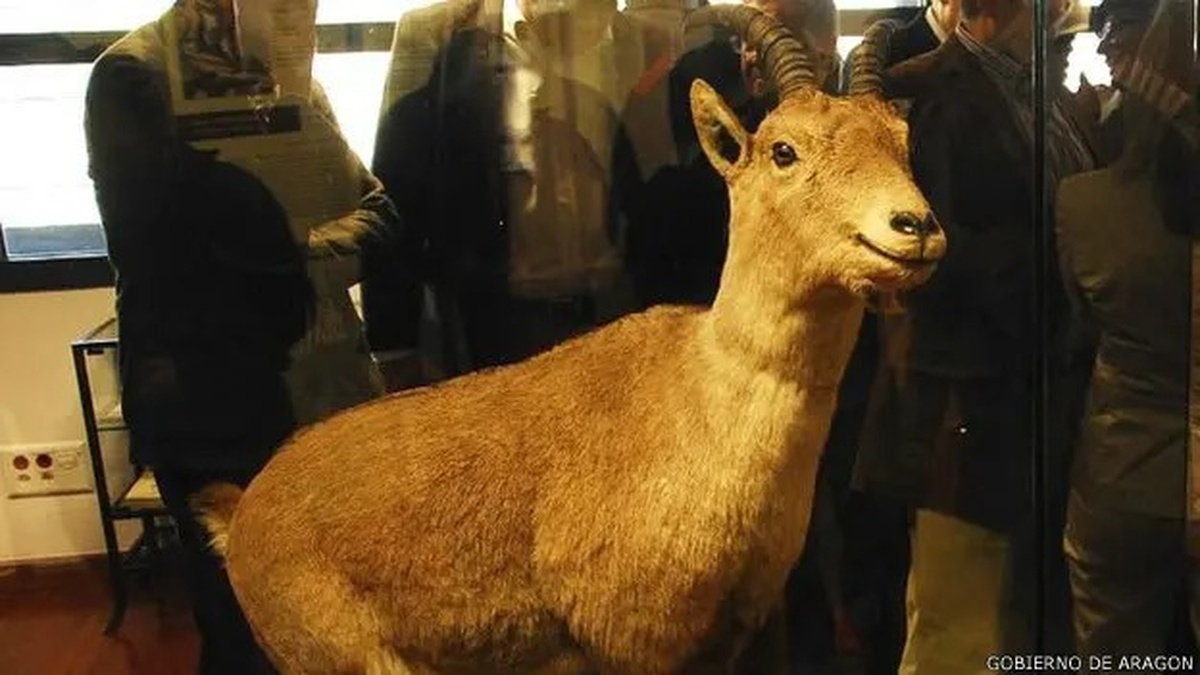 Stuffed body of the Bucardo – Credits: Government of Aragon
Scientific breakthrough applied technique already used in other mammals.
Initially, the experiment used the somatic cell nuclear transfer, a method that science had already successfully applied in cloning the Dolly the sheepOn 1996However, the researchers adapted the technique to the characteristics of a wild animal.
In this process, the scientific team employed preserved cells from an adult female, collected before the extinction. Then, the scientists inserted the nucleus of these cells em domestic goat eggs, previously emptied of their original DNA.
Thus, the procedure sought to fully restore the original genetic configuration of the species, while domestic females acted only as embryonic recipients.
The complex procedure required hundreds of laboratory trials.
Throughout the experiment, the team executed several rigorously planned technical steps. First, the researchers They froze and stored the cells. in the laboratory. After that, they prepared eggs to receive the cloned genetic material.
During the process, the scientists produced hundreds of embryos and cultivated them in a controlled environment. However, according to data released by Aragon Agri-food Research Center and by French scientific institutions, only a pregnancy He went all the way to the end.
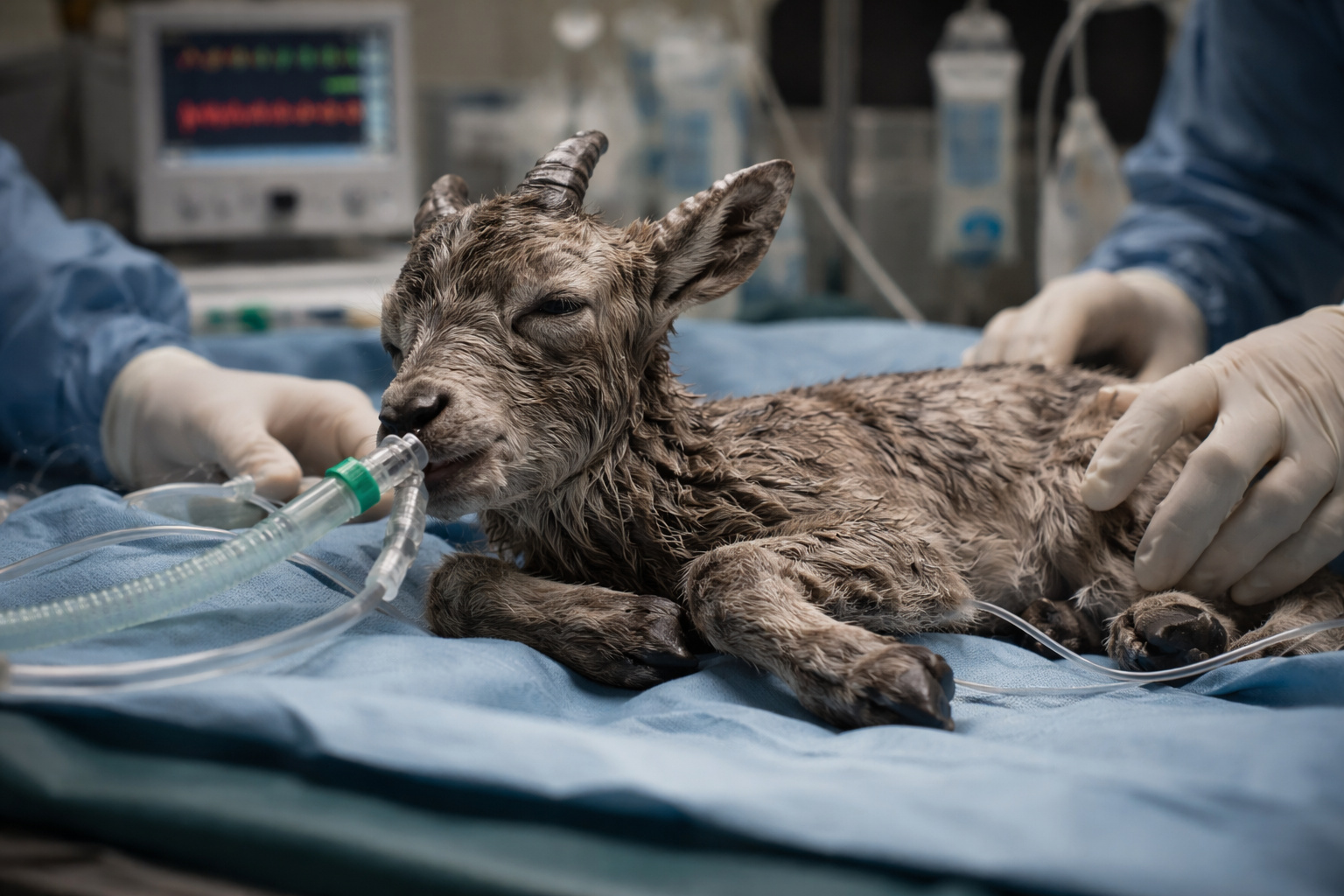
The birth occurred because cesarean sectionOn July 2003, with intensive veterinary care and continuous scientific monitoring.
The premature birth confirmed genetic success and revealed biological flaws.
The puppy was born with morphologically normal appearance, according to scientific reports released at the time. Soon after, analyses of nuclear DNA They confirmed that the clone was… genetically identical to the female donor.
However, just a few minutes after birth, the animal presented severe respiratory failureDespite attempts at stabilization, the veterinary team was unable to reverse the situation.
A necropsy identified a lethal lung malformationwhich prevented proper gas exchange and led to the clone’s rapid death.
Cloning has exposed the real limits of genetic conservation.
Finally, the experiment made clear important limitations of cloning as a conservation tool. Among the main problems, researchers observed that… high rate of embryonic failures and high frequency of malformations in viable clones.
Studies conducted by scientists from University of Zaragoza and from European biotechnology centers show that flaws in cellular reprogramming They especially affect vital organs, such as lungs and heart.
Thus, although the experiment of 2003 While it represented a scientific milestone, it also highlighted the ethical and biological challenges involved in attempting to reverse extinction through biotechnology.
Given this unique event, to what extent should science advance in cloning as a conservation tool without exceeding still poorly understood biological limits?