
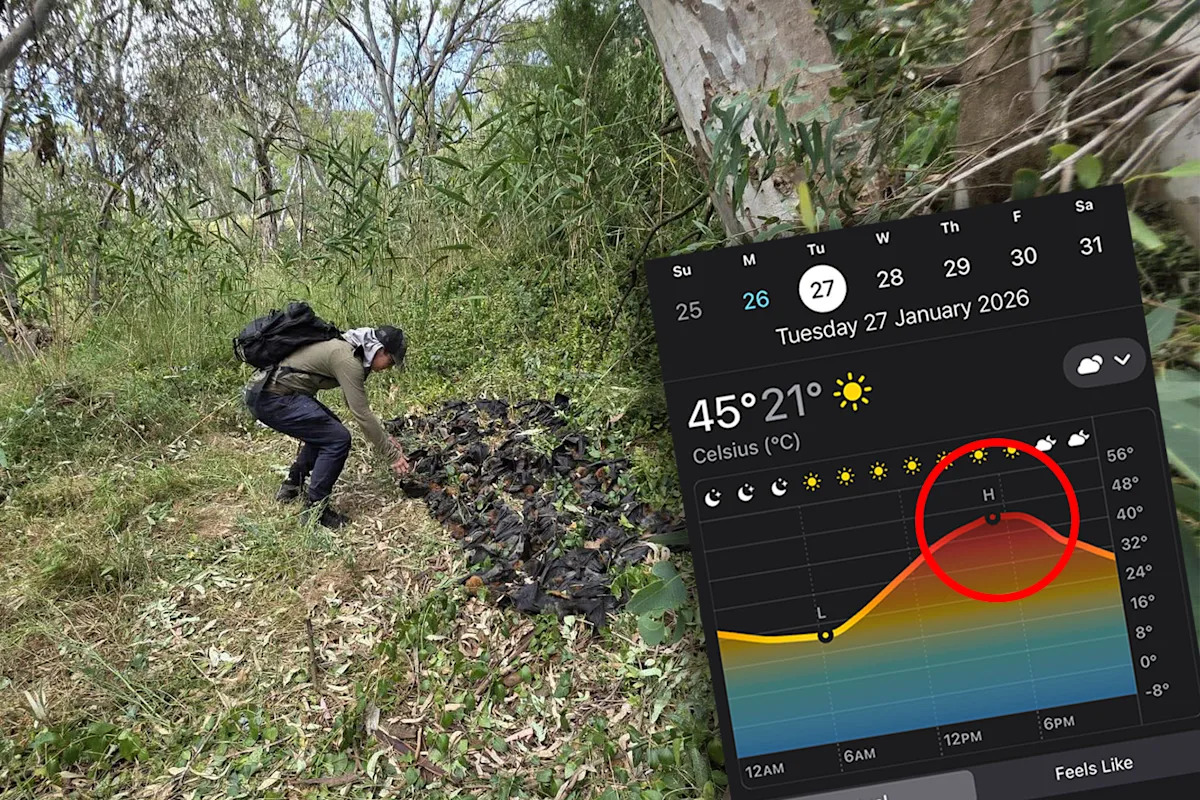
The temperature is expected to soar beyond 45 degrees in parts of Victoria on Tuesday, and it’s predicted tens of thousands of grey-headed flying foxes will perish around the state. When the species cannot access significant shade and water during heatwaves, they clump together on branches in the coolest areas and flap their wings to try to regulate their body temperature.
Ultimately, the colonies become overwhelmed and die en masse.
Federally listed as vulnerable to extinction because numbers have fallen around Australia, there are at least 15 sites in Victoria where the colonies could collapse, significantly decreasing their populations.
Fly By Night has been urging the Victorian government to intervene with targeted water spraying to keep the bats cool, and the deployment of veterinary teams.
But the environment department (DEECA) has only committed to supporting three state-significant sites at Yarra Bend Park in Kew, Eastern Park in Geelong and Rosalind Park in Bendigo.
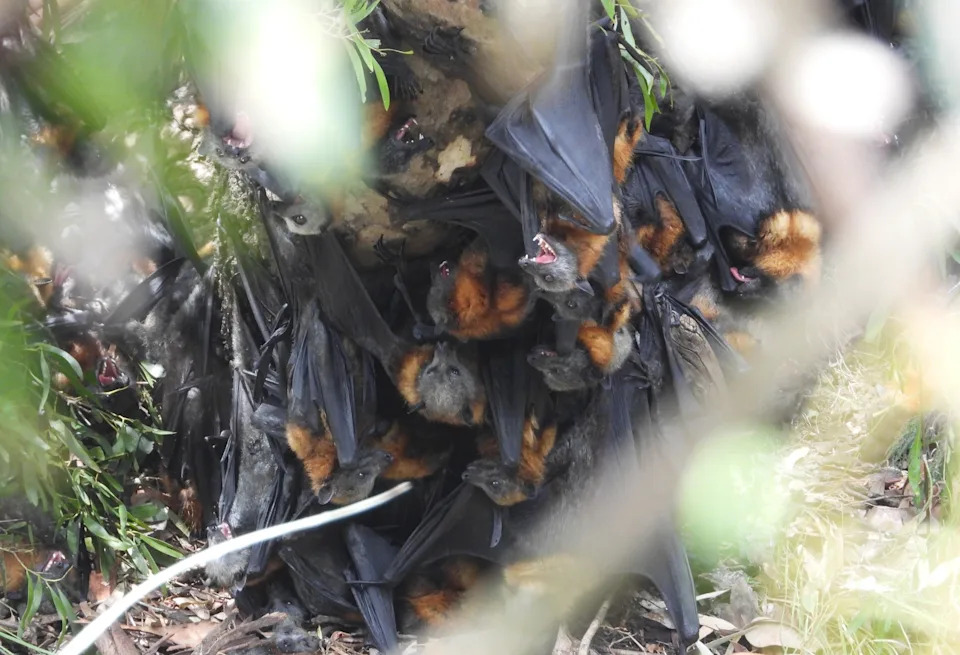
Flying foxes clumped together and died in their thousands during a heatwave in early January. Source: Fly By Night
Five hours when flying foxes face biggest danger
Fly By Night issued a similar plea during a heatwave earlier in January, but the response at most sites was left up to underresourced volunteers, and despite their best efforts, thousands of bats died.
Dozens of baby flying foxes were rescued, some while still clinging to their dead mothers, but their future remains uncertain as they face another heatwave.
In Bendigo, 150km north of Melbourne, the temperature is predicted to hit 45 on Tuesday and then hover around 38 to 40 degrees for the week. While Mildura could hit 48 degrees.
Before industrialisation, extreme heatwaves were once a one-in-25-year event, but because of climate change, they now occur every five years.
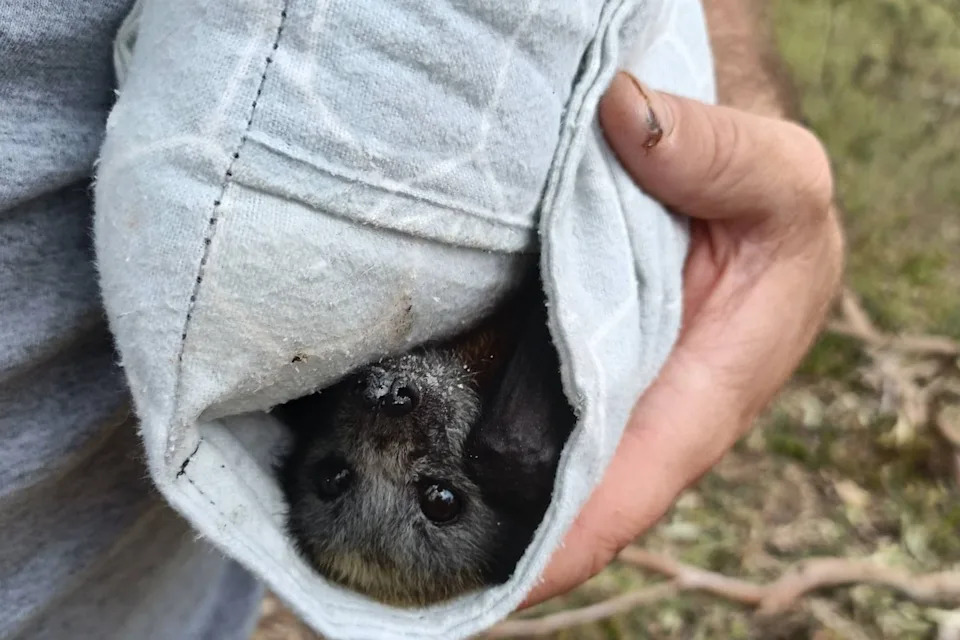
This picture shows a flying fox rescued during a heatwave earlier in January. Source: Fly By Night
Fly By Night’s clinic director, Tamsyn Hogarth, fears the mortalities could be worse tomorrow, and tens of thousands could die.
“It’s going to be pretty dire. We’re going to have over 40 degrees in some places for five hours, which is extreme,” she told Yahoo News, pointing to the expected forecast for Tuesday afternoon.
“It’ll be pretty bad in the camps with no support.”
Frustration at treatment of threatened species
The worst case tomorrow will be significant mass mortalities at multiple flying fox camps, and no one to relieve the suffering.
While there is a water system at Yarra Bend, Hogarth has been unable to secure any watering equipment, saying she was told it was needed for potential bushfire responses.
She believes grey-headed flying foxes do not get the same level of support as other species facing extinction, despite them being integral to ecosystems as long-range forest pollinators.
“We’re talking about lives here, but they’re not a priority at all, and it’s really frustrating,” she said.
DEECA is working to collect and dispose of the piles of dead flying foxes from the last heatwave.
But many parks are still overrun with bodies, and this will make it more of a challenge for volunteers as they sift through the dead in search of the living tomorrow.
“There are still dead everywhere – they haven’t all been collected,” Hogarth said.
“You wouldn’t leave the bodies of other species in parks, but apparently this is OK.”
Government urges public not to touch bats
DEECA has urged members of the public not to touch fallen flying foxes and for vaccinated rescuers volunteering in the colonies to wear PPE.
On rare occasions, they can carry diseases that can be harmful to humans, including Australian bat lyssavirus and Hendra. Rabies is not present on Australia’s mainland, and so it is not a risk.
During heat-stress events, DEECA confirmed it prioritises human safety over wildlife. It tries to minimise disturbances to camps, as this can cause them to scatter, become stressed, and die in greater numbers.
“DEECA is continuing to work with land managers across the state to support flying-fox colonies during extreme heat events,” a spokesperson said in a statement in response to several questions from Yahoo News.
“There will be support in place at nationally important flying-fox camps for upcoming extreme heat days, including Yarra Bend Park in Kew, Eastern Park in Geelong and Roaslind Park in Bendigo.”
Love Australia’s weird and wonderful environment? 🐊🦘😳 Get our new newsletter showcasing the week’s best stories.
