
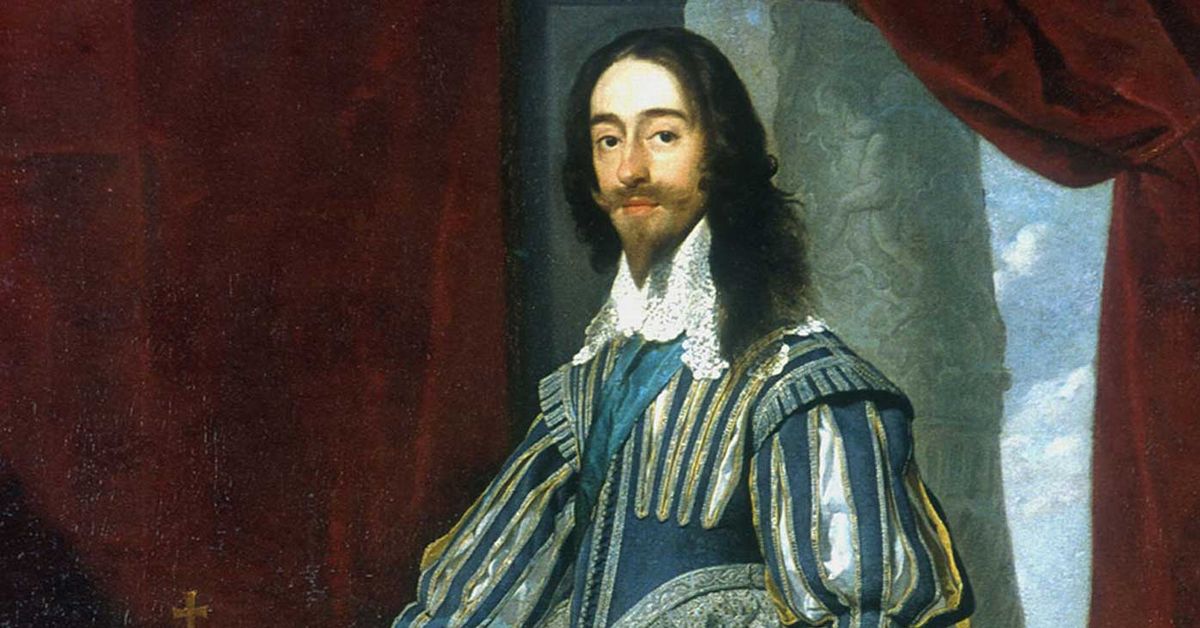
Charles I became the first – and (so far) only – king of England to hear his own subjects officially sentence him to death, on January 27, 1649.
Charles, the second king of the Stuart dynasty, ascended to the throne in March 1625.
From the beginning, his reign was troubled with the king attempting to reign as an absolute monarch even as an ever-stronger parliament attempted to curb his powers.
 King Charles I lost his throne and his head after the English Civil War. (Supplied)
Additionally, Charles’ marriage to a Catholic princess led to broad suspicion of his religious sympathies from reformist-minded Protestants.
The discontent, and particularly the running political battle between the king and the parliament, eventually erupted into the conflict known as the British Civil War, which began when Charles raised the royal standard in 1642, and ended with his capture in 1647.
Charles continued to foment trouble while in captivity, leading to the shorter-lived Second Civil War in 1648.
 Charles remains the only English king to be executed by a court of law – however spurious. (Getty)
When the dust settled on that conflict, Charles was back in captivity, Oliver Cromwell and his New Model Army were ascendant, and those parliamentarians who supported negotiating with the king found themselves arrested or excluded from proceedings.
In January 1649, the Cromwell-controlled so-called “Rump Parliament” indicted Charles for treason against the country.
All three of England’s Chief Justices insisted the charges had no basis in law, so the parliament independently passed its own legislation to create a new court to try the king.
 King Charles I was wearing this shirt when he was beheaded. (Supplied)
Beginning on January 20, the trial lasted just seven days. Charles refused to even plead, insisting it was illegal to put him in the dock.
On January 27, he was told: “For all which treasons and crimes this court doth adjudge that he, the said Charles Stuart, as a tyrant, traitor, murderer, and public enemy to the good people of this nation, shall be put to death by the severing of his head from his body.”
The sentence was carried out on January 20. On his way to the block, Charles requested a second shirt, as the weather was cold and he did not want people to see him shiver and assume he was afraid.
After his death, England entered an interim of republican rule, but Charles II, the slain king’s son, was recalled to the throne in 1660. Somewhat remarkably, given his father’s fate, he accepted eagerly.