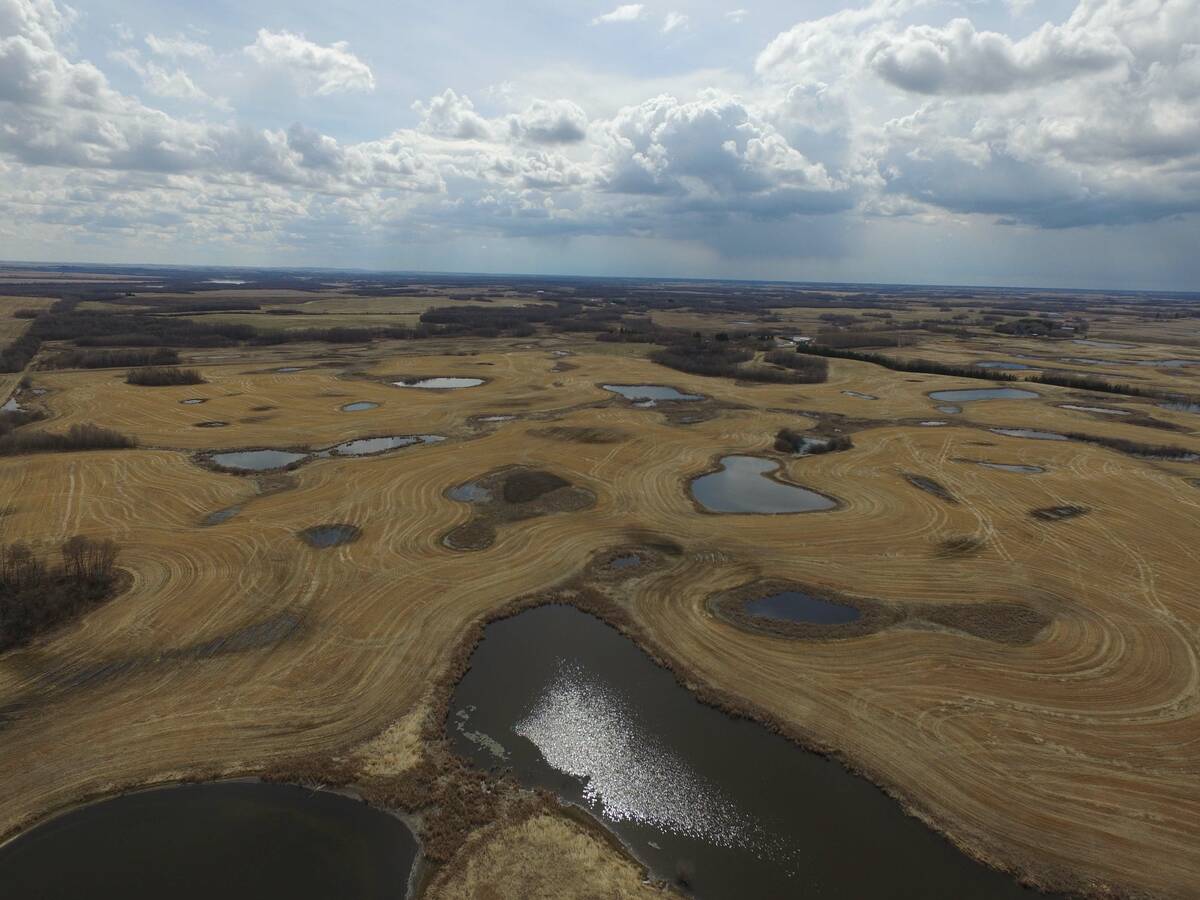
Growing interest in tile drainage and a search for efficient wetland drainage sparked a project at the Conservation Learning Centre near Prince Albert, Sask.
“Historically, in the province, the method used to drain our isolated depressions that we have is through surface drainage,” said Robin Lokken, manager of the centre.
“And so this involves excavating open ditches and connecting those wetlands to nearby wetlands and moving that water off the land.”
Read Also
How a storm becomes weak or strong
This week, we look at the conditions that determine whether a developing trough strengthens into a true Alberta Clipper or Colorado Low, or whether it forms a weak low, bringing only minor impacts.
To determine the best possible solution, Lokken compared drainage methods of surface, tile, surface and tile and single buried tile to an undrained control. The chosen site for the project had significant low spots that in wet years would fill substantially and limit seeding and crop production.
In total, 0.4 acres were drained, but the drainage increased cultivated acres by 83 per cent compared to the wet year of 2017.
Compared to the dry year of 2023, which was the when the project began, there was an increase of nine per cent.
“Even though it’s been exceptionally dry for the duration of this project, it’s still been exciting to capture results, although muted somewhat since we haven’t had the precipitation that I would love to have, now that I have this in place,” Lokken said.
In addition to comparing drainage methods, the study also looked at nutrient availability, soil quality and yield.
Initial soil variances were noticed when compared to baseline soil data from the installation years of 2022 and 2023, particularly that some wetland bottoms had much more nitrogen than the mid-slope of the depression and other areas of the field.
“Our surface, and surface plus tile, has greater total nitrogen now following drainage than our mid-slope and the other drainage treatments,” Lokken said.
“And I’m assuming this is a factor of that extra topsoil now that we have put over top of our original soil.”
The opposite occurred when it comes to phosphorous.
The nutrient was greater in the lowest lying areas before drainage but has decreased following surface and surface plus tile.
In 2024, the research centre grew the first crop on the drained field — wheat — and seeded through all the wetlands except one, which was used as a control.
“2023 was our driest year in the last 12 years, and then we had a really small snow pack leading into the spring of 2024, so conditions were really, really dry,” she said.
Rain fell in June and some lowlands were flooded out, but the centre still saw an improvement in yields.
The undrained control averaged 32 bushels per acre, while the areas with surface drainage averaged 63 bu. The best yields were from the surface and tile, and this treatment also provided a protein boost to the grain and a greater phosphorous content than other treatments.
This past year was nearly a duplication of weather, moisture and seeding conditions, with the only change being that canola was seeded instead of wheat.
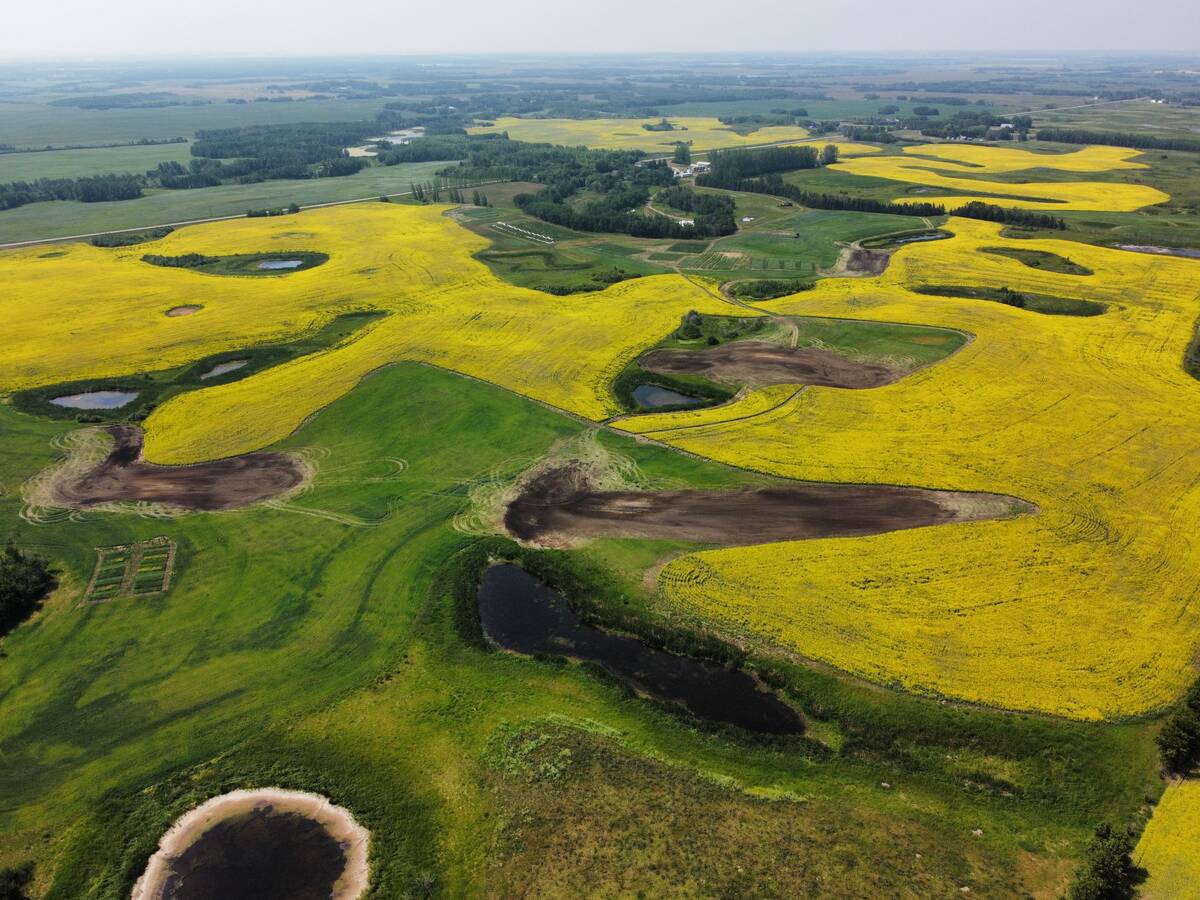 Drainage was installed in 2023, and thisphoto was taken after the surface drainage but before the tile installation. Photo: Courtesy of Conservation Learning Centre
“Drainage, again, resulted in increased yields, and then that undrained treatment, again, we had a lot of variability there, with some producing no yields and others performing just as well as those other treatments,” Lokken said.
She said drainage has saved time and inputs, decreased variability and resulted in more stable crop production from year to year.
Lokken intends to continue the project with future funding, focusing on yield data while increasing soil and water monitoring. However, she hopes it starts getting wetter in order to improve results and the information she can obtain.
“I need it to get wetter so that I can see, does surface shine during spring snow melt?” she said.
“Is our ground too frozen for the tile to start draining before the surface can start getting it off? When we get these multi-day rain events, maybe tile will better perform, or maybe we’ll be really impressed with the wetlands that have been drained by both.”