
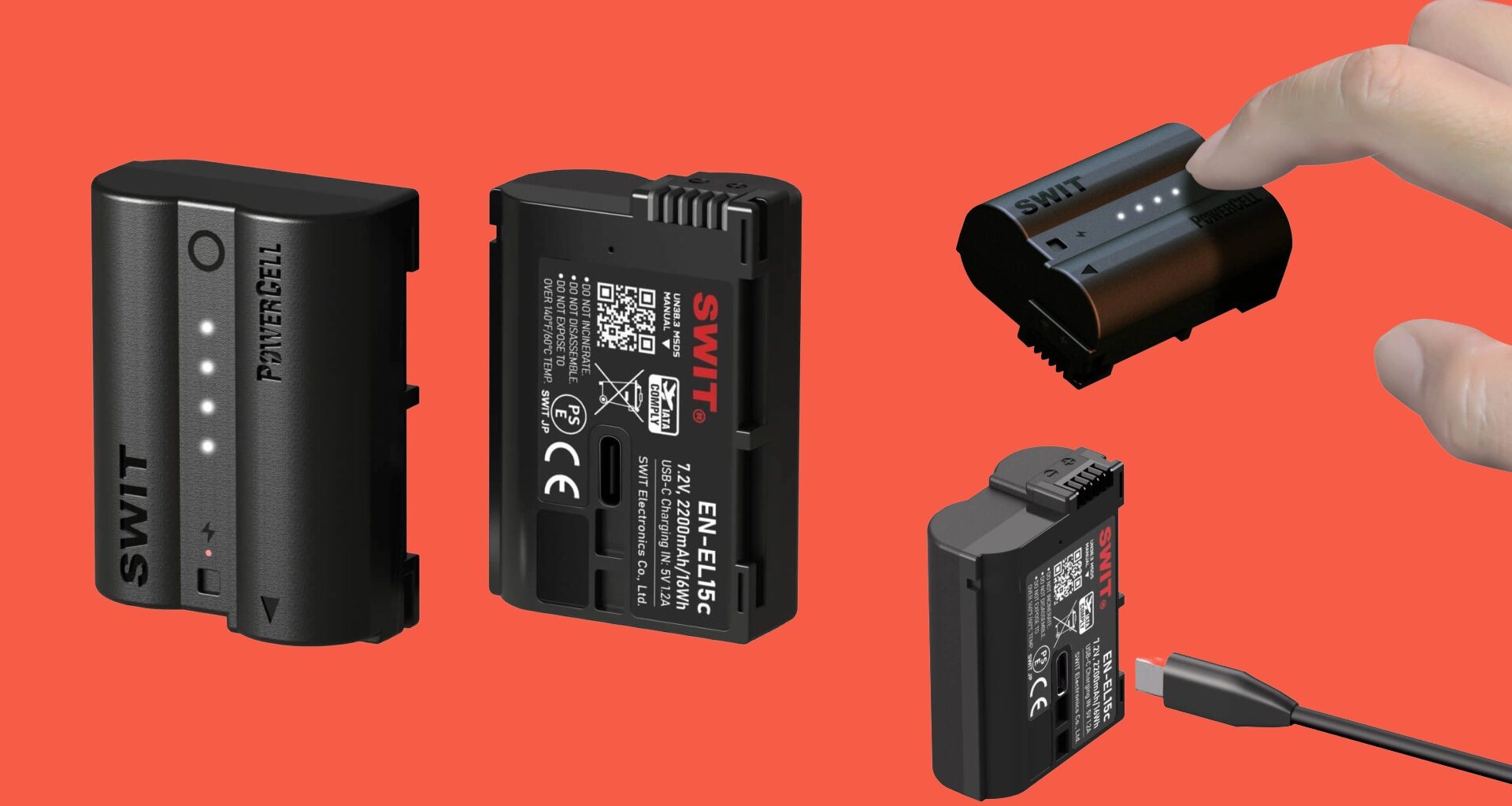
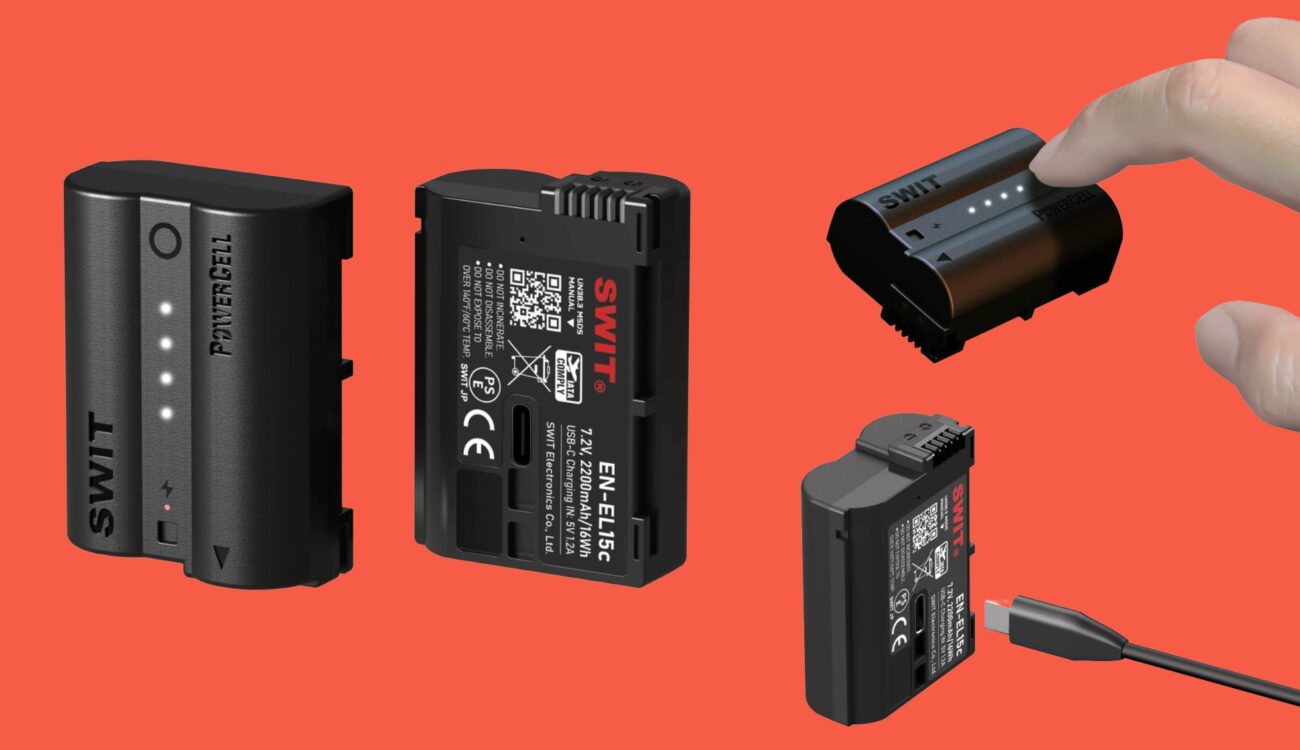
After their debut at IBC 2025, SWIT’s PowerCell slot-in camera batteries are now shipping worldwide. The series covers four popular battery formats with Panasonic cells inside, USB-C charging capability, and pricing that significantly undercuts OEM options.
The third-party camera battery market has long been a mixed bag. While original manufacturer batteries offer peace of mind, their cost can quickly add up for filmmakers who need multiple packs per camera body. Budget alternatives often disappoint with inconsistent performance, inaccurate runtime readings, or sudden shutdowns during critical moments. SWIT, known for professional broadcast power solutions, is positioning the PowerCell series as a middle ground: broadcast-grade engineering at consumer-friendly prices.
We covered the PowerCell series when SWIT first introduced them at IBC 2025, and the company has since been conducting field trials with professional users before making them widely available.
What’s inside
The PowerCell batteries use Panasonic NCR1850 cells, the same class of internals found in many original manufacturer batteries. SWIT rates them at 7.2V with 2200mAh capacity (16Wh), and the company claims full compatibility with OEM chargers and in-camera battery communication protocols. This means cameras should display accurate runtime information rather than the guesswork often associated with third-party options.
Each battery features a four-level LED power indicator activated by touch, allowing users to check remaining charge without inserting the battery into a camera. The housing uses flame-retardant materials designed to withstand field conditions.
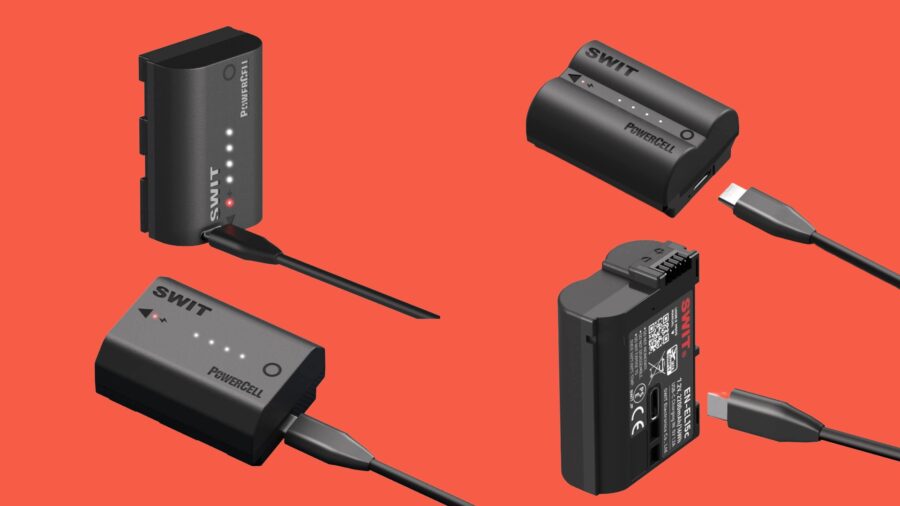 USB-C charging convenience. Credit: SWITUSB-C charging convenience
Perhaps the most practical feature for working filmmakers is the integrated USB-C charging port. Rather than requiring dedicated chargers for each battery format, users can top up PowerCell batteries from any USB-C power source: phone chargers, power banks, laptop ports, or vehicle adapters. The charging circuit includes thermal management to prevent overheating during the charge cycle.
This approach aligns with how many professionals already manage their larger V-mount and Gold-mount batteries. Having the same flexibility for mirrorless camera batteries eliminates the need to pack format-specific chargers, and it means a charged battery is never more than a USB-C cable away.
 Compatibility with Sony, Canon, FUJIFILM, and Nikon cameras. Credit: SWITCompatibility and models
The initial PowerCell lineup covers four widely used formats:
The Sony NP-FZ100 replacement works with the FX3, FX30, and Alpha 7/9 series cameras. Canon shooters get an LP-E6P option compatible with the R5 C, R5 Mark II, R6, R7, and other bodies using that format. Nikon users can pick up the EN-EL15c variant for Z8, Z9, and compatible Z-series cameras. FUJIFILM’s NP-W235 format is covered as well, supporting the X-T4, X-T5, GFX100S, and GFX50S II.
SWIT has indicated that additional formats, including Panasonic batteries, are in development.
Price and availability
The PowerCell batteries are now available through authorized partners worldwide, with pre-orders open at B&H Photo. Pricing comes in well below OEM equivalents:
The Sony NP-FZ100 replacement is priced at $49 MSRP. Canon LP-E6P and Nikon EN-EL15c versions are both $39 MSRP. The FUJIFILM NP-W235 option comes in at $35 MSRP.
For comparison, original manufacturer batteries in these formats typically retail between $75 and $85, making the PowerCell series roughly 40-50% less expensive depending on the format. For filmmakers building out battery kits across multiple camera bodies, those savings accumulate quickly.
Have you tried third-party batteries for your mirrorless cameras, or do you stick exclusively with OEM options? Let us know your experiences in the comments below!