
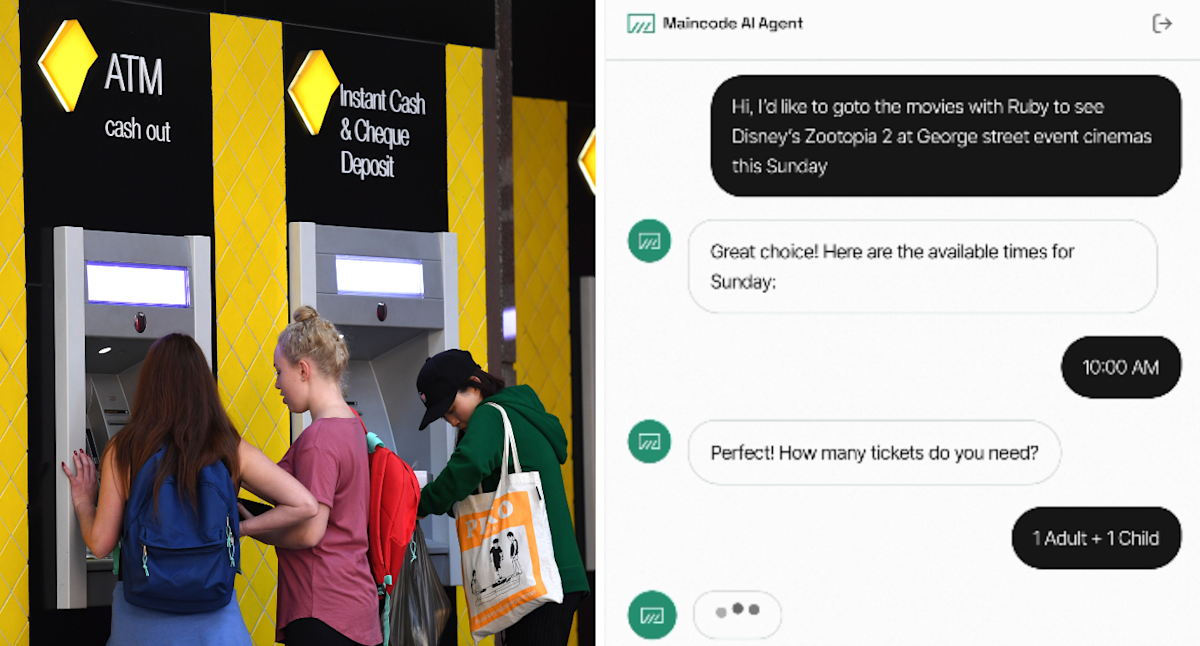
 Mastercard has completed Australia’s first authenticated agentic transactions using a Commonwealth Bank debit card and Westpac credit card. (Source: Getty/Mastercard)
Australians are one step closer to the option of having their online shopping be fully automated. Global payments giant Mastercard has announced it will expand its agentic payments technology to Australia.
The payments company has completed Australia’s first authenticated agentic transactions, which are transactions completed by an ‘AI agent’, using Commonwealth Bank and Westpac cards. Mastercard’s ‘Agent Pay’ technology, which was launched in the US last year, allows shoppers to ask an AI agent to search, find and buy items for them.
Mastercard Australasia’s head of customer solutions centre Surin Fernando told Yahoo Finance customers were already using AI agents and it was expected to become the norm in the future.
RELATED
“Often retailers don’t know it’s an agent making the transaction. They decline the transaction, they think it might be a bot, they think it could be fraud. We see that often in fashion retail and things like ticketing,” he said.
The Agent Pay framework means the bank processing the transaction, the payment provider and the retailer are all aware that it is an AI agent making the transaction, so it’s less likely to get knocked back.
Mastercard used a Commonwealth Bank debit card to purchase movie tickets from Event Cinemas and a Westpac credit card to book accommodation at Thredbo. Both transactions were done using a large language model dubbed Matilda.
Do you have a story to share? Contact tamika.seeto@yahooinc.com
Fellow payments giant Visa, which NAB and ANZ has partnered with, also announced a similar technology last year it has called Intelligence Commerce. It has not yet rolled out in Australia.
“Soon people will have AI agents browse, select, purchase and manage on their behalf,” Visa’s chief product and strategy officer Jack Forestell said at the time.
“These agents will need to be trusted with payments, not only by users, but by banks and sellers as well.”
Agentic commerce is where you make a purchase, whether that’s a new item of clothing, a flight or a hotel, using an AI chatbot like ChatGPT.
You can get the AI chatbot to find and compare options, and complete the purchase within the chat. They act like your own personal shopper and the idea is that it will save a lot of time.
Research from PayPal last year found 48 per cent of Aussies had already used AI assistants for online shopping, while 78 per cent expected it would become a mainstream part of online shopping.
Over in the US, ChatGPT launched Instant Checkout last year, which allows users to purchase products directly through the platform.
McKinsey expects agentic commerce could “radically remake the entire shopping experience” and has estimated it could be worth as much as $5 trillion globally in business-to-customer goods trade by 2030.
Mastercard’s Agent Pay is the framework that enables agentic transactions to be fully recognised and authenticated.
The idea is you would go to your preferred AI agent and ask them to complete a specific buying task within set parameters.
For example, that could be buying tickets for a particular movie on a specific date, or buying flights to Tokyo when they drop under a certain price, or getting Lady Gaga tickets as soon as they are released.
Here’s how it looked when an AI agent was asked to buy movie tickets using a CBA debit card. (Source: Mastercard)
Eventually, Fernando said you’d be able to see these pending transactions in your banking app as well.
“All of those intentions to buy, if they’re pending, and from which agent will appear in your bank account very clearly. All of the ones that are completed will equally show as well,” he said.
“It creates incredibly different visibility that we’ve never seen before in shopping.”
Fernando said customers would need to authenticate transactions before they can be made. This would be done through biometric confirmation, so your Face ID or fingerprint, you essentially still have the final say.
“If it’s authenticated, then there’s a level of comfort and confidence because the customer’s actually consented to that,” Fernando said.
Mastercard’s payments also use Agentic Tokens to protect user credentials and tie each transaction to a specific authorised AI agent.
You need to confirm the payment through your passkey, which could be your FaceID or fingerprint. (Source: Mastercard)
Fernando claimed you wouldn’t be at risk of an AI agent “going rogue” because you would have to clearly articulate what you want to buy, authenticate this, and then your instructions and the actual basket would need to match up.
“All the safety and security of what you’d expect from Mastercard takes place,” he said.
“Arguably, there’s a lot of transactions that take place today in lots of instances where you are not authenticating the transactions and the retailer doesn’t know your order intention. Think about even a recurring transaction or a direct debit on your card.”
Mastercard said Aussie consumers can expect the technology to roll out in the coming months.
Two of Australia’s Big Four banks have thrown their support behind the technology.
“As Australians explore more AI-powered ways to shop and pay, we’re proud to be participating in early, controlled trials with Mastercard to help shape secure and transparent agentic payment standards across the ecosystem,” CBA’s executive general manager everyday banking Monica Wegner said.
“Payments play an important role in our customers’ everyday lives, and giving our customers seamless, secure and simple ways to pay is a priority for us. Agent Pay will make those moments quicker and easier for our customers,” Westpac chief executive of consumer Carolyn McCann said.
Fernando said more retailers needed to be onboarded, but noted retailers across different sectors, including supermarkets, ticketing, travel and fashion were in discussions.
“I’d expect to see some of these experiences come to life very, very soon,” he said.
“When I say very soon, I mean possibly in the next coming months.”
Get the latest Yahoo Finance news – follow us on Facebook, LinkedIn and Instagram.