
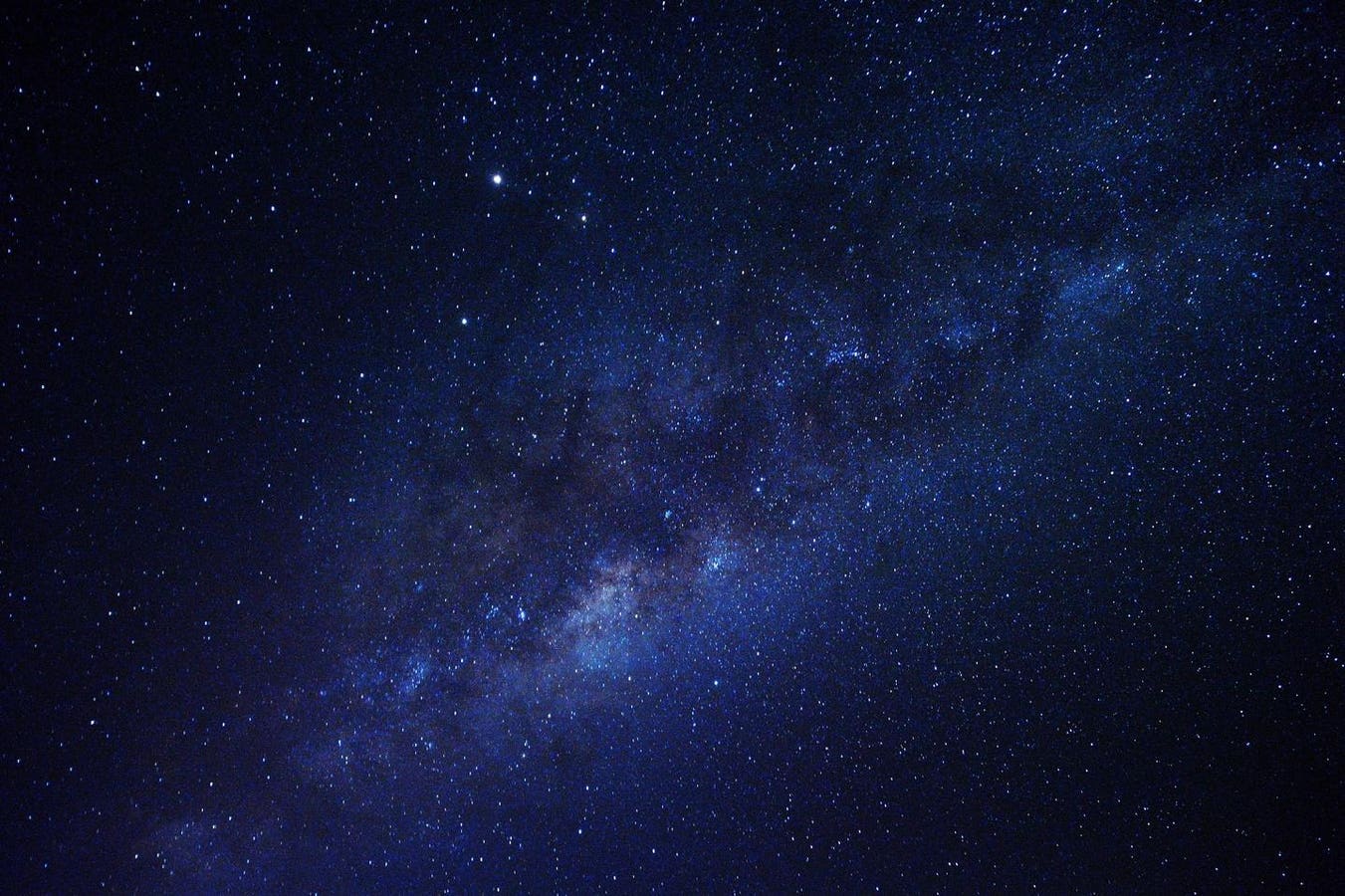
Even in the cold, airless regions between stars, cosmic dust grains can help stitch amino acids into short peptides, potentially seeding young planets with ready‑made building blocks for life.
EyeEm on freepik
Life’s basic chemistry may start not in warm ponds on young planets but in the icy dark between the stars. A new study shows that simple building blocks of proteins can link together on tiny grains of cosmic dust, even where there is no liquid water, raising the chances that life‑friendly chemistry is common across the universe. The question is: do those first protein‑like chains have to wait for a planet with oceans, or can they start forming much earlier, in deep space?
The answer appears to be that space itself can assemble these chains long before any planet exists, giving young worlds a chemical “starter kit” for life.
How Space Sparks Life’s Chemistry
Proteins do almost everything inside living cells, from building tissues to powering chemical reactions, and they are made from smaller units called amino acids, which are joined into chains known as peptides. In early studies, there was a large focus on amino acids and their presence in meteorite and comet studies. What was missing was clear proof that amino acids can join to form peptides under realistic conditions, rather than only in warm water on planets.
In the new study, the focus was on glycine, the simplest amino acid that helps build proteins. Thin layers of frozen glycine were placed on a cold surface in a vacuum chamber that mimics a dense cloud of gas and dust in space. The layer is then blasted with a beam of charged particles, standing in for cosmic rays, the high‑energy radiation that constantly passes through interstellar clouds.
After the simulated cosmic‑ray bombardment, the glycine is no longer just a collection of single molecules. Using infrared light and high‑precision mass measurements, a clear signature of glycylglycine, a simple two‑unit peptide, along with small amounts of water and other complex organic molecules were detected. In other words, radiation that might seem destructive is actually helping the molecules snap together into more complex structures. The results show that the peptide really does form from the starting glycine under cold, dry, space‑like conditions.
Still, there are limitations. The dust grain surface is simplified, only glycine is studied, and lab timescales are much shorter than the millions of years available in space. Even so, when taken together with earlier studies, the results make a strong case that space itself can assemble key pieces of life’s chemistry long before Earth‑like environments come into play.
How This Changes The Story Of Life’s Beginnings
Traditional origin‑of‑life stories center on Earth‑like environments—volcanic pools, shallow seas, or deep‑ocean vents—where liquid water and heat drive chemistry forward. The new study suggests that important steps toward life may happen much earlier, in giant clouds of gas and dust that later collapse into stars and planets. If peptides form routinely on icy dust grains in these clouds, they can be built into comets and asteroids and ultimately delivered to young planets as they form. It suggests that new planets have a far richer starting inventory of ready‑made, protein‑like molecules than previously assumed.
If peptides can form wherever there are cold ices, dust, and radiation, then the basic chemistry of life may not be rare or fragile. Instead, it may be a natural consequence of how matter behaves in many star‑forming regions, which exist all across the Milky Way and beyond. That raises the odds that many rocky planets start their history already seeded with complex organic molecules that can speed up the path toward living systems.
Future space missions that sample comets, asteroids, or even interstellar dust may be able to test this idea directly by looking not just for individual amino acids but also for short peptides like those produced in these experiments. If such molecules are found, it would strengthen the case that life on Earth—and potentially elsewhere—owes a surprising debt to chemistry that happens in the coldest, darkest parts of space.