
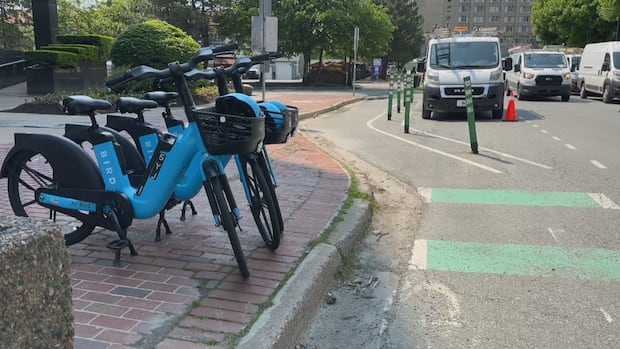
Halifax will explore cheaper designs for two upcoming cycling projects, as regional councillors weigh the need to finish an overdue bicycle network against tight budget pressures.
On Tuesday, regional council directed municipal staff to redesign the segments on Novalea Drive and Welsford Street, which are expected to be built within two years.
The move saves about $1.8 million.
“I do think we need to look at stretching our dollars,” said Deputy Mayor Patty Cuttell.
The new plans still fit the all-ages-and-abilities (AAA) criteria the bike network was built on, which include protected bikeways separate from traffic, multi-use pathways for people both walking and biking, or local street bikeways where there are fewer cars.
Cuttell said Halifax should not compromise on the AAA standard “but if there’s a cheaper way to deliver it, at this point I am very supportive of that.”
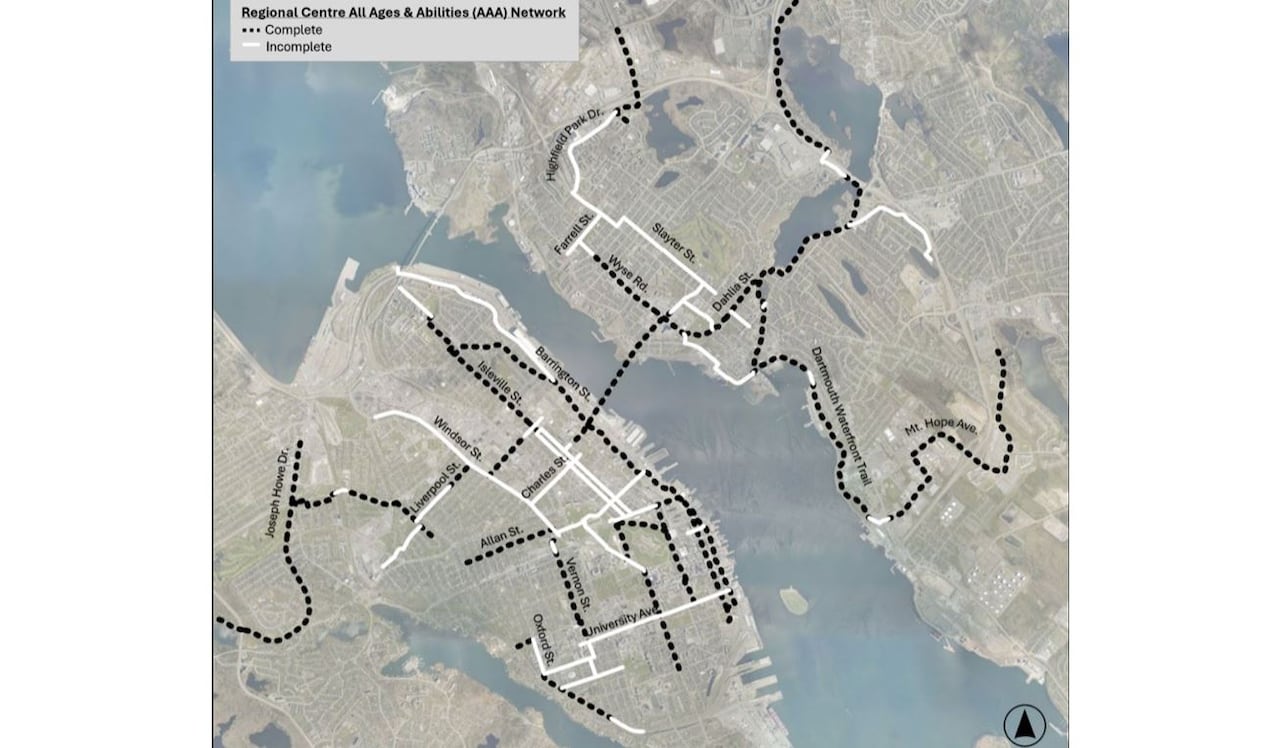 Halifax’s all-ages-and-abilities (AAA) bike network status as of early 2026. (Halifax Regional Municipality)
The review came from Coun. Tony Mancini’s motion in June asking staff to examine whether upcoming segments of the bike network could be done more cheaply.
The entire network was supposed to be done in 2022 for about $25 million, cost-shared by the federal and provincial governments.
Now the network of 53 kilometres of cycling infrastructure is expected to be completed by the 2029-30 fiscal year, for a total cost of about $85 million, staff said Tuesday.
Halifax is left to pay about $55 million over the next few years, although municipal staff will explore more funding support from other levels of government.
But the new designs come with trade-offs.
The new Novalea plan of a two-way bike lane rather than a multi-use pathway would mean removing all 69 street parking spaces, while Welsford’s move from a separated bike lane to a local street bikeway will likely need traffic calming measures due to higher vehicle speed on the road.
Dartmouth project stays the same
Staff had suggested redesigning a third segment in north-end Dartmouth, which would have saved about $3 million.
But that was voted down on the urging of area councillor Sam Austin. He said moving the route from Highfield Park Drive, which is zoned for major density in future years and has transit, to a quieter street nearby did not make sense.
“It is a penny-wise and pound foolish sort of decision,” Austin said. “It’s not actually effective. If we’re gonna do this, we should do it right.”
Last summer, Mayor Andy Fillmore suggested Halifax temporarily pause awarding new design and construction contracts for bike lanes, in light of rising costs for the network and traffic congestion concerns.
That was voted down, but on Tuesday Fillmore again floated the idea of completing the network with sections that do not meet the AAA standard — such as painted lines on the road.
“During an affordability crisis … a fully triple-A rated bike network is in my view a nice-to-have, and not need-to-have,” Fillmore said.
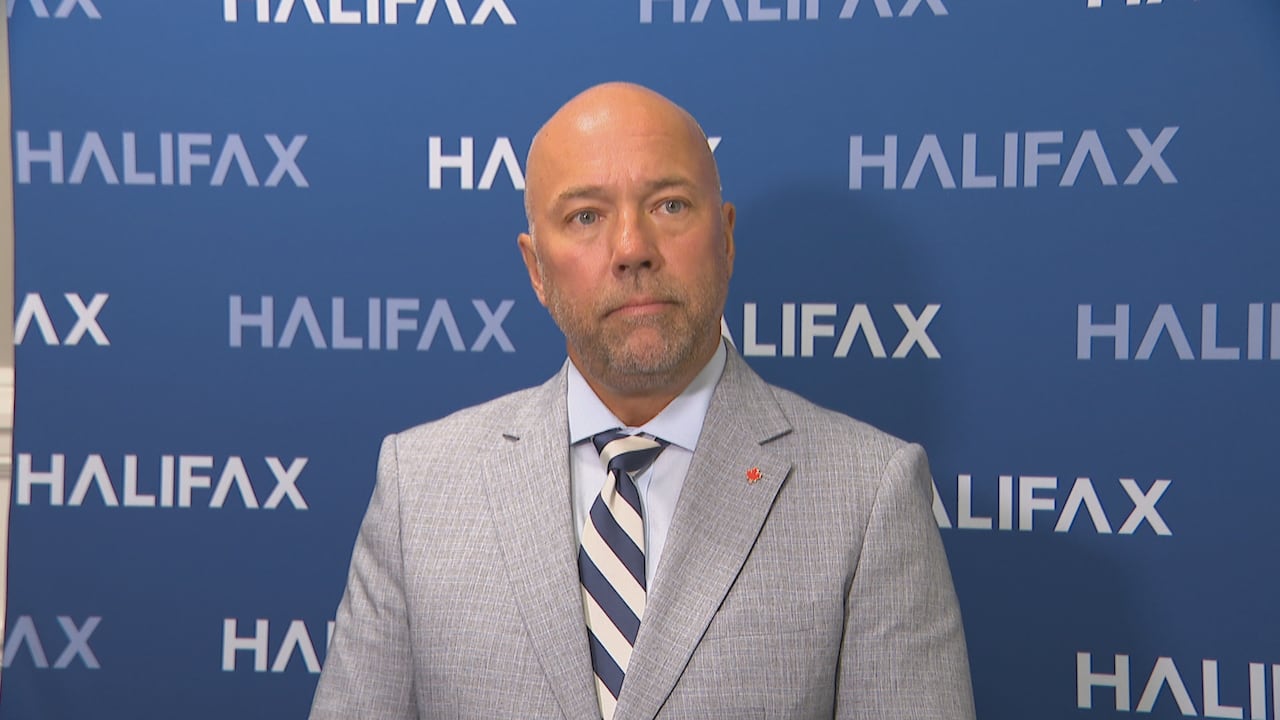 Halifax Mayor Andy Fillmore spoke to reporters at Halifax city hall on Tuesday, Aug. 19, 2025. (Galen McRae/CBC)
Coun. Trish Purdy voiced support for Fillmore’s perspective.
“It is very, very expensive for projects that benefit such a small percentage of our ridership and of our taxpayers,” Purdy said.
Some councillors said scrutinizing every dollar spent on bike infrastructure without considering the many benefits they bring — like reducing traffic congestion, safety, improved health and lower carbon emissions— is unfair.
For comparison, municipal staff said Halifax spends far more on road upgrades alone. Following a question from Coun. Laura White, municipal staff said those costs would be about $900 million over the 12 years it will take to build the bike network.
Coun. Sam Austin said it is hard to quantify the savings for a parent who doesn’t have to drive their child to a nearby recreation centre, because their kids can use a protected bike lane.
One of the most expensive things most households have is their car, Austin said, so it makes sense to create cheaper options to get around, like transit and cycling.
“That is affordability. This is an investment in affordability,” Austin said.
Coun. Shawn Cleary said research is clear that people have to feel comfortable cycling to actually hop on a bike, and ridership will not go up with unprotected painted lanes on a road.
Even though the network is not done, Cleary said it’s gratifying to see a huge jump in people using the bike lanes as they are added.
Halifax’s bike counters, positioned on certain lanes and the Macdonald Bridge, captured more than 561,000 bikes passing over them in 2025, Austin shared recently on social media. That is more than double the roughly 250,000 bikes logged in 2021, although there are now more counters capturing bikers than there were a few years ago.
“When we build it, people are coming — it’s kind of like the Field of Dreams,” Cleary said.
Since council ended up passing two of the three redesign options, the mayor’s motion to explore non-AAA projects did not get on the table.
Province on board with new designs
The provincial government does have the power to overrule municipalities on transportation projects it believes could harm the movement of people and goods. Premier Tim Houston said he would take that step if Halifax turned Morris Street into a one-way road to accommodate a bike lane, so council abandoned that plan last year.
But municipal staff said Tuesday the province had a “generally positive” reaction to the three cheaper alternative designs, although they want to be involved in the upcoming detailed planning.
Municipal staff will review more future cycling projects with an eye to cutting costs, and return to council with those options at a later date.
MORE TOP STORIES
Halifax’s all-ages-and-abilities (AAA) bike network status as of early 2026. (Halifax Regional Municipality)