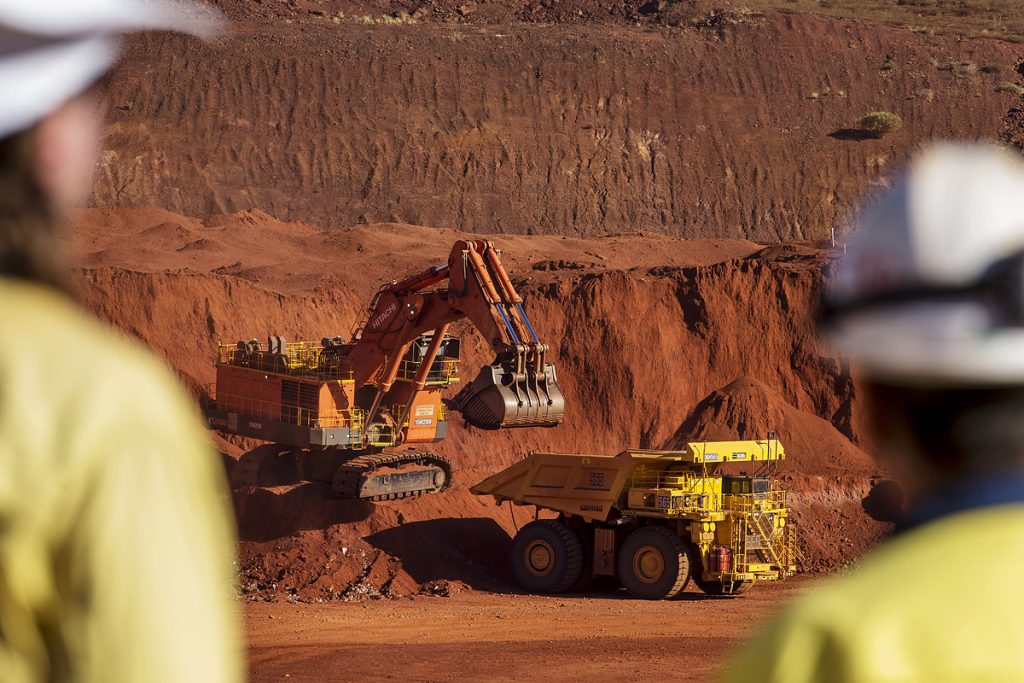
 Rio Tinto, Nammuldi mine, AHS trucks.
Decarbonising Australia’s heavy industry is one of the most significant challenges of the energy transition. Sectors such as iron, steel and alumina are essential to the economy and everyday life, yet they remain among the hardest to abate. Their large emissions footprint, technical complexity and high capital requirements means progress cannot come from isolated efforts.
Resolving this is where ARENA is increasingly focused. Beyond funding individual projects, ARENA works across industry to create the conditions for collaboration in hard-to-abate sectors, where shared risk, pooled expertise and coordinated learning are essential for progress.
Initiatives such as NeoSmelt and the Australian Alumina Working Group demonstrate how structured collaboration accelerates learning, reduces risk and moves emerging technologies closer to deployment.
Why collaboration matters in hard to abate industries
Hard-to-abate industries account for a significant share of domestic and global emissions and sit at the core of modern economies. Sectors such as iron and steel, alumina refining, cement and chemicals are essential to infrastructure, manufacturing and clean energy supply chains, yet their processes are emissions-intensive and technically difficult to decarbonise. At the same time, demand for many of these materials is expected to grow as economies expand and invest in clean energy technologies.
The challenge is not a lack of ambition. Instead, the barriers are scale, risk and complexity. Many emerging technologies require pilot projects, large capital commitments and deep technical expertise across multiple disciplines, from process engineering to energy systems and materials science.
For most organisations, pursuing these pathways independently would be slow, prohibitively expensive or simply unviable. Collaboration helps share risk, accelerate learning and move first-of-a-kind solutions toward demonstration and deployment. As a result, collaboration is increasingly becoming the default rather than the exception in hard-to-abate industries.
Recent developments across Australia’s industrial decarbonisation landscape reflect this shift. Joint ventures, working groups and co-development agreements are enabling producers, technology developers and energy providers to pool expertise and capital to tackle challenges that no single participant can carry alone.
ARENA’s role in enabling collaboration: the NeoSmelt example
ARENA plays an important role in these sectors, particularly where the scale, cost and complexity of decarbonisation exceed what any single organisation can manage.
Project NeoSmelt is a clear example of how this works in practice. The joint venture between BlueScope, BHP, Rio Tinto, Woodside and Mitsui Iron Ore Development is exploring a lower emissions ironmaking pathway for Pilbara ores. Supported by $19.8 million in ARENA funding for a Front-End Engineering Design (FEED), the study focuses on the feasibility, risks and system-wide learning required to progress Australia’s largest ironmaking electric smelting furnace pilot plant.
ARENA’s support has enabled competitors and partners from across the mining, steelmaking and energy value chain to align around a shared objective. This type of collaboration requires more than funding. It depends on trust, clear governance and confidence that knowledge will be managed and shared in ways that benefit the broader system, not just individual participants.
NeoSmelt’s governance model reflects this need. As highlighted in its recent Spotlight Interview published on ARENA’s Knowledge Bank, NeoSmelt operates under a defined framework, with operating committees and dedicated technical and intellectual property subcommittees. This structure provides transparency, accountability and clarity of roles, allowing expertise from each organisation to inform decision-making and ensuring all partners progress together.
ARENA’s involvement reinforces this discipline. Public funding comes with expectations around diligence, learning and knowledge sharing, helping to lower barriers to cooperation and accelerate progress toward deployment. In doing so, ARENA is not just supporting a single project but demonstrating how structured collaboration can unlock decarbonisation pathways that would otherwise remain out of reach.
NeoSmelt is not unique. Partnerships such as Rio Tinto’s collaboration with Calix on the ZESTY Green Iron demonstration plant show how producers and technology developers are sharing risk to move first of a kind solutions toward deployment. While the technologies differ between projects, the logic is the same: no single organisation can credibly carry the technical, financial and execution risk alone.
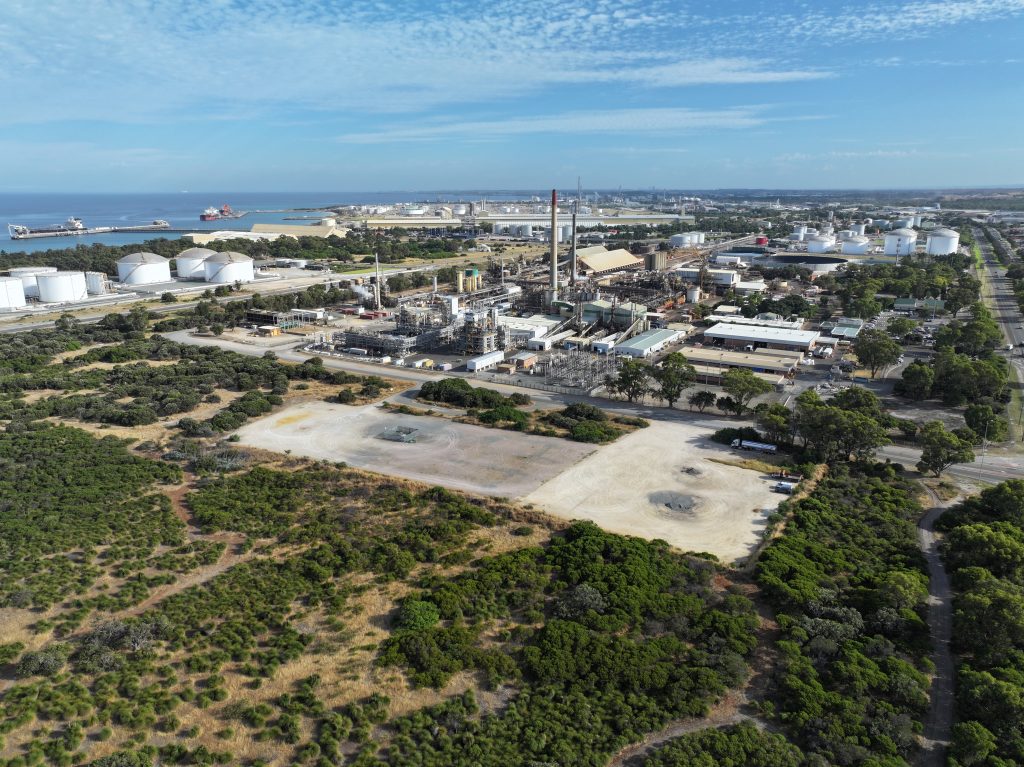 Project Neosmelt, Kwinana, Western Australia
A proven approach: lessons from alumina refining
The alumina refining sector demonstrates a similar approach. Through the ARENA-convened Australian Alumina Working Group, the country’s three alumina refiners jointly developed A Roadmap for Decarbonising Australian Alumina Refining, building a shared evidence base and a common view of viable pathways to decarbonise.
Crucially, ARENA’s role has not ended with the roadmap. It continues to facilitate periodic Working Group meetings to maintain momentum, identify approaches to address common challenges and enable knowledge sharing across the sector. These meetings are carefully structured to avoid any discussion or activity that could conflict with competition law, ensuring collaboration occurs safely, transparently and appropriately.
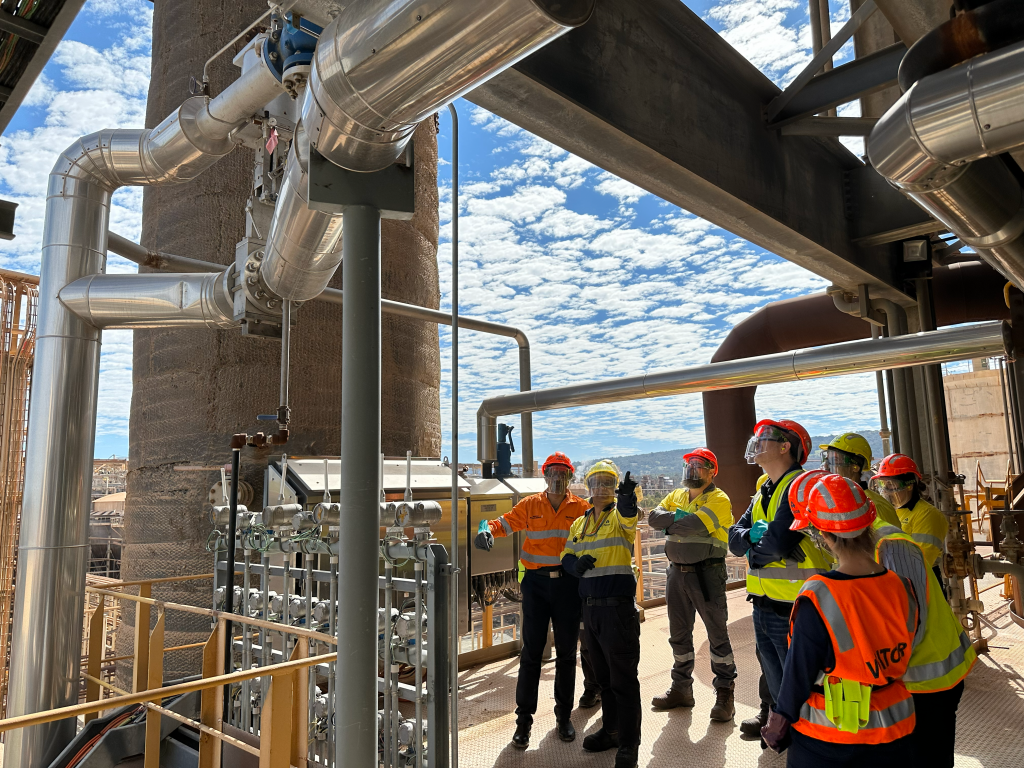
The most recent meeting, held in October 2025, included an on-site visit to Alcoa’s Pinjarra refinery, where participants were able to see the previously installed electric calciner firsthand. This kind of practical, shared learning accelerates confidence across the sector and shortens the distance between concept, demonstration and deployment.
Together, the alumina work and NeoSmelt illustrate a consistent model: ARENA convenes industry peers around a shared challenge, supports early-stage learning and de-risking, and creates the conditions for technologies to move from theory to reality. In sectors where emissions are high and solutions are complex; collaboration is not optional. It is foundational.
Building momentum through partnership
Australia has the resources, industrial capability and expertise to play a leading role in decarbonising global supply chains. Achieving this potential will require collaboration at scale across industry, government and research, especially in hard-to-abate sectors where the risks and costs of change are too great for any single participant to carry alone.
Initiatives such as NeoSmelt and the Australian Alumina Working Group, show what collaboration looks like in practice. Whether through project-based consortia or structured industry working groups, these models bring industry players together around shared challenges, accelerate learning, and help move first-of-a-kind technologies from concept toward deployment.
The energy transition will not be delivered project by project. It will be delivered through deliberate, well-governed partnerships that share risk, knowledge and ambition, and through public institutions that create the conditions for those partnerships to form, endure and deliver system-wide change.