
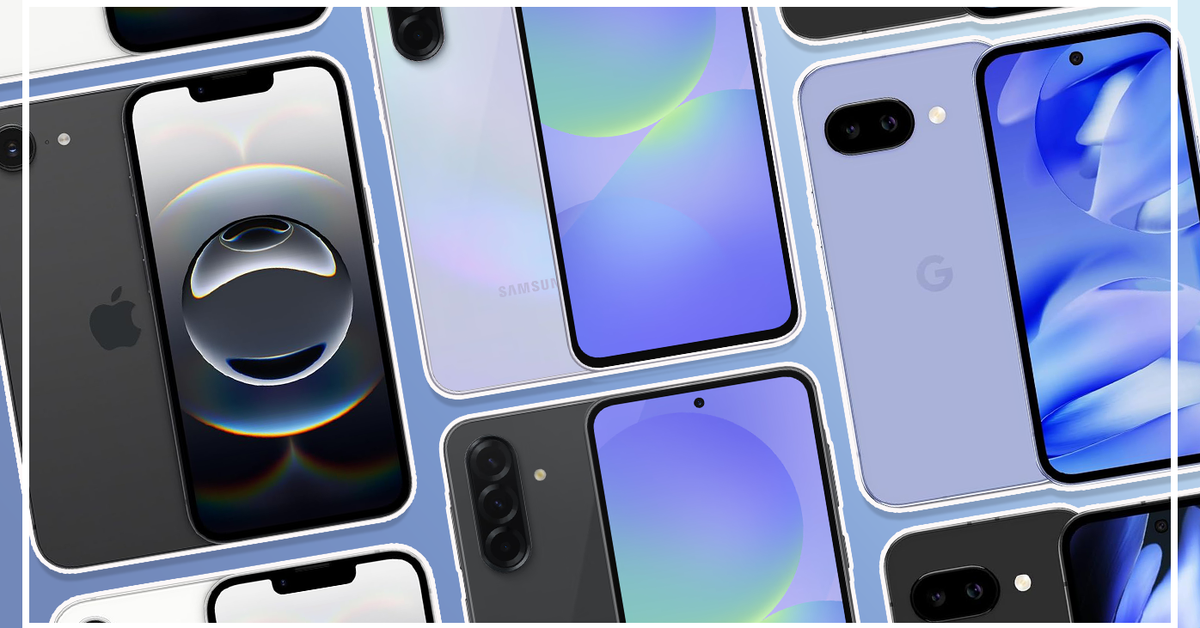
Let’s be honest: you don’t need to upgrade to the latest $2000 phone every year. Most Aussies are realising that those price tags are becoming harder to justify for a slightly faster processor.
I’ve spent the past months hands-on with lower-end models, and the good news is that budget no longer means a slow, plastic brick.
From Nothing’s surprisingly powerful entry-level models to Samsung’s AI-packed mid-rangers, the choice has never been better.
NOTE: Prices are accurate at the time of publishing.
Who it’s for: loyal Apple fans who don’t want to leave the ecosystem. This is Apple’s only budget offering.
If you refuse to leave the world of blue-bubble iMessages, the iPhone 16e is the most sensible option. It packs the same A18 chip as the base iPhone 16 and handles the new iOS and Apple Intelligence features with ease. It also offers a 6.1-inch Super Retina XDR display and a solid 48MP fusion camera. Despite its performance, the phone lacks a dedicated ultra-wide lens, and the standard 60Hz refresh rate on the screen won’t feel as smooth as other Android phones in this range.
Who it’s for: anyone who loves the vanilla Android experience and wants a budget-friendly phone from Google.
The Google Pixel 9a is one of the best compact budget phones with its 6.3-inch Actua display and Tensor G4 chip. The phone offers one of the best default Android experiences if you’re after simple, and its large 5100mAh battery will last up to 30 hours. The camera is a standout too, with a dual-rear system and Google’s signature processing, making photos look natural. While the phone has a slower 18W charging, the promise of seven years of updates and an IP68 dust and water-resistant rating makes it a great-value package.
Who it’s for: anyone who wants the AI features of the top-end Samsung phones and doesn’t mind small compromises for a lower price.
Samsung’s fan edition phones often strike the best balance between value and performance, and the S25 FE is no different. It features a stunning 6.7-inch display and offers the full suite of Galaxy AI tools, including advanced photo editing and real-time translation. Plus, the phone is built from premium aluminium and glass, giving it a higher-end feeling. Although the processor and chunky bottom bezel on the bottom of the screen will remind you it’s not quite a full-blown flagship. Still, great value.
Who it’s for: anyone who wants a unique-looking budget phone that just works.
Nothing strips its design down to the bare minimum in its budget phone, but at $439, it punches well above its weight. The transparent design remains simple, with a single ‘Glyph Dot’ on the back for notifications, though some might find it a bit too minimal. Despite this, the phone wins for practicality with a 6.77-inch 120Hz display and a microSD slot supporting up to 2TB of storage.
Who it’s for: anyone who values the convenience of fast charging and a bright screen over anything else.
The Motorola Edge 60 Fusion is another value-packed phone with incredible specs at this budget range. It offers a bright, curved 4500-nit display that runs at 120Hz, integrated AI with motoAI, and a Sony LYTIA 700C camera sensor to help you shoot like a pro. The real standout is the phone’s 68W fast-charging capabilities that promise a full day’s battery in just eight minutes.
Who it’s for: anyone who wants a reliable daily driver that won’t break the bank.
The Samsung Galaxy A36 is a reliable daily driver, thanks to its large 6.7-inch 120Hz display and a versatile 50MP triple camera system. The phone is backed by a big 5000mAh battery, a Snapdragon 6 Gen 3 chip and offers 45W fast charging. The phone is also IP67 water and dust-resistant, perfect for daily tasks, although it lacks an SD card slot for any expandable storage.
After a cheap mobile phone plan?
READ MORE: Nothing Phone (3a) Lite review: Budget king, or nothing special?