
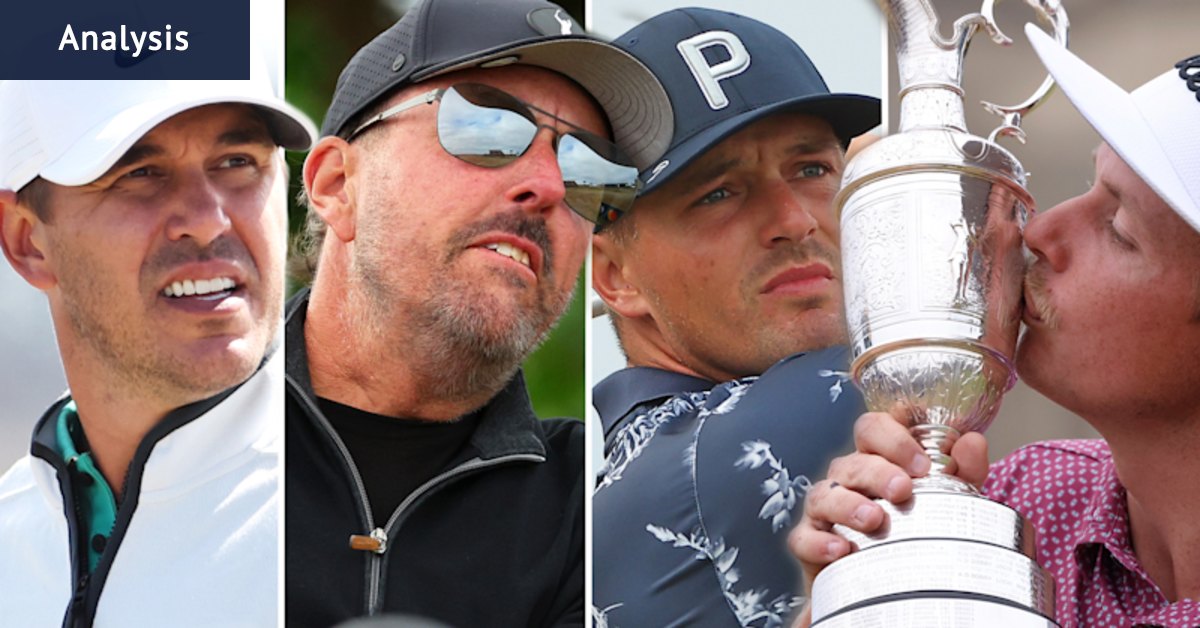
Those merger talks stalled, however, and under aggressive new chief executive Brian Rolapp – a former NFL executive – the PGA Tour recently appeared to change its strategy: they would skip the peace deal and just go ahead and win the war.
Loading
The PGA Tour opened up a brief window where major winners Smith, Rahm, DeChambeau and Koepka would be welcomed back as members, in a scheme seeking to re-poach the main attractions of LIV Golf. If effective, it would have chopped LIV off at the knees.
In the end, Koepka was the only one of the quartet to take up the offer, which came with a $5 million penalty and a handful of hefty financial restrictions designed to placate PGA Tour stars who stayed loyal. Koepka could miss out on up to $90 million, the tour reportedly estimated.
The special window closes on February 2 but Smith, Rahm and DeChambeau have all indicated they don’t intend to follow Koepka – for now. The trio are all contracted for 2026 and are notionally free agents thereafter.
But Koepka wasn’t alone in returning from LIV. On Thursday, former US Masters champion Patrick Reed also announced he would be returning to the PGA Tour in August, after serving the year-long ban imposed on returning LIV players. Three other players have also applied to return.
Koepka – whose 12-month ban was waved under the special deal – will tee up in his first PGA Tour tournament in four years on Friday at the Farmers Insurance Open.
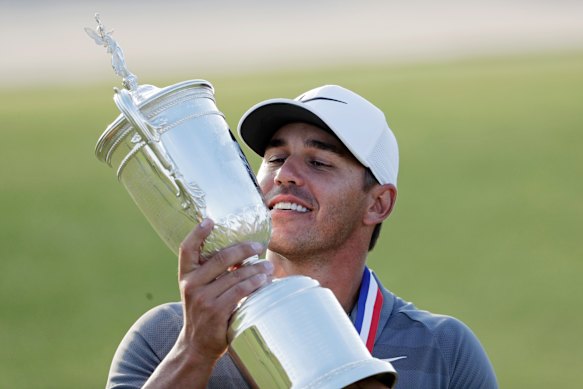
Brooks Koepka celebrating his second US Open title in 2018.Credit: AP
In a sign of its significance, ESPN will run the tournament on its main channel for the first time since Tiger Woods’ heyday.
The returns of Koepka and Reed are being viewed as huge wins for the PGA Tour. Both are polarising characters, Reed in particular. He and McIlroy have a history. But all of that spice is being seen as a bonus for the PGA Tour, in the all-important battle for eyeballs and spectator engagement.
Though it deserves credit for taking more golf stars around the world – including Australia – LIV Golf has largely struggled to attract a big fan base, on course and on screens.
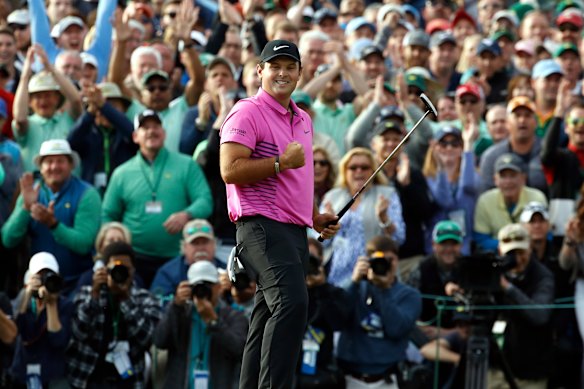
Patrick Reed won the Masters in 2018.Credit: AP
Broadcast figures published in the US last year showed when the two tours went head-to-head on a Sunday, the PGA Tour’s audience was eighteen times bigger than LIV Golf’s. On-course attendance figures have also been comparatively modest for LIV.
The one big exception is LIV Golf’s wildly popular event in Adelaide, which attracted more than 100,000 people last year and is expected to draw similar numbers again next month.
Adelaide is routinely held up as LIV’s shiny exemplar: proof younger fans want a more entertaining form of golf. But there is also an argument the popularity is just as much a reflection of Australia’s hunger to see international golf stars, which was also evident in the record-breaking attendances at the Australian Open last year, with McIlroy in the field.
So where does LIV Golf go from here?
McIlroy was dismissive last week.
“It’s not as if they made any huge signings this year, is it?” he said. “They haven’t signed anyone who moves the needle and I don’t think they will. I mean, they could re-sign Bryson for hundreds of millions of dollars, but even if they do, it doesn’t change their product, does it?”
McIlroy said LIV players “are starting to realise they’re not getting everything they wanted out of going over there.”
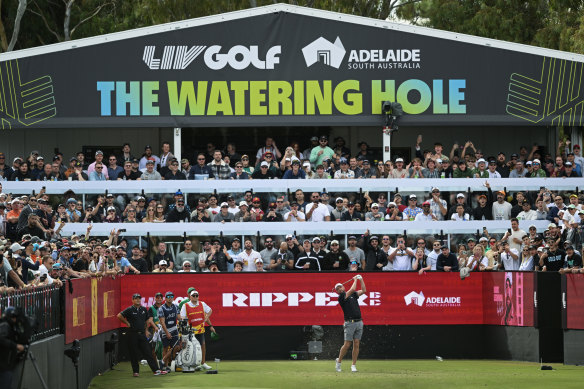
LIV Golf in Adelaide has been a huge success, but other tournaments haven’t been as popular.Credit: Getty Images
What DeChambeau does next could make or break LIV Golf. As a two-time US Open winner and with a social media following of more than five million, DeChambeau is the alpha male of LIV, and arguably all world golf. He is reportedly seeking $US500 million ($700 million) to renew his contract with LIV and, given the damage his defection would do to the tour, he has good leverage.
Another crucial decision on LIV’s future will come via the Official World Gold Rankings, whose board met this week to determine if the competition would attract world ranking points in the future. LIV bosses last year announced it was changing its foundational premise and playing 72 holes, instead of 54 – the main reason players couldn’t get rankings points, which are needed to earn starts in the majors.
Loading
But perhaps the biggest question facing LIV is how long the Saudi’s Public Investment Fund – which bankrolls the tour – is willing to keep ploughing in the money. Multiple reports say the PIF has spent more than $US5 billion ($7 billion) in five years on LIV, and each year has run at a significant loss.
Ahead of the new season starting next week, the BBC reported claims from a source that the PIF is reviewing the future of LIV Golf and all its sports investments, eyeing off a shift into AI and tech innovation instead.
PGA Tour bosses, it appears, can smell blood in the water. And they want LIV players to know “where the best belong”.