Wildlife carers are pleading with people not to hastily remove any nesting birds found on their properties. It comes after a homeowner disturbed a little penguin and her two chicks, despite being warned not to go near the family.
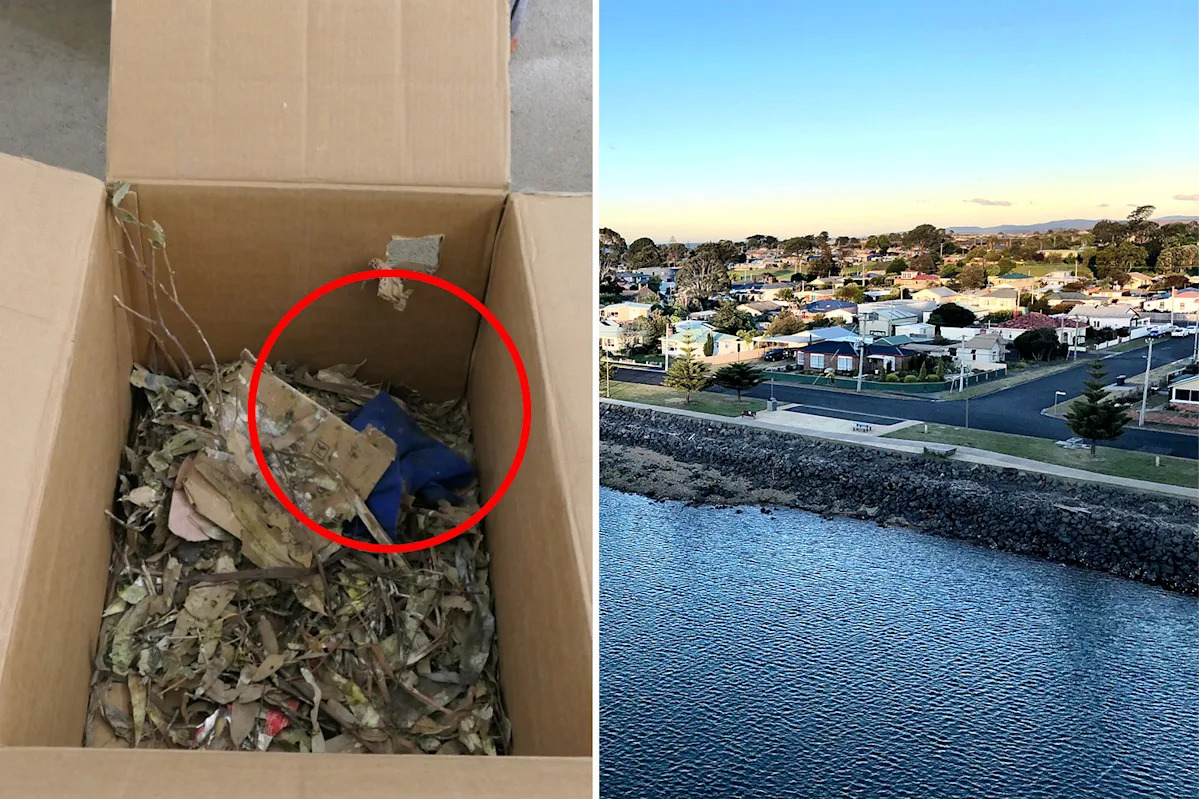
The Tasmanian resident contacted Penguin Rehab and Release after discovering the trio on his coastal property, wildlife carers said.
While most people would see this as an “immense privilege”, the man “viewed their presence as a nuisance”, the group said online.
Although he was informed that penguins are a protected species and cannot be disturbed during the breeding season, the local chose to ignore the advice.
“He initially removed one adult from the garage, then found a mother and her one-day-old chicks and removed them from their nest area,” according to Penguin Rehab and Release.
“While he cared just enough to bring them to us, he did not care enough to leave them where they belonged and give them the time and space to grow into healthy fledglings.
“That decision placed all three lives in immediate danger, and it was entirely unnecessary.”
It is illegal to rouse, injure or kill penguins. Disturbing wildlife carries a potential $4,040 fine under the National Parks and Reserves Management Regulations 2019.
Penguin and chicks confined in box filled with rubbish and debris
The family was delivered to wildlife carers in a box with “inadequate ventilation, mixed in with rubbish and debris”.
Even more concerning, it appeared the penguins had been confined in the box “for some time” before being brought in.
Carers said the mother appeared to be “extremely distressed” and was no longer keeping her chicks warm.
“One was so weak that we initially believed it had already died,” the group said.
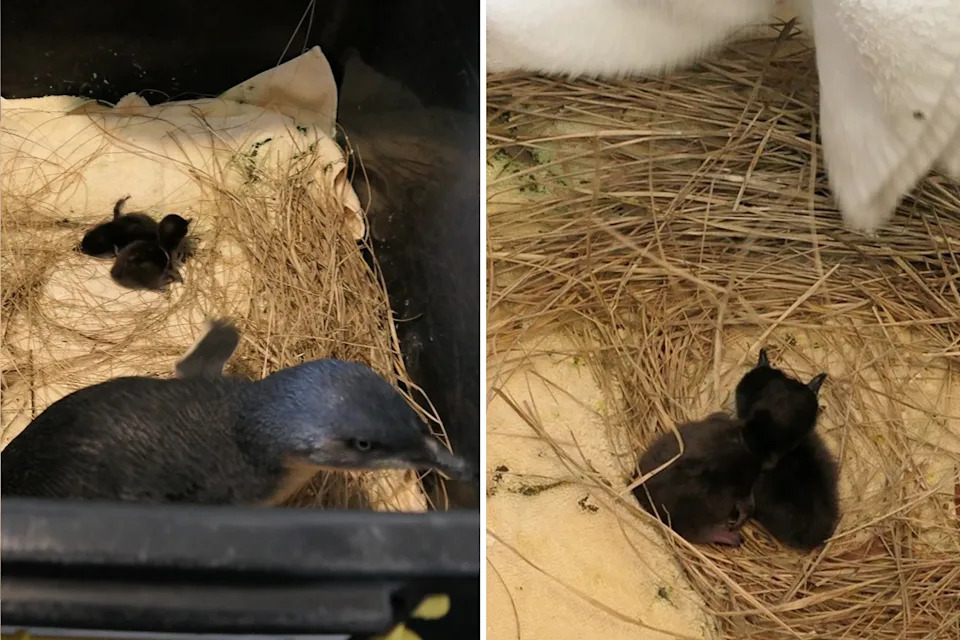
The box that the penguin family arrived in (right) didn’t have adequate ventilation and was filled with debris and rubbish. Source: Penguin Rehab and Release
Despite the traumatic removal, the mother penguin once again nestled on her chicks, preferentially feeding the larger, stronger of the two.
“The weaker chick that initially appeared dead was still kept warm by mum but required supplementary feeding directly from the carer to have any chance at all,” Penguin Rehab and Release said.
“For three days, we did everything possible to stabilise and protect this little family.”
Tragically, the larger chick then died unexpectedly, sending its mother into a “severe” state of distress.
She stopped keeping the remaining chick warm, and attempted to escape the box.
“With the chick already being support fed by the carer and now fully abandoned by its mother, the decision was made to release the mother penguin so she could return to the wild, and to continue raising the remaining chick in care,” wildlife carers said.
Heartbreakingly, despite their efforts, the second penguin also died about a week later.
Annoyed second resident heeds wildlife advice
What makes the incident even more frustrating, is how unnecessary and preventable it was.
“This mother penguin was attentive, experienced, and fully capable of raising two healthy chicks if she had been left undisturbed,” the group said.
“Putting up with penguins nesting on your property for a short couple of months is not too much to ask, especially when the alternative is suffering, loss, and death.”
This was even more evident when carers were contacted by another “frustrated and unhappy” resident who also found penguins nesting on his property.
Despite his annoyance, he was given the same advice and chose to cooperate.
The man has left the burrow completely undisturbed for the time being and will penguin-proof his property after the breeding season ends.
“He has chosen to be a good neighbour to the penguins. These two stories show a stark contrast in choices and in outcomes,” Penguin Rehab and Release said.
A little “patience, respect, and understanding” can mean the “difference between not just individuals surviving, but colonies surviving”.
Kiwi couple at their wits’ end after penguins move in
While learning to live in harmony is the best option for wildlife, it’s not always easy.
A New Zealand couple found this out the hard way last year when little blue penguins tunnelled under their home and nested next to their bed under the floorboards.
With the noisy creatures throwing one heck of a party every night, the pair reached their wits’ end but were told nothing could be done until the penguins decided to move on.
Do you have a story tip? Email: newsroomau@yahoonews.com.
You can also follow us on Facebook, Instagram, TikTok, Twitter and YouTube.