

Former Australian Institute of Sport (AIS) athletes have raised concerns about the Australian Sports Commission’s handling of a documentary it says may trigger former AIS attendees.
The documentary, called Forging Champions, was commissioned by the Australian Sports Commission to air on Channel 9 this coming Monday.
It covers the 40-year history of the AIS, featuring interviews with some of Australia’s biggest sports stars from the past four decades.
But former athletes who claim they were physically and psychologically abused during their time at the institute claim the documentary could potentially trigger some people, leading to harm if it presents a rosy image of the institute.
The former athletes have not yet seen the documentary, but some are concerned that if it doesn’t deal with the institute’s history and the harm many say they suffered, it will potentially be triggering for many.
The Australian Sports Commission, which runs the AIS, acknowledged in 2021 that incidents and practices occurred that were not acceptable during the institutes’ live-in scholarship program, which ran from 1981 to 2012.
Former AIS gymnast Jenny Richardson has written to Australian Sports Commission chief executive Kieren Perkins to express her outrage at the way the AIS has handled the documentary.
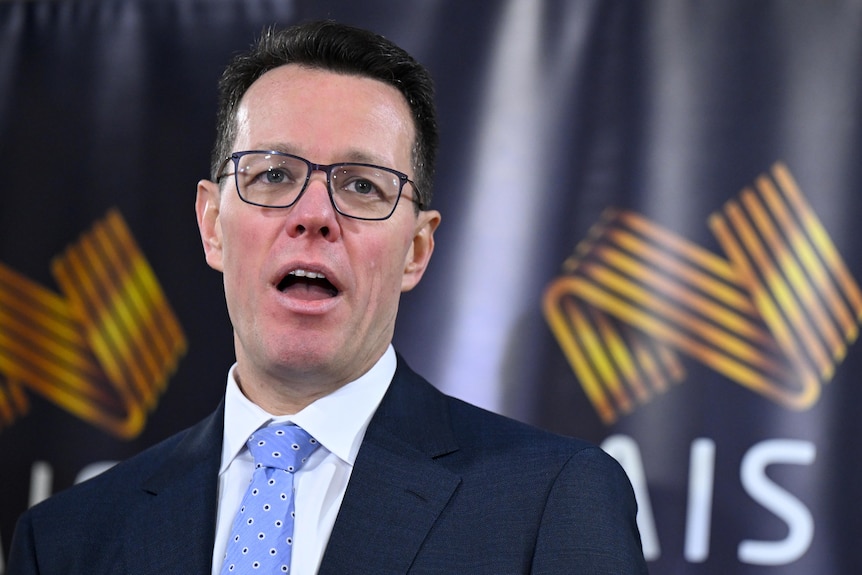
Kieren Perkins is the head of the Australian Sports Commission. (AAP Photos: Lukas Coch)
“I want him and the restorative team who are meant to be helping me not to put this to air because they know it’s going to damage a lot of people,” Richardson told ABC Sport.
Richardson is one of a number of former AIS athletes who was taken aback by an email Perkins sent to former athletes who are receiving help through the ASC’s Restorative Program to forewarn them about the documentary.
“I appreciate that not everyone had a positive experience at the AIS and the ASC Board’s 2021 apology and Restorative Program recognises and responds to AIS scholarship athletes who experienced harm from inappropriate practices or abuse as a result of their time at the AIS,” Perkins wrote.
“Your wellbeing remains a priority for us. If this notification or the documentary raises any questions or concerns, or if you would like support at any stage, please know that help is available.
“Thank you for the part you have played in the history of the AIS. Your experiences, achievements and contributions continue to inform who we are today and who we aspire to be.”
AIS to offer restoration payments to abused athletes
One former athlete, “Grace”, who was at the institute in the 1980s and 1990s and represented Australia at Commonwealth Games and world championships, told the ABC that Perkins’s email hit like a “power punch”.
“That email shocked me — that’s how traumatic that email was,” Grace told ABC Sport.
“I’ve spoken to others who’ve said that email was so triggering from Kieren.”
She said she was concerned some former athletes could suffer from watching the documentary.
She has also written to Perkins asking him to stop the documentary from airing.
“I would be one of many who responded to Kieran and said, ‘I think this is a major mistake’,” Grace said.
“As an athlete in the 80s and 90s, I think the Australian public need to be aware it wasn’t just vulnerable young girls that were abused, it was men and women, girls, boys, any sport, all suffered different forms of abuse.”
If you or anyone you know needs help:Lifeline on 13 11 14Kids Helpline on 1800 551 800MensLine Australia on 1300 789 978Suicide Call Back Service on 1300 659 467Beyond Blue on 1300 224 636 or its COVID-19 support service 1800 512 348Headspace on 1800 650 890ReachOut at au.reachout.comCare Leavers Australasia Network (CLAN) on 1800 008 774Brother to Brother on 1800 435 799
In response to questions from ABC Sport, Perkins wrote:
“The Australian Sports Commission (ASC) leadership acknowledges that harmful behaviours occurred in the past, that this was not acceptable, and that we remain committed to apology, accountability, and athlete support.
“This documentary offers a timely opportunity to reflect on where we began, how we have evolved, and where we are heading next.
“The early communication to former athletes was trauma informed to ensure they hear about the project from us first and have awareness and the opportunity to engage if they wish.”
ABC Sport approached Channel 9 with questions, but the organisation declined to comment — referring us instead to the Australian Sports Commission.
The ABC is aware the documentary will air with a warning before it is televised.
Athletes and anti-abuse campaigners ABC Sport has spoken to have also complained about a 30-second promotional video that has been distributed on social media channels.
Loading Instagram content
The founder of advocacy group Athletes Rights Australia, Alison Quigley, said the Sports Commission’s Restorative Program had a principle of “do no further harm”.
“How does this upcoming promotional video address ‘do no further harm?’ she said.
In his statement, Perkins said “the ASC went into this project with a willingness to share all elements of the AIS’s journey”.
“We do not shy away from the fact that some athletes were treated inappropriately in the past,” he said.
Perkins, who was appointed the commission’s chief executive in 2021, said in his email that the ASC’s Restorative Program, which offers payments of up to $50,000 and counselling for former AIS scholarship holders who suffered abuse while they were at the institute, did not have funding beyond this December.
The ABC has previously revealed the stories of gymnasts who allege they were physically, psychologically and sometimes sexually abused during their time at the AIS in the 90s and early 2000s.
The ABC also revealed the stories of Australia’s women’s volleyball team from 1997 to 2005, who suffered psychological and physical damage due to the program’s “climate of fear” at the AIS.
Former Olympians outline ‘environment of fear’ at AIS
Grace said many athletes were aware of instances of gymnasts being deprived of food, being bullied, and of athletes training in extreme conditions, while injured or in pain.
“It was this overwhelming understanding. We all knew that there was abuse happening to many of the athletes, but it was taken in your stride as kind of that’s what the factory is,” Grace said.
“If you spoke up, you were instantly dispensable and you were removed.
“The sport would suffer, the training would suffer, the injuries would start to come on.
“You just saw athletes just lose kind of their magic, their spark, even their self-value until they were no longer of any use to the sport or to the coaches. And the next thing you’d hear, another athlete’s been kicked out.”
Grace isn’t able to speak publicly about her specific allegations but said she felt suicidal at times.
“Grace” was at the Institute in the 1980s and ’90s and represented Australia at Commonwealth Games and world championships. (Supplied)
“I was catastrophically failing as a human and it was obvious to everybody,” she said.
If you or anyone you know needs help:Suicide Call Back Service on 1300 659 467Lifeline on 13 11 14Aboriginal & Torres Strait Islander crisis support line 13YARN on 13 92 76Kids Helpline on 1800 551 800Beyond Blue on 1300 224 636Headspace on 1800 650 890ReachOut at au.reachout.comMensLine Australia on 1300 789 978QLife 1800 184 527
She said when she left, she lost her entire identity overnight.
“You are no longer an athlete. A doctor doesn’t care about you, physios aren’t fussing over you, masseuses aren’t dying to help you,” she said.
“You are thrown out like a piece of rubbish, and that was the experience of everybody in the 80s and 90s. You were dispensable.”
She said she was shocked an organisation that was paying out hundreds-of-thousands of dollars in payments to athletes who had been abused was also highlighting its successes.
“They’re paying out huge amounts of money in restorative payments, sending letters of apology for the abuse that took place,” she said.
“If the Catholic Church decided to go and do the last 40 years of the Catholic Church and how incredible we’ve been, the Australian public would be outraged [but] they’re not aware of the systemic abuse that happened across many sports and all age groups.”
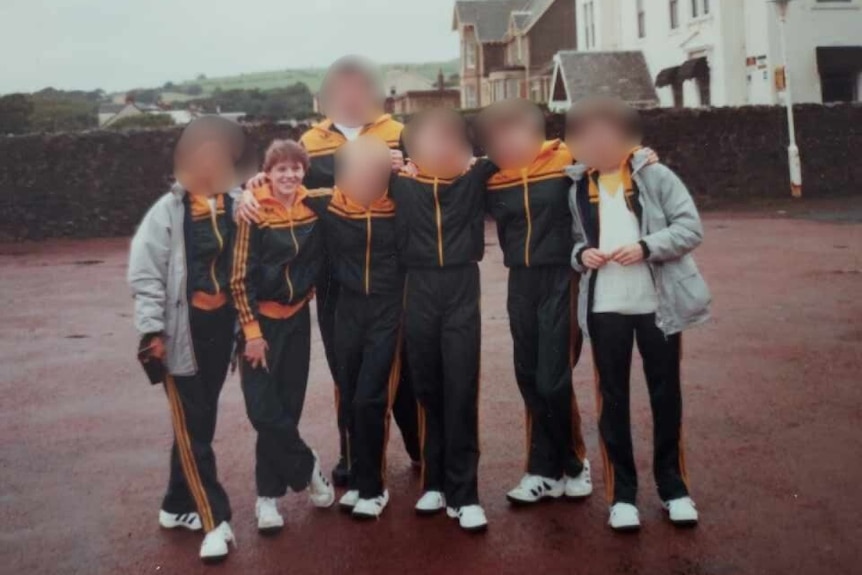
Jenny Richardson (second from left) entered the AIS as one of Australia’s leading gymnasts. (Supplied)
Jenny Richardson told ABC Sport she had been dealing with the eating disorder anorexia nervosa for the 40 years since she left the AIS, which she attributed to the psychological abuse she said she suffered at the institute.
“It’s a battle every day,” Richardson said.
“I still have the screaming in my head about the food.
“I’m afraid of food. I monitor everything that goes in my mouth. I’ve got severe body dysmorphia, so that affects my eating as well.”
She entered the institute as a leading Australian gymnast at just 15 but said she was immediately singled out because of her weight — a story that was shared widely by many of the young women and girls who went through the institute’s gymnastics program.
Alleged gymnast abuse at AIS over decades
“We got weighed every morning before training. I spent more time on the running track than I did in the gym,” Richardson said.
“I was made to sit in the sauna as well, multiple times, fully clothed.”
She said one time the team was told to train fully clothed in the sauna.
She said she was pinched, slapped and called “a pig”.
She said food deprivation was common and widely known about by athletes in other sports.
“I was getting extremely depressed to the point that I was in the top room in the residence, and I sat on my windowsill just looking down thinking I’d love to jump,” Richardson said.
“I want to end it all, I was so miserable.
“I fell out of love for gymnastics. Gymnastics was my whole life before I went up there, but I felt like a failure.”
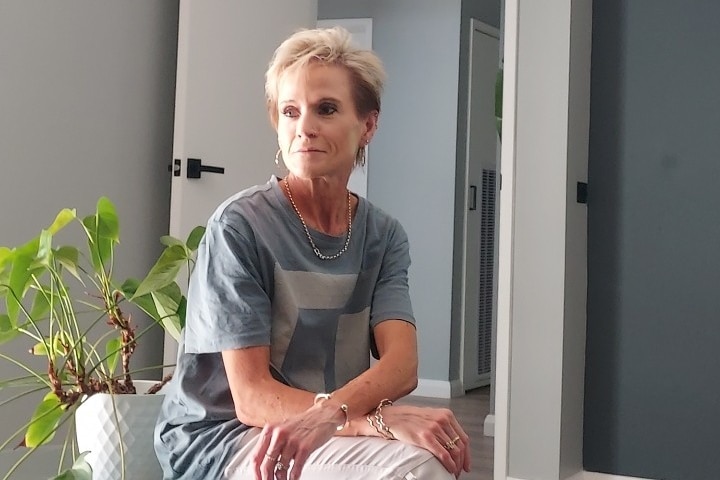
Decades on, Richardson is still haunted by her experiences at the AIS. (Supplied)
She left after nine months and never trained as a gymnast again but continued to spiral with her illness, spending months in an eating disorder clinic.
“There was no debriefing, checking in on me when I came back,” she said.
In the mid 1990s she received a settlement from the Australian Sports Commission.
More recently, she received $15,000 through the Restorative Program, which has also paid for ongoing psychiatric and dietary help.
Richardson told the ABC she believed she would need ongoing counselling.
She responded to Perkins’s email saying the documentary was “a slap in the face”.
“One minute you’re apologising for the harm caused but then backflip highlighting how magnificent the AIS is disregarding its wrong doings,” she wrote.
“I’m sorry to say the apology I received has absolutely no substance or credibility, it’s beyond disappointing.”
Richardson told ABC Sport she had been gaining some trust after her recent mediation, during which time she met personally with Perkins.
“I thought, well, they are listening,” Richardson said.
“But I feel like the carpet’s been pulled out from under my feet again.
“You’re now glamorising what went on in 40 years [but] you’re not telling the full story.”
She said she was particularly disappointed about Perkins’s revelation that the funding for the Restorative Program would end in December.
“That’s left me thinking ‘what then?'”
In his statement, Perkins said the ASC would continue to offer support to athletes who experienced harm and abuse as a result of their time at the AIS.
Former athletes who were receiving counselling would be able to continue through the ASC’s Mental Health Referral Network.