
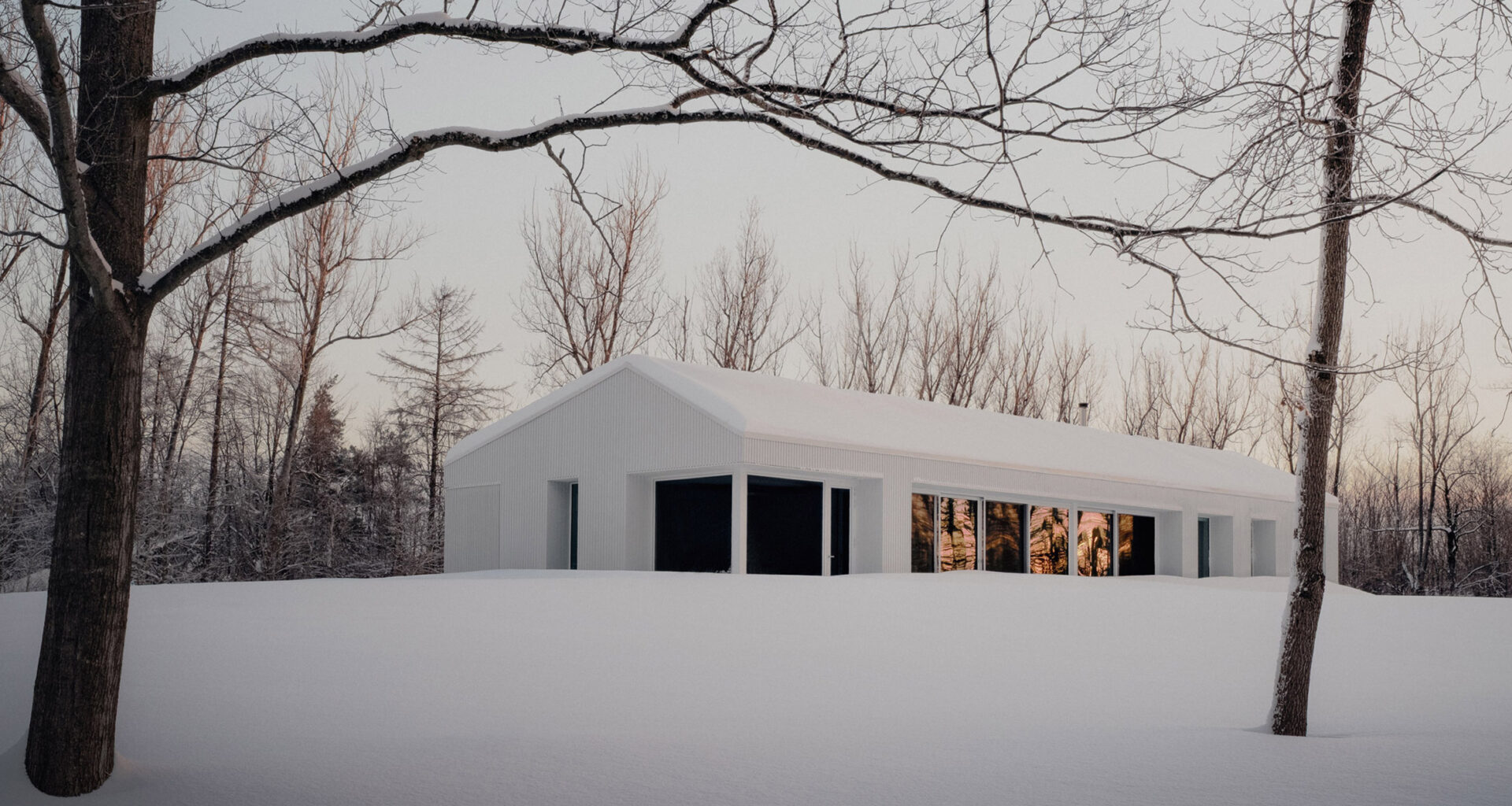
Canadian studio Akb Architects has designed a white, hilltop house that “dissolves into the snow” in Mono, Ontario, acknowledging the vernacular architecture while implementing contemporary tactics.
Known as Timbertop House, the 2650-square-foot (245-square metre), gabled home sits on an elevated clearing on a 200-acre property owned by a single family for multiple generations.
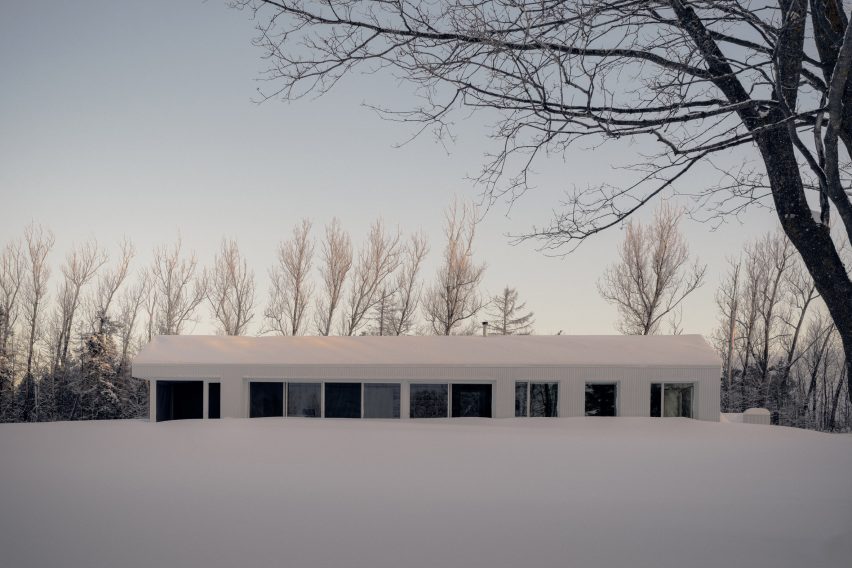 Akb Architects has completed a hilltop house in Ontario
The land, affectionately called the Rolling Hills of Old Ontario, was cleared and farmed in the 1800s. The original farmhouse was removed, making way for the new residence surrounded by forest.
The 2024 design draws inspiration from the site’s agricultural history, in which white, gabled farm structures were built with a constrained silhouette to accommodate the harsh winter.
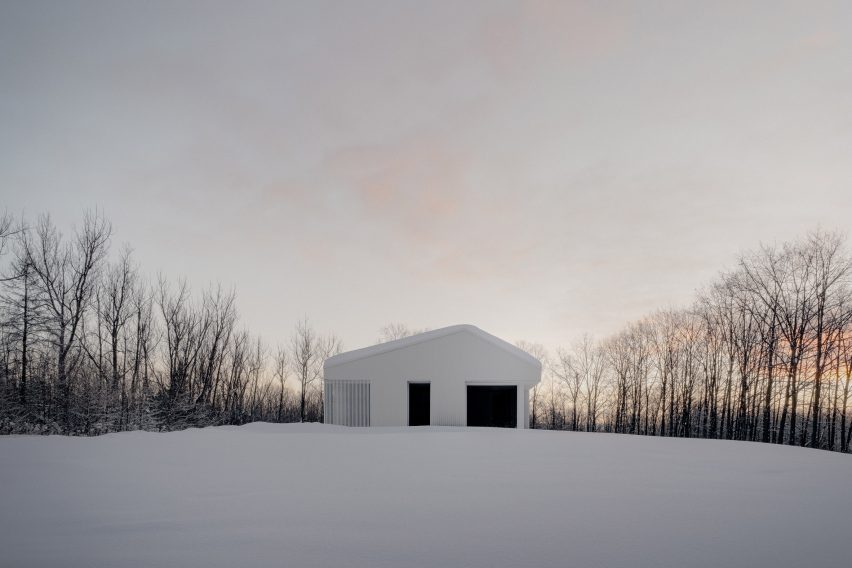 It sits on a 200-acre property
Akb Architects, which is based in Toronto, updated the utilitarian form with an asymmetrical roofline that ascends sharply from the open field and descends gently to the forest.
Rather than deep overhangs, the roof’s edge is flush with the outer walls, reducing potential snow sag and allowing insulation to carry from the wall to the roof.
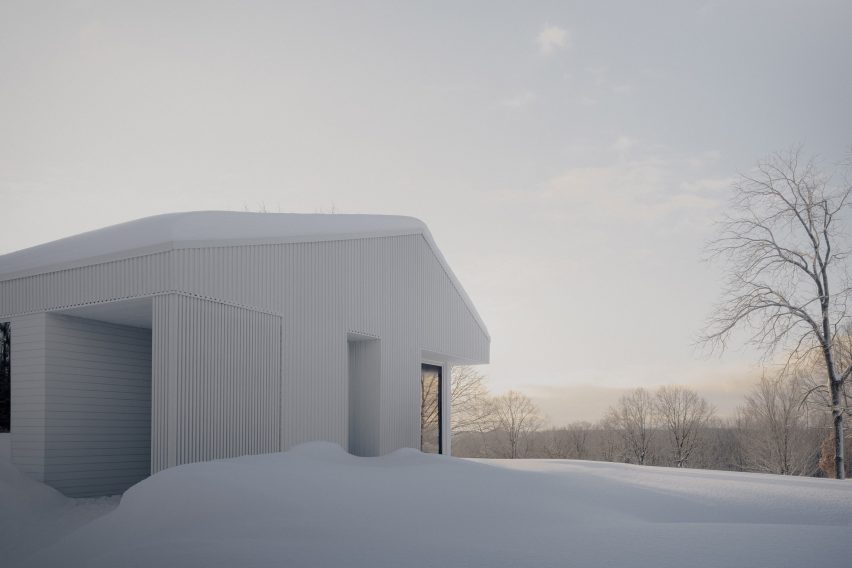 It has replaced a previous farmhouse
“Referencing the architectural past context and reinterpreting it in a contemporary way creates a deliberate tension in the architecture that’s both modest and bold at once,” said Akb founder Kelly Buffey.
The studio used pre-painted white board-and-batten siding rather than opting for a dark finish to reduce solar heat gain and ensure low maintenance long term.
According to the studio, the white colour also creates pleasing seasonal effects.
“This duality also plays out across the seasons. In winter, the house almost dissolves into the snow, while in spring, summer and fall it becomes a beacon, standing out against the changing colours of the landscape,” said Buffey.
 It references the constrained silhouettes of the surrounding vernacular architecture
The single-storey, rectangular plan prioritises practicality.
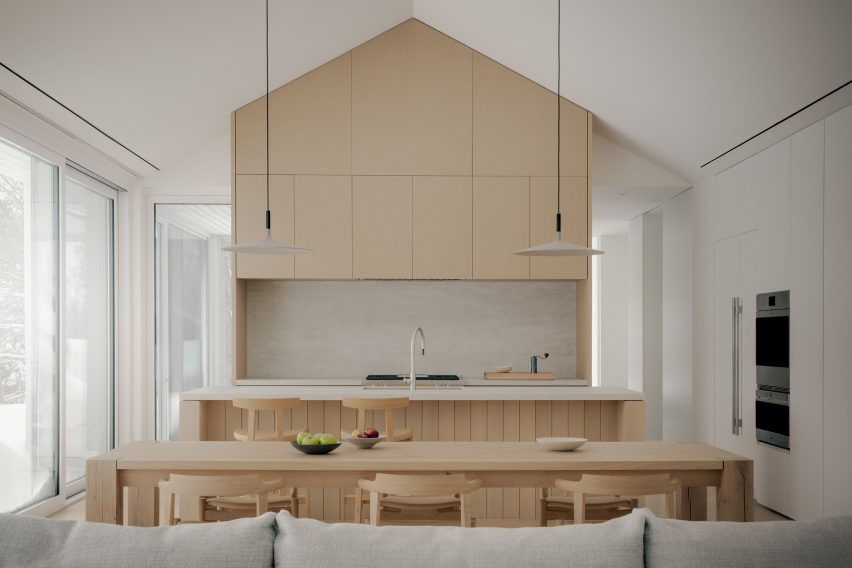
The entry at the northwest corner of the house is anchored by a mudroom and laundry. It then opens to a large, vaulted communal space. An open kitchen and living area hold the centre of the plan with a large screened porch on the southwest corner.
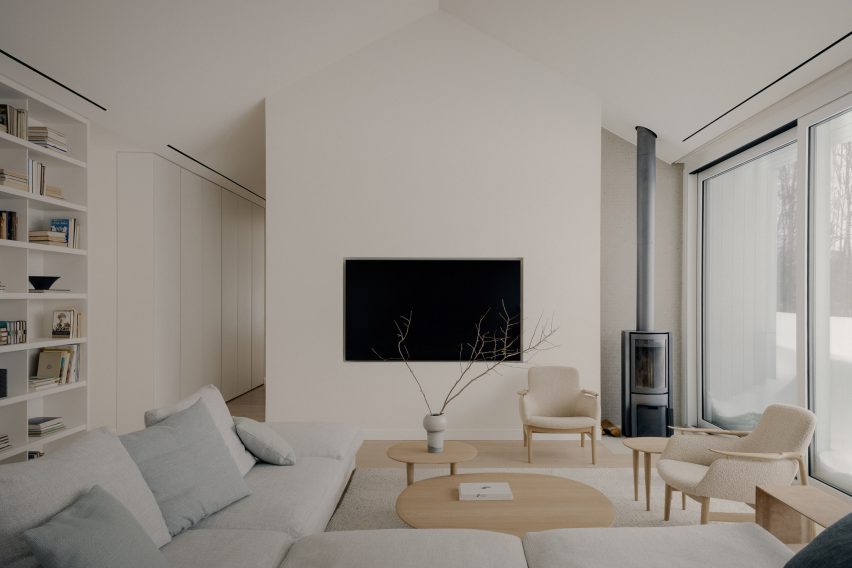 An open living room sits at the centre of the house
Sleeping areas with three children’s bedrooms, a central bath and a primary suite comprise the eastern portion of the house.
The long southern wall is made up almost entirely of full-height sliding glass doors that open to a large deck that runs around three-quarters of the house. Concealed by snow in the winter, the deck offers a direct connection to the landscape in the summer.
Read: Whistling Wind Island by Akb Architects is “surrounded by open waters and expansive sky”
Whistling Wind Island by Akb Architects is “surrounded by open waters and expansive sky”
At the northeast corner of the house, a four-season spa area offers a moment of relaxation with a custom hot tub set in a cedar bench.
“Part of our mandate from the client was to design a home that feels easy and relaxed, is efficient in its layout, and has a strong connection to the outdoors,” Buffey said.
“Keeping everything on one level grounds the building in the vastness of this 200-acre property, simplifies circulation and creates seamless, direct connections to the outdoors and the land itself.”
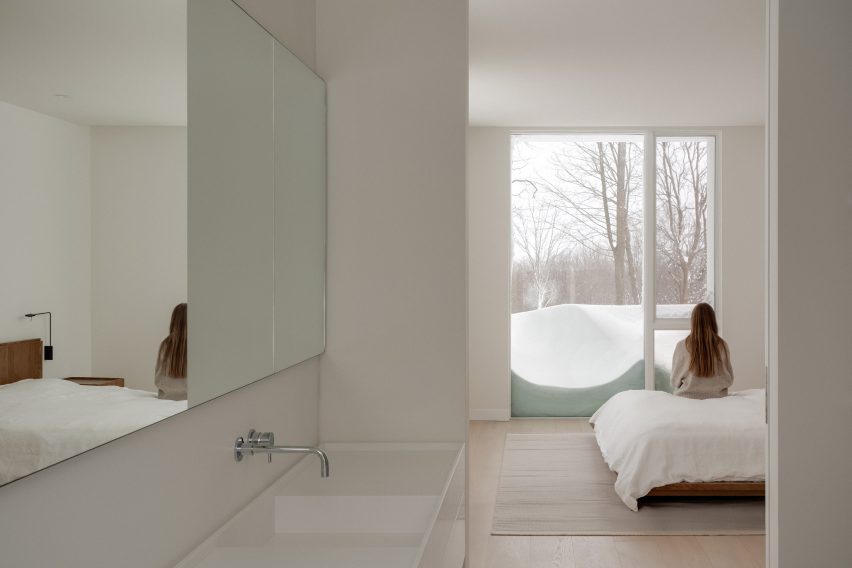 The house’s white colour blends in with the snowy landscape
Oak and concrete floors, Japanese tiles and custom Corian vanities fill the interior.
Founded in 2004, Akb previously designed a cluster of cedar buildings surrounded by water on an archipelago in Pointe Au Baril, a blackened wood home and boathouse in Muskoka and a monochromatic ski chalet in the Blue Mountains.
The photography is by Félix Michaud.
Project credits:
Architecture, interiors & furniture curation: Akb Architects
Akb Architects: Kelly Buffey, Robert Kastelic, Donald Peckover, Tim Wat, Nicky Bruun-Meyer, Katie Godfrey, Aaron Finbow
Construction: Cliff & Evans
Structural engineering: Kieffer Structural Engineering