
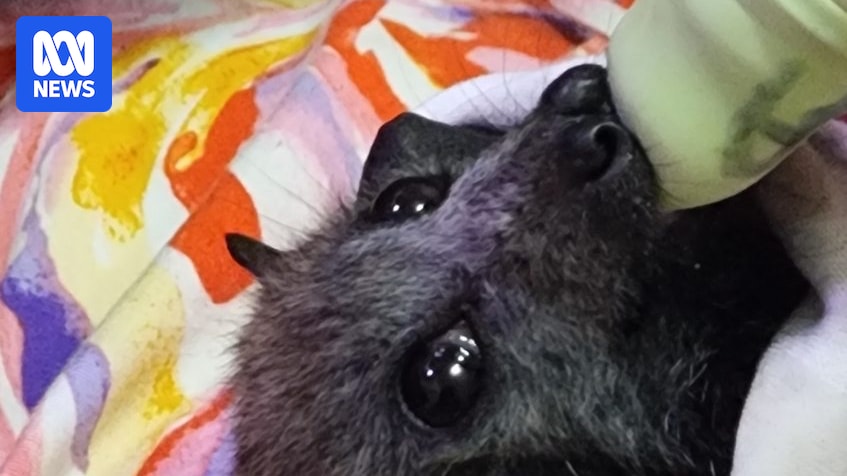
Record-breaking temperatures and successive heatwaves have killed thousands of flying foxes across South Australia as the mammals struggle to cope with hot conditions.
Rescue groups estimate more than 2,500 bats have died from colonies in Adelaide and Naracoorte, in SA’s south-east, with many survivors being cared for by volunteers.
Bat Rescue SA chairperson and coordinator Sue Westover said young flying foxes were especially susceptible to increases in temperature.
“We lost a lot of juveniles, but there’s been a lot of adults lost as well at Naracoorte,” she said.
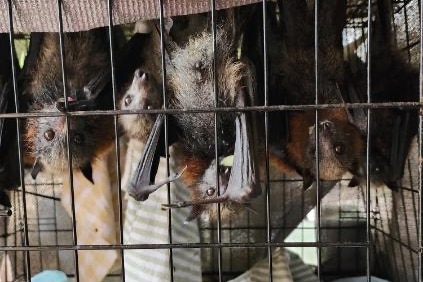
Many of the juvenile bats recovered in Naracoorte were transported to Adelaide, where wildlife carers have been looking after them. (Supplied: Bat Rescue SA Inc.)
Ms Westover said the deaths were not surprising.
“The bats just don’t cope with the heat; their bodies just aren’t built to deal with temperatures over 42 degrees,” she said.
“[There’s] not a lot we can do other than pick up the pieces.”Coordinated recovery effort
More than 46,000 flying foxes are known to live in Adelaide, but it is unknown exactly how many live in Naracoorte.
During the past decade, governments and environmental groups have invested heavily in preserving populations across South Australia.
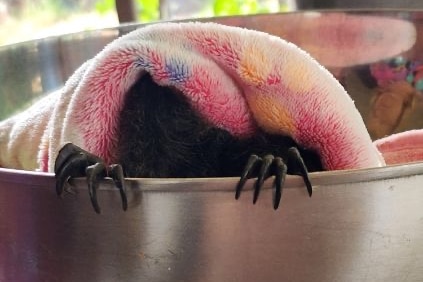
There are flying fox colonies right across South Australia, but groups in Naracoorte and Adelaide were worst affected. (Supplied: Bat Rescue SA Inc.)
While many young flying foxes were reunited with their colonies in Adelaide, Ms Westover said the Naracoorte colony was devastated.
“We were lucky with our Adelaide heat; it was mainly just the juveniles coming to ground, so we were able to reunite a lot back with their mothers,” she said.
“Unfortunately, there was a lot of adults lost at Naracoorte, so the babies couldn’t be put back.”
A team of three carers from Limestone Coast Wombat and Bat Rescue worked in Naracoorte to rescue any surviving bats.
Many of those bats were then sent to volunteer teams in Adelaide, who have been helping rehabilitate the animals, including at Ms Westover’s facility.
“They’ve saved around 37 and there could be a few more,” she said.
“They’re not quite big enough to go into the creche aviary with the other older juveniles, so I’ve set up one of my aviaries as the baby creche and they’re on dripper bottles.”
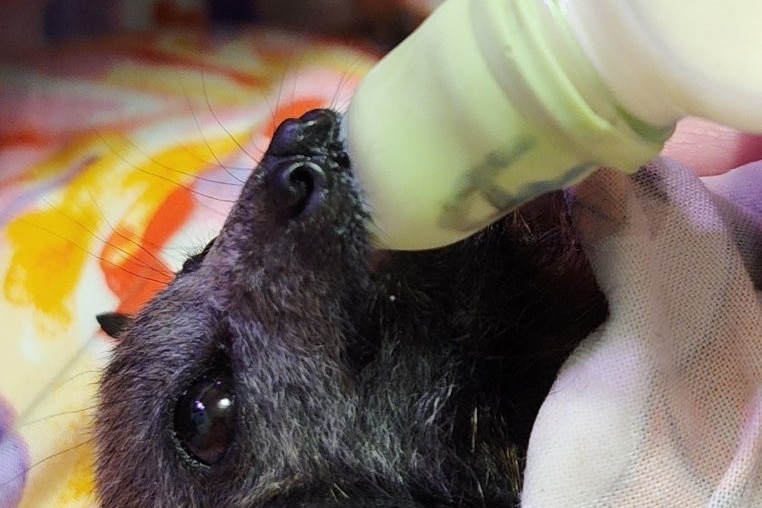
The juvenile flying foxes were between eight and 10 weeks old and many required drip feeding. (Supplied: Bat Rescue SA Inc.)
The bats are aged between eight and 10 weeks old, and Ms Westover hoped they could be released back into the wild in March.
“[They’re] just starting to learn to eat fruit, and from there they’ll progress,” she said.
“Then they’ll be transferred to a release aviary into the [Adelaide] Botanic Park colony where they’ll be eventually released.”
Natural population cycle
Wayne Boardman from Adelaide University’s School of Animal and Veterinary Sciences said most animals cannot survive successive days with temperatures over 42 degrees.
“What we find with the flying foxes is they tend to camp and roost high up in trees so they get exposed to the glaring sun,” he said.
“They build up this temperature and then they try to seek shade; if they don’t have the right conditions understorey, they can succumb.”

Wayne Boardman has taken in a few of the bats to help in the recovery effort. (ABC South East SA: Caroline Horn)
While the number of flying foxes had increased since the last period of hot conditions killed many in 2019, Dr Boardman did not think the Naracoorte colony would re-establish.
“For the last few years that they’ve been there it’s been OK because food resources are there, but for survivability in hot temperatures, then it’s not ideal by any stretch of imagination,” he said.
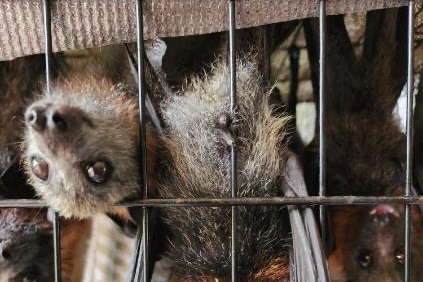
Flying fox populations are expected to recover, but the Naracoorte colony is not expected to re-establish. (Supplied: Bat Rescue SA Inc.)
Despite the kill, Mr Boardman was confident flying fox numbers would recover.
“They can only produce one animal a year [and] they can live up to 14 years of age,” he said.
“If they produce one every year, they can replace themselves.
“The population will recover, but if we get a terrible bounce of hot weather in the future, we’ll see them dying again.”