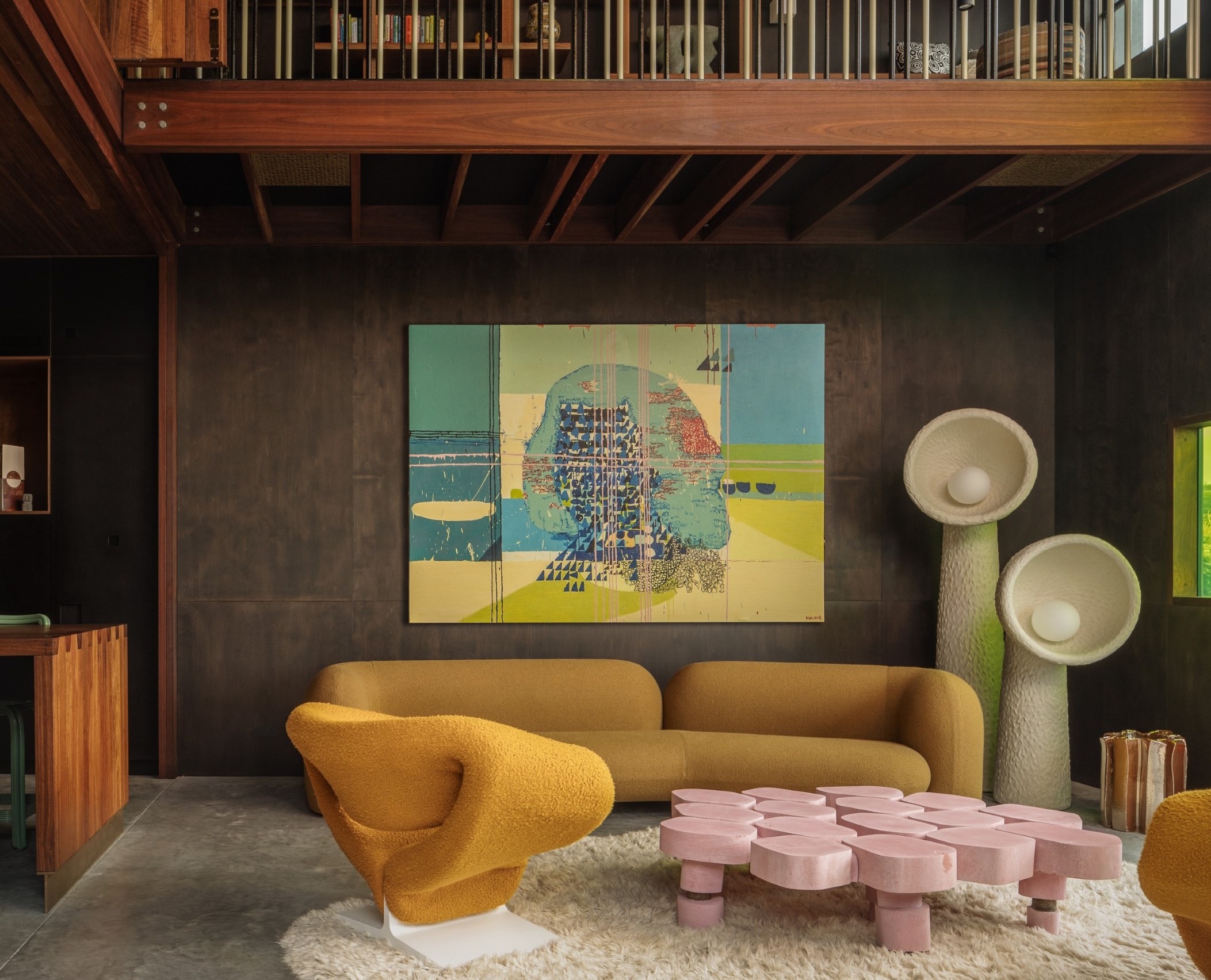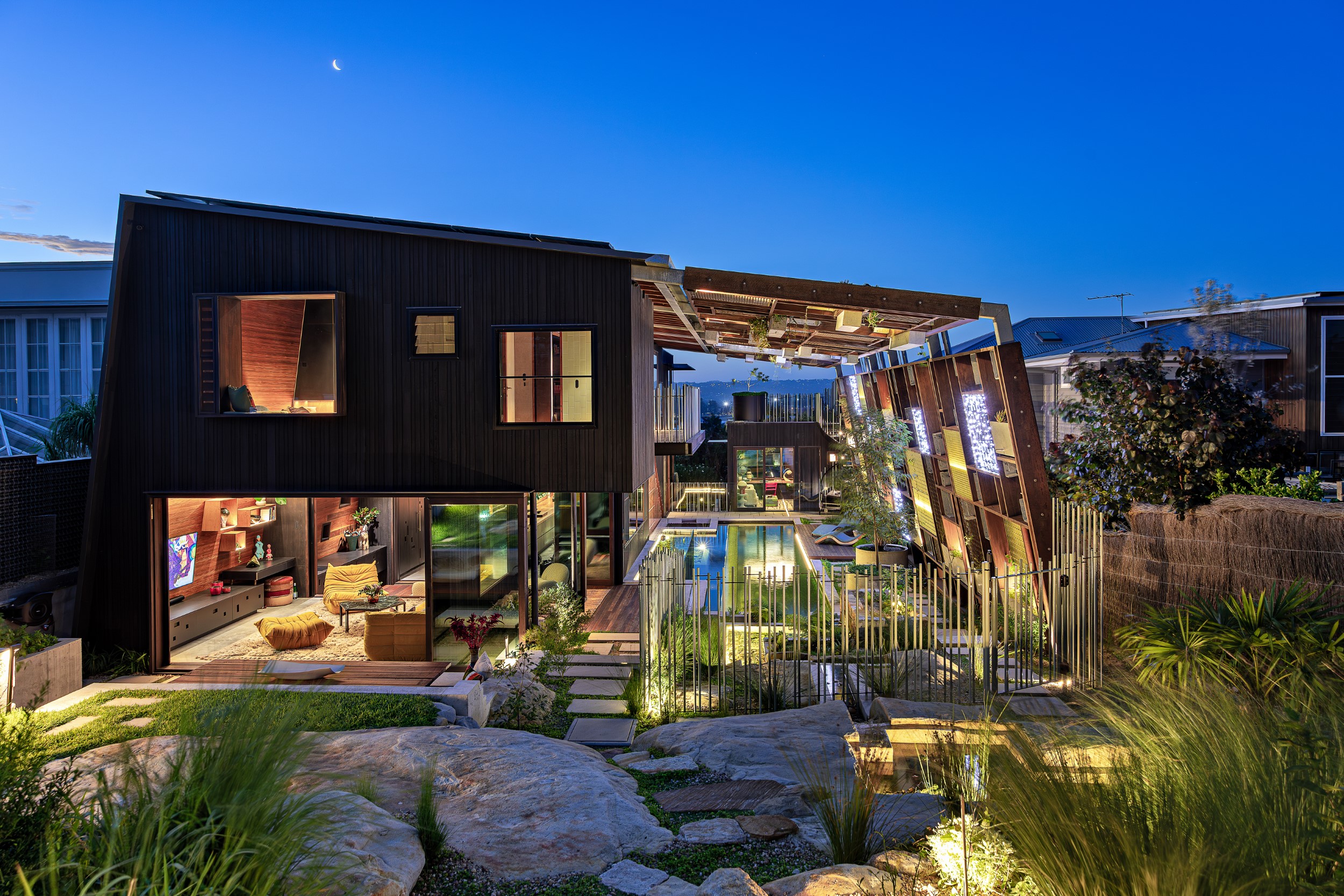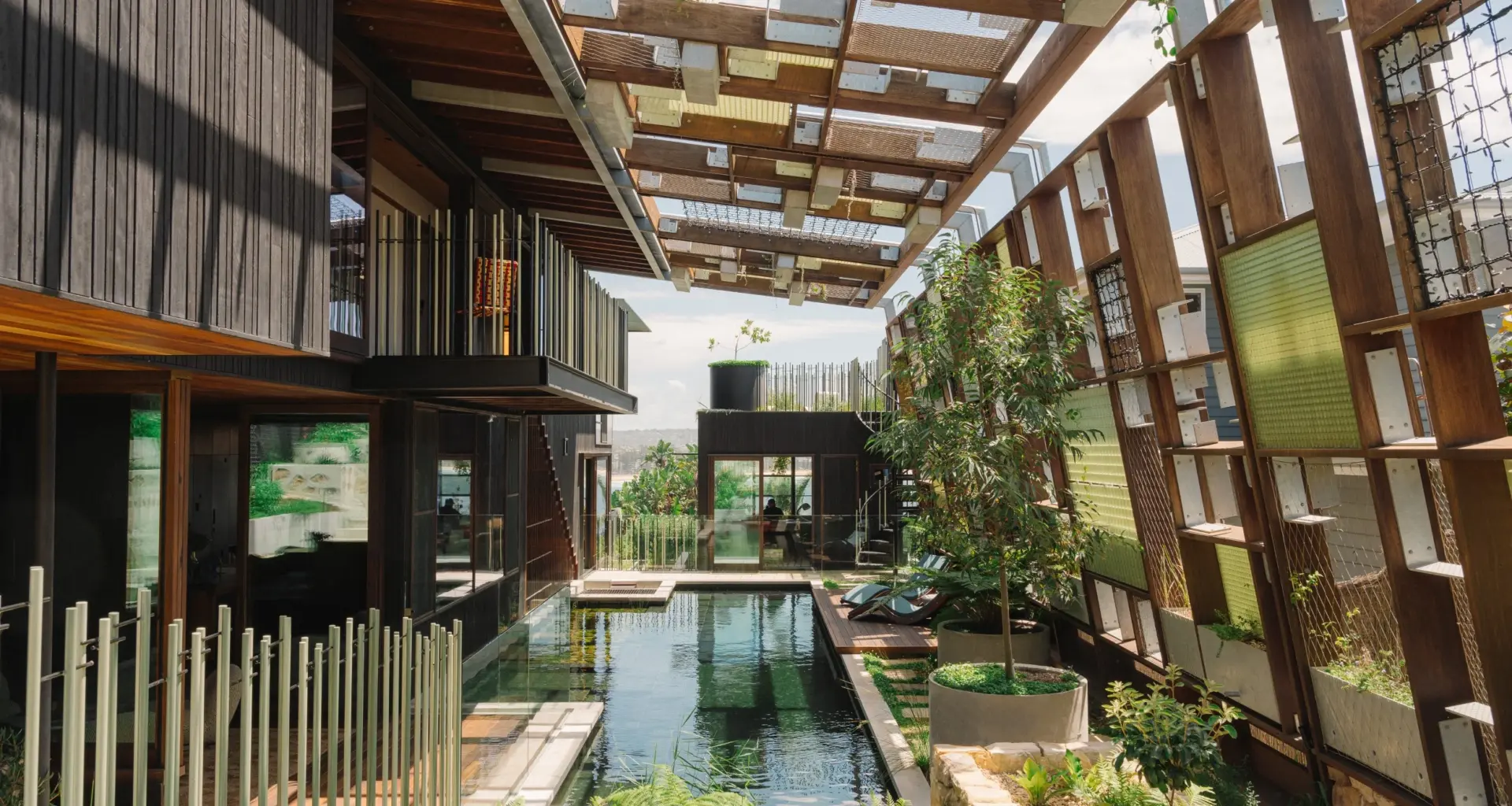
Holocene House stands out. The two-storey beachside home in Manly, Sydney, designed by C Plus Architects and Builders, pushes the boundaries of a home as we know it. From the outside, its black, box-like form is unassuming. Step inside and it feels like you’re living in a rainforest rather than a suburban block. Rooms open to a creek-like freshwater pool, recycled timbers line the walls, a canopy of plants flourishes
Sustainability, regeneration and a deep connection to nature sit at the centre of the property, which was shortlisted in the 2025 House Awards. For the homeowners – a young couple with two kids – the aim was to create a carbon-positive sanctuary. By 2050, the home is expected to have generated more energy than was consumed in its material production, construction, operation and eventual disposal.
Named after the Holocene Epoch – the last 11,700 years, when temperatures were stable and humans thrived in harmony with ecosystems – the project asks “whether we may once again live in symbiosis with the planet and its ecosystems,” says C Plus founder and managing director Clinton Cole.
Certified as Australia’s first Active House, Holocene House pairs high performance with restraint. Renewable energy systems, rainwater harvesting, greywater recycling, native planting and low-impact materials are embedded throughout.
Despite its scale and technical sophistication, it’s not splashy. Instead, it quietly sets a new benchmark. “We hope it represents a shift toward regenerative Australian architecture – homes that give back more than they take,” Cole says.
Here, he talks through the design approach, key details and how the project came together in practice.
The brief
The brief was to create a highly sustainable, regenerative home with open-plan living that felt bright, warm, green and deeply connected to the outdoors. Key considerations included making it breathable, private and toxin-free; embracing views in all directions while disconnecting from neighbouring buildings and the street; incorporating off-grid elements like growing their own food; and integrating a low-maintenance natural freshwater swimming pool as a central feature.
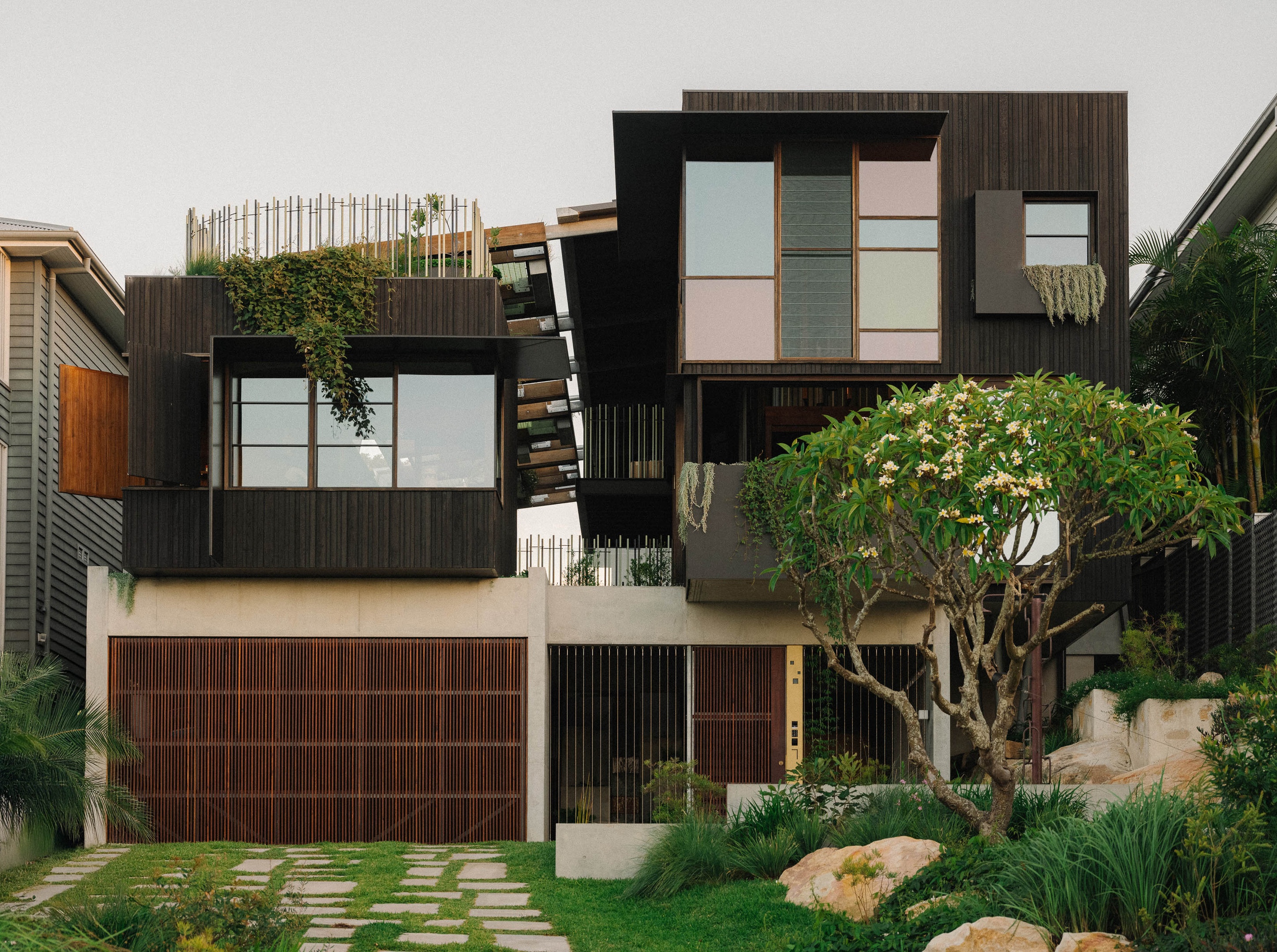
The design was inspired by the owners’ love of the outdoors, particularly their stories of walking through Eli Creek on K’gari (Fraser Island). We drew from natural landscapes like rainforests, rivers and rocks.
 Design details
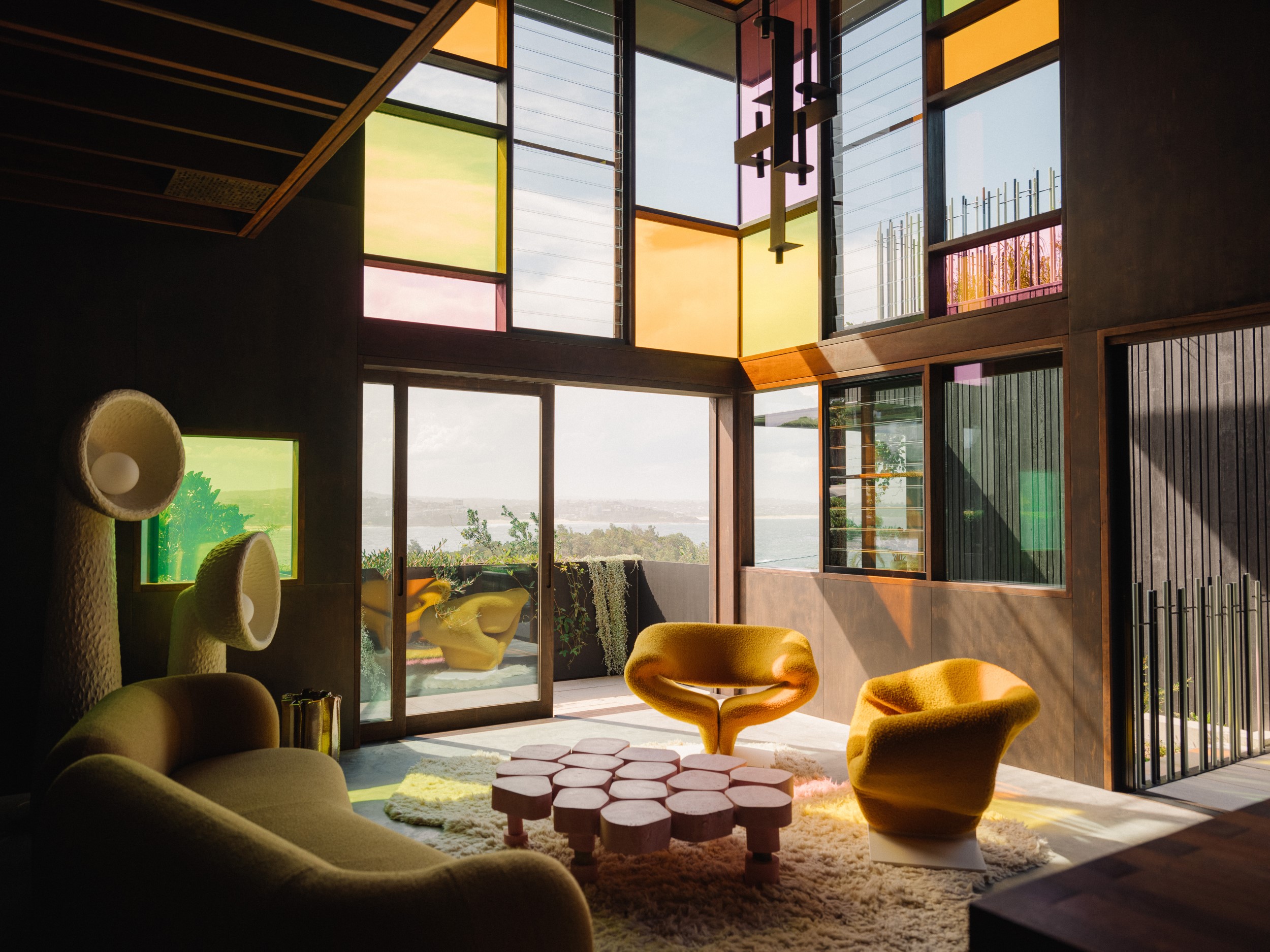
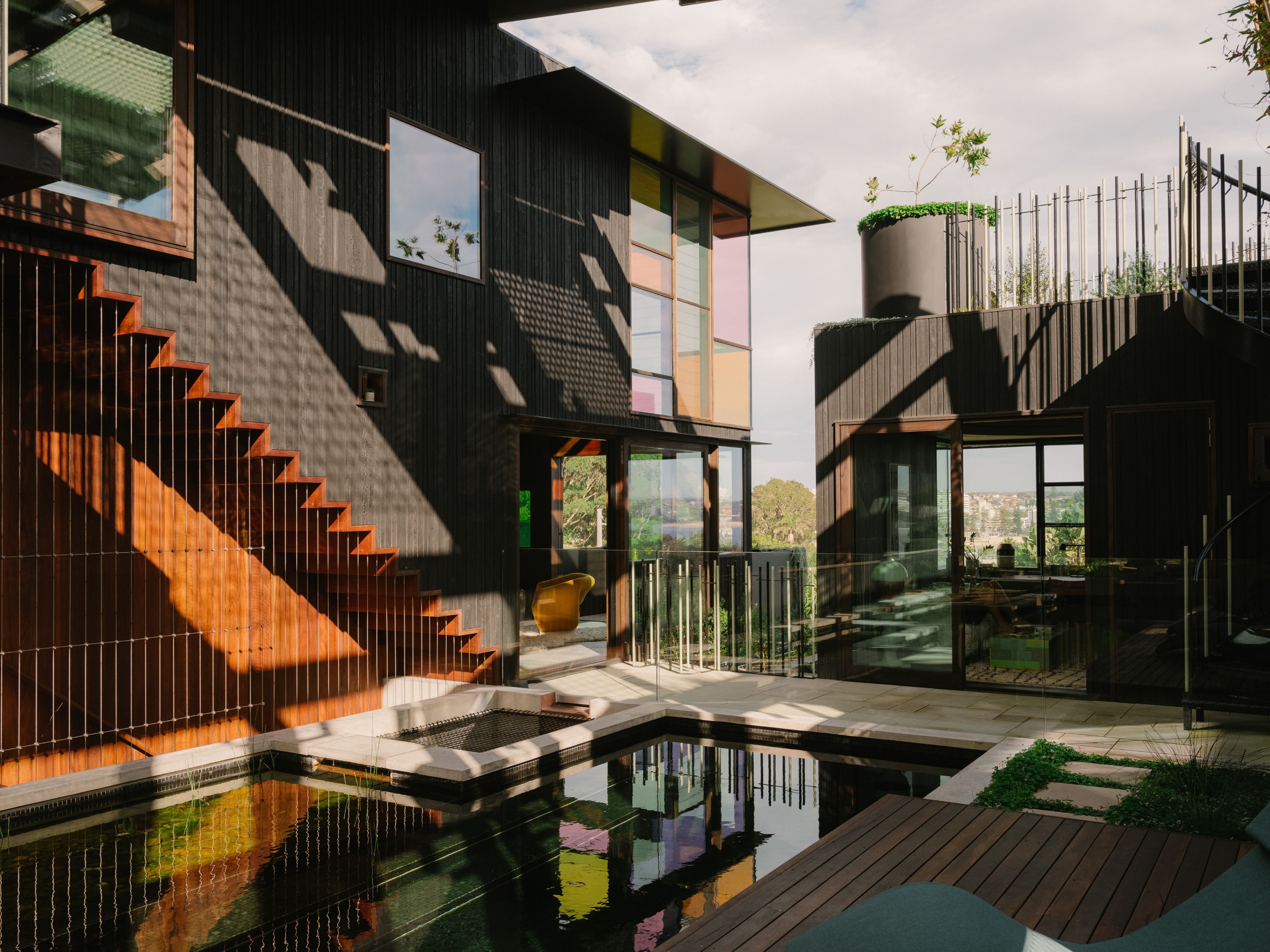
The stained glass patchwork panels deconstruct the Shelly Beach views, challenging the typical reverence for ocean panoramas by breaking them into colourful abstractions. This invites a fresh perspective, where ephemeral reflections of sunlight dance and play… especially on grey days or with winter’s softer sun.
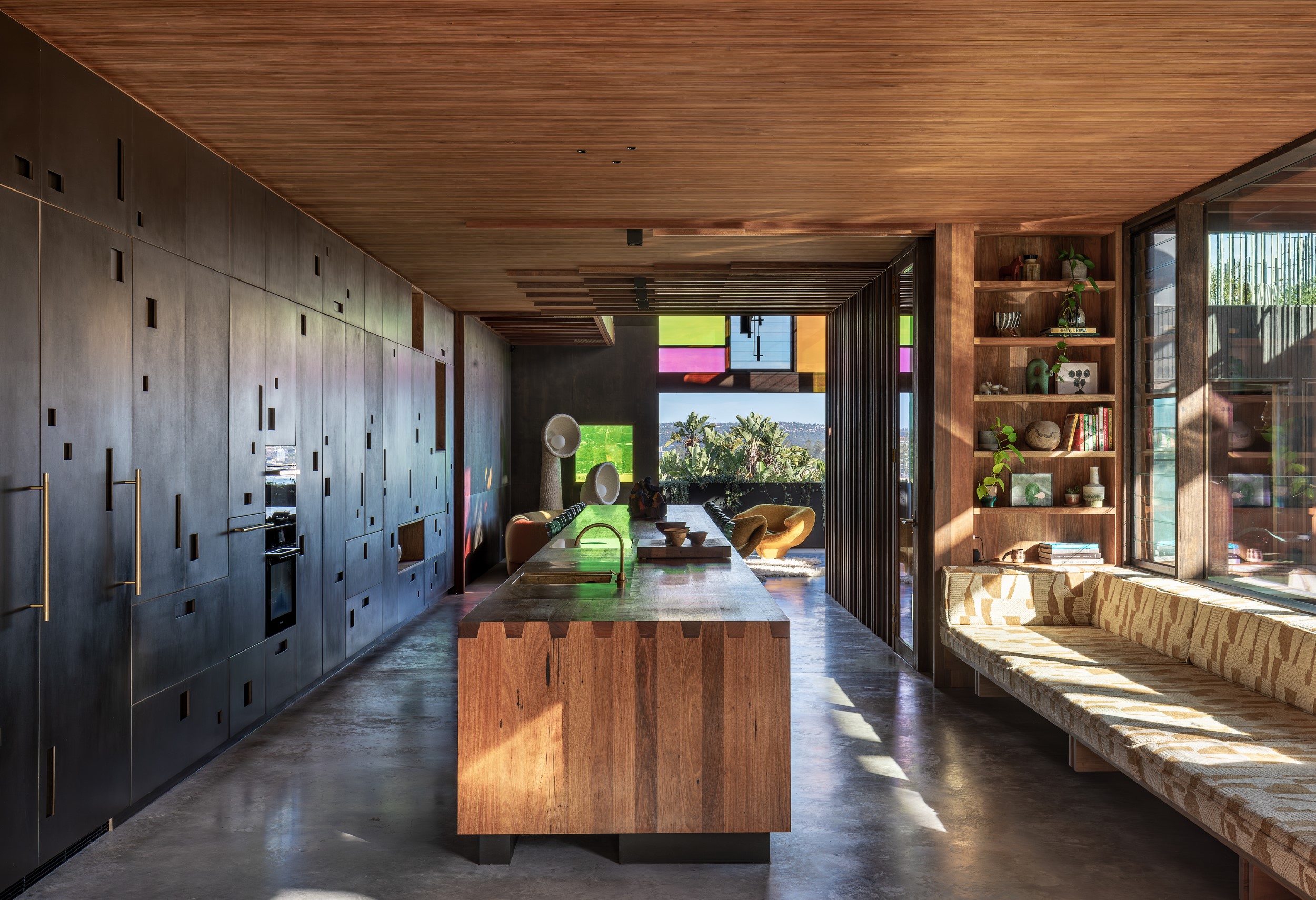
We prioritised low-impact, low-embodied-energy materials to minimise toxins and environmental footprint. Spotted gum hardwood Shou Sugi Ban cladding – charred using the Japanese method for durability and low maintenance – was sourced sustainably and used externally for its fire resistance, longevity and low maintenance in a coastal sea spray environment. Recycled hardwoods from demolished homes local to the manufacturer feature in doors, windows, benchtops, flooring and joinery.
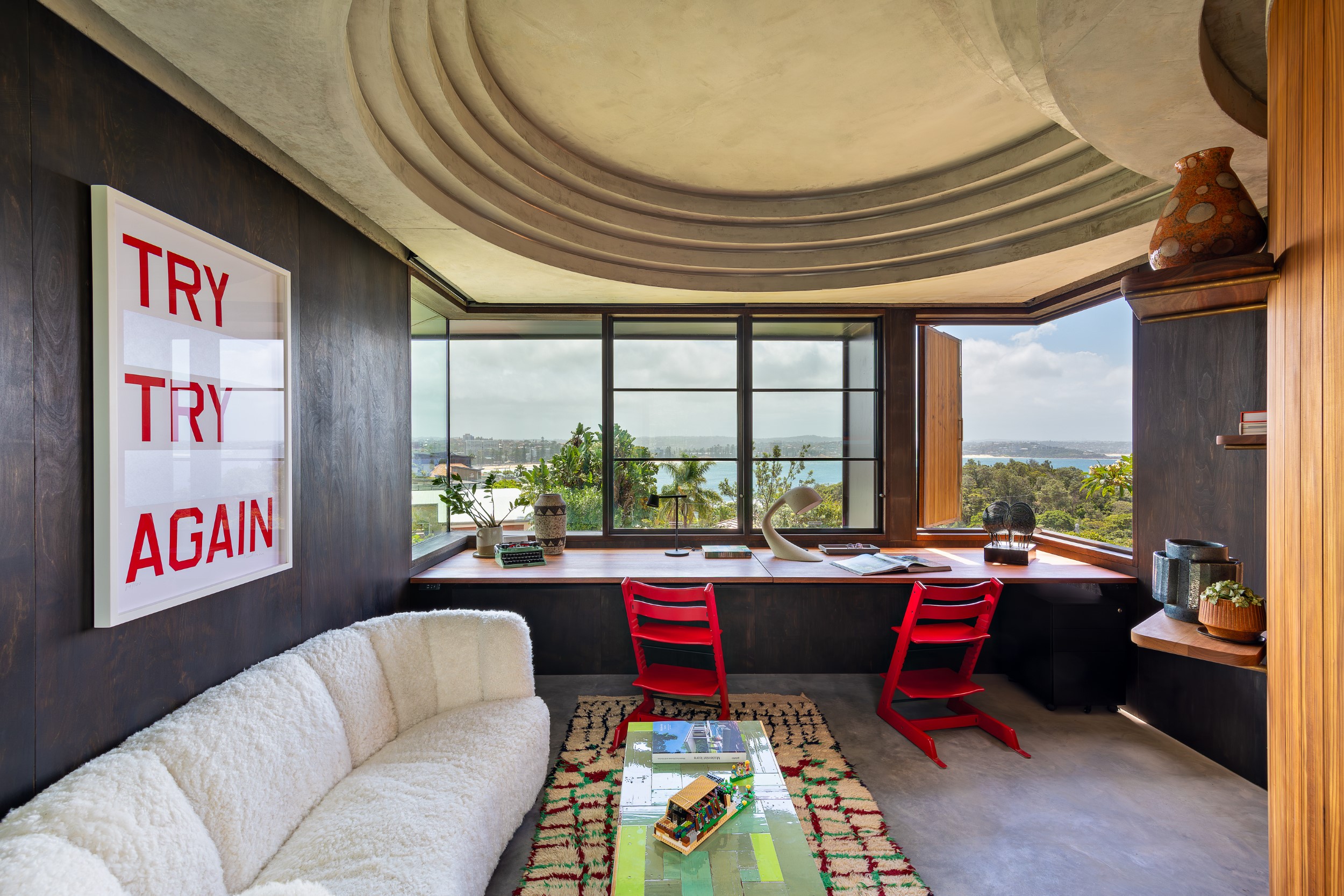
Paperock, a toxin-free composite from reconstituted paper pulp, appears in kitchen joinery with dappled light niches. Boral Envisia low-carbon concrete is in slabs and features like the scalloped office ceiling. FRP lattices in the canopy are low-maintenance and we reused site-excavated sandstone, concrete and timber in landscaping and the driveway.
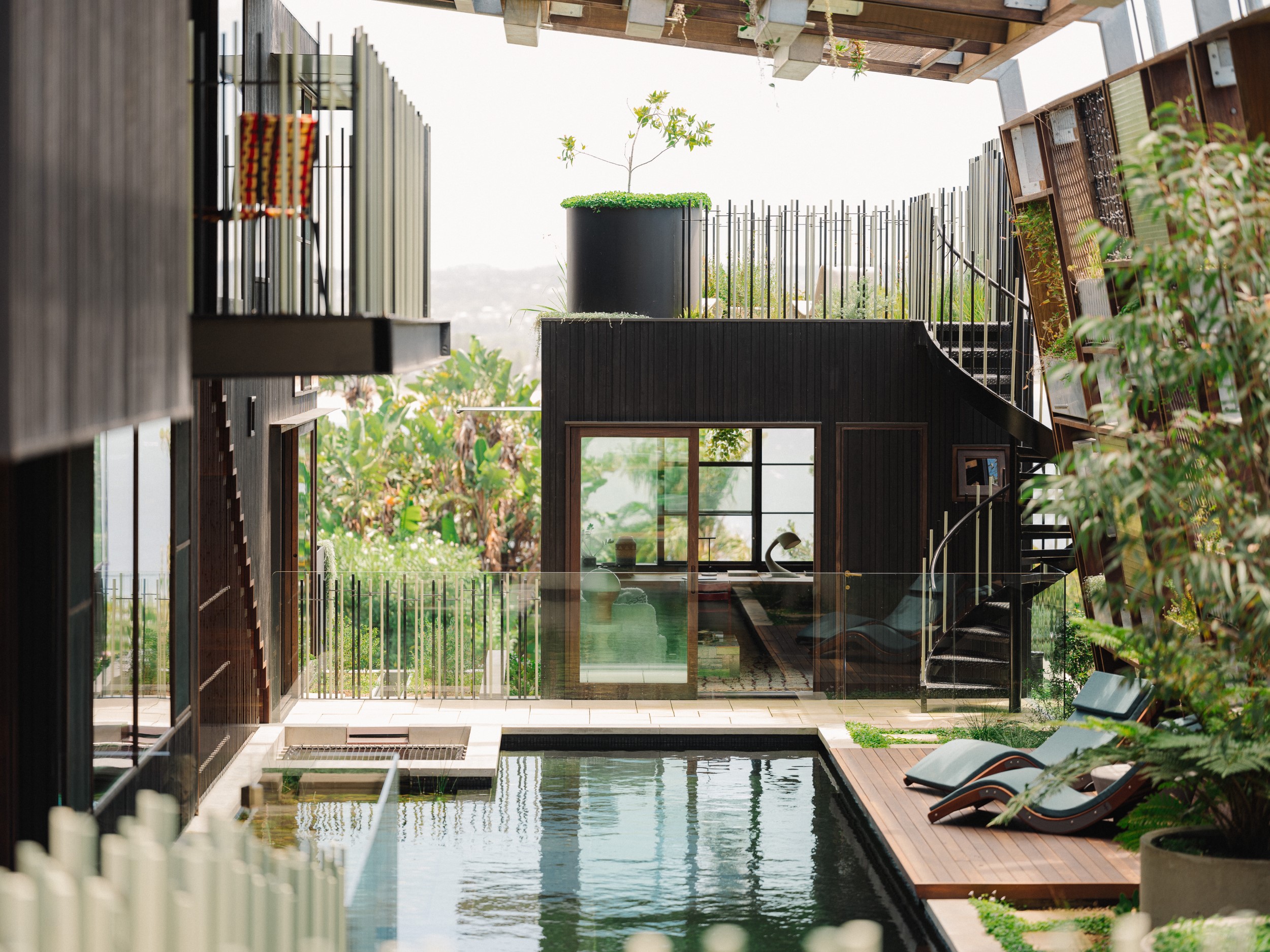
The most transformative element is the natural freshwater swimming pool, which we’ve integrated as the heart of the home, flowing like a rainforest creek directly next to the central living spaces. In a way, it’s ‘inside’ the house because the entire area is enveloped by a permeable canopy overhead – a semi-transparent veil of flourishing plants growing on an eclectic structure of timber, structural steel and translucent jade-coloured lattices made from fibre-reinforced plastic.
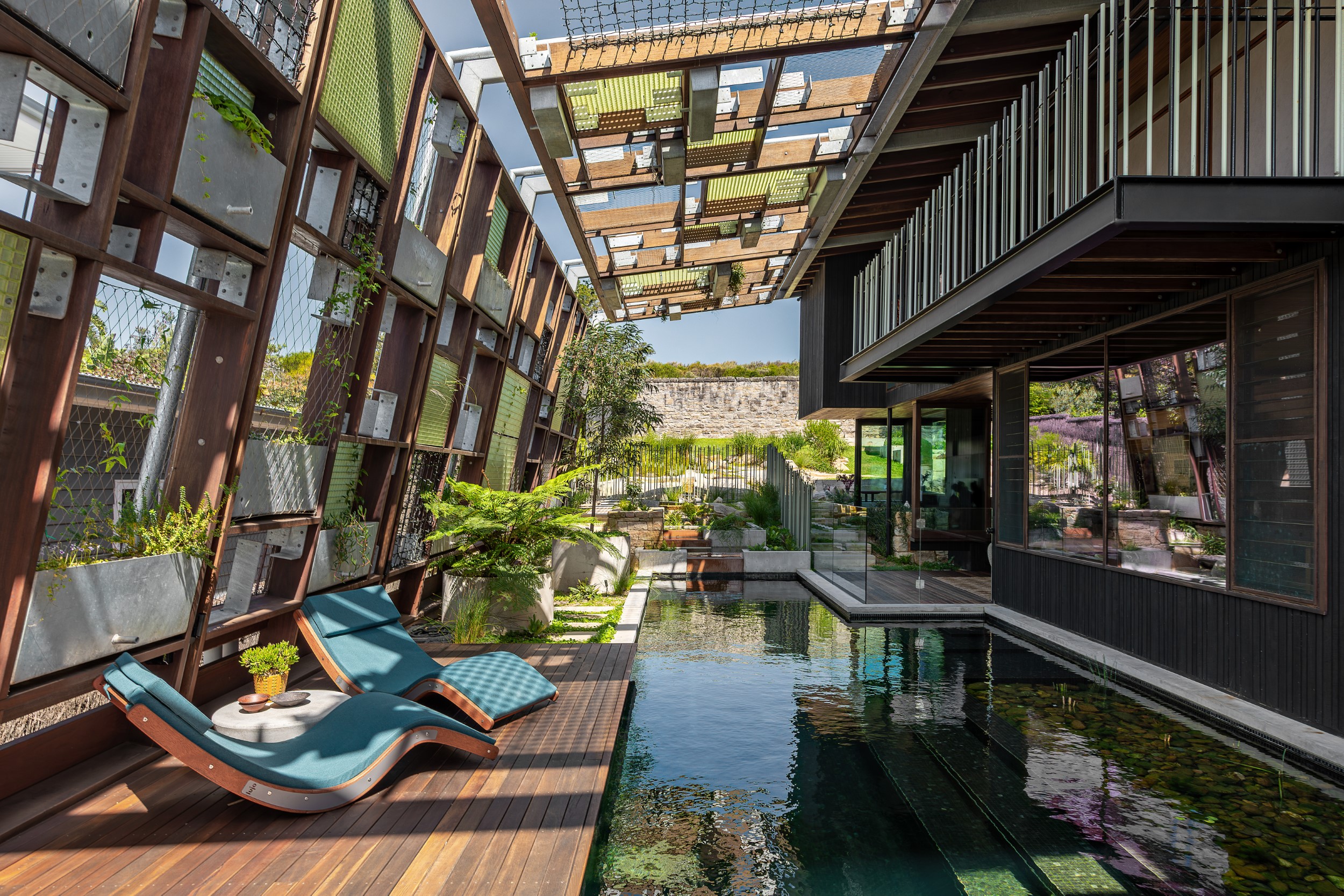
We carved the pool from rocky outcrops at the rear, with water cascading through polishing ponds, reed beds, charcoal and pebbles for biofiltration, using UV rays and a simple filter system. Dark tiles and surrounding decks make it feel like a stream; residents can paddle, swim or relax at its edge.
 Landscaping
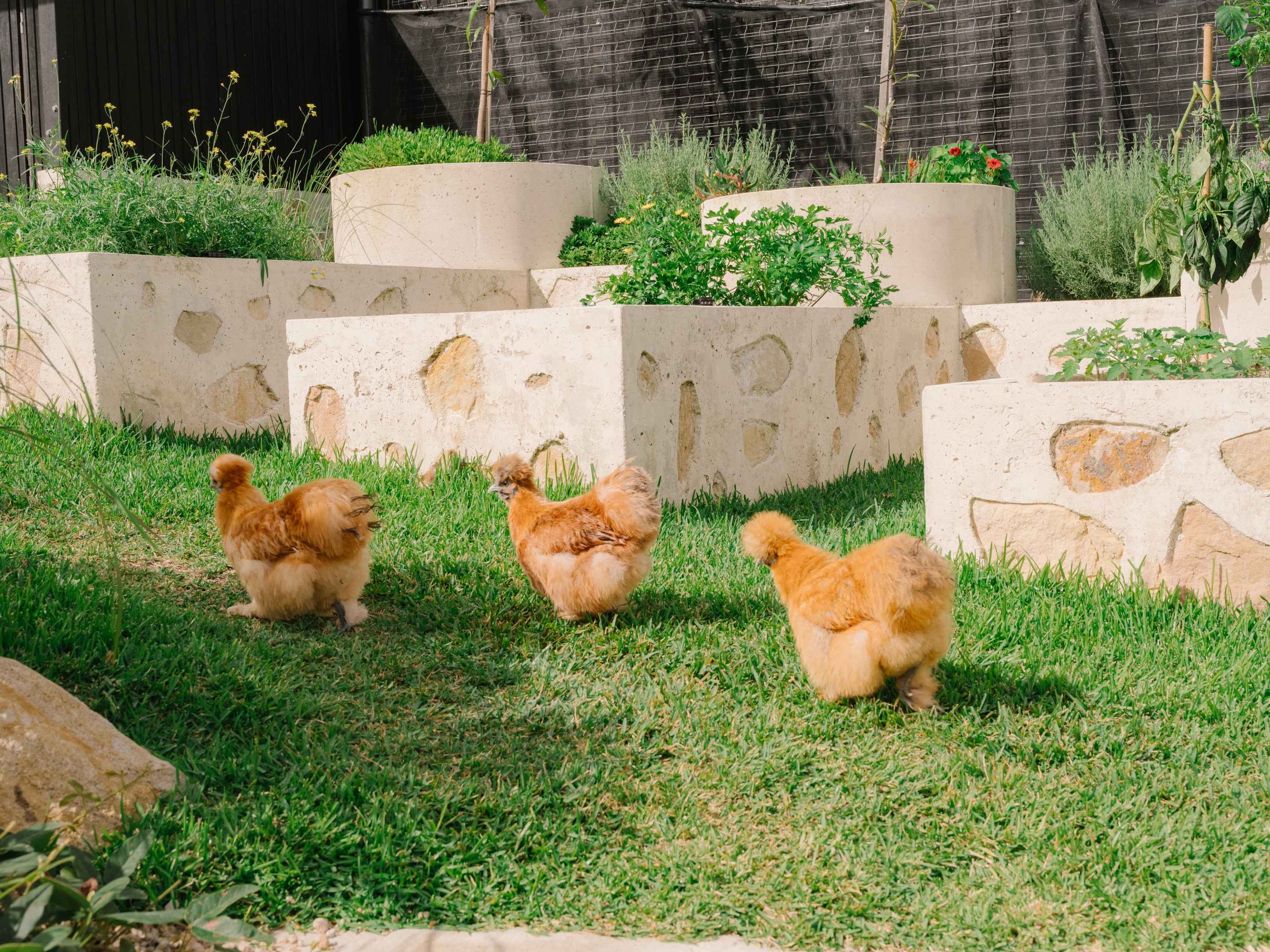
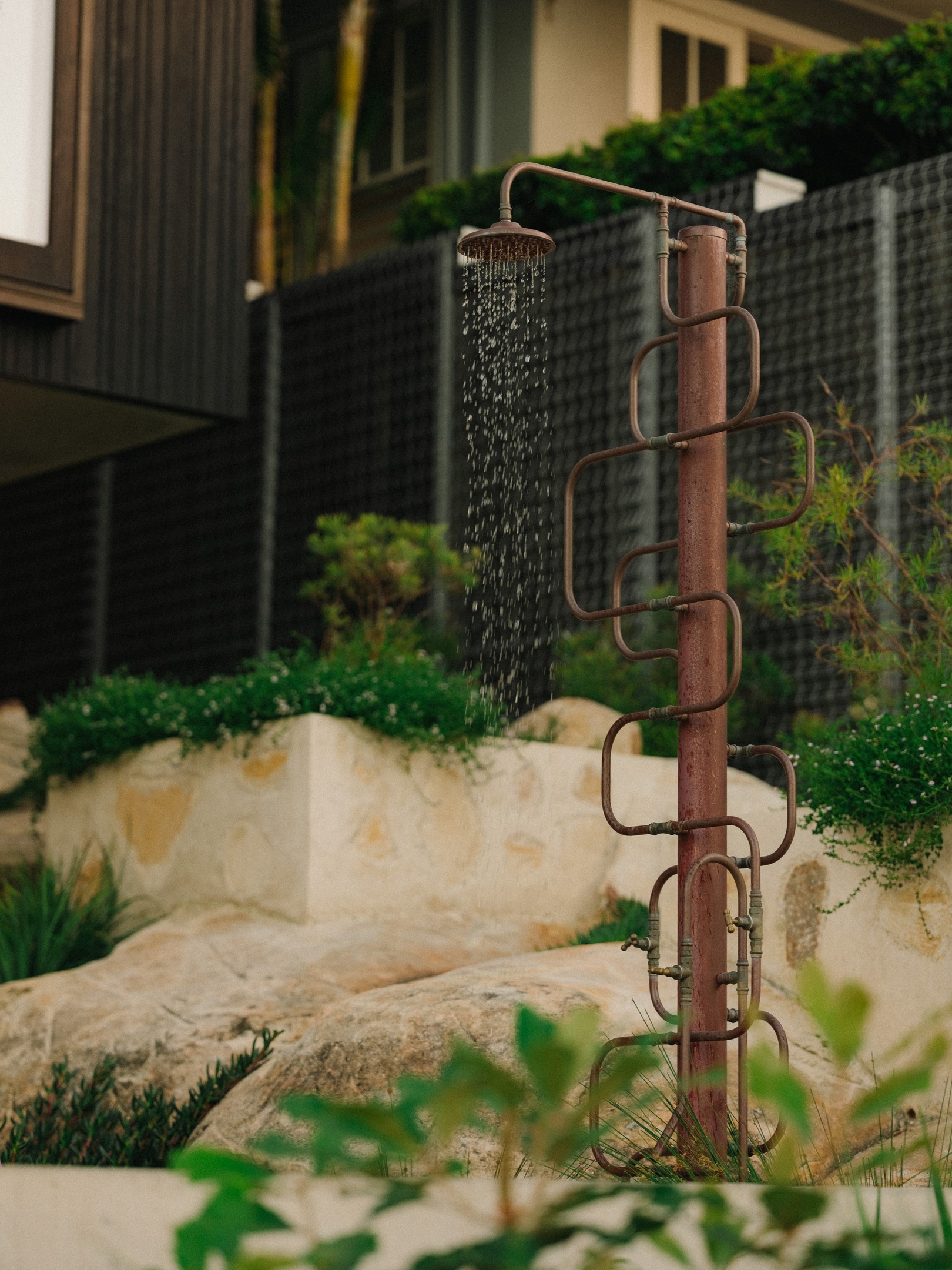
The landscaping draws from local coastal ecology to support bandicoot preservation, with native plants like coastal heath species sourced locally. We incorporated a productive fruit and vegetable garden, herb beds and a chicken coop for self-sufficiency. The canopy has over 20 floating planters growing a forest-like veil that will eventually drape down.
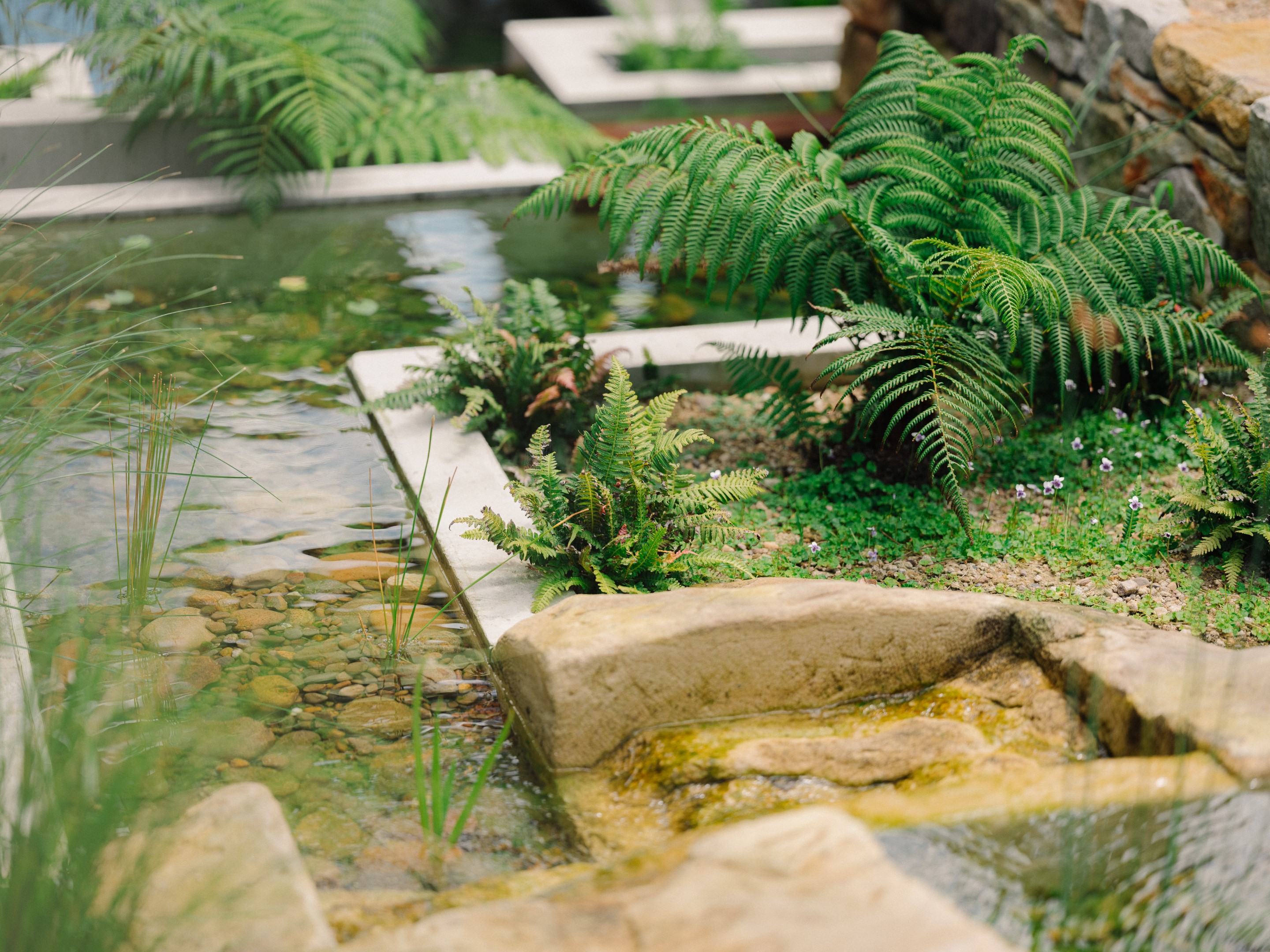
[There] are apple berry, water vine, toothed clematis, headache vine, dichondra silver falls, wombat berry, love creeper, false sarsparilla and jasmine morinda. Everything was chosen for low water needs, fed by greywater and rainwater systems, with compost from garden waste boosting soil. Some of my favourite species used are the cabbage palm, melaleuca, native fuschia and saw-toothed banksia.
 Regeneration
The main priorities were balancing sustainability with resident health and comfort, navigating challenges like Covid delays, material shortages and extreme weather. We focused on site-sensitive design, in some cases re-using excavated materials, selecting low-embodied energy options and integrating systems like solar PV and greywater recycling.
[This project] reframes homes as regenerative ecosystems, symbiotic with nature, self-sustaining and focused on life over luxury. It challenges trends like oversized footprints and sea-view obsession by prioritising the rear coastal heath, modest roof terrace views and permeability to elements. Instead of sealed mansions with six-car garages, it proposes modest, human-centred designs that invest in planetary health, questioning excess in a fragile world.