
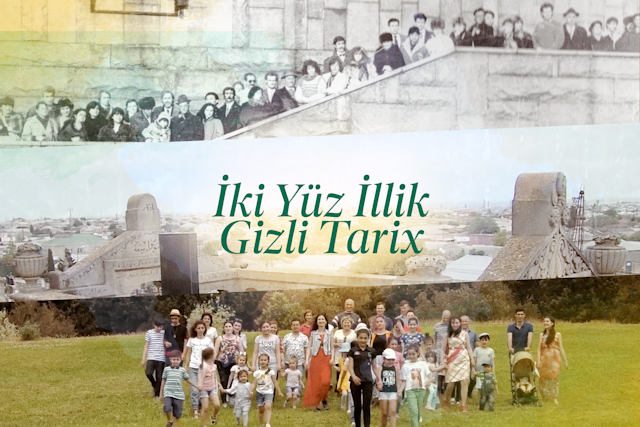
The documentary does more than chronicle events. Through interviews with community members, historical footage, and commentary from scholars, it explores how Bahá’í principles, such as the oneness of humanity, the equality of women and men, and the harmony of science and religion, fostered Azerbaijan’s intellectual and cultural landscape during a pivotal period of the country’s history.
One of the documentary’s most compelling threads follows the story of Táhirih, a poet and a Bahá’í heroine of women’s emancipation in the nineteenth century. In 1848, at the “Conference of Badasht,” she appeared on one occasion without the veil required by Muslim tradition, an act that came to represent the emergence of a new era.
The film also examines the Faith’s connections to prominent figures in Azerbaijan’s enlightenment movement. Writers and poets such as Huseyn Javid, Mirza Alakbar Sabir, Abdulkhalig Yusif, and Jafar Jabbarli, who were central to the country’s literary heritage, were drawn to or inspired by Bahá’í principles. The community established progressive educational initiatives, including what became the first girls’ school in Baku in 1901, reflecting the Bahá’í emphasis on universal education and the advancement of women.