
IBM’s leader has trumpeted an AI-on-the-mainframe future as generative AI fills in the COBOL gap left by earlier generations of techies.
Arvind Krishna, IBM chairman, president, and chief executive officer, was speaking as the company turned in full-year results that showed a leap in mainframe sales.
Big Blue turned in revenue from continuing operations of $19.7 billion for the fourth quarter, up 12 percent on the year, yielding net income of $5.6 billion, up 91 percent. For the full year, revenue was up 8 percent to $67.5 billion, while net income jumped 76 percent to $10.6 billion.
Naturally, AI featured heavily as the firm briefed analysts on the numbers. “Our cumulative GenAI book of business now stands at over $12.5 billion, of which Software is more than $2 billion and Consulting is more than $10.5 billion, with both seeing the largest quarterly increase to date,” said Krishna.
He said the technology was also a “powerful productivity driver” for the firm itself. “In 2023, we set out on a goal to achieve $2 billion of productivity savings exiting 2024. And today, we are well ahead of that, exiting 2025 with $4.5 billion of annual run rate savings.”
However, the strongest growth came in IBM’s infrastructure business, which grew revenues 12 percent for the year, and 21 percent in the fourth quarter.
Software grew 11 percent for the full year, and 14 percent in the fourth quarter. Consulting was the laggard, up 2 percent for the year and 3 percent in the fourth quarter – or flat and 1 percent at constant currency respectively.
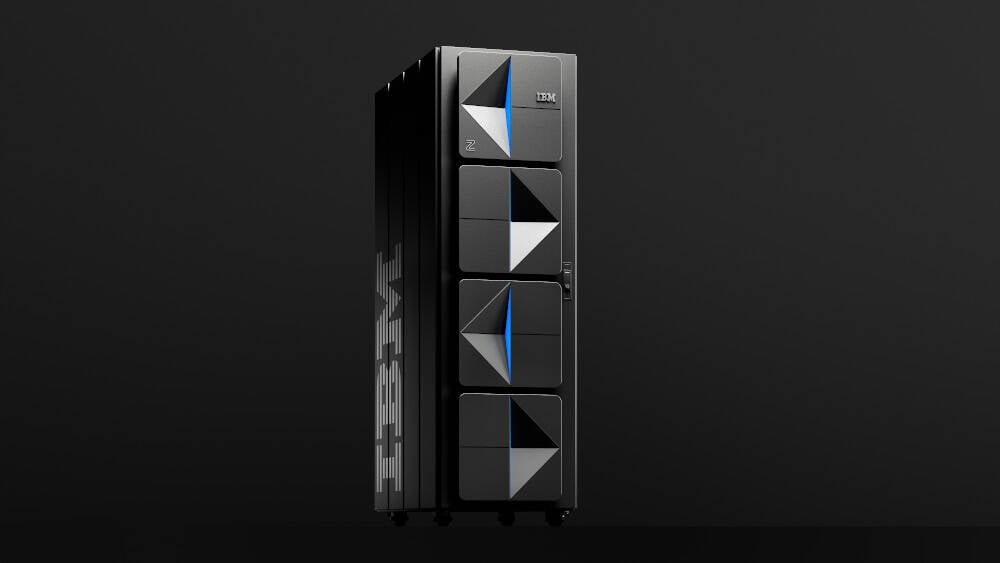
That infrastructure boost was in large part powered by the launch of IBM’s z17 series of mainframes.
In his prepared remarks, Krishna said: “Innovation value can also be seen in our IBM Z performance, up 48 percent this year, achieving the highest annual revenue for Z in about 20 years.”
CFO James Kavanaugh referred to a “record z17 launch, achieving the highest annual revenue for IBM Z in about 20 years and outpacing z16 over the first three quarters of the program.”
Krishna said this was more than just a question of legacy replacements. He said sovereignty was a key issue, and “more and more clients have woken up to that for certain workloads, the mainframe is actually the lowest unit cost economics platform, and that is really important.”
At the same time, he said GenAI made mainframes easier to leverage and modernize. “The GenAI tools we have provided with the Watson Code Assistant for Z really takes that onus away. It can refactor COBOL into Java… It can help you refactor that code if you want to keep it exactly as it is.”
He added: “I’m incredibly excited by our ability to do AI right in line. If you can do it right in line with the transactions, that’s a milliseconds delay as opposed to multiple seconds if you take it off platform, which is how people have been doing it so far.”
But if the mainframe is set to be part of the AI future, some other legacy issues are also set to stick with us.
Asked if AI/HBM-fueled DRAM price hikes were a problem, Krishna said: “I personally believe, as long as that dynamic is there, those pricing issues are going to be there through the year.”
He added: “There is no AI server without a bunch of CPUs right next to it. So the reality becomes that the AI demand also drives demand for normal servers that in turn feed and load up those servers.” ®