
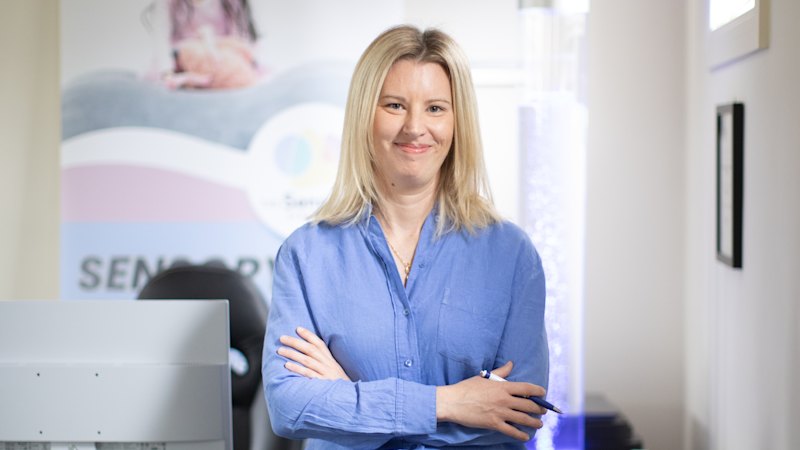
Emily Chantiri
January 30, 2026 — 5:01am
Save
You have reached your maximum number of saved items.
Remove items from your saved list to add more.
Save this article for later
Add articles to your saved list and come back to them anytime.
Got it
AAA
More and more workplaces are leaning on artificial intelligence to complete tasks such as onboarding and to fill the roles of customer service agents and human resources, with the technology now moving far beyond being a novelty chatbot.
But not all businesses are sold on the idea, with some rejecting AI over concerns it can be difficult for customers to use, and can create unnecessary confusion for both staff and clients.
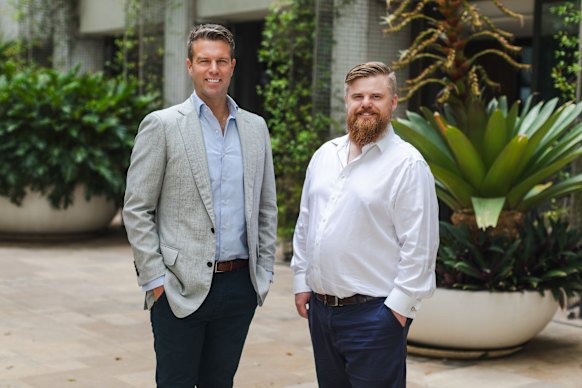 Craggle co-founders Luke Oxley and Benjamin Baume. Both worked at Westpac.
Benjamin Baume, co-founder and managing director of Craggle, is a fan. The home loan business uses AI agents as real team members in the company’s home-lending process, with the core chat agent acting like a digital mortgage assistant.
“It has a two-way conversation with customers, collects a lending fact in plain language, and matches their scenario against more than 7500 home loan options across 50 lenders,” said Baume.
In under a second it works out which options are both competitive and serviceable for that customer. “Importantly, it will tell someone if they’re already on a good rate, so there is no pressure to refinance when it does not make sense,” he says.
The agent operates behind a masking layer so it can use financial details while protecting personal information. For the broker it acts like an assistant. It is the first resource to engage the customer, capture the key information and structure the scenario.
As a small retailer we ultimately chose to invest back into human-led service, instead of bots.
Sarah James, founder of The Sensory Specialist
Baume says the company is also testing a voice version of the same agent.
“Overall, AI has helped us make home lending faster, simpler and more transparent for customers, while providing brokers quality leads and more time to do the work that needs a human.”
Back to basics
However, Sarah James, founder of The Sensory Specialist, is less enthused. The retailer, which specialises in sensory tools and NDIS-friendly products, recently trialled an AI chatbot on its Shopify site.
“The bot learned all the website content and was meant to answer frequently asked questions and reduce customer service load,” said James. But after three months the company decided to remove it.
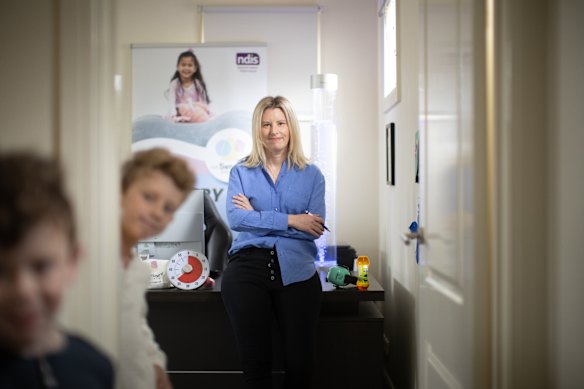 Sarah James, founder of small business The Sensory Specialist, recently trialled an AI chatbot to limited success.Simon Schluter
“The main reasons were that customer frustration was high. It couldn’t handle real-time questions like order updates. Most people ended up calling or emailing anyway, and subscription fees were significant”.
A solid FAQ hub and prominent search bar worked better by improving satisfaction more, especially when combined with real humans replying to emails within 24 hours, James said.
“As a small retailer we ultimately chose to invest back into human-led service, instead of bots,” she says.
Adoption led by larger companies
Dr Sue Keay, an AI robotics and workplace planning expert and director of the UNSW AI Institute, said the adoption of these technologies is being led by companies that already have scale.
Smaller companies are finding experimentation and implementation more challenging. The Australian industry has not fully embraced the digital revolution, Keay adds, which makes the AI transformation more difficult.
“It is far easier to automate workplace tasks if it is already digitised, with manual and paper-based processes already moved online,” she says.
Editor’s pick
To extract the most value from business data, it is crucial for the data to be digitised. Investment into developing data pipelines is essential to the successful application of AI and robotics.
There are many examples where companies are struggling to find the value in AI applications.
“I have heard from a few companies that experimented supplying generative AI tools to their workforce, and then removed them due to lack of widespread use. It is difficult to know whether it’s lack of training, familiarity or poor designs with these tools.”
The other challenge is being able to fully define the benefits of these technologies. Keay provides this example, with the introduction of autonomous load haulage vehicles in the mining industry, where initially the business case and capital investment did not stack up.
However, there were clear safety benefits. These became apparent after the introduction of this technology, with improved fuel efficiency, reduced road maintenance costs and the ability to optimise production once the technology was embedded into existing processes.
Having dedicated resourcing within the organisation to support AI implementation is crucial. “Without leadership, investment and a workforce with an open mindset, the use of digitised bots is unlikely to succeed.”
Get workplace news, advice and perspectives to help make your job work for you. Sign up for our weekly Thank God it’s Monday newsletter.
Save
You have reached your maximum number of saved items.
Remove items from your saved list to add more.
From our partners