
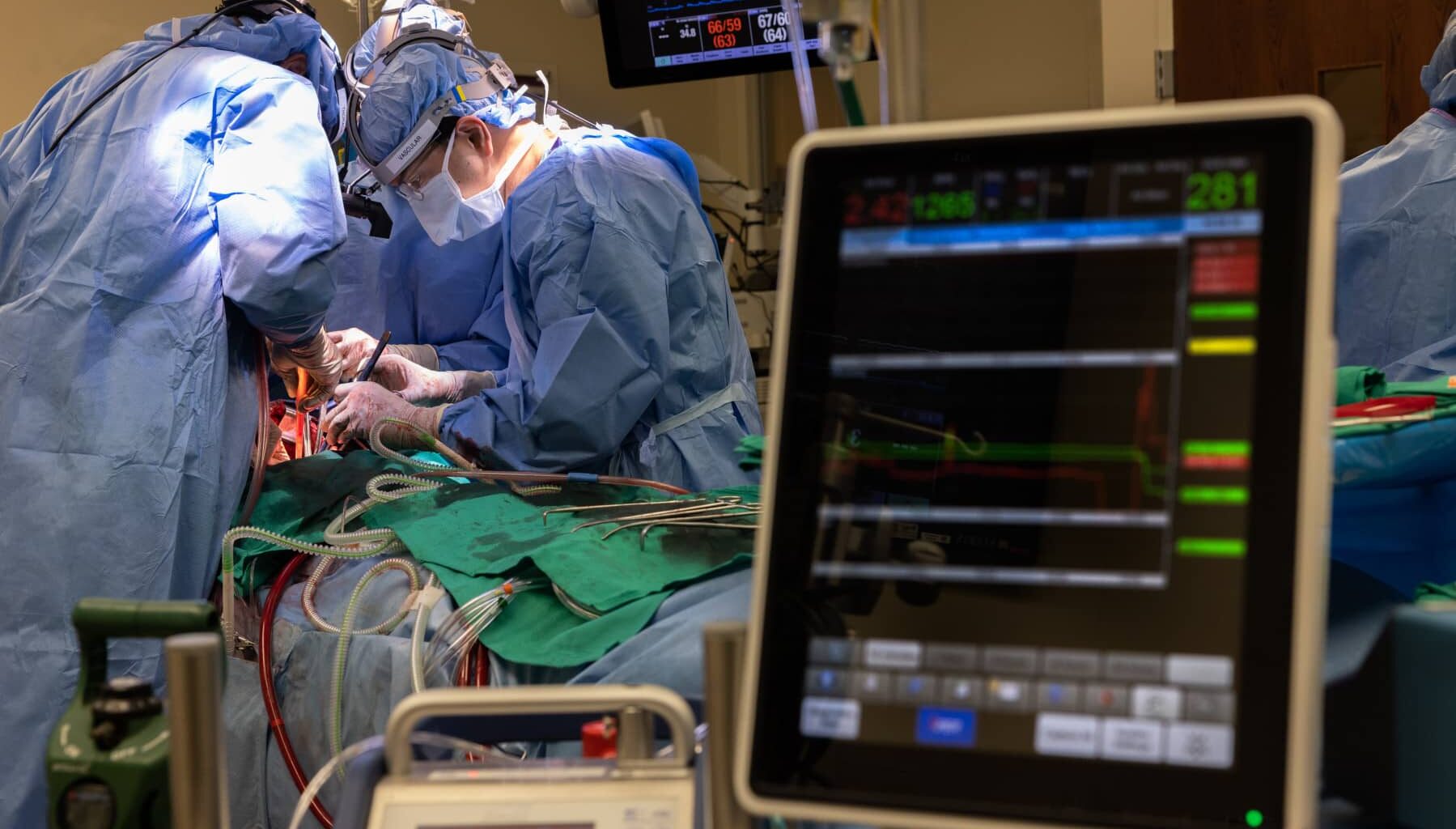
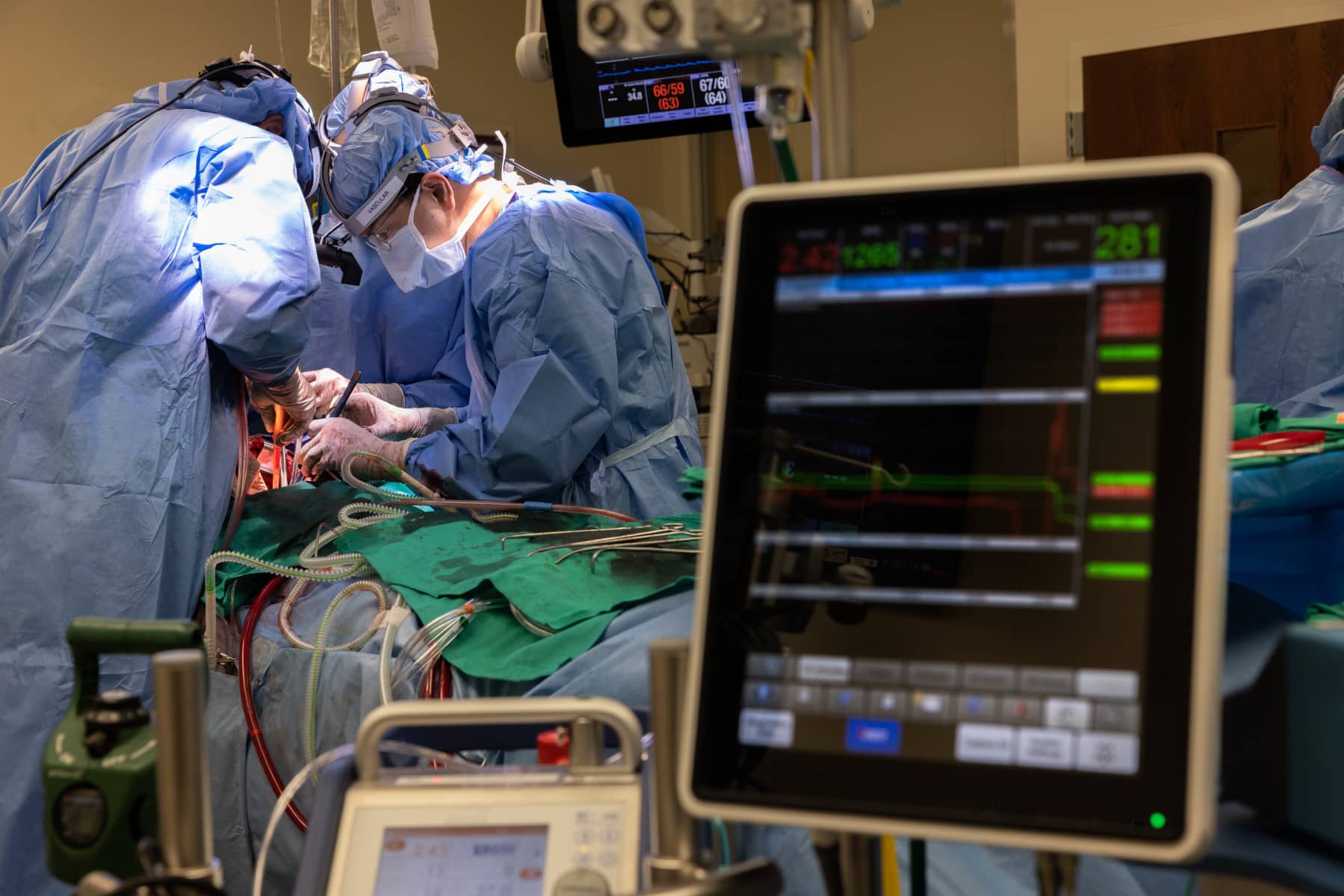
Surgeons at Northwestern Medicine perform a life-saving procedure. Credit: Northwestern Medicine
Surgeons have reported a rare medical case in which artificial lungs kept a man alive for two days after doctors removed both of his diseased lungs, buying crucial time until donor organs became available.
The case was led by Ankit Bharat, a lung transplant surgeon, and was published Jan. 29 in the medical journal Med. Researchers say the case shows how artificial lung systems may serve as a temporary lifeline for patients with catastrophic lung failure who would otherwise die while waiting for a transplant.
Severe infection triggers rapid lung failure
The patient was a 33-year-old man who developed acute respiratory distress syndrome, or ARDS, a life-threatening condition in which inflammation and infection overwhelm the lungs. Doctors said the influenza virus triggered the illness. Bacterial pneumonia soon followed, rapidly destroying lung tissue and pushing the patient into multi-organ failure.
When the man arrived at the hospital, his condition was critical. His heart stopped shortly after arrival, forcing doctors to perform CPR, Bharat said. The infection had already caused irreversible damage.
“When the infection is so severe that the lungs are melting, they’re irrecoverably damaged,” Bharat said. “That’s when patients die.”
Transplant was the only option, but the body needed time
Doctors concluded that a double lung transplant was the patient’s only chance of survival. But his body was too unstable to receive donor lungs immediately. The infected lungs were actively fueling the infection and had to be removed, yet without lungs, survival is normally impossible.
“The heart and lungs are intrinsically connected,” Bharat said. “When there are no lungs, how do you keep the patient alive?”
Artificial lungs replace missing organs
To address that challenge, the surgical team engineered a temporary artificial lung system. After removing both lungs, doctors connected the patient to the external setup, which took over the lungs’ essential functions.
Northwestern Medicine surgeons develop a total artificial lung system to keep a patient alive for 48 hours after removing both lungs, enabling a double-lung transplant. pic.twitter.com/9OqsfCoO6J
— Tom Marvolo Riddle (@tom_riddle2025) January 30, 2026
The system oxygenated the blood, removed carbon dioxide, and maintained stable circulation through the heart and the rest of the body. Researchers said the setup required constant monitoring and precise control to keep blood flow and oxygen levels within safe ranges.
For the next 48 hours, the patient lived without lungs. During that time, the artificial system functioned as a complete replacement for the missing organs.
Patient stabilizes while on artificial support
Once the diseased lungs were removed and artificial support was in place, the patient’s condition began to improve. His blood pressure stabilized. His heart and kidney function started to recover. Doctors also saw signs that the infection was subsiding.
Two days later, donor lungs became available. Surgeons performed a double lung transplant. The operation was successful. More than two years later, the patient has returned to daily life and continues to show good lung function, researchers reported.
Removed lungs reveal irreversible damage
The case challenges conventional thinking about lung transplantation, which is typically reserved for patients with chronic diseases such as cystic fibrosis or interstitial lung disease. Severe ARDS is often treated with prolonged life support in the hope that the lungs will recover.
But analysis of the removed lungs showed recovery was never possible. Researchers examined the organs at the molecular level and found extensive scarring and widespread immune damage. These findings confirmed that the tissue had reached an irreversible stage.
“For the first time, biologically, we are giving molecular proof that some patients will need a double lung transplant, they will not survive,” Bharat said.
A potential shift in treating severe lung failure
For now, the use of artificial lungs without any remaining lung tissue is limited to highly specialized centers with the expertise and resources to perform such procedures. Bharat hopes the concept can eventually be developed into standardized devices that help critically ill patients survive while waiting for transplants.
Researchers say the case highlights a potential shift in how doctors treat severe lung failure, showing that artificial lungs can keep patients alive when the body needs time to heal, and no other options remain.